
If you’re planning travel from Dubai to Doha with children, the simplest practical rule is: prefer a direct flight when it keeps travel time and hassle lower for your family; choose a connecting itinerary only when it meaningfully reduces cost, improves schedules, or fits tight planning needs. For many families the difference comes down to tradeoffs—time versus price, predictability versus flexibility, and in-flight amenities versus ground logistics. This guide compares the two options across factors families care about: door-to-door time, transfer stress, luggage and stroller handling, sleep schedules, and small-change costs like extra transportation or meals. Use the criteria here to compare specific flights on the carrier’s final booking page (verify baggage rules, exact connection windows, child fares, and seat selection fees there). Trip.com is a useful place to compare current availability, but always confirm details with the airline before you commit.
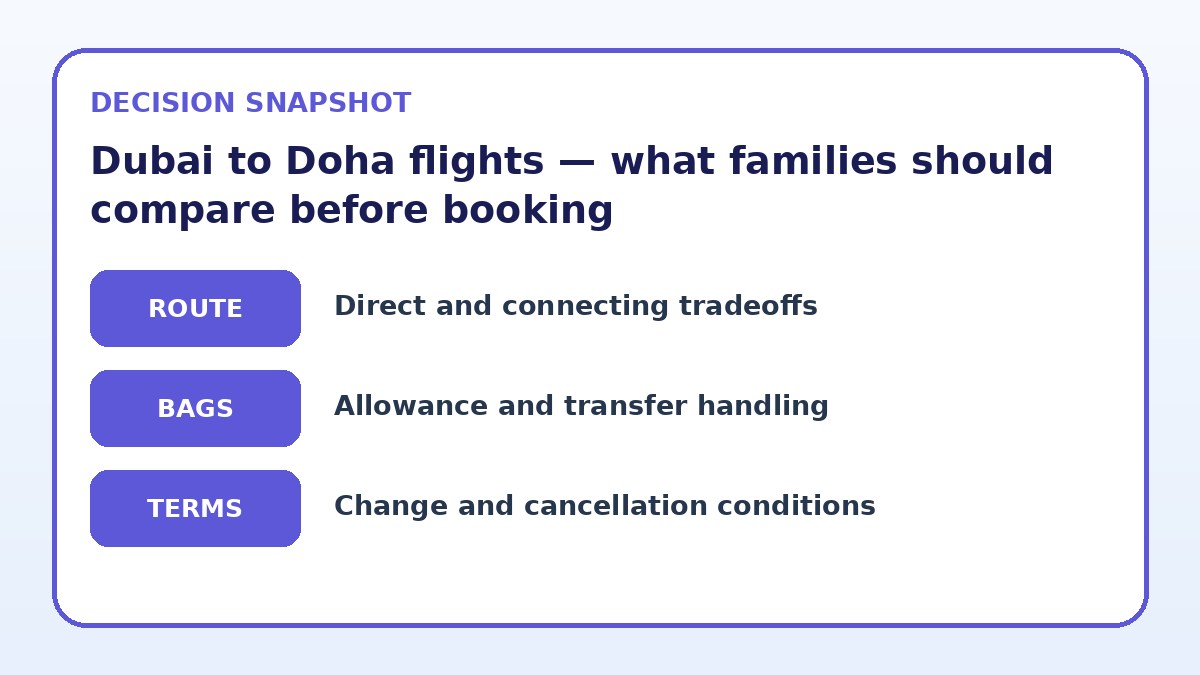
See current options before you compare the details
Availability and final conditions change. Open Trip.com now or keep reading for the practical comparison.
Why a direct flight usually favors families
Direct flights reduce the number of moving parts you must manage with children: one check-in, one boarding, one security clearance, and often no mid-journey gate changes. That simplicity lowers stress if you’re traveling with strollers, car seats, or carry-on bags holding snacks, nappies, and entertainment. Fewer transfers also mean fewer opportunities for delays to ripple and disrupt nap schedules or mealtimes. For families with infants or toddlers who need routines, the fewer touchpoints the better.
A direct option also reduces the need to coordinate ground transfers or to race between gates in a busy transfer hall—especially useful if anyone in the party has limited mobility. If you’re balancing school or work commitments at either end, the predictability of a single-sector itinerary can make scheduling childcare or pickups far easier. That said, direct flights sometimes depart at inconvenient times or cost more; the choice is about balancing convenience and the overall family budget.
When a connecting itinerary makes sense
Connecting flights can be smarter when they open up significantly cheaper fares, better departure or arrival times, or more convenient overall trip plans—for example, if a connection allows you to avoid late-night arrivals with sleeping children. Some families use a daytime connection to break a long travel day, booking a family-friendly hotel near the transfer airport when an overnight stop reduces stress and jet-lag. Connecting routes may also offer routes with better loyalty upgrade opportunities or access to a preferred airline’s network.
However, connecting itineraries introduce complexity: you must manage transfer rules (minimum connection times), baggage re-check procedures, and potential visa or transit requirements. For families, that means asking how long the transfer will be, whether you need to exit and re-clear security, and if airport lounges or play areas are available to keep kids comfortable during waits. Only choose a connecting option when its advantages outweigh these practical frictions for your household.
| Approach | Best for | Tradeoff to check |
|---|---|---|
| Direct flights | Families prioritizing simplicity and fewer airport transfers | May cost more or offer less convenient departure times |
| Connecting flights with short layovers | Families wanting minimal extra travel time but lower fares | Higher risk of rushed transfers and stress with kids |
| Connecting flights with long layovers | Families who value rest breaks or want to split the journey overnight | Longer total travel time and added accommodation or transit costs |
| Separate tickets for each leg | Flexible families chasing lower fares and willing to self-manage transfers | No protected connection—missed flights mean buying replacements |
Ready to check the option that fits your plan?
Use your exact dates and traveler details so the provider page can show the current total and conditions.
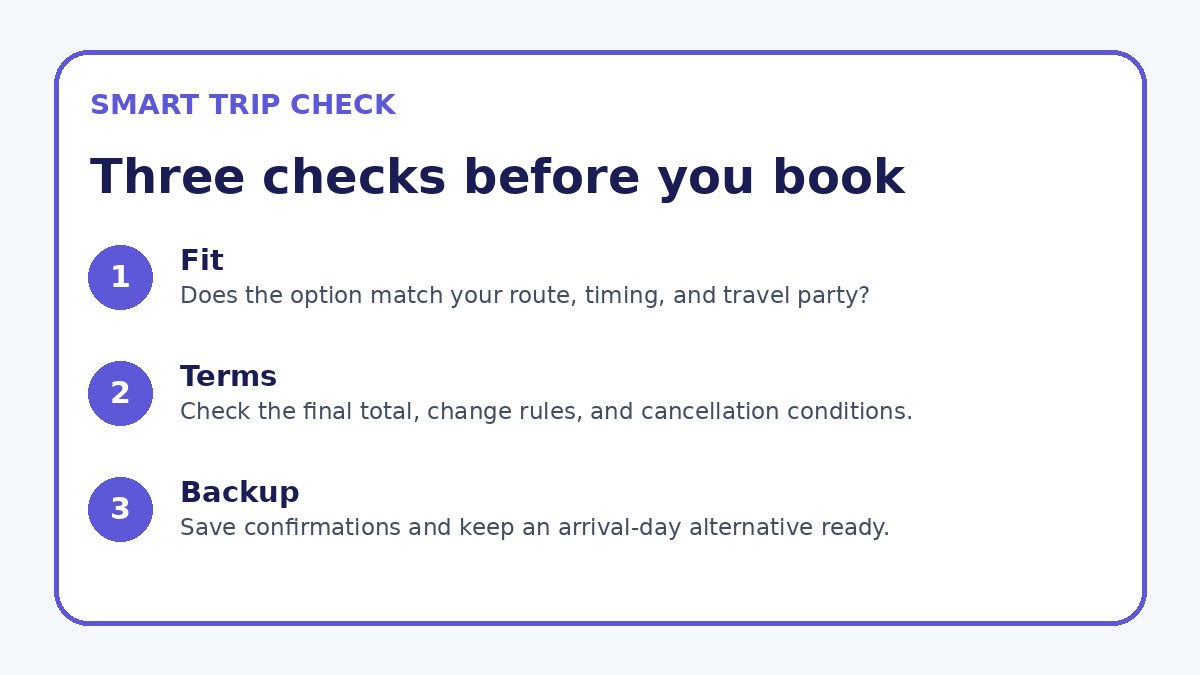
Practical tradeoffs to compare before booking
Start with door-to-door time: add driving or metro time to the airports, recommended arrival windows for international travel with children, and expected transfer times. A flight with a short airborne time but a long connection can still leave you worse off than a slightly longer direct flight. Also compare total scheduled wait—long layovers can be a blessing if the airport has family facilities, but a rushed connection increases stress and the risk of missing the second leg.
Next, check baggage rules and stroller/car seat policies for each leg—some carriers gate-check or allow complimentary infant baggage, while others charge. If you must change terminals, know whether baggage is automatically transferred between flights or whether you need to collect and recheck it. Finally, look at the ability to reserve seats together or request bassinets, and whether meals for children are offered or must be purchased in-flight or at the airport.
Before you book
- Compare total door-to-door time including airport transfers, not just airborne minutes.
- Verify baggage transfer rules and stroller/car-seat policies on each airline’s final booking page.
- Confirm seat assignments, bassinet availability, and whether children can sit together before paying.
- Check connection details: terminal changes, minimum connection time, and whether immigration is required.
- Plan backup options: note later flights, rebooking policies, and whether travel insurance covers missed connections.
- Pack an easily reachable family carry-on with medicines, snacks, chargers, spare clothes, and travel documents.
How to evaluate risk and contingency plans
Assess the connection buffer: aim for a minimum that comfortably covers deplaning, immigration or transit security, restroom and snack stops, and moving terminals if required. For families, adding extra padding reduces anxiety—especially on unfamiliar airports. Check the airline’s published minimum connection time and then add a sensible margin for unexpected delays. If you’re booking separate tickets for each leg to save money, be especially cautious: missed connections could mean buying new flights.
Consider contingency options: can you rebook easily if a leg is delayed? Does your airline offer family assistance or priority transfer services? Know where you’d go for childcare or quiet rest—airport play areas, lounges that admit children, or nearby short-stay hotels. Finally, have a simple emergency kit (chargers, spare snacks, a change of clothes) accessible in your carry-on, and store digital copies of travel documents so you can move quickly if plans change.
Frequently asked questions
Is a direct flight always the best choice for families?
Not always. Direct flights are often the least stressful because they remove transfer logistics, but they can be more expensive or operate at inconvenient times. For some families a well-timed connecting itinerary that shortens wait at either end, reduces overnight travel, or saves meaningful money will be preferable. The right choice depends on your children’s ages and routines, budget flexibility, luggage needs, and tolerance for airport time. Always weigh total travel time, connection complexity, and whether you can reserve seats together before deciding.
How much connection time should I allow when traveling with kids?
Allow more buffer than standard minimums—what feels comfortable depends on whether you must change terminals, collect and recheck luggage, or pass immigration. A reasonable approach is to add at least 60–90 minutes beyond the airline’s published minimum connection time for single-airport transfers when traveling with young children, and more if terminal changes or baggage reclaims are involved. Also factor in time for bathroom breaks, quick snacks, and settling children before the next boarding. Check the airport map and services to refine this estimate.
What should I check on the airline’s booking page before finalizing?
On the airline’s final booking page verify baggage allowances for each passenger and leg, stroller and car-seat policies, exact connection windows, and any seat selection or infant fees. Confirm whether seats are guaranteed together, if a bassinet can be reserved, and what support is available for families at your transfer airport. Check transfer rules for missed connections on codeshares or multi-carrier itineraries. If you find any unclear terms, contact the airline directly before paying to avoid surprises at the airport.
Final planning note
Choosing between direct and connecting Dubai to Doha flights for a family trip is a practical balance: direct flights reduce complexity and transfer stress, while connecting options can unlock better schedules or cost savings. Focus on total door-to-door time, realistic connection buffers, baggage and stroller rules, and the ability to reserve family-friendly seating. Use the checklist to compare specific itineraries and confirm details on the airline’s final booking page. If you want to scan current options, Trip.com can be useful for initial comparisons, but always verify transfer logistics and family services with the carrier before you book. With a little preparation, you can pick the itinerary that keeps travel days manageable and preserves energy for the part of your trip that matters—the time together.
Continue planning
Check current options and final conditions
Use the provider page to confirm live availability, the final total, cancellation terms, and every condition that matters to your trip.
This evergreen planning guide was created with AI-assisted drafting and a structured quality review. It does not display live prices, schedules, availability, visa guidance, or provider rankings. Verify current details before booking. Some links are affiliate links; we may earn a commission at no additional cost to you.