If you need to travel from Busan to Gyeongju for a meeting or site visit, the critical planning task is aligning departure and arrival with your work commitments. Start by deciding whether you need the fastest arrival, a guaranteed seat, or flexibility for schedule changes. Once that priority is clear, compare door-to-door time, transfer complexity, and the likelihood of delays. Confirm luggage allowances, onboard power and connectivity if you plan to work en route, and the exact drop-off point in Gyeongju relative to your meeting location. For any operator-specific terms — cancellation windows, refund rules, or luggage policies — check the provider’s final booking page before purchasing. You can use Trip.com or similar booking sites to view current availability, but always verify details on the transport operator’s official page or call their customer service when timing is critical.
See current options before you compare the details
Availability and final conditions change. Open Trip.com now or keep reading for the practical comparison.
Choose the transport approach that matches your meeting priorities
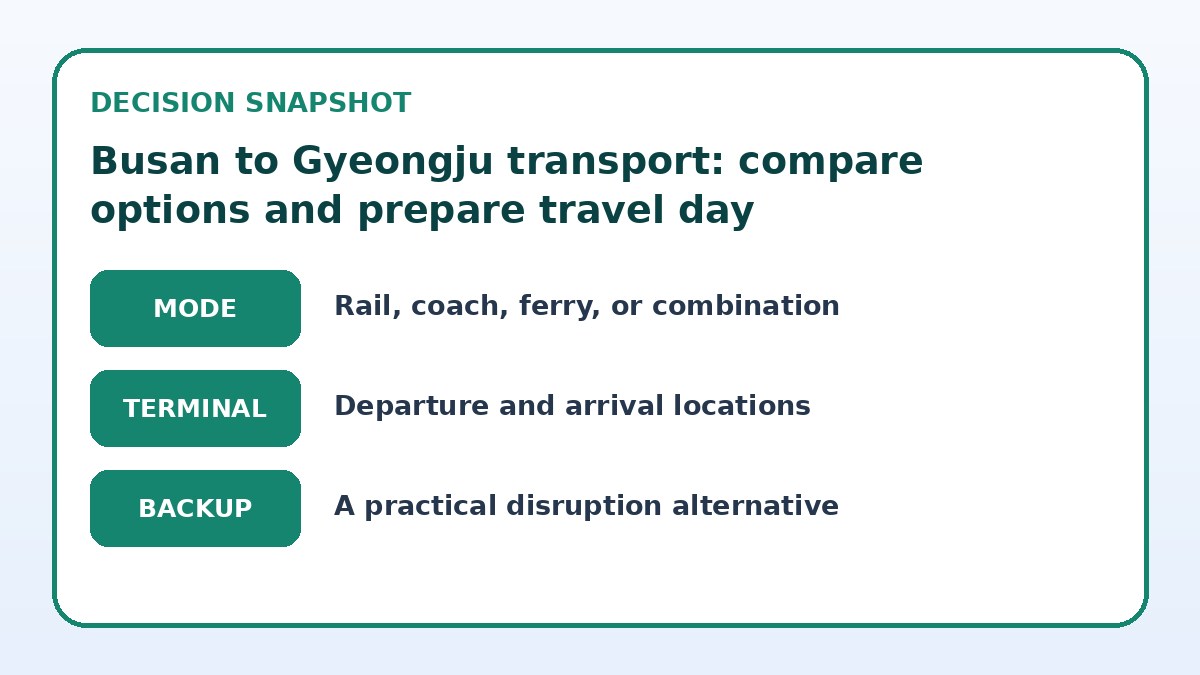
Start by identifying what you cannot compromise: absolute speed, minimal transfers, a quiet workspace, or cost control. High-speed rail or express services typically win on travel time but may require transfers to and from stations; buses or shared shuttles can have simpler boarding but are more susceptible to road traffic. A private car or chauffeur is often the simplest door-to-door option for busy schedules but adds complexity in booking confirmations and deposit rules. Knowing whether arriving 10–15 minutes late is acceptable will guide whether you prioritize buffer time over the shortest timetable.
Use that priority list to build a short shortlist of feasible options. Compare total journey time from your office or hotel in Busan to the final meeting address in Gyeongju rather than just in-vehicle times. That total should include local rides, expected wait times, and time to navigate stations. When time matters most, also factor in typical traffic at your planned travel hour and whether the route includes any transfer points where you may need to cross platforms or pick up checked luggage.
Practical checks the morning of travel
On the travel day, run through a brief checklist: reconfirm your booking reference, check the operator’s real-time service alerts, and verify platform or pickup location changes. If you have a train or bus seat number, note carriage and door positions to reduce boarding time. For private transfers, confirm the driver’s contact and exact meeting point; for shared shuttles, check whether pickups are door-to-door or at a designated stop. If you plan to work on the journey, ensure devices are fully charged and that you have offline copies of critical documents in case of intermittent connectivity.
Plan for contingencies: identify the nearest taxi ranks or ride-hailing coverage at both ends, and have a backup contact at your Gyeongju meeting location who can receive updates if you’re delayed. If your meeting is time-sensitive, leave an early alert message so colleagues know you are en route and can adjust if necessary. Also verify weather and any major events that might affect road or station crowding; when in doubt, adding an extra 20–30 minutes buffer is often the most practical hedge against small delays.
| Approach | Best for | Tradeoff to check |
|---|---|---|
| High-speed rail or express train | Travelers prioritizing shortest in-vehicle time and predictable schedules | May require transfers to final address; check seat reservation and luggage policies before booking |
| Intercity or express bus | Simple booking and direct stops that may be closer to certain neighborhoods | Susceptible to road traffic; fewer onboard work amenities and variable comfort levels |
| Private car or chauffeured transfer | Door-to-door convenience and minimal transfers for tight meeting schedules | Higher cost and need to verify driver details, cancellation terms, and pickup logistics |
| Shared shuttle with hotel pickup | Balanced cost and convenience when timings align with your schedule | Possible multiple pickups en route and less control over departure times |
Ready to check the option that fits your plan?
Use your exact dates and traveler details so the provider page can show the current total and conditions.
Comparing service-level tradeoffs and booking criteria
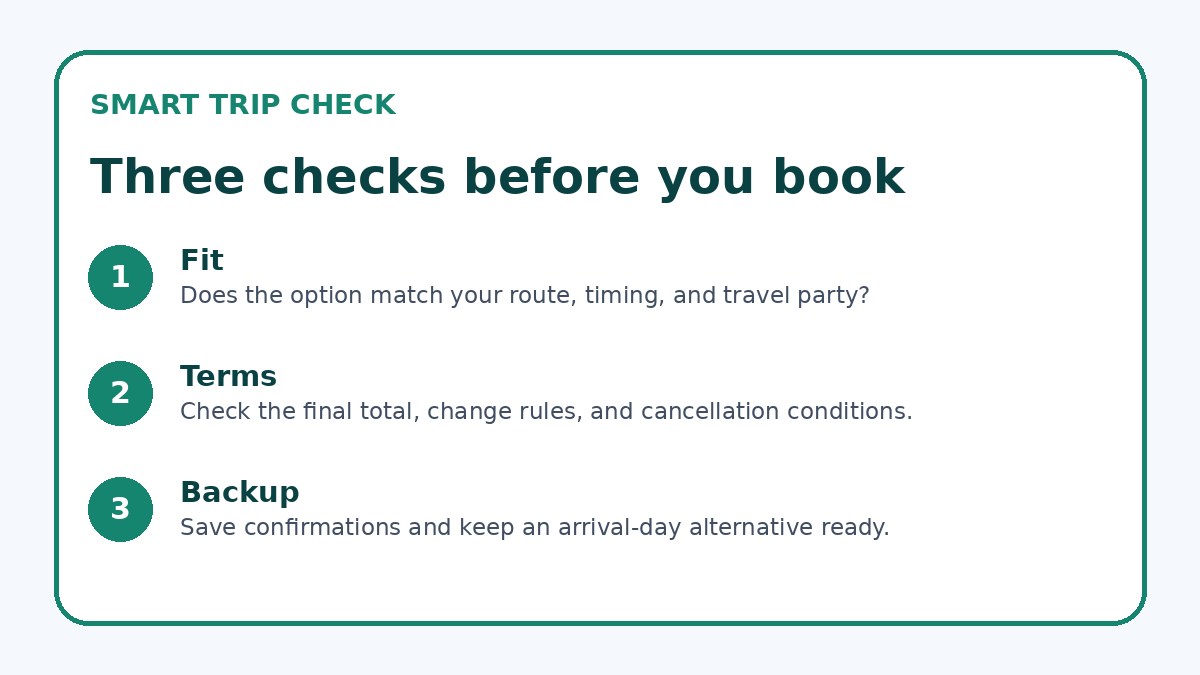
When choosing between options, weigh seat reservation rules, cancellation flexibility, and the service’s reliability record for the specific time of day. Business travelers who need guaranteed seating and a working environment should prefer services that allow reserved seats and state amenities like power outlets. If your schedule could shift, prioritize fares or tickets with flexible change policies — but check the exact change windows and possible fees on the provider’s final booking page, since these rules vary and can affect how easy it is to move your reservation.
Also think about the final-mile logistics in Gyeongju: some stations or stops are closer to the historic district, hotels, or conference centers than others. A slightly slower option that drops you nearer to your meeting venue can save time overall. When comparing options, calculate the total time and complexity cost of transfers, the effort of hauling luggage between platforms, and whether you’ll need an additional taxi at either end. These small choices often determine whether your travel day feels smooth or stressful.
Before you book
- Confirm the final meeting address in Gyeongju and map the nearest station or stop before selecting a transport option.
- Verify your booking reference and check the operator’s live service alerts on the travel morning for delays or platform changes.
- Confirm luggage allowances and carry-on dimensions on the provider’s final booking page to avoid last-minute repacking.
- Save offline copies of key documents and ensure your laptop and phone batteries are charged with a portable power bank accessible.
- If reserving a seat, note carriage and door numbers to board quickly; if using a driver, confirm their contact and pickup exactness.
- Have a backup plan: know the nearest taxi areas or ride-hailing coverage at both Busan departure and Gyeongju arrival points.
Work-ready packing and on-route productivity tips
Pack a compact ‘meeting day’ kit for the journey: chargers and a power adapter, a headset for calls, printed copies of meeting materials, and a portable battery. For quick changes of clothing or a freshen-up, include a lightweight travel shirt or basic grooming items in a carry-on. If you expect to join video calls, test the webcam and audio on your device before setting off; some trains and buses have noisy sections where a noise-cancelling headset is essential for clarity.
During travel, create small blocks of work to match likely interruptions: respond to quick emails, draft meeting notes, or review presentations. For longer focused work, block a continuous 30–45 minute window when disruption probability is lowest. Save any large file transfers until you’re on a stable connection, and always keep key documents available offline. Finally, plan for a short buffer on arrival to reconnect, set up your presentation, and arrive at the meeting room calm and prepared.
Frequently asked questions
How do I decide whether to pick a direct service or one with a transfer?
Base the decision on total door-to-door time and risk tolerance. A direct service reduces transfer stress and lowers the chance of missed connections, which is valuable for tight schedules. However, a service with a transfer can sometimes be faster overall if the transfer links faster segments; it also may offer more departure times. Compare the itinerary end-to-end, include transfer walking times and luggage handling, and estimate buffer time. If the meeting is inflexible, favor direct options or allow an extra buffer to mitigate transfer risks.
What should I verify on the provider’s booking page before confirming?
Check exact departure and arrival locations, seat reservation rules, baggage allowances, cancellation and change policies, and whether the service includes onboard power or Wi‑Fi. Look for any boarding instructions, required ID, or specific pickup point details. Also review the provider’s stated change and refund windows so you know your flexibility if your meeting time shifts. For absolute certainty, save screenshots of the booking confirmation and, when timing is critical, call the operator to confirm pickup or platform details.
Can I reliably work during the trip between Busan and Gyeongju?
Working on the move is possible but depends on the option you choose. Trains often offer more stable seating and sometimes onboard power and Wi‑Fi, making them better for focused tasks or video calls. Buses and shared shuttles can be noisier and more affected by road conditions, which can interrupt work. For important calls, use a noise‑canceling headset and have a quiet backup space or reschedule the call. Always prepare offline access to files and send a short status message to meeting participants before travel so you can handle any brief interruptions smoothly.
Final planning note
For business travel from Busan to Gyeongju, the right choice balances time, predictability, and on-route productivity. Start by deciding whether door-to-door speed, a quiet workspace, or maximum flexibility matters most. Then compare total journey time, transfer complexity, and provider rules like seat reservations and baggage allowances. On the day, reconfirm bookings and pickup details, charge devices, and keep key documents offline. Small planning steps — mapping the exact drop-off, saving backup contact numbers, and adding a modest buffer — are what turn a tight schedule into a manageable travel day. Use booking platforms such as Trip.com to view current options, but always verify critical details on the operator’s final booking page before you pay.
Continue planning
Check current options and final conditions
Use the provider page to confirm live availability, the final total, cancellation terms, and every condition that matters to your trip.
This evergreen planning guide was created with AI-assisted drafting and a structured quality review. It does not display live prices, schedules, availability, visa guidance, or provider rankings. Verify current details before booking. Some links are affiliate links; we may earn a commission at no additional cost to you.