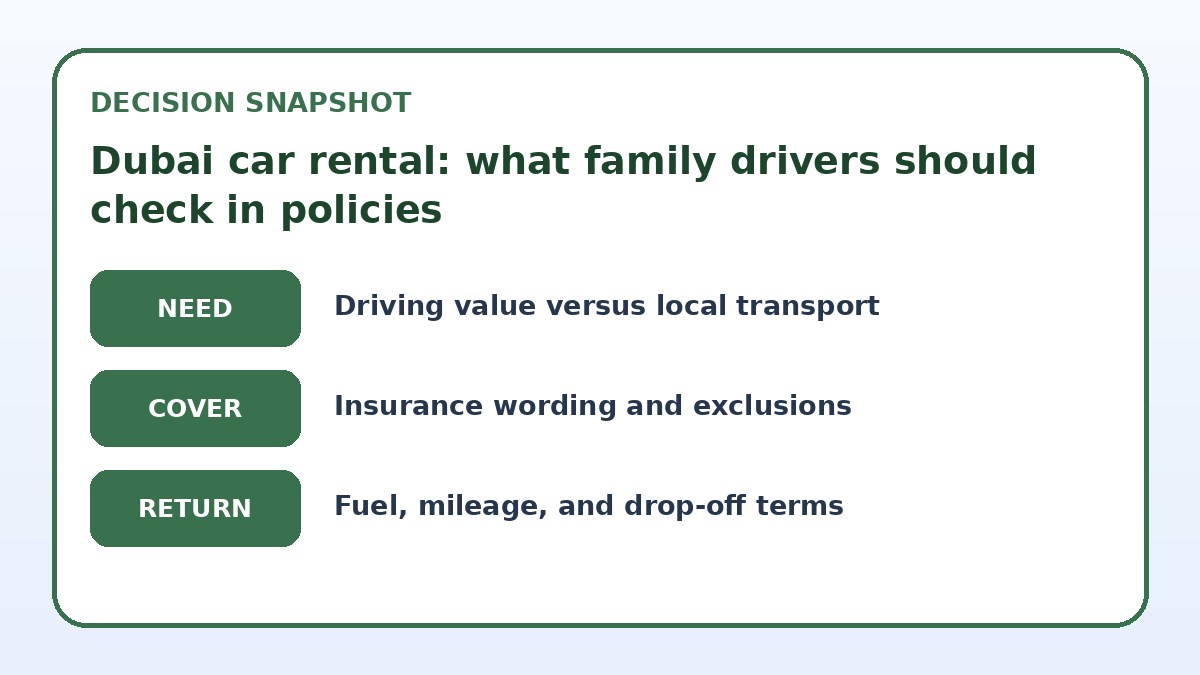
If you’re planning to rent a car in Dubai with children, start by focusing on three policy phrases: Collision Damage Waiver (CDW) and Excess, Third-Party Liability, and cover for additional drivers and child restraints. Practically, ask the rental agent to show the precise definition of “waivable excess” and whether CDW reduces or eliminates your financial responsibility after an incident. Make sure accompanying drivers are listed and that any infant or booster seats are explicitly allowed under the rental contract. Keep a printed or screenshot copy of the rental agreement and insurance wording with you. Below I explain the tradeoffs behind common terms—what they actually mean in a claim, how to spot exclusions that matter to families, and the specific questions to ask before you sign or pay for extra protection.
Key insurance terms families must understand
Start with Collision Damage Waiver (CDW) or Loss Damage Waiver (LDW). These are the most frequently sold protections and can reduce or remove your liability for damage to the rental vehicle, but they rarely make you entirely ‘insurance-free’. The rental contract will state an excess (also called deductible): the maximum sum you’re liable for per claim if you don’t buy a waiver that reduces it. For families, pay attention to whether accidental damage caused while securing a child, reversing with a child seat, or unloading luggage is treated differently. Ask for the exact wording: does CDW exclude damage to tyres, windshield, roof or undercarriage? If yes, ask how those items can be covered.
Next check Third-Party Liability limits for bodily injury and property damage to others. This protects you if you hurt someone or damage another person’s property, and higher limits become important when travelling with children due to the risk and potential claim amounts. EU and GCC standards differ, so ask the rental firm what the policy covers within the UAE and whether supplementary liability cover is sold. Confirm whether the rental’s liability extends to named additional drivers or only the primary hirer. Finally, look for any language that voids insurance—for example, using the vehicle for commercial transport, off-roading, or permitting unlisted drivers can invalidate a claim.
What “excess”, waivers and credit card cover really mean
The excess (deductible) is the most important number to lock down before you drive away. Some waivers offered by rental firms reduce the excess to a small amount or zero in exchange for a daily fee; others only reduce it partially. Separately, many credit cards offer rental-car coverage that may cover part or all of the excess if you pay for the rental with the card—but these programs often have exclusions (for example, they may not cover certain vehicle classes, undercarriage damage, or policies when additional drivers aren’t listed). Ask your card issuer for the provider’s exact policy brochure and compare it to the rental contract wording.
When comparing options, verify whether the waiver is refundable if unused, and the conditions for filing a claim. If you choose to rely on a credit card cover, make sure you satisfy all card terms: the cardholder often needs to be the primary renter, all drivers must be licensed and recorded, and a police report may be required for claims. Also ask whether the provider requires you to pay the full excess at the counter and then wait for the card issuer’s reimbursement; processing times and evidence requirements vary, so plan for potential out-of-pocket cashflow and hold documentation for every damage incident.
| Approach | Best for | Tradeoff to check |
|---|---|---|
| Basic CDW from the rental company | Short city drives and minimal paperwork | May leave high excess and exclude tyres, windscreen or undercarriage damage |
| Rental company super-waiver (excess reduction to zero) | Families wanting lowest out-of-pocket risk during a claim | Daily cost can add up; still check for specific exclusions and named-driver requirements |
| Credit-card rental cover | Travellers who prefer not to buy waivers at the counter | Often requires cardholder to be primary renter and may exclude certain damage types |
| Standalone third-party excess insurance | Lowering excess without altering the rental contract | Claims are handled externally—expect reimbursement processes and strict evidence rules |
Family-specific exclusions and practical examples
Common exclusions that hit families include tyre and windshield damage, roof or undercarriage impacts, and incidents arising while transporting children or using child restraints incorrectly. For example, claims for scratches caused when placing a car seat incorrectly or from an unsecured stroller may be denied if the rental contract lists such causes as exclusions. Also inspect the policy for restrictions on where you can drive—many standard contracts exclude sand dunes, desert tracks and private property. If you expect to visit beach parks or drive on unpaved roads, get explicit permission in writing or purchase an add-on that covers these activities.
Practical examples help you decide: if a child’s booster knocks a cup that spills and damages upholstery, will that be treated as normal wear or as a claimable damage? If you have to swap cars because of an accident, confirm whether replacement car costs, taxi fares for your family, or accommodation while a claim is processed are covered. Rental companies sometimes offer family-friendly add-ons—child seats, extra drivers at lower fees—but verify whether taking a child seat from the company affects claim acceptance versus using your own. Always photograph vehicle condition with time-stamped images and have all drivers sign the inspection report at pickup.
Before you book
- Request the rental contract’s exact CDW/LDW wording and confirm the excess amount and whether it is per incident or per rental
- Confirm all additional drivers and their ages are listed on the agreement to ensure they are covered
- Ask explicitly whether tyres, windscreen, roof and undercarriage damage are excluded and what add-ons cover them
- Verify whether child seats supplied by the company affect insurance acceptance and document their condition at pickup
- Check your credit card’s rental-cover brochure for exclusions, required claim steps, and whether reimbursement is allowed
- Photograph the vehicle from all angles with timestamps and keep copies of the signed inspection report and any police reports
How to compare and negotiate cover before booking
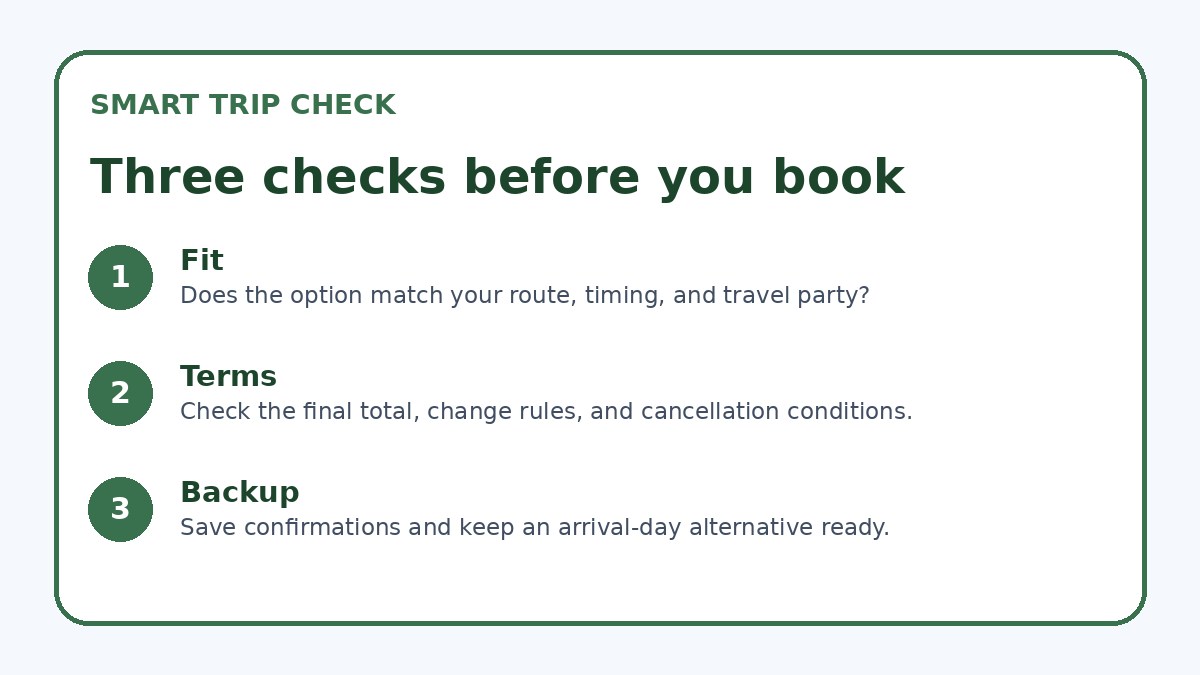
Make direct comparisons by asking suppliers for the full insurance wording or a policy summary, not just product names. Create a short checklist of must-haves: zero or low excess for collision, cover for windscreen/tyre/underbody, named additional drivers, and explicit allowance for child restraints. Compare whether the rental company, a third-party insurer, or your credit card is supplying cover—each has different claim processes and evidence requirements. If possible, get the cover terms emailed so you can review exact clauses calmly rather than accepting verbal assurances at the counter.
When negotiating, use concrete questions: whether the CDW covers parking lot dents, if off-road or beach driving is allowed, and what documentation is required after an incident. If the standard package doesn’t meet your needs, ask about aftermarket insurance brokers or standalone policies that reduce the excess without changing the rental agreement. Finally, confirm on the rental firm’s booking page the final line items that will be charged at pickup—waiver cost, additional driver fees and child-seat hire—and check whether any of those charges will alter insurance applicability. Trip.com can be a place to compare current vehicle availability and basic booking terms, but always verify the detailed insurance wording with the supplier.
Frequently asked questions
Does the rental company’s child seat affect insurance coverage?
Not usually in a way that voids CDW, but the rental contract may include clauses about correct installation and approved equipment. If the supplier provides the seat, document its fit and condition and ask whether using a non-company seat affects claims. Some contracts require child restraints to meet local safety standards; if a damage claim relates to an improperly installed seat, insurers may seek evidence showing appropriate use. Always photograph installation and keep receipts for any hired seat; if you’re uncertain, have the supplier sign that the seat provided complies with the rental policy.
If I pay the rental company’s super-waiver, can my credit card still cover the excess?
Most credit-card protections do not pay for costs already waived by the rental company, because there’s no excess to reimburse. Cards typically provide secondary coverage that reimburses excess you initially paid. If you buy a rental super-waiver that reduces your excess to zero, the credit-card benefit usually becomes redundant for the same claim. To avoid paying twice, check your card’s terms first: if it offers strong primary coverage for your rental class and permitted uses, relying on the card and skipping the super-waiver may be cost-effective—but confirm all conditions on your card issuer’s policy page and the rental contract.
What documents and evidence will speed up a claim if something happens?
Collect the rental contract with the insurance wording, the signed vehicle inspection form, time-stamped photos or video of pre-existing and new damage, a police report if required, and contact details of any witnesses. Keep copies of receipts for child seats, taxi or accommodation expenses related to the incident, and the claim forms the rental company or insurer provides. If using credit-card coverage, also retain the card transaction receipt showing you paid with the card. Promptly submit all requested documents and follow the insurer’s timeline to avoid delays or rejection.
Final planning note
Families renting a car in Dubai can reduce uncertainty by focusing on a few concrete items: the exact excess amount and how it can be reduced, which driver names are covered, and the list of common exclusions such as tyres, windscreen and undercarriage. Gather written policy wording before you commit, photograph the vehicle at pickup, and verify whether your credit card cover applies and under what conditions. When comparing options, prioritize clarity of claims process and realistic out-of-pocket exposure rather than only the lowest upfront fee. With the right questions and documentation, you can choose the combination of rental waivers, card benefits, or external excess insurance that matches your family’s comfort with risk.
Continue planning
Check current options and final conditions
Use the provider page to confirm live availability, the final total, cancellation terms, and every condition that matters to your trip.
This evergreen planning guide was created with AI-assisted drafting and a structured quality review. It does not display live prices, schedules, availability, visa guidance, or provider rankings. Verify current details before booking. Some links are affiliate links; we may earn a commission at no additional cost to you.