If you need a short answer: choose the location that supports the days you plan to spend out (city, beach, or nearby excursions) and then pick the most comfortable room you can afford within that area. Solo travelers often face a tradeoff between walking distance to attractions, nightlife safety, and the quiet, private space needed to rest and work. In Da Nang the main location choices are the riverside/city center, My Khe beach strip, or quieter residential districts toward the airport and western hills. Each location affects transport time, cost, evening safety, noise levels, and hotel type—so decide how much of your trip will be spent out exploring versus relaxing in-room, then balance nightly comfort (bed, storage, soundproofing) against walkability and convenient transport.
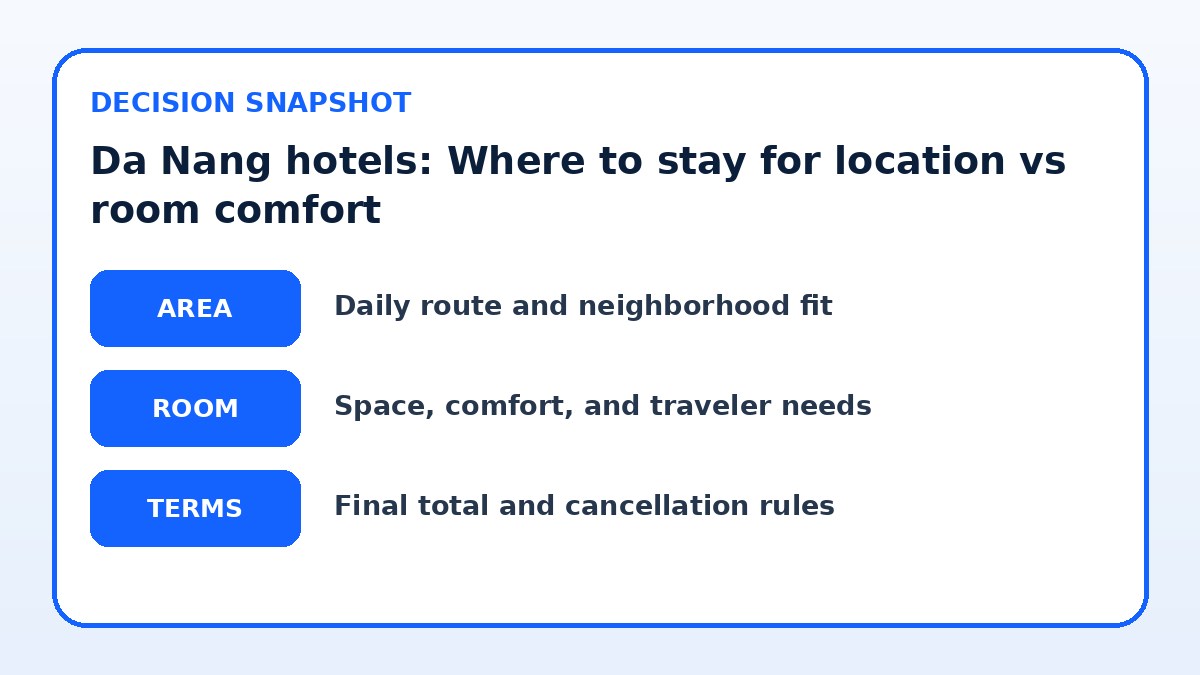
See current options before you compare the details
Availability and final conditions change. Open Trip.com now or keep reading for the practical comparison.
Decide by daily rhythm: how you will spend your time
Start by mapping a typical day in Da Nang: morning beach, midday site visits, afternoon cafe work, evening riverside walks or dinner in Hoi An. If most days begin with beach time or long day trips, a hotel on the My Khe beach strip or near the main coach/taxi hubs saves commuting stress. For social evenings, riverside hotels put you close to waterfront restaurants and the Han River bridges. If your tempo is slow—rest, reading, spa treatments—choose a quieter neighborhood and a room that supports downtime with a comfortable bed and blackout curtains.
Consider transit options for your itinerary rather than relying on a single landmark. Even when a hotel is labeled ‘central,’ check how easy it is to reach the airport, bus stations, or boat launches for side trips. Solo travelers who expect to use ride-hailing services should confirm mobile coverage and pick hotels with clear pickup spots. If you plan early departures or late arrivals, proximity to the airport or a dependable taxi stand becomes a higher priority than proximity to nightlife.
Location tradeoffs: nightlife, safety, and convenience
Riverside and beach-adjacent areas offer walkable evenings and a selection of cafes, but they can be noisier and busier at night. Noise is a frequent complaint for solo travelers who value sleep, so look for rooms on higher floors and read room-level notes when booking. Conversely, neighborhoods further inland or near the airport are quieter and often cheaper, but you add daily commuting time and taxi cost. Safety-wise, Da Nang is considered generally safe for solo travelers, yet being near populated, well-lit streets helps for late-night returns—so factor in the walking route from hotel to restaurants or transit.
Convenience means more than proximity: it includes useful amenities such as 24-hour reception, luggage storage for early check-ins or late departures, and a secure spot for storing valuables. A hotel in a quieter area might provide these services more reliably than a low-end beachfront guesthouse. If you expect to arrive late, confirm the hotel’s check-in policy on their booking page because staffing and late-check-in procedures vary. When balancing location and safety, prioritize practical features that reduce stress during odd hours.
| Approach | Best for | Tradeoff to check |
|---|---|---|
| Central riverside or beach hotel | Walkable dining, nightlife, and sightseeing | Higher noise levels and smaller rooms in some properties |
| Quiet residential or airport-area hotel | Restful nights and lower nightly rates | Longer commutes to main attractions and evening activities |
| Mid-distance hotel with good transport links | Balanced access and better room sizes | Some commuting cost and time for both beach and city sites |
| Smaller boutique or guesthouse | Personality and local tips from hosts | Variable soundproofing, fewer standardized services |
Ready to check the option that fits your plan?
Use your exact dates and traveler details so the provider page can show the current total and conditions.

Room comfort tradeoffs: sleep, workspace, and privacy
Room comfort breaks down into sleep quality, usable space, and bathroom privacy. For solo travelers working remotely or keeping travel gear in-room, a larger room with a desk and more storage can make a short stay feel livable. Soundproofing and AC performance are crucial—noisy streets or thin walls can erase the benefit of a central location. If you need deep rest after long travel days, prioritize bed size and blackout curtains over nonessential extras like minibar or balcony if they compromise sleep.
Bathroom arrangement and in-room layout matter more than many expect: a wet-room or a small ensuite will feel cramped for longer stays, while a proper separated shower and decent ventilation make a big difference. Check room descriptions for window orientation and whether the property lists sound or sea views—rooms facing busy streets often carry more noise. Always verify which room category you are booking on the provider’s final page, since photos can show several room types under one listing.
Before you book
- List your daily priorities (beach, Hoi An day trip, riverfront dinners, rest) and map hotels within those zones.
- Filter hotel search by neighborhood, then confirm walking times or taxi access to your top two priorities.
- Compare specific room categories within a hotel for bed size, floor level, window orientation, and bathroom type.
- Check recent guest reviews for noise, cleanliness, and safety-related comments related to solo travelers.
- Verify the hotel’s check-in policy, luggage storage, and late-arrival procedures on the final booking page.
- Contact the hotel directly if you need airport pickup, late check-in, or to request a quiet room on a higher floor.
How to compare options and what to verify before booking
When comparing hotels, create a short checklist tailored to your needs: distance to your top priorities, bed size and room square footage, floor level, and services like luggage hold and 24-hour front desk. Use filters on booking sites to narrow by neighborhood and then inspect individual room descriptions carefully—many hotels offer both standard and upgraded rooms with different layouts and windows. Don’t rely only on star ratings; read recent guest comments about noise, cleanliness, and staff helpfulness to understand recurring issues that affect solo stays.
Before hitting confirm, verify specific facts on the provider’s final booking page: exact room category, whether breakfast is included, the hotel’s cancellation terms, check-in/check-out times, and any fees the booking platform doesn’t list. If arrival is late or you need airport pickup, contact the hotel directly to confirm procedures. If you use public transit or ride apps, confirm the pickup/dropoff address—some properties list a different formal address than the local signage, which can complicate late-night pickups.
Frequently asked questions
Is it safer for solo travelers to stay in the riverside area or near My Khe beach?
Both riverside and My Khe beach areas are well-traveled and generally safe for solo visitors. Riverside areas offer more evening activity and public lighting, which can feel safer for late dinners or walks. Beach strips have a different vibe—more tourists during the day and lively spots in the evening. For personal safety, prioritize hotels with 24-hour reception, read recent reviews about neighborhood safety, and pick a room above the ground floor. Confirm pickup points and entry procedures on the hotel booking page if you plan late returns.
How much should I prioritize room size versus location for a week-long solo stay?
For a week, prioritize whichever supports most of your time: if you’ll be out all day exploring, a smaller room in a central location may be more practical. If you expect to work from the room, relax between excursions, or value long sleep, favor a larger room with a desk and better soundproofing even if it means commuting a bit. Factor in transport costs and exhaustion—sometimes paying slightly more for comfort reduces daily friction. Always verify the exact room layout and amenities on the hotel’s final booking page before confirming.
Can I rely on photos and star ratings to judge room comfort for solo travel?
Photos and star ratings provide a starting point but can be misleading because hotels often mix multiple room types into one gallery. Look for room-specific photos and recent guest reviews that mention bed size, noise, and bathroom layout. Star ratings indicate service level but not specific comforts like soundproofing or mattress quality. Before booking, read the room description carefully and check the final booking page to ensure you select the precise room category you expect.
Final planning note
Balancing location and room comfort for Da Nang hotels as a solo traveler comes down to honest priorities: how much time you’ll spend out versus in the room, whether nightlife or rest matters more, and which services reduce friction for solo logistics. Choose the neighborhood that minimizes travel for your key activities, then select the most comfortable room available in that area—paying attention to floor level, bed size, and bathroom layout. Verify specifics on the booking page and contact the hotel when necessary to secure late check-in or a quieter room. With these checks, you’ll find a spot that feels safe, convenient, and restful for your solo trip.
Continue planning
Check current options and final conditions
Use the provider page to confirm live availability, the final total, cancellation terms, and every condition that matters to your trip.
This evergreen planning guide was created with AI-assisted drafting and a structured quality review. It does not display live prices, schedules, availability, visa guidance, or provider rankings. Verify current details before booking. Some links are affiliate links; we may earn a commission at no additional cost to you.