If you need to book Amsterdam to Rome flights for work, start with a short, focused checklist that covers schedule reliability, airport logistics, baggage rules, and how the flight times fit your meetings. Business travel often trades off price against convenience: an earlier arrival or later departure can save a taxi and an overnight stay, while a cheap fare might carry strict change fees that complicate flexible itineraries. Before you open any booking page, decide which variables matter most for this trip — earliest arrival, single connection, checked baggage, or refundable change options — then use that priority list to compare options side by side. Below you’ll get a compact checklist to follow, explanation of the tradeoffs behind each item, and practical tips on what to verify on the airline or booking site before you tap purchase.
See current options before you compare the details
Availability and final conditions change. Open Trip.com now or keep reading for the practical comparison.
Define your business priorities before you search
Before opening a flight search, list what aspects of the journey you are unwilling to compromise. For many business travelers this list includes minimizing risk of missed meetings, keeping travel time predictable, and having a simple ticket change process if plans shift. Decide whether you value the lowest possible fare or prefer a higher base fare that includes checked baggage and more flexible change rules. Also note ground logistics: is a quick transfer into central Rome essential, or can you afford a longer shuttle? Writing down these non-negotiables saves time when you compare multiple flight options and prevents impulse bookings that add stress later.
With priorities set, determine acceptable tradeoffs for the trip. For example, if you accept one short connection, choose routing with reliable layover times and minimum transfer distance at the connecting airport. If direct flights are offered and you prize simplicity, weigh whether a slightly later or earlier departure would better fit meeting times. Also factor in loyalty benefits—if you can earn or redeem status-based perks that meaningfully improve seat selection or baggage allowances, that can change which fare class is the better choice. Your priorities will shape the rest of the checklist and the specific items you verify on the booking page.
Compare flight times, connections and door-to-door schedules
When comparing Amsterdam to Rome flights, examine the full door-to-door schedule, not just airborne time. Look at published departure and arrival times, anticipated transfer methods between airports and downtown, and realistic buffer time for customs and local traffic. If your schedule is tight around meetings, target flights that arrive several hours before your first commitment to allow for delays. For return trips, align departure times with realistic time to reach the airport from your last meeting. Use timetable tools and maps to estimate ground transfer durations rather than relying on optimistic assumptions.
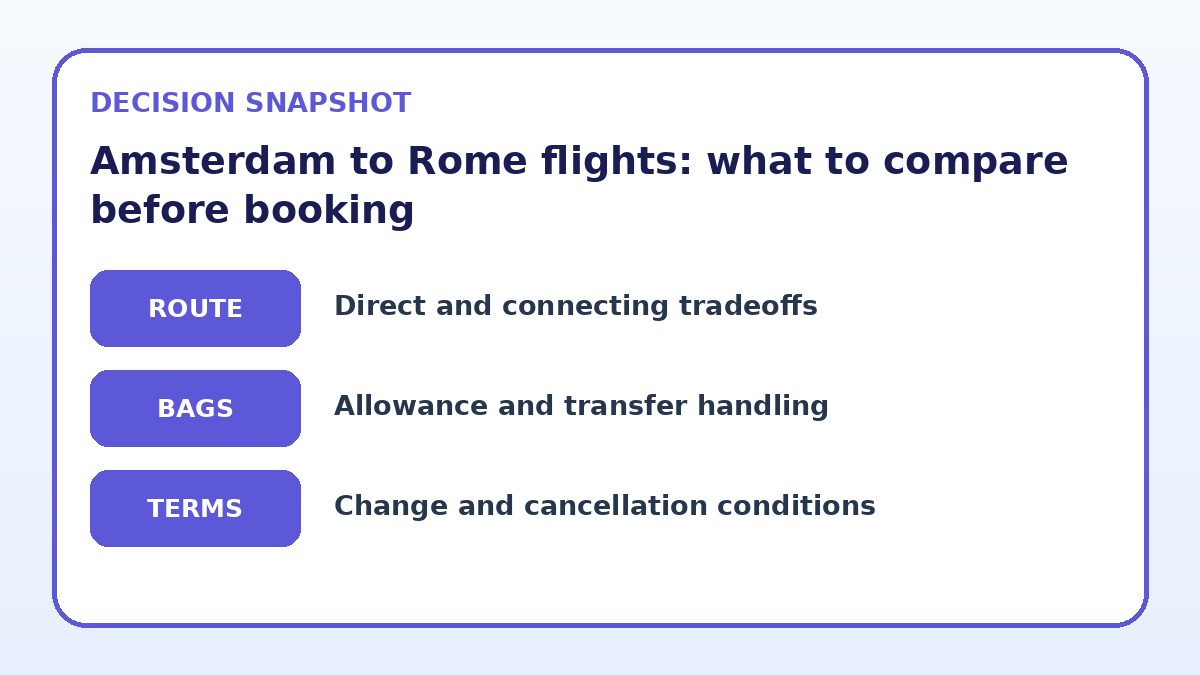
Direct versus connecting flights is a common decision point. Direct flights remove the variable of a missed connection but may be less frequent or more expensive. Connecting flights can offer earlier or later arrival windows, but require careful layover planning—check minimum connection times and whether you must clear security or re-check luggage. If a connection involves switching airports or terminals, factor the extra time and potential city transfer costs. Always compare the total scheduled travel time and the number of risky junctures (overnight connections, tight layovers) to choose a workable itinerary.
| Approach | Best for | Tradeoff to check |
|---|---|---|
| Direct flights only | Travelers prioritizing simplicity and minimal transfer risk | Often fewer time options and possibly higher fares |
| Connecting flights with short total time | Those wanting the earliest arrival or latest departure windows | Higher risk of missed connections and luggage recheck |
| Lowest base fare | Cost-conscious travelers with fixed, simple plans | May exclude baggage and have strict change penalties |
| Flexible/refundable fare | Unpredictable itineraries or high-change-probability trips | Higher upfront cost but lower change-related risk |
Ready to check the option that fits your plan?
Use your exact dates and traveler details so the provider page can show the current total and conditions.
Verify fare rules, baggage, and change/cancellation terms
Fare rules make the difference between a smooth itinerary change and a costly headache. Before booking, read the fare conditions on the airline’s final booking page: what is included in the base fare, what baggage allowances apply, and what fees or fare differences apply for changes or cancellations. Business travelers should weigh the price of a more flexible fare against the potential cost of last-minute changes. Also check seat selection policies, boarding priority, and whether lounge access or upgrades are offered through the fare class or loyalty status—these can improve productivity and comfort during travel.
Ticketing rules vary widely even on the same route. Low-cost fares may look attractive but often exclude checked bags, seat reservation, and free changes; legacy carriers may bundle those services. If your itinerary involves connections on separate tickets, verify whether baggage can be checked through and whether missed connections are protected. For refunds and credits, confirm the process, timeframes, and whether you must request changes through the airline or can use your corporate travel agent or booking platform. Always save a screenshot or PDF of the final fare rules page as proof of what was promised at purchase.
Before you book
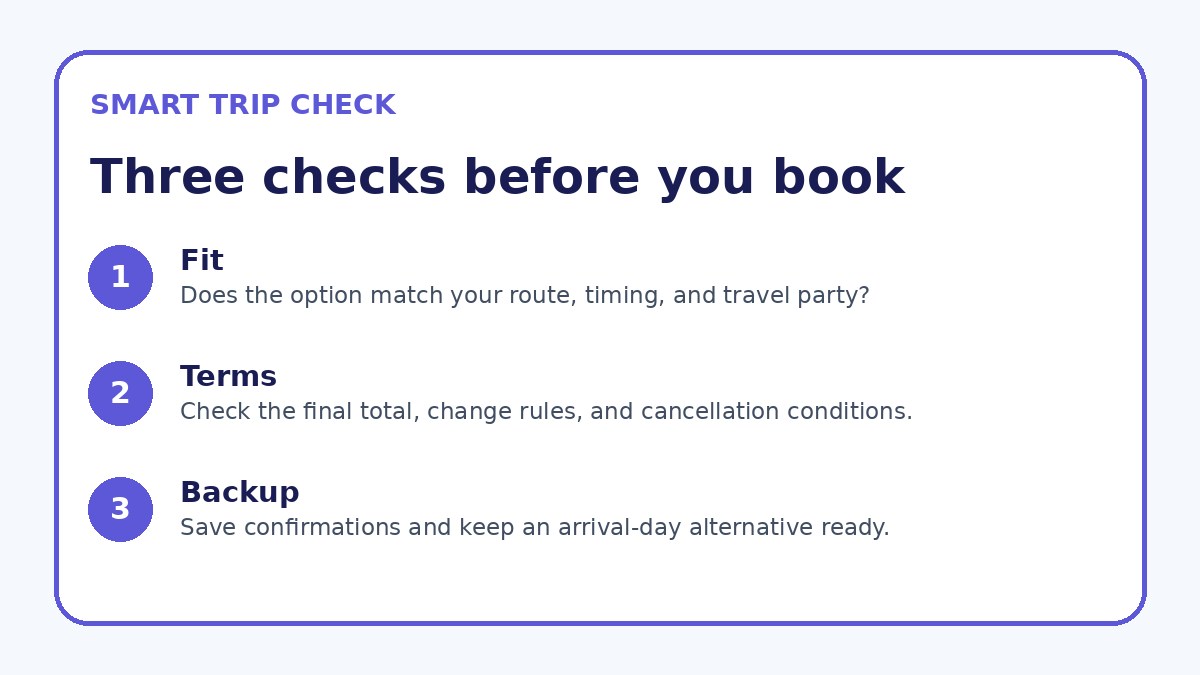
- Set your top three priorities (arrival window, ticket flexibility, baggage included) to guide fare and schedule choices.
- Search for both direct and one-stop itineraries and compare total door-to-door time, not just airborne time.
- On the airline or booking site’s final page, open and save the full fare conditions and baggage allowance before payment.
- Map ground transfers for chosen airports—estimate travel time to your meeting location at the expected arrival hour.
- Confirm change, cancellation and rebooking fees and procedures; note whether changes must be made through the airline or your agent.
- Plan a contingency (later flight or nearby hotel) if your schedule has less than a three-hour buffer before critical meetings.
Plan ground logistics: airports, transfers, and contingency plans
Airport choice matters for door-to-door time. From Amsterdam, Schiphol is the main international hub with multiple connection options; consider your hotel or meeting location when choosing departure times. In Rome, Fiumicino and Ciampino serve different carrier mixes and ground transfer profiles—Fiumicino typically has more long-haul and major carrier services, while some budget or charter flights use smaller airports. Before booking, map out transfer options from the airport to your meeting point: train, express shuttle, taxi, or rideshare. Estimate peak-hour travel times and potential delays so you can set realistic arrival windows.
Also build contingency plans: identify an alternative later flight or a nearby hotel in Rome if an earlier arrival is critical and weather or airport delays disrupt your schedule. If you have a tight return schedule, consider a slightly earlier outbound flight in case a delay forces a schedule adjustment. Keep emergency contact numbers, corporate card details for last-minute hotels, and flexible transport options ready. Finally, verify on the airline’s final booking page any airport-specific requirements such as recommended check-in times or terminal information that could affect your plan.
Frequently asked questions
Should I prioritize a direct flight from Amsterdam to Rome for business travel?
Prioritizing a direct flight depends on your tolerance for connection risk, schedule needs and cost sensitivity. Direct flights reduce the chance of missed connections and simplify luggage handling—useful if your agenda is tightly scheduled or you must avoid stress before meetings. However, direct options may carry a price premium or limited departure times; if an earlier arrival or later departure is vital, a one-stop itinerary could better fit your timeline. Compare total door-to-door time, change penalties, and how each option affects your on-ground schedule before deciding.
How much buffer time should I allow between arriving in Rome and an important meeting?
A comfortable buffer depends on transfer method and local traffic patterns, but for business travel allow at least two to three hours between scheduled arrival and an in-city meeting. This window covers passport control, baggage claim, customs, and ground transfer variability—especially during peak traffic or if arriving at a different airport than central Rome. For critical, non-negotiable meetings, add an extra hour. If time is tight, choose flights that consistently arrive earlier in the day and consider booking a flexible fare or an overnight near your meeting as a backup.
What should I verify about baggage and ticket rules before booking?
Before booking, confirm whether the fare includes carry-on only or also checked luggage, and whether seat selection and priority boarding are included. Read the fare’s change and cancellation policy—note penalties, fare differences for rebooking and whether refunds are available or only travel credits. If your itinerary uses separate tickets or codeshare segments, verify baggage transfer between legs and protection for missed connections. Always save or screenshot the final fare rules and any corporate travel policy approvals so you can reference exact terms if a change becomes necessary.
Final planning note
Booking Amsterdam to Rome flights for business is mainly about clarifying priorities and validating the terms that affect those priorities. Use the checklist to streamline decision-making: pick the right balance of directness, schedule fit, and fare flexibility; verify baggage and change rules on the airline’s final booking page; and plan ground transfers and contingencies that match your meeting requirements. Making those confirmations before you commit reduces last-minute stress and unexpected costs. If you want current availability and schedules as a starting point, you can compare options on Trip.com, but always validate key rules and total travel times on the provider’s booking page before purchase.
Continue planning
Check current options and final conditions
Use the provider page to confirm live availability, the final total, cancellation terms, and every condition that matters to your trip.
This evergreen planning guide was created with AI-assisted drafting and a structured quality review. It does not display live prices, schedules, availability, visa guidance, or provider rankings. Verify current details before booking. Some links are affiliate links; we may earn a commission at no additional cost to you.