Pick your base first: for a short couple’s trip to Chiang Mai, the neighborhood you choose will shape almost every hour of your visit. Decide between the Old City’s compact walkability, Nimmanhaemin’s café-and-design energy, riverside calm, or a quieter suburb near the airport depending on how much walking, dining variety, and evening atmosphere you want. For a two-to-four night stay most couples find one convenient central base and one easy list of nearby priorities keeps transit time low and experiences high. This guide gives a practical short-listing method so you can select a neighborhood before browsing live room inventory. I’ll cover neighborhood fit, daily-route friction, room and party needs, and the booking points you must verify on the hotel’s final page so you leave with a confident reservation.

Check live stays in the areas that fit
Use your dates and party size to compare current rooms after you narrow the neighborhood fit.
Neighborhood fit: choose by vibe and walking convenience
For a short stay with limited time, prioritize a neighborhood whose daily rhythm matches yours. If you want to stroll night markets, temples, and cafés on foot, the Old City’s compact grid is the easiest base—many attractions are within walking distance and short tuk‑tuk rides handle anything farther. If evenings are for relaxed dining, riverside hotels provide calmer nights and scenic walks. Couples wanting modern dining, galleries, and cafés often prefer Nimmanhaemin; it’s denser with contemporary nightlife but slightly farther from some temples.
Think beyond labels: assess noise, crossing busy streets, and the availability of late-night food. A lively area shortens transit but may mean more traffic and sound at night; a quieter riverside spot costs you minutes to key attractions but offers fewer interruptions. For a 2–4 night trip, weigh whether you want walking convenience to the main sights or a quieter mood that requires short rides. Short stays usually benefit from minimizing transit time between the hotel and your top two planned activities each day.
Choose an area-selection strategy
| Area approach | Best for | Tradeoff to check |
|---|---|---|
| Pick the Old City for walkability | Couples wanting to sightsee on foot and minimize daily travel time | Noisy streets and more tourist crowds in peak evening areas |
| Choose Nimmanhaemin for cafes and nightlife | Couples focused on modern dining, galleries, and contemporary cafés | Slightly farther from some temples and riverside walking routes |
| Base yourself riverside for calm and views | Couples seeking quieter evenings and scenic strolls by the river | Longer rides to core Old City attractions and busy market areas |
| Stay near the airport/outer suburbs | Couples with early flights or limited time who want minimal transfer stress | Less central for dining and sightseeing; more reliance on cars or taxis |
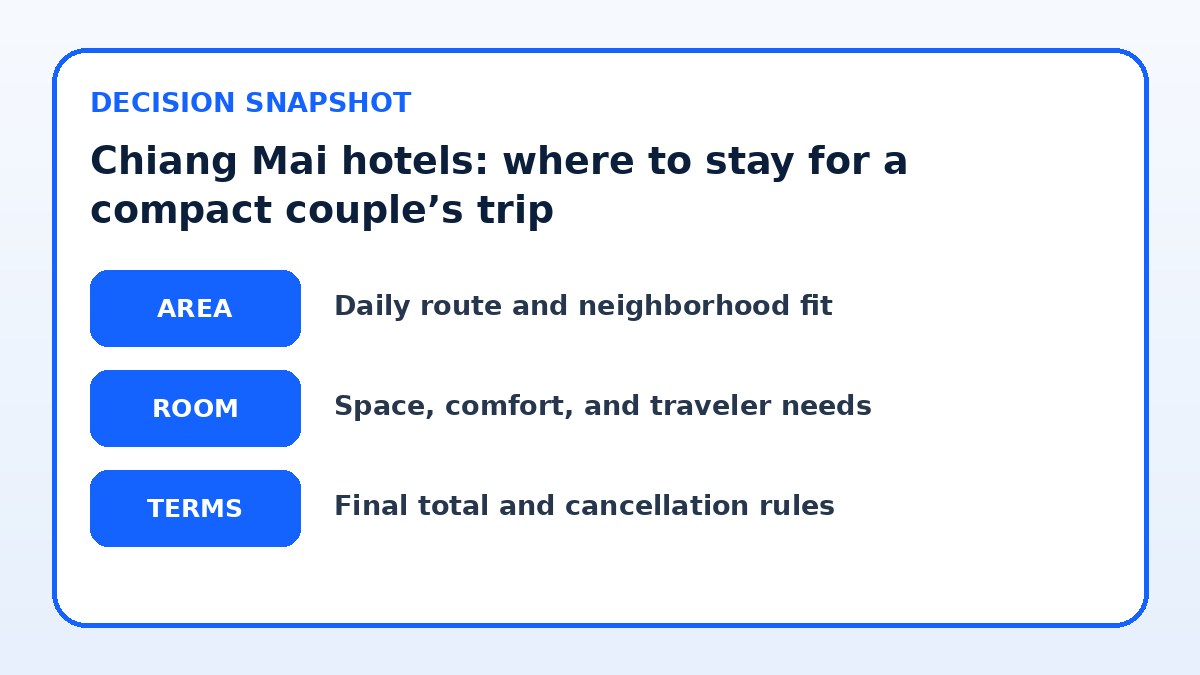
Daily-route friction: get from A to B efficiently
Estimate how you will move between the hotel and the activities on your short itinerary. Chiang Mai’s central neighborhoods are compact, so walking or a short tuk‑tuk is often faster than arranging rides. If you plan temple visits in the morning, then markets and a cooking class in the afternoon, choose a hotel that reduces back-and-forth across town. For couples, small detours add up—pick a base that keeps your most frequent routes within 10–25 minutes by car or 20 minutes on foot.
Also consider logistics at arrival and departure: a base close to the airport road reduces transfer stress if you have tight connection times or early flights. If you plan only evening activities, choose an area with safe, well-lit sidewalks and easy late-night transport. Confirm whether your preferred neighborhood has plentiful taxis or reliable ride apps at the hour you’ll return; when in doubt, pick a base where you can comfortably walk back to the hotel after dinner.
Now compare like with like
Keep the same dates, guests, room needs, and cancellation preferences while you compare the final choices.
Room and party needs: what couples should prioritize
On a short stay, bedrooms function as rest zones and logistical hubs; choose a room that supports both. Couples often want a comfortable bed, decent blackout curtains for naps, and room size enough for luggage and a small workspace. If you plan in-room relaxation—reading, late chats, or an indoor meal—consider a room with a seating area or balcony. If privacy and quiet are priorities, request rooms away from busy streets or rooftop bars when booking.
Check bedding configuration and whether properties offer double or king beds, and confirm if rollaway beds or cribs are available if you have special needs. For laundry or active sightseeing, fast-turnaround housekeeping matters; ask about same-day laundry if that’s important. If you value amenities like a small gym or pool, find hotels that advertise those features but always verify current access and any extra usage rules on the hotel’s booking page before you finalize.

Hotel booking check before payment
- Confirm the hotel’s cancellation and change policy on the provider page before paying to avoid surprises if plans shift.
- Verify bed type and bedding configuration so you get a double or king bed rather than two singles by default.
- Check whether breakfast is included, its serving hours, and whether it requires advance booking or an extra fee.
- Ask the hotel about late check-in procedures, 24-hour reception availability, and luggage storage if you arrive early.
- Confirm access to any amenities you plan to use—pool, gym, spa—and whether there are time or gender restrictions.
- Compare transfer options from the airport and whether the hotel provides pickups, a preferred taxi number, or easy ride-app access.
Final booking terms: what to verify before you reserve
Before booking, inspect four practical details on the hotel’s final page: cancellation and change policies, exact bed configuration, whether breakfast is included and how it’s served, and any mandatory property fees or deposit rules. These terms can change quickly; treat the hotel’s booking page as the authoritative source. If you use a third-party site like Trip.com, use it to compare availability and room types, then confirm the terms on the hotel’s own page where possible.
Also check arrival logistics: transfer options, late check-in requirements, and whether the hotel can store luggage if you arrive before check-in. If you plan short excursions that finish late, ask about 24-hour reception and late-night check-in procedures. Finally, review cancellation flexibility relative to how rigid your travel dates are; more flexible policies reduce risk on tight itineraries, but always confirm any nonrefundable conditions before you commit.
Hotel Guide questions travelers ask
Which Chiang Mai neighborhood is best for a two-night romantic stay?
For a short romantic stay, many couples prefer the Old City for its close-knit streets, easy access to temples, and nearby night markets, which lets you pack more experiences into limited time. If you prioritize relaxed dinners with riverside views, the riverside area along the Ping River gives quieter evenings and scenic walks, though it adds a short commute to some attractions. Consider whether you’ll spend more time wandering by day or lingering over meals at night—that preference should drive the neighborhood choice for a short trip.
How do I decide between walking and using tuk‑tuks or ride apps in Chiang Mai?
Decide from your planned daily routes: if most of your must-see spots are clustered, walking wins for speed and atmosphere. For destinations scattered across the city—cooking classes, temples outside the Old City, or Nimmanhaemin nightlife—factor in short tuk‑tuk rides or ride-app trips that keep travelling time under 25 minutes. Also think about evening returns: if you prefer to walk back after dinner, select a well-lit neighborhood; otherwise ensure reliable ride options are available at the times you’ll travel.
What room features should couples prioritize for a short stay in Chiang Mai?
Prioritize bed size and room quietness first—good restful sleep matters more than large floor area on short trips. A room with blackout curtains, some seating space, and adequate storage for two sets of luggage improves comfort. If you plan romantic in-room moments, a balcony or river-facing room adds ambiance. Also confirm housekeeping turnaround if you’ll reuse clothes, and check whether the hotel’s booking page lists fees or restrictions for extra services you might want during a short stay.
Final decision note
For a short couple’s trip to Chiang Mai, start by selecting the neighborhood that aligns with how you want to spend your time: Old City for walking and sights, Nimmanhaemin for contemporary cafés and nightlife, riverside for calm evenings, or an airport-area base to minimize transfers. Once you’ve narrowed to a neighborhood, choose a room that balances privacy and space for luggage, and verify practical booking details—cancellation rules, bed configuration, breakfast inclusion, and late check-in procedures—on the hotel’s final page before you reserve. With that shortlist, you’ll be ready to compare live room inventory confidently and pick a hotel that keeps transit friction low and the trip enjoyable.
Continue planning
Check current options and final conditions
Use the provider page to confirm live availability, the final total, cancellation terms, and every condition that matters to your trip.
This evergreen planning guide was created with AI-assisted drafting and a structured quality review. It does not display live prices, schedules, availability, visa guidance, or provider rankings. Verify current details before booking. Some links are affiliate links; we may earn a commission at no additional cost to you.