If you plan to drive around Chiang Mai with children, the most practical step before you click Book is to read the insurance wording and translate it into simple outcomes: who pays for damage, what counts as an excluded incident, and whether additional drivers and child seats are covered. Insurance summaries on booking sites often use acronyms—LDW, CDW, TP, PAI—that mean very different things depending on local law and the rental company’s fine print. For families, the deciding factors are clear: enough liability to protect you if you injure others, collision coverage that controls out-of-pocket costs for vehicle damage, and explicit permission for multiple named drivers or child-seat equipment. This guide shows which phrases to watch for, the tradeoffs between cost and protection, and a practical checklist to use at booking and pickup so you know exactly what you’re buying for your Chiang Mai driving days.
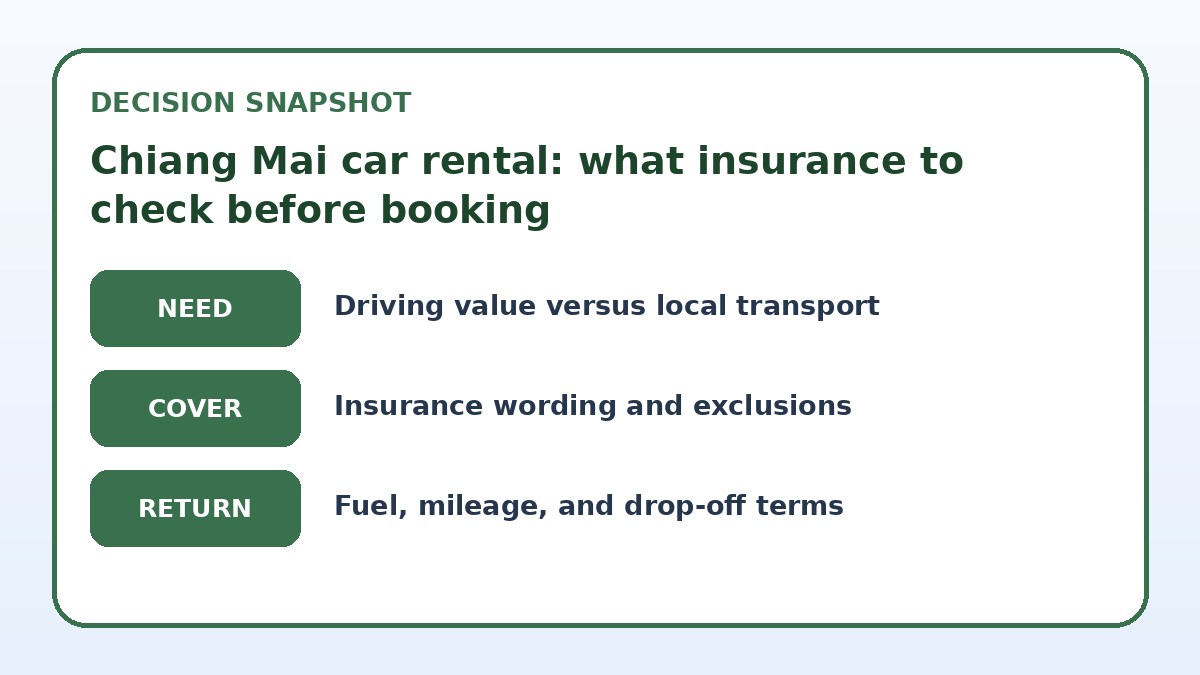
See current options before you compare the details
Availability and final conditions change. Open Trip.com now or keep reading for the practical comparison.
Key insurance terms and what they mean for families
Start with the acronyms you’ll actually see on a Chiang Mai car rental page. CDW or Collision Damage Waiver and LDW or Loss Damage Waiver are commonly offered; they reduce or eliminate your financial responsibility for damage to the rental vehicle but typically come with an excess (also called deductible). Third-party liability (often labeled TP or TPFT—Third Party, Fire and Theft) covers damage or injury you cause to other people or property. PAI (Personal Accident Insurance) covers medical costs for you and passengers in some policies, but family medical coverage is often better handled by travel insurance that covers all travelers and pre-existing conditions.
Importantly for families, read definitions: what counts as 'damage' (glass, underbody, roof), whether off-road or certain roads are excluded, and whether driving outside a specified region voids coverage. Many waivers exclude damage caused by negligence—speeding, driving under the influence, or using an unauthorized driver—and that can mean total denial of claims after an accident. Always check whether child seats and booster seats are treated as included equipment, whether damage to them is insured, and whether using local roads, rural routes, or steep mountain roads is explicitly permitted.
How excess, waivers, and supplements change your out-of-pocket risk
The excess (or deductible) is the amount you must pay if the car is damaged before the rental company accepts a waiver. Some rental rates look low because they include a high excess; an extra daily supplement can reduce or remove that excess. Compare the cost of the rental-company excess waiver to independent collision cover products or credit-card benefits, but read those full policy wordings too—credit-card cover often excludes certain car categories and may require you to pay the repair bill up front and claim reimbursement later.
Supplements often marketed to families—like adding a second driver, booking GPS, or reserving a child seat—may appear harmless but can affect insurance. If the rental agreement requires accessories to be declared, failing to list an installed child seat could be used to argue negligence. Also verify whether adding a young driver (if a family member is under the rental company’s minimum age) is possible and how much that adds to the policy cost. Always weigh the predictable daily supplement against the unpredictable financial risk of paying the excess after an accident.
| Approach | Best for | Tradeoff to check |
|---|---|---|
| Rental-company CDW/LDW | Families wanting immediate, simpler handling of damage claims at the counter | Cost is higher and fine-print exclusions can still leave an excess or exclude certain incidents |
| Independent third-party collision cover | Travelers aiming to lower daily rental cost and willing to manage claims after the trip | You may need to pay repairs up front and face complex reimbursement rules and exclusions |
| Credit-card rental coverage | Cardholders who meet issuer conditions and want coverage without buying extras at pickup | Coverage terms vary; some cards exclude specific vehicle classes, countries, or drivers under a set age |
| Minimal mandatory liability only | Travelers prioritizing lowest upfront cost and accepting high financial risk in case of damage | Potentially large out-of-pocket costs and legal exposure if you cause injury or significant property damage |
Ready to check the option that fits your plan?
Use your exact dates and traveler details so the provider page can show the current total and conditions.
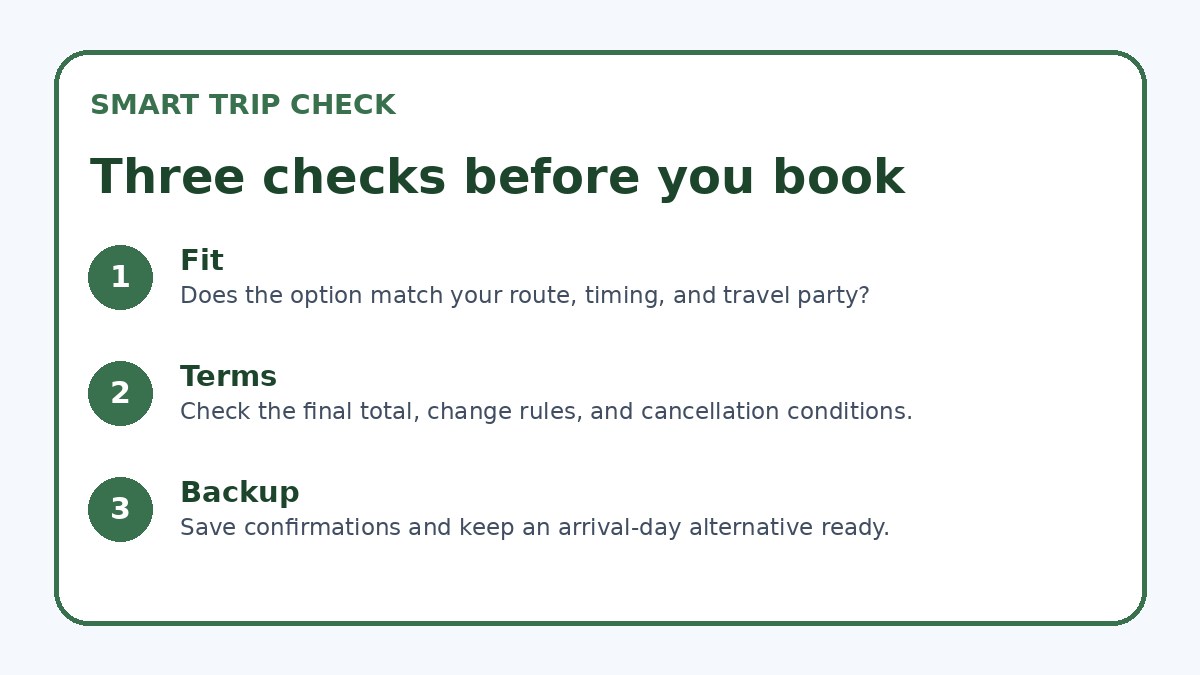
Choosing between provider waivers and third-party coverage
Deciding whether to buy the rental company’s waiver or an independent third-party policy comes down to timing, convenience, and confidence. Rental-company waivers tend to be accepted at the counter with no extra paperwork when damage occurs; third-party policies sometimes require you to pay the repair cost upfront and file a claim. If you value zero-hassle resolution on vacation days with kids, the rental company’s damage waiver may be worth the extra cost. If you want to minimize overall rental expense and are prepared to handle claims after your trip, third-party cover can be more economical.
However, third-party insurers and credit-card benefits vary widely in what they exclude: high-value vehicle classes, specific accident types, or drivers under a certain age. Always read both the rental agreement and the third-party product wording to check for exclusions that matter to your family trip—unsealed mountain tracks around Chiang Mai, for instance, may be excluded in some policies. Before relying on a credit card, confirm in writing that it covers rentals in Thailand and the correct vehicle class; verify this on the card issuer’s policy page and the rental provider’s final booking page.
Before you book
- Before booking, download and read the rental company’s full insurance wording PDF; save a copy with your reservation confirmation.
- Verify the excess/deductible amount and whether an excess-reduction option or full waiver is available at pickup.
- Add all potential drivers to the reservation and confirm any young-driver fees or age-related exclusions in writing.
- Confirm whether child seats are listed as rented equipment, whether damage to them is covered, and note any related fees.
- Photograph the car’s exterior and interior during pickup, list pre-existing damage on the contract, and get the agent’s signature.
- Keep contact details for claims: rental supplier emergency number, third-party insurer policy number, and your travel-insurance claims line.
What to check at booking and at the pickup counter
At booking, compare the rental-rate page wording and the full rental agreement PDF. Look specifically for phrases like 'additional driver', 'named driver only', 'excess reduction', 'third-party liability limit', and 'excluded uses' such as off-road driving or unpaved roads. If the booking page mentions insurance inclusions in summary, click through to the detailed policy wording and save or screenshot the relevant clauses. If anything is unclear, ask the rental company for a written clarification and keep that confirmation with your reservation.
At pickup, inspect the vehicle with an adult family member present, photograph any pre-existing scratches or dents, and ensure these are recorded on the rental agreement. Confirm in writing (on the contract) which coverages you bought and which drivers are named. Ask the counter agent to clarify how a damage claim is handled—do they require immediate police reports, what contact number to use, and whether you must pay the excess on the spot. If you bought a separate third-party policy, bring the policy number and claims contact details for quick reference.
Frequently asked questions
Does the CDW/LDW shown on a Chiang Mai car rental page remove all financial risk?
No. Collision Damage Waiver (CDW) and Loss Damage Waiver (LDW) typically reduce your liability for vehicle damage but rarely remove all financial responsibility. Most waivers still include an excess (deductible) that you must pay for each claim, and many policies list exclusions—like damage to tires, windscreen, undercarriage, or damage caused by prohibited uses (off-road driving, driving under the influence). Always read the contract’s definition of covered damage and excluded situations. If you want to limit risk at pickup, ask for the excess-reduction option or combine the waiver with a trusted third-party product after comparing the exact wording.
Can my credit card’s rental insurance cover a family rental in Chiang Mai?
Possibly, but you must check the cardholder agreement carefully. Many credit cards offer secondary or primary rental coverage, but terms vary on geographic eligibility, vehicle categories, permitted drivers, and claim processes. Cards often exclude vans, pickups, or vehicle classes above a certain value and may require you to decline the rental company’s CDW at the counter. For family travel where multiple drivers or child seats are used, confirm in writing with your card issuer that the policy covers rentals in Thailand and that any young drivers are eligible. If details are unclear, request a written benefits guide or call customer service before relying on card coverage.
If we damaged the rental car on a rural Chiang Mai road, what immediate steps protect our family and insurance claim?
First, ensure everyone is safe and call emergency services if needed. Then document the scene: take photos of vehicle damage, surroundings, skid marks, and road conditions. Notify the rental company immediately and ask for instructions; some policies require prompt reporting. If there are injuries or significant damage, file an official police report and keep a copy—many insurers require it for claims. Get witness contact information if possible. Finally, follow the rental company’s claims process and keep receipts for any expenses. Verify all next-step requirements against the rental contract wording and your third-party policy before leaving Chiang Mai, because some insurers deny claims for delayed reporting.
Final planning note
For families renting a car in Chiang Mai, the most useful habit is translating insurance wording into specific outcomes: who pays what, when, and under which behaviors. Don’t rely on summary labels—read the full rental agreement, check excess amounts, and confirm named-driver and child-seat rules. Decide whether you prefer the convenience of the rental company’s waiver or the potential savings of third-party or credit-card cover, and compare exact exclusions, claim processes, and obligations. At pickup, record existing damage, verify purchased coverages on the contract, and keep emergency and claims contacts handy. If in doubt, request written confirmation from the supplier and double-check third-party policies; Trip.com can be used as a place to compare current options but always verify coverage details on the provider’s final booking page.
Continue planning
Check current options and final conditions
Use the provider page to confirm live availability, the final total, cancellation terms, and every condition that matters to your trip.
This evergreen planning guide was created with AI-assisted drafting and a structured quality review. It does not display live prices, schedules, availability, visa guidance, or provider rankings. Verify current details before booking. Some links are affiliate links; we may earn a commission at no additional cost to you.