Practical answer first: for many first-time visitors to Cebu, renting a car makes sense only if you plan multiple day trips outside the city, travel with a group, or value flexible rural access. If your trip stays mainly in Cebu City and nearby beach resorts reachable by shuttle, taxis, or organized transfers, a car adds cost, stress, and parking headaches. Before you book, tally who’s in your party, where you’ll sleep, and what you want to see — waterfalls, mountain overlooks, southern beaches, or island-hopping terminals. The right choice often isn’t purely about cost; it’s about comfort, timing, and how confident you are driving in unfamiliar traffic and on secondary roads. Below are clear tradeoffs, decision checks, and practical steps to help you choose the best transportation approach for your Cebu itinerary.
See current options before you compare the details
Availability and final conditions change. Open Trip.com now or keep reading for the practical comparison.
Who benefits most from a Cebu car rental
A rental car fits travelers whose plans include multiple day trips beyond the metro area, such as heading to waterfalls, dispersed beaches on the island’s west or south coasts, or driving long stretches where public transport is infrequent. Groups of three or more split the vehicle cost and gain privacy and storage for gear like snorkeling equipment, hiking boots, or baby supplies. A car also helps when you want to set your own schedule — early starts for sunrise viewpoints or late returns from rural eateries — without relying on the constraints of shuttle timetables or ride availability.
Driving yourself becomes more attractive when your accommodation choices are spread out or when you prefer scenic detours that public buses don’t serve. If you plan to visit multiple independent attractions in one day, the aggregated time saved by driving can outweigh the effort of parking and navigating. Consider how much time you’ll spend driving between points versus time at each stop; long drives with frequent short visits usually favor having a car.
When taxis, ride-hailing, and transfers are better
If your itinerary stays largely inside Cebu City, Mactan resort areas, or involves short ferry hops to nearby islands with organized pick-ups, taxis, local ride apps, and hotel transfers simplify logistics. These options remove parking worries and let you avoid learning local driving patterns, which can be dense and fast-moving in urban zones. For short trips, the per-ride cost of taxis or pooled transfers often undercuts the daily cost of a rental plus fuel and parking, especially for solo travelers or couples.
Group airport-to-hotel transfers or resort shuttles are often timed for arrivals and provide predictable door-to-door service, making them attractive for people who want to start their trip without orientation stress. Also consider the convenience of hiring a driver for a day: it gives you control over the schedule without the responsibility of driving, and experienced local drivers know shortcuts and safe routes that help avoid the worst congestion.
| Approach | Best for | Tradeoff to check |
|---|---|---|
| Self-drive rental car | Groups, flexible itineraries, and lots of off-the-beaten-path stops. | Higher responsibility for navigation, parking, and insurance; hidden fees may add up. |
| Driver-for-hire (daily) | Travelers who want local knowledge and no driving stress. | More expensive than taxis for short hops; schedule depends on driver availability. |
| Taxis and ride-hailing | Short city travel, solo travelers, and simple resort transfers. | Can become costly for repeated long legs and has variable availability at remote sites. |
| Organized tours or hotel shuttles | Sightseeing with minimal planning and fixed schedules. | Less flexibility for personalized stops and timing; may not reach remote locations. |
Ready to check the option that fits your plan?
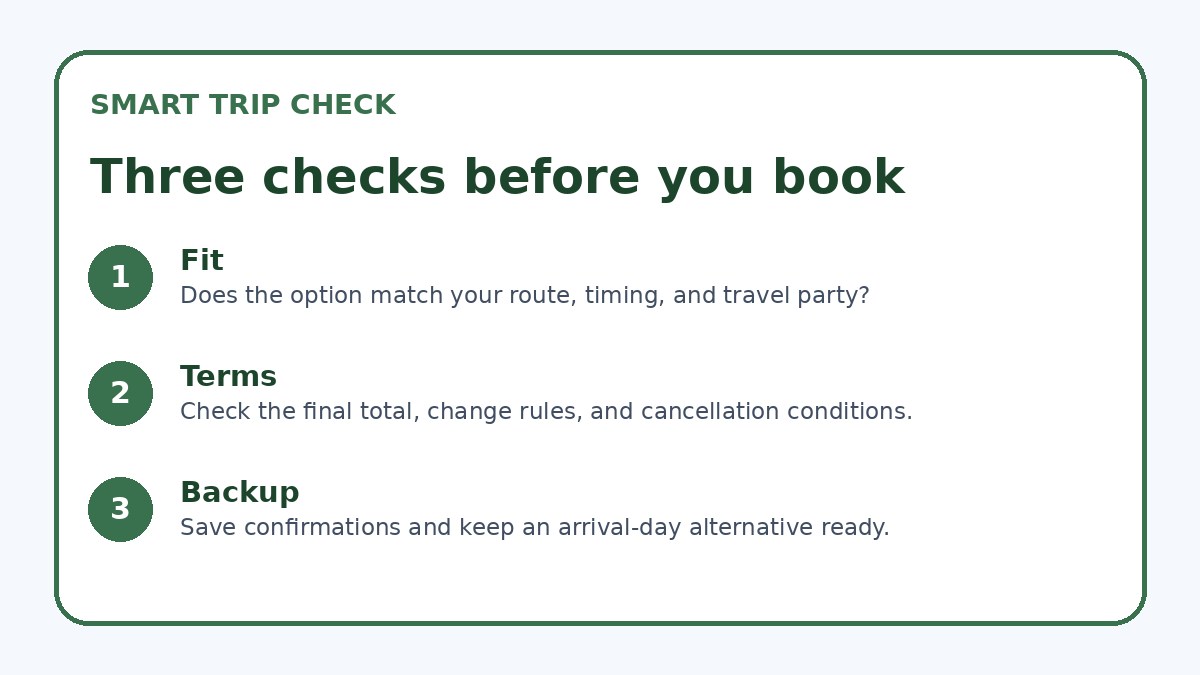
Use your exact dates and traveler details so the provider page can show the current total and conditions.
Practical tradeoffs and hidden costs to weigh
A rental car’s headline daily rate hides multiple variables: fuel consumption for longer island drives, parking fees at hotels and attractions, security deposits, and possible surcharges for one-way drop-offs or additional drivers. Insurance coverage levels vary by provider and policy; always check what the basic rate includes and whether you need to buy extra liability, theft, or damage waivers. Also consider the non-monetary costs: driving in heavy traffic, dealing with narrow rural roads, and finding reliable parking at busy beaches or city centers.
On the other hand, taxis and ride-hailing have variable availability and can become expensive for repeated long legs. Waiting time during peak travel or at remote trailheads may add up. If you value time flexibility and privacy, compare the sum of multiple taxi fares and transfer timings against a rental plus fuel and parking. Trip.com can be a useful comparison place to check current vehicle availability and rental terms before booking; always verify the final insurance and fuel policies on the provider’s own booking page.
Before you book
- Map each planned day’s main stops and estimate door-to-door travel time before deciding on car rental.
- Confirm whether your chosen accommodations offer secure parking and whether parking fees apply.
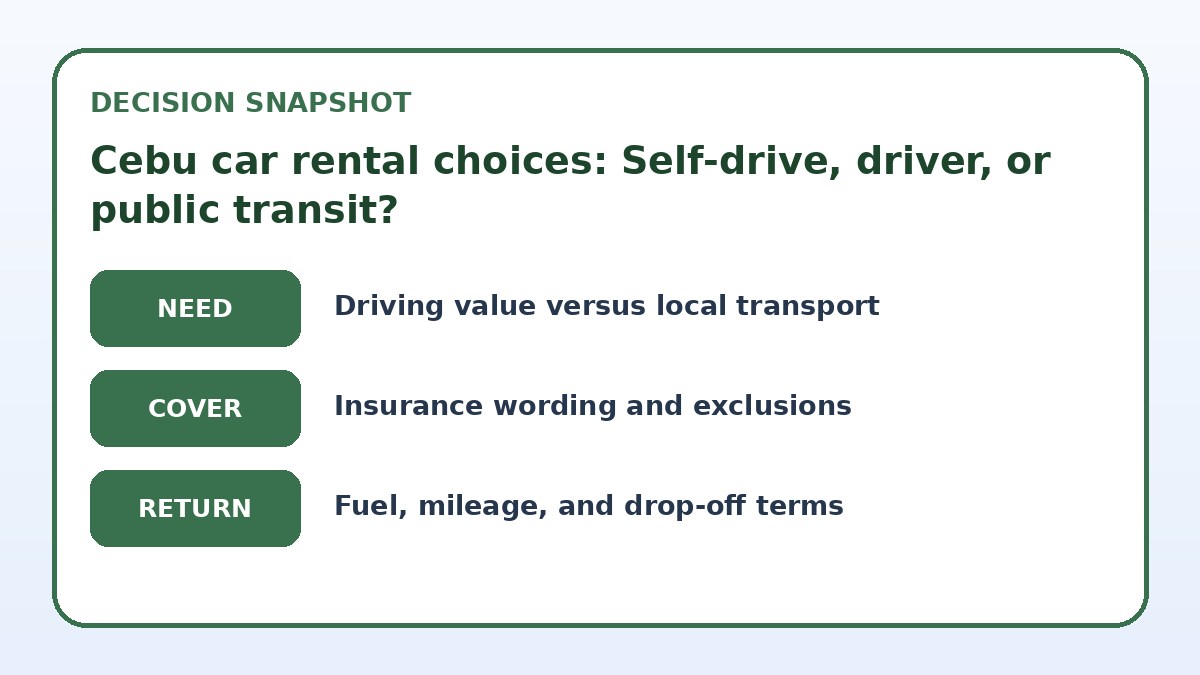
- Check the rental provider’s insurance coverage, excess amount, and what is excluded on their booking page.
- Verify whether your driving license is accepted and whether an International Driving Permit is recommended.
- Compare total expected costs: rental base rate plus fuel, tolls, parking, and deposits against taxi or driver estimates.
- If unsure, price a one-day driver hire for a sample route to compare convenience and local knowledge versus self-driving.
How to decide: a quick planning checklist
Start by mapping your top priorities: list each day’s main stops, approximate start times, and whether remote access or luggage capacity matters. Note where you plan to sleep each night and whether accommodations include parking. If multiple days involve long drives or remote beaches where public transport is limited, a rental may be the best bet. If most days have short local movements or organized tours that include pickups, taxis or day-driver hires likely save money and hassle.
Next, evaluate drivers and licenses: check whether your license is accepted for self-driving rentals and whether you feel comfortable with local traffic patterns. Contact the car rental provider to confirm fuel policy, mileage limits, deposit amount, and what their insurance covers; do the same for any driver-for-hire arrangements to learn whether tolls, waiting time, and parking are included. With those pieces known, you can compare realistic total costs and time saved for each option and make a decision aligned with your comfort level and schedule.
Frequently asked questions
Is it safe for first-time visitors to drive in Cebu?
Safety depends on experience and comfort with local driving conditions. Urban traffic can be dense, lanes informal, and motorbikes common. Secondary roads to waterfalls or beaches may be narrow and uneven. If you regularly drive in busy, mixed-traffic environments, you may adapt quickly; otherwise consider a driver-for-hire or using taxis for urban legs and organized transfers for rural excursions to reduce stress. Always check the rental provider’s advice on road conditions and what their insurance covers for different road types.
Can I base in Cebu City and use day tours instead of renting a car?
Yes — many first-time visitors stay in Cebu City or Mactan and take day tours or transfers to key attractions. Organized tours and hotel shuttles can reach popular beaches, cultural sites, and boat terminals for island trips. This approach removes parking and navigation concerns and can include knowledgeable guides. However, tours run on fixed schedules and may not visit remote or less-touristed spots; if you prefer independent exploration of dispersed attractions, a rental or driver might be better.
What should I verify on the rental company’s booking page before confirming?
On the provider’s final booking page confirm the fuel policy (full-to-full or other), mileage limits, deposit amount and accepted payment method, and exactly what insurance and excess cover. Check rules about additional drivers, cross-island travel restrictions, and whether one-way returns are allowed. Look for cancellation and amendment terms, and whether roadside assistance is included. If any fees or conditions are unclear, contact the company directly and get written confirmation before you finalize the booking.
Final planning note
Deciding whether a Cebu car rental fits your first trip boils down to planned geography, group size, and comfort with local driving. If your days include multiple far-flung stops, heavy luggage, or flexible timing, a car delivers independence and convenience. If your visit centers on city sights, resort stays, or organized island hopping, taxis, transfers, or a driver-for-hire usually reduce stress and hidden costs. Do the mapping exercise, verify rental terms and insurance, and compare realistic total costs. With those checks done, you’ll choose the option that matches your priorities and lets you enjoy Cebu without unnecessary hassle.
Continue planning
Check current options and final conditions
Use the provider page to confirm live availability, the final total, cancellation terms, and every condition that matters to your trip.
This evergreen planning guide was created with AI-assisted drafting and a structured quality review. It does not display live prices, schedules, availability, visa guidance, or provider rankings. Verify current details before booking. Some links are affiliate links; we may earn a commission at no additional cost to you.