Pick your Gyeongju stay area by how you plan to move each day, not by a single landmark. If you want quick access to the KTX or bus network, choose a hotel near Singyeongju Station or bus hubs. If you plan to base yourself for parks and historical sites, a hotel inside the old city (Bomun or downtown Gyeongju) keeps walking short. For quiet nights and scenic lake views, the Bomun Lake resort corridor trades a longer trip to some sites for calm and hotel facilities. Before opening live listings, identify which transport links you’ll use most—intercity trains, express or local buses, taxis, or rental car—so you can shortlist areas where hotels will actually save you time and hassle.

Check live stays in the areas that fit
Use your dates and party size to compare current rooms after you narrow the neighborhood fit.
Neighborhood fit: match your arrival and daily flow
Start by matching where you arrive and how you’ll travel each day. If you arrive by intercity rail, hotels near Singyeongju Station or the newer stations reduce baggage transfers and save time. If your plan is to spend multiple days focused on the historic core — Bulguksa, Cheomseongdae, Gyeongju National Museum — staying in the downtown area or close to the old-city cluster makes walking between sites, restaurants, and evening markets realistic without frequent taxi rides.
Consider how many trips you’ll make to distant sites like the Tumuli Park or Gyeongju Expo. If your itinerary includes early visits to temples or a day trip from Busan, a hotel near major bus stops or taxi stands will cut waiting time. For travelers who prefer guided day tours, a central downtown hotel often serves as the simplest meeting point; check meeting locations with tour operators before booking to avoid long transfers from outlying hotels.
Choose an area-selection strategy
| Area approach | Best for | Tradeoff to check |
|---|---|---|
| Stay near Singyeongju Station | Arrivals by intercity train and minimal baggage transfers | Fewer evening dining options within immediate walking distance compared with the downtown core |
| Central downtown (old city) hotels | Walkable access to museums, markets, and varied restaurants | May be busier and noisier; some temples are a short taxi or bus ride away |
| Bomun Lake and resort corridor | Quiet nights and hotels with on-site facilities for families | Longer local travel time to central historic sites and museums |
| Outlying guesthouses near temples or rural sites | Early visits to specific heritage sites and a slower pace | Limited public transport and fewer dining or convenience options nearby |
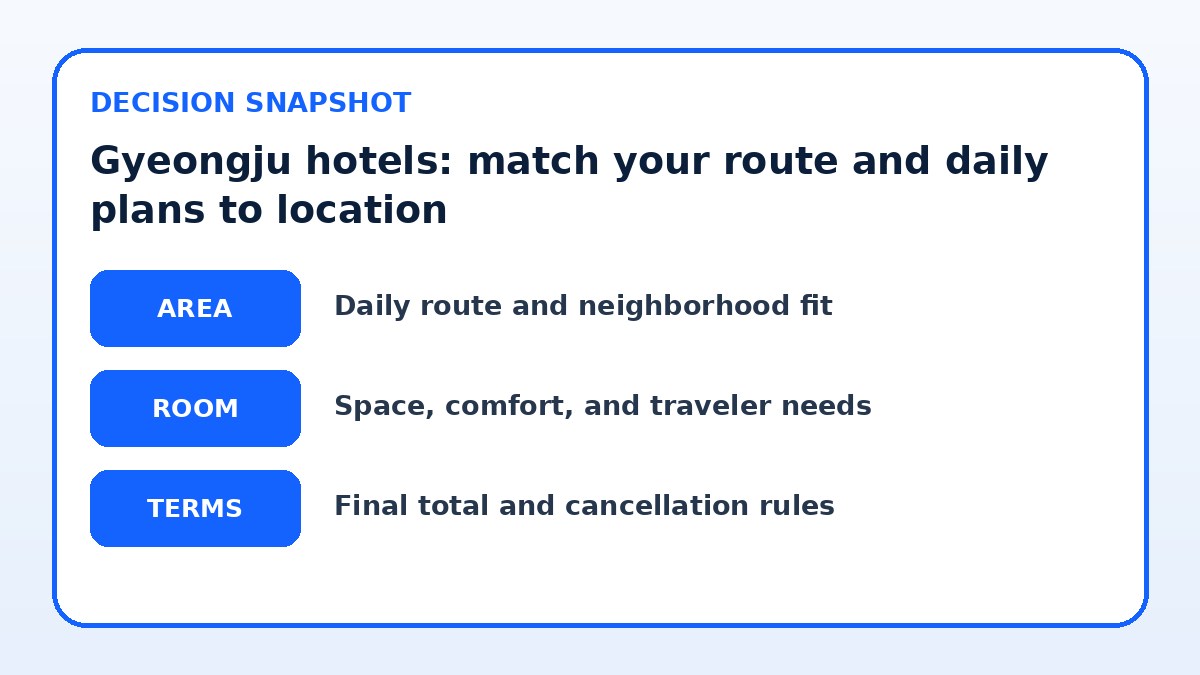
Daily-route friction: how transfers add up
Assess cumulative friction: a 20-minute transfer once is different from the same transfer repeated three times a day. Walking time from a hotel to the nearest bus stop, frequency of buses, and the availability of taxis at night all influence how much energy you'll spend each day. Hotels that advertise shuttle services or have staff who arrange taxis can ease the friction, but verify those services on the hotel’s booking page because shuttle routes and availability change.
Also compare waiting patterns. In Gyeongju, local buses serve many attractions but run less often than urban metro lines; relying solely on low-frequency buses can turn a short distance into a long day. If you want predictability, prioritise hotels close to frequent bus corridors or to main taxi pickup points. If you plan to rent a car, check on-site parking and whether your hotel offers spaces suitable for compact or larger vehicles; confirm parking rules directly with the property before booking.
Now compare like with like
Keep the same dates, guests, room needs, and cancellation preferences while you compare the final choices.
Room and party needs: who’s in your group matters
Room type and party size dictate how transport convenience maps to comfort. Travelling solo or as a couple makes central walking distances more tolerable; families or groups with older travellers may prefer fewer transfers even if that means staying outside the core in a hotel with larger rooms, on-site dining, and quieter evenings. Look for hotels that list family rooms or interconnecting rooms when you need space; confirm bed configurations and any extra-bed policies on the hotel’s official booking page.
If you have mobility needs, priority should be hotels with ground-floor access, elevators, and minimal steps between parking or drop-off areas and the lobby. For late arrivals, pick hotels advertised as having late check-in or 24-hour front desk service, and then verify the procedure on the property’s page. Groups travelling with bicycles or bulky gear should check storage options and whether there are secure bike racks or an internal storage room.

Hotel booking check before payment
- List primary transport modes you’ll use in Gyeongju: KTX/rail, express/local buses, taxis, or rental car.
- Shortlist 2–3 neighbourhoods that put you closest to the majority of your planned daily stops.
- Contact selected hotels to confirm shuttle, taxi assistance, parking availability, and any accessibility features.
- Verify check-in/out times, cancellation rules, and whether extra-guest fees or deposits apply on the hotel’s booking page.
- Map walking times from each candidate hotel to the nearest bus stop, taxi rank, or train station.
- If you depend on guided tours, check the operator’s meeting point and ensure your hotel is a logical pickup location.
Final booking terms: what to verify before you click
Before you open live inventory, list the non-negotiables to verify on the hotel’s booking page: cancellation policy, check-in and check-out times, shuttle or pickup arrangements, parking availability and costs, and whether the hotel charges for extra guests or services. Don’t assume amenities; wording and fees can change. If you plan to rely on a shuttle from the station, confirm its schedule and whether advance reservation is required.
Also check payment and ID requirements — some properties will require a local ID or a deposit at check-in. If you want an early check-in or late check-out, contact the hotel directly after you book to request it; many properties note requests but can only confirm closer to arrival. You can compare current availability and conditions on sites like Trip.com, but always confirm the final details and the property’s own terms on the hotel’s official page or by direct contact.
Hotel Guide questions travelers ask
Is it better to stay in downtown Gyeongju or near Bomun Lake for a first visit?
Downtown Gyeongju places you within easy walking distance of the historic core, museums, and evening dining — convenient if you prefer to explore on foot and minimise taxi rides. Bomun Lake hotels offer quieter nights and more on-site amenities, which can be attractive for families or travellers wanting resort-style comfort. Choose downtown for shorter daily walks between multiple attractions; choose Bomun if you prefer a relaxed base and don’t mind occasional transfers to reach central heritage sites.
How should I factor train schedules into my hotel choice?
If you arrive or depart by intercity train, use the station location as an early filter: hotels near Singyeongju Station reduce baggage handling and taxi fares. Check train arrival and departure times and compare them with hotel check-in and check-out policies — if you have a late-night arrival, confirm the hotel’s late check-in procedure directly. When comparing options, weigh the convenience of a short walk from the station against other priorities like proximity to attractions or quieter streets.
What transport details must I verify on the hotel page before booking?
Confirm the hotel’s stated shuttle policies, whether a shuttle requires advance booking, and the exact pickup points. Check parking availability and any associated fees if you’ll use a rental car. Verify accessibility features (elevators, step-free access) if needed, and review the front desk hours and late-check-in process. For anything involving third-party transport or tour meetups, ask the hotel to confirm typical taxi wait times or common meeting spots so you can plan reliable daily routes.
Final decision note
For first-time visitors, the right Gyeongju hotel depends on the transport patterns you’ll use daily. Choose a hotel near Singyeongju Station if your trip centres on rail travel and minimal baggage transfers. Opt for downtown if you want walkable access to museums, dining, and evening markets. Pick Bomun Lake or resort corridors for quieter nights and on-site facilities, accepting longer local transfers to some sites. Before booking, shortlist neighbourhoods that match your arrival method, daily itinerary, and mobility needs, then verify shuttle availability, parking, accessibility, and check-in procedures on the property page. With that shortlist in hand, you’ll be ready to open live inventory and pick a room that keeps your days efficient and comfortable.
Continue planning
Check current options and final conditions
Use the provider page to confirm live availability, the final total, cancellation terms, and every condition that matters to your trip.
This evergreen planning guide was created with AI-assisted drafting and a structured quality review. It does not display live prices, schedules, availability, visa guidance, or provider rankings. Verify current details before booking. Some links are affiliate links; we may earn a commission at no additional cost to you.