
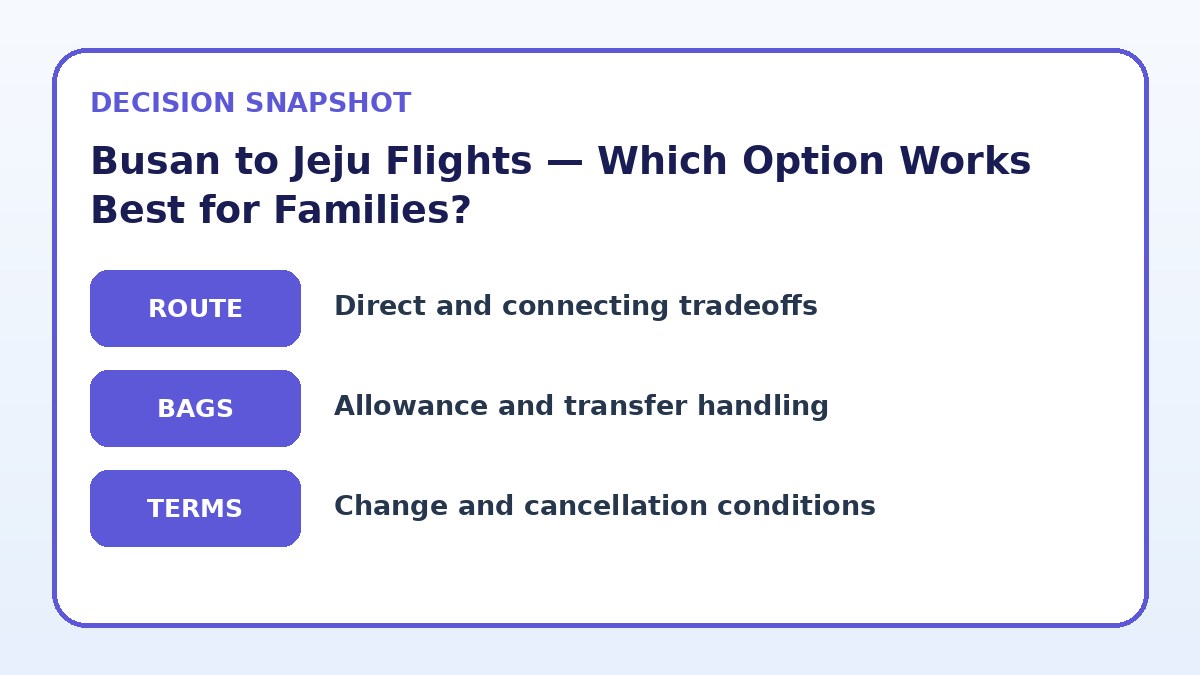
If you’re planning travel from Busan to Jeju with kids, the quickest practical answer is simple: choose a direct flight when minimizing door-to-door time and transfers matters most; consider a connecting option if you need greater schedule flexibility, lower fares at particular times, or specific loyalty-program routing. Families with very young children, heavy luggage, strollers, or scheduled activities on arrival usually benefit from fewer touchpoints and simpler airport routines. That said, connecting itineraries sometimes make sense for evening travel, multi-city itineraries, or when direct seats are limited for the family. Read on for concrete tradeoffs and a straightforward decision checklist to help you compare real fares and schedules before booking.
See current options before you compare the details
Availability and final conditions change. Open Trip.com now or keep reading for the practical comparison.
Time, stress and the kid factor
For families the most tangible advantage of a direct flight is reduced complexity. Fewer takeoffs and landings, no intermediate airport navigation, and only a single check-in and security pass mean less chance of losing track of a child or misplacing a bag. Infants and toddlers also tend to cope better when routines are simpler; a single flight segment lets you plan nap and meal times more predictably. When you measure travel by the parent’s workload, direct flights translate into fewer moments of intense supervision and more predictable arrival time for ground transfers or planned activities on Jeju.
That said, not every direct option will be convenient for every family. If direct flights depart at awkward times for your children—too early, during typical nap windows, or late at night—a connecting itinerary with more favorable departure and arrival times may reduce overall family stress even if it lengthens travel time. Also consider transit time to and from each airport: a connecting itinerary might use a different departure airport that’s closer to your accommodation in Busan or offers a smoother ground connection on Jeju’s side, changing the real-life convenience calculus.
Cost and seating: what families should check
When comparing direct and connecting options, look beyond headline fares. Low-cost carriers or special connecting itineraries might appear cheaper on search aggregators but can add fees for checked luggage, seat selection, meals, and stroller handling. For families these ancillary fees add up quickly; a seemingly low fare that forces you to buy multiple extras can end up more expensive than a higher base fare on a direct flight that includes checked baggage and standard seat assignments. Make a side-by-side tally of all likely fees before booking.
Seating availability matters more for families than many solo travelers realize. Confirm whether the booking system lets you reserve seats together and whether those seats incur a fee. Connecting itineraries can complicate seat continuity if the segments are on two different carriers or separate tickets: you may need to reassign seats during a transfer or risk being split up. Always check the carrier’s final booking page for the exact seat map, paid-seat rules, and whether infants count toward seat allocation.
| Approach | Best for | Tradeoff to check |
|---|---|---|
| Direct flight | Families prioritizing shorter door-to-door time and fewer transfers | May have limited departure times and sometimes higher base fares or less schedule flexibility |
| Connecting flight with same carrier | Families wanting more schedule options while keeping baggage through-checked | Requires longer total travel time and depends on the carrier’s minimum connection protection |
| Connecting flight on separate tickets | Travelers seeking lower fares or unusual routing when direct options are sold out | Higher risk if a delay causes a missed connection; you may need to recheck luggage and rebook separately |
| Hybrid plan (overnight layover) | Families who prefer a relaxed transfer and want to split travel across two days | Adds accommodation time and cost, and lengthens trip timeline despite reducing transfer stress |
Ready to check the option that fits your plan?
Use your exact dates and traveler details so the provider page can show the current total and conditions.
Transfers, layovers and luggage logistics
Connecting flights introduce an extra handoff: a change of planes means moving between gates, possibly terminals, and sometimes re-checking luggage. For families with checked bags, confirm whether the itinerary is booked as a single ticket with through-checked baggage; if it isn’t, you might need to collect luggage and recheck it, which can be time-consuming and stressful with kids. Also assess minimum connection times listed by the airline and factor in immigration or security checks when applicable. Longer layovers offer breathing room; very tight connections increase the risk of missed onward flights.
Strollers, car seats and special assistance should be checked in advance. Some airports and carriers will gate-check strollers and provide priority boarding for families—policies vary. If you have mobility-challenged family members or very young children, look for connections that give you enough time to manage transfers without rushing. On connecting itineraries, having a layover that allows a rest break, food and bathroom time can make the trip more manageable than a fast but tightly timed routing.
Before you book
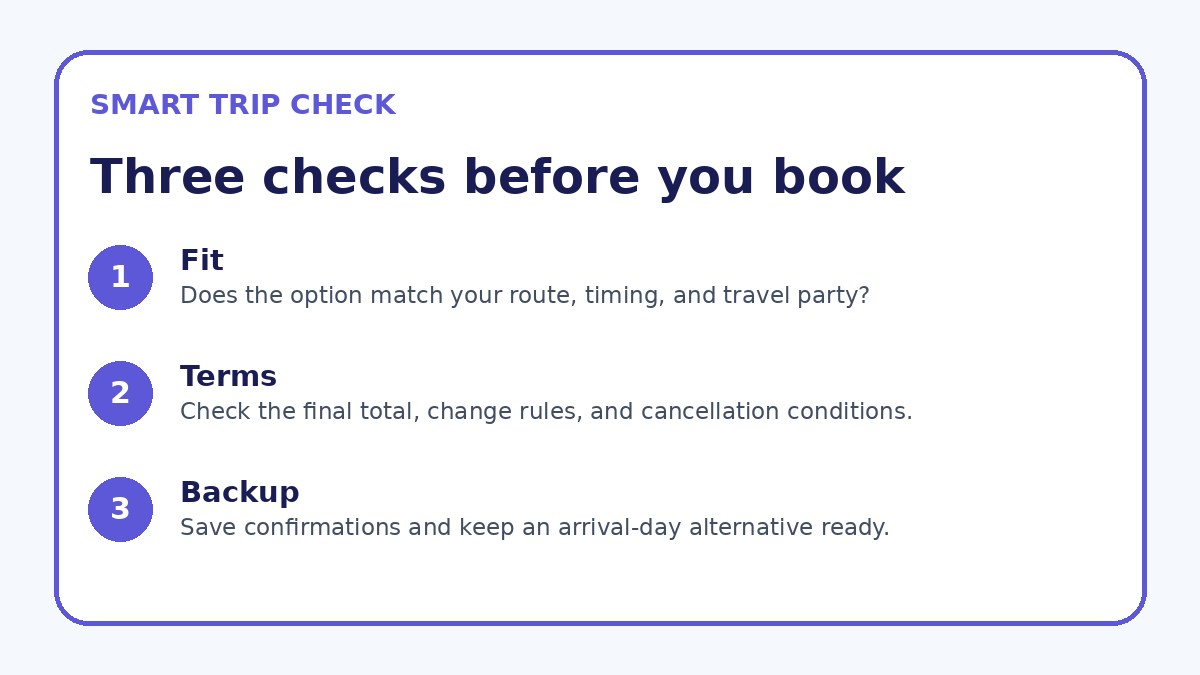
- Verify total door-to-door time including airport transfers, check-in, security, and expected wait times before choosing a flight.
- Compare full cost by adding likely baggage, seat selection, and stroller handling fees to the base fare for each option.
- Confirm whether baggage is through-checked and whether seats can be reserved together on the carrier’s final booking page.
- Check minimum connection times, terminal transfer details, and whether immigration or security rechecks are required during transfers.
- Look up the carrier’s family boarding, bassinet, and special assistance policies and request these services in advance when possible.
- Keep digital copies of all booking confirmations and the carrier’s contact info; allow extra time for rebooking when connections are tight.
Flexibility, contingency planning and booking tips
In uncertain situations—tight onward plans, family illness, or variable weather—flexible tickets and good change/refund terms are worth their weight in calm. Direct flights reduce the number of potential disruption points, but flexible fares can still be valuable if your plans may shift. When comparing itineraries, check the ticket’s change and cancellation policies on the official booking page or the airline’s site. If you use two different carriers on a connecting route, verify who’s responsible for rebooking if the first leg is delayed.
If you’re using fare-search sites, treat their quotes as starting points. After you find a promising option, open the airline’s own booking page to confirm seat rules, baggage allowances, exact connection times, and any family-specific services such as priority boarding or bassinets. Trip.com can be used as one place to compare current availability and conditions, but always verify provider-specific facts and final terms on the carrier’s official booking confirmation before you pay.
Frequently asked questions
Are direct Busan to Jeju flights always the fastest family choice?
Direct flights generally reduce the number of steps and therefore the chance of delays or lost time during transfers, which is often preferable for families. However, the fastest practical option depends on door-to-door time—not just airborne minutes. If a direct flight departs from an airport that’s significantly farther from your accommodation or arrives at inconvenient hours for your children, a connecting itinerary with better local timing can be more comfortable overall. Check ground transit times and schedule fit before deciding.
How should I handle checked luggage and strollers on connecting routes?
Before you book, confirm on the airline’s final booking page whether baggage is checked through to your final destination. If segments are on different tickets or different carriers, you may need to collect and recheck luggage, which adds time and complexity. For strollers and car seats, review the carrier’s gate-check rules and whether these items are free. If using connections, leave ample time to retrieve and recheck items and consider using compact, easy-to-fold strollers to simplify transfers.
What if I need to rebook due to a missed connection during a family trip?
Responsibility depends on whether segments are on one ticket or multiple tickets and on the carrier’s policies. If you booked a single-ticket connecting itinerary, the airline typically assists with rebooking. If legs are separate bookings, you may need to arrange and pay for the onward segment yourself. For family trips, try to book itineraries offering minimum connection protections or buy flexible fares that include easier change options. Always confirm rebooking and delay policies on the carrier’s official booking confirmation before you finalize payment.
Final planning note
Choosing between direct and connecting Busan to Jeju flights for a family trip comes down to balancing time, stress and cost. Direct flights minimize the number of handoffs and usually reduce the parent workload, making them the natural choice when you prioritize smooth, predictable travel and quick arrival. Connecting options can be attractive for more flexible schedules, specific timing needs, or sometimes better seat availability, but they introduce extra transfers, possible luggage handling, and greater disruption risk. Use the checklist above, verify baggage and seat rules on the airline’s booking page, and choose the itinerary that best matches your family’s tolerance for transfers and timing.
Continue planning
Check current options and final conditions
Use the provider page to confirm live availability, the final total, cancellation terms, and every condition that matters to your trip.
This evergreen planning guide was created with AI-assisted drafting and a structured quality review. It does not display live prices, schedules, availability, visa guidance, or provider rankings. Verify current details before booking. Some links are affiliate links; we may earn a commission at no additional cost to you.