Practical answer first: prioritize a fast rail route if you value time and convenience; pick an express coach if you want a lower-cost, late-night or early-morning option; choose a rental car only if you plan long rural detours beyond Kyoto and value flexibility over city parking hassles. For first-time visitors building a multi-city ground-transport plan between Tokyo and Kyoto, the core decisions are travel time versus cost, luggage handling, and where you’ll use your base to reach sights. Start by mapping your itinerary: Tokyo neighborhoods you’ll depart from, Kyoto neighborhoods you want to stay in, and any intermediate stops like Hakone, Nagoya, or Nara. Use that map to compare door-to-door times, transfers, and how each option changes your lodging choices. Confirm final schedules, seat availability, and luggage allowances on the provider’s official booking page before committing; you can also check current options on Trip.com as a quick comparison tool.
See current options before you compare the details
Availability and final conditions change. Open Trip.com now or keep reading for the practical comparison.
Choose your primary travel axis: speed, cost, or route flexibility
For a multi-city ground-transport plan, start by naming the value you want most. Speed simplifies connections and lets you cover more cities in less time; that tends to point toward high-speed rail or limited express trains. Cost-focused travelers will layer slower trains, overnight buses, or regional rail to reduce fares but should factor in longer travel times and potential sleep loss. If flexibility is the priority, driving or a mix of regional trains gives freedom to stop in small towns, detach from crowded schedules, and carry more gear. Writing this single priority at the top of your plan keeps later choices consistent.
Once you choose your axis, translate it into practical checks: how many hours do you accept on the move; are you comfortable changing transport mid-journey; and must you arrive by a certain time to make a tour or hotel check-in? For multi-city trips where you combine Tokyo and Kyoto with side stops—say Hakone for hot springs or Nara for temples—add realistic minimum transfer times between stations and the time it takes to reach your chosen accommodations. Those transfer buffers are especially important when comparing direct services to multi-leg itineraries, because connections change the ‘real’ door-to-door experience.
Picking where to stay in Kyoto based on transport choices
Your Kyoto neighborhood choice should reflect how you plan to move after you arrive. If you expect to continue onward by rail—return to Tokyo or go south—staying close to Kyoto Station saves time and simplifies luggage transfers. If your priority is sightseeing in central Kyoto (Gion, Higashiyama, Kiyomizu), choose a central or eastern neighborhood where many attractions are a short walk or bus ride away; this can cut local transit time even if it adds 10–20 minutes arriving from Tokyo. For quieter, lower-cost stays, peripheral neighborhoods or suburbs can be attractive, but factor in a morning commute into central Kyoto.
Also consider luggage handling and check-in windows. Some hotels and guesthouses near tourist hubs allow early luggage drop-off; if they don’t, arriving at a station with secure lockers or with easy access to a luggage-forwarding service will make a big difference. If your plan includes side trips that depart from different stations (for example, a day that leaves from a regional line rather than Kyoto Station), look for accommodation with flexible transit options or book one overnight that splits the travel—two bases can be worth the extra time if they save backtracking and let you maximize sightseeing.
| Approach | Best for | Tradeoff to check |
|---|---|---|
| Fast high-speed rail (priority: time) | Travelers who value shortest door-to-door time and simple, frequent departures. | Typically higher fares and potential capacity limits during busy periods; less flexibility for rural detours. |
| Overnight or daytime express coach (priority: cost) | Budget-conscious travelers who accept longer journey times and limited onboard space. | Fewer daily departures, longer travel time, and potential discomfort compared with reserved train seating. |
| Rental car or self-drive (priority: flexibility) | Visitors planning multiple rural stops or carrying bulky gear where door-to-door access matters. | City parking, tolls, and navigation in dense areas add complexity; less ideal for central urban stays. |
| Regional trains and multi-leg rail hopping (priority: sightseeing) | Travelers who want to stop at smaller towns along the route and enjoy varied rail experiences. | Longer total travel time and more transfers; requires careful timing and contingency buffers. |
Ready to check the option that fits your plan?
Use your exact dates and traveler details so the provider page can show the current total and conditions.
Comparing rail, bus, and driving for a multi-city itinerary
When building a multi-city route, compare door-to-door times rather than just scheduled journey times. Trains usually offer tidy station-to-station timing and frequent departures which makes them predictable for connecting plans. Buses can be cheaper and may run overnight, freeing up daytime for sightseeing, but they often have fewer daily departures and can be less predictable in traffic. Driving gives the most local flexibility; however, urban parking, tolls, and navigation through dense city centers complicate city-to-city plans. List typical station transfer walks, average wait times, and the expected time to get from each arrival point to your chosen accommodation.
Always add contingency time for each planned connection. For first-time visitors, a conservative buffer—longer than a local traveler would use—reduces stress when trains run late or you get delayed while exiting a busy station. If you plan to use rail passes or discount tickets, verify seat reservation rules and the process for reserving connections on provider pages. When providers or services might have changing rules—like luggage policies, reservation requirements, or boarding procedures—check their official booking pages rather than relying on secondary summaries; Trip.com can be a helpful aggregator to compare current offerings, but confirm details on operator websites.
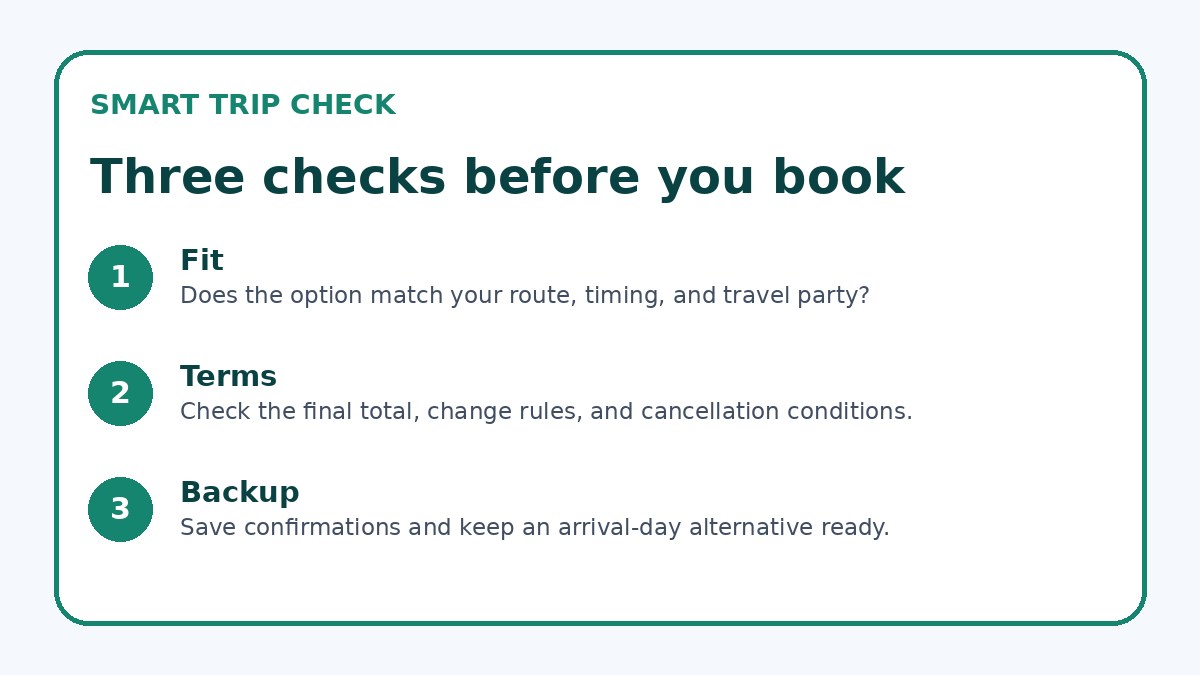
Before you book
- Map your door-to-door route for each travel day, including walk time from station to hotel and time for luggage handling.
- Decide your primary priority (speed, cost, flexibility) and filter transport options against that single decision.
- Check seat-reservation rules, luggage policies, and transfer procedures on each carrier’s official booking page before purchase.
- Choose your Kyoto base aligned with planned activities—Kyoto Station for onward travel or central/eastern neighborhoods for sightseeing.
- Allow conservative transfer buffers between booked connections, especially when tickets are on separate reservations.
- Save station names in both English and Japanese and keep paper confirmations for hotels and booked transfers.
Practical booking and day-of-travel tips for first-timers
Reserve seats for segments where capacity matters—morning and evening peaks, holiday periods, or popular limited expresses—especially when carrying large luggage or traveling with a group. If you’re building a multi-city plan with several independent tickets, note that missed connections on separate tickets rarely come with automatic protection, so allow enough time between services. For overnight or long daytime moves, packing a small ‘day’ bag with essentials reduces the hassle of accessing items when luggage is stored or forwarded. For every segment, write down the station name in both English and Japanese script to ease navigation and communication.
On the day of travel, arrive at transfer stations early to find platforms, confirm platform changes on station boards, and allow time to pass through station concourses. Use mobile apps or screenshots of your booked tickets, but also carry paper confirmations for hotels or private transfers in case mobile access is limited. If you plan to use luggage-forwarding services, check cutoff times and pick-up arrangements with your accommodation. Finally, build a simple backup plan: an alternative train or bus and the hotel’s latest check-in instructions in case of delays.
Frequently asked questions
Should I buy a rail pass for travel between Tokyo and Kyoto?
A rail pass can simplify booking and reduce per-segment payment complexity if you’re taking many long-distance trains. Whether it’s economical depends on how many long-distance rides you plan beyond Tokyo–Kyoto and which services you’ll use. Passes sometimes exclude premium reserved seats or require advance reservations for specific high-speed services, so compare your planned itinerary against what the pass covers. Always verify coverage, reservation rules, and activation procedures on the pass provider’s official page before purchase, and compare individual ticket costs for the exact segments you plan to take.
How do I handle luggage when moving between cities multiple times?
For repeated city moves, prioritize travel-friendly luggage and consider using a luggage-forwarding service for bulky bags to reduce carry time between stations and hotels. Many accommodations accept forwarded luggage and will hold it until you check in, but confirm pick-up and drop-off timing with both the lodging and the forwarding provider. For the segments where you keep your bags, choose reserved seats with luggage space or use station lockers for short visits. Always check each operator’s luggage size limits and booking rules on official pages to avoid surprises.
Is renting a car better than trains for a multi-city route that includes Kyoto?
Renting a car makes sense if your multi-city plan includes rural sites that are poorly served by public transit, or if you need full schedule flexibility and carry large gear. However, in urban centers like Kyoto and Tokyo, rail and local transit typically offer faster and less stressful access than driving and parking. Factor in city parking availability, potential tolls, and where your accommodations are located; staying near major stations usually favors rail. If you consider renting, compare driving door-to-door time against rail door-to-door time and verify rental policies and insurance details on the provider’s booking page.
Final planning note
Building a Tokyo-to-Kyoto ground-transport plan for a first-time visit is a practical exercise in prioritization and timing. Start by choosing whether time, cost, or flexibility matters most, then pick the corresponding transport approach and align your Kyoto base to minimize local transit. Map door-to-door times, add conservative transfer buffers, and confirm seat reservations, luggage rules, and provider policies on official booking pages. For multi-city trips, sometimes splitting stays or accepting a slightly slower connection saves overall time and reduces stress. With a simple prioritized checklist and a couple of backup options, you’ll have a resilient plan that fits your travel style and reduces surprises on the road.
Continue planning
Check current options and final conditions
Use the provider page to confirm live availability, the final total, cancellation terms, and every condition that matters to your trip.
This evergreen planning guide was created with AI-assisted drafting and a structured quality review. It does not display live prices, schedules, availability, visa guidance, or provider rankings. Verify current details before booking. Some links are affiliate links; we may earn a commission at no additional cost to you.