
Practical answer first: for a first visit, choose your hotel neighborhood based on what you want to do most. If sightseeing (Freedom Trail, museums, public gardens) is your priority, stay near Beacon Hill/Back Bay; if nightlife and food are central, consider the North End or Seaport; for a budget-conscious traveler who still wants good transit, look at the Theater District or Fenway. Boston is compact; a well-placed hotel plus a short subway or walk will usually suffice. This guide explains the tradeoffs—walking distance, transit access, noise, and local character—so you can weigh convenience against atmosphere. Read on to match neighborhoods with what matters to you, how to compare listings, and specific booking checks to avoid surprises on arrival.
Why neighborhood choice matters more than hotel brand
Location determines how you spend your time in Boston more than chain loyalty. The city’s compact core means walking and short subway rides are realistic, so a neighborhood that matches your priorities—museums, dining, nightlife, or quieter streets—will save transit time and let you experience the parts of Boston you came for. For instance, being a 10–20 minute walk from the Museum of Fine Arts is worth more than a modest upgrade in room size if museum visits are your main plan.
Room features, loyalty points, and in-hotel amenities can matter, but first-time visitors often benefit more from proximity. Consider what you’ll do each day and choose a neighborhood that minimizes back-and-forth travel rather than squeezing a few dollars off the rate. Also weigh noise, walkability, and meal options: some neighborhoods have a friendly street-level restaurant scene while others are quieter at night and better for early starts.
Comparing the main Boston neighborhoods for first-timers
Back Bay and Beacon Hill are historic, picturesque, and centrally located. Back Bay’s wide avenues, shopping on Newbury Street, and proximity to Copley and the Prudential Center make it convenient for a mix of museums, dining, and shopping. Beacon Hill’s narrow brick streets and gas lamps provide a classic New England feel and a short walk to the Boston Common and State House. Both neighborhoods are walkable to many downtown attractions and well-served by multiple subway lines, which reduces the need for taxis.
The North End and Seaport focus more on food and waterfront ambiance. The North End’s narrow lanes are packed with Italian restaurants and bakeries, great for evening strolls and casual exploration. The Seaport is modern and visually striking with newer hotels and restaurants along the harbor; it’s especially appealing if you want waterfront access and contemporary dining but expect higher evening hype and occasional construction or event traffic.
| Approach | Best for | Tradeoff to check |
|---|---|---|
| Back Bay / Beacon Hill | Sightseeing, classic Boston atmosphere, easy walking to museums and the Common | Higher nightly rates and tourist foot traffic during peak hours |
| North End / Seaport | Dining, nightlife, waterfront views and contemporary restaurant scenes | Noisier evenings and possible event congestion near the harbor |
| Fenway / Theater District | Concerts, sports, and theater with short walks to venues | Event-day crowds and occasional late-night noise |
| Near MBTA stations (budget focus) | Lower cost stays with easy subway access across the city | Short daily commutes into central attractions and fewer hotel amenities nearby |

Practical tradeoffs: transit, noise, and event crowds
Fenway and the Theater District put you close to specific draws—Fenway Park, the Boston Symphony, and performing arts venues. That convenience comes with tradeoffs: game nights or showtimes bring crowds and noise that can make weekday mornings slow to move outside. If you choose these neighborhoods for lower weekday rates or lively evenings, check the event calendar before booking and confirm hotel soundproofing options if you are a light sleeper.
For budget-conscious travelers, neighborhoods a short subway ride away—such as areas near the Green Line or Orange Line stops—offer more hotel choices without sacrificing access. You can compare the time saved by a central location against money saved by staying farther out: factor in the frequency and convenience of MBTA service at your chosen station and the cost or hassle of late-night returns. Always verify the hotel’s exact distance from the nearest station and whether elevators or stairs are involved when arriving with luggage.
Before you book
- Map your top three activities and confirm walking times from any hotel you shortlist.
- Check recent guest reviews for noise, cleanliness, and bed comfort rather than relying only on star ratings.
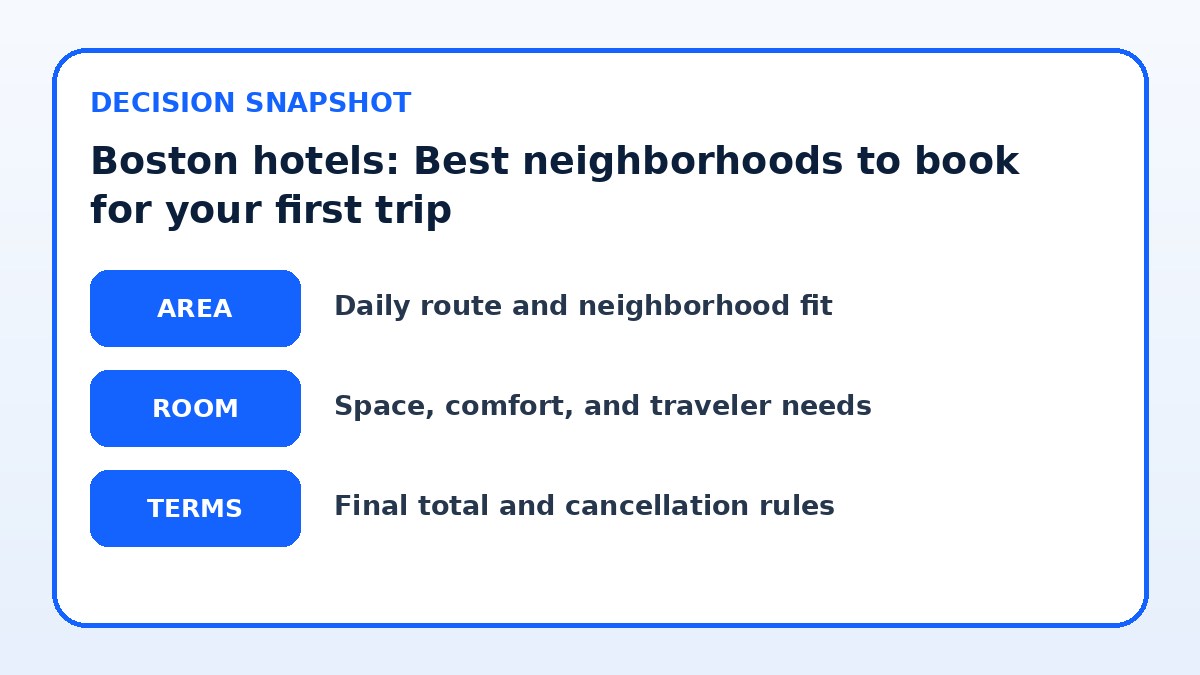
- Confirm cancellation and check-in policies on the hotel’s official booking page before paying.
- Verify the nearest MBTA station, typical service frequency, and elevator access if you have heavy luggage.
- Ask the hotel about soundproofing or room placement options if you are sensitive to city noise or event nights.
- Compare whether breakfast is included or available and whether parking or shuttle services are offered if needed.
How to compare specific Boston hotel options before booking
When you shortlist hotels, compare not only nightly rates but also the location in relation to your planned activities. Use a map view to measure walking time to your top three interests—museums, a neighborhood you want to dine in, and the main transit station you’ll use. Read recent guest notes about noise, bed comfort, and cleanliness to check for issues that photos don’t show. If public transit or walking will be your default, verify how many blocks and what kind of terrain separate the property from the station or attractions.
Before you finalize a reservation, confirm policies that commonly change: cancellation terms, whether breakfast is included, parking availability (if you’re driving), and the property’s check-in times. For anything the hotel lists that could affect your stay—like parking costs, shuttle services, or early check-in—verify those details on the hotel’s booking page or ask the property directly. Trip.com can be useful to compare availability and options, but always review the hotel’s own page or contact them for final confirmation.
Frequently asked questions
Which Boston neighborhood gives the best access to the Freedom Trail and major museums?
For the Freedom Trail and core museums, Back Bay and Beacon Hill are highly practical. Both neighborhoods sit close to the Boston Common, Public Garden, and several museums reachable by short walks or a single short subway hop. Staying in these areas reduces transit time between attractions and makes it easy to return to your room midday. If museum-heavy days are on your itinerary, prioritize a hotel that puts those sites within a 10–20 minute walk to maximize sightseeing time.
Is it worth staying in the Seaport for the views and dining?
The Seaport offers modern waterfront hotels and a strong restaurant scene, which is appealing if you want contemporary nightlife and harbor access. It can be more expensive and busier around events, so consider whether the waterfront atmosphere is central to your trip. If you plan evening dining and daytime waterfront walks, the Seaport is convenient; if most of your time will be spent in historic downtown areas or museums, a central Back Bay or Beacon Hill location may save travel time despite fewer harbor views.
How should I factor in MBTA access when picking a hotel in Boston?
Public transit extends your options significantly—hotels a few blocks from reliable subway lines can feel centrally located without the central premium. When evaluating MBTA access, check which lines serve the nearby station, typical frequency (especially late at night), and the walking route to the station. Also verify any accessibility needs like elevators. If you plan to use the subway frequently, prioritize a hotel within a 5–10 minute walk of a well-served station rather than a cheaper place with poor transit connections.
Final planning note
Choosing where to stay in Boston for your first visit comes down to the activities you value most. Pick Back Bay or Beacon Hill for classic sights and walkability, the North End or Seaport for dining and waterfront energy, or Fenway and the Theater District if events are your focus. Budget travelers should prioritize proximity to MBTA stations to expand hotel options without sacrificing access. Always verify walking distances, event calendars, and hotel policies on the provider’s booking page before you commit. With those checks done, you’ll have a hotel location that supports what you want to see and do in Boston.
Continue planning
Check current options and final conditions
Use the provider page to confirm live availability, the final total, cancellation terms, and every condition that matters to your trip.
This evergreen planning guide was created with AI-assisted drafting and a structured quality review. It does not display live prices, schedules, availability, visa guidance, or provider rankings. Verify current details before booking. Some links are affiliate links; we may earn a commission at no additional cost to you.