
If you travel to Barcelona for work, price alerts can save you time and money — but they can also trigger rushed, unnecessary bookings. The practical approach is to create a simple rule set: set alerts for your exact travel window and acceptable times, define a reasonable price threshold, and require a minimum decision window (for example, 48–72 hours) after an alert before you book. Always cross-check any alerted deal on the provider’s final booking page for fare conditions, change and cancellation policies, baggage rules, and whether the price requires nonrefundable terms. Use alerts to inform, not to force action; treat them as prompts to compare options with your routine business-travel checklist. This keeps your travel program consistent, preserves flexibility, and reduces the risk of missing corporate policy requirements or getting stuck with rigid tickets.
See current options before you compare the details
Availability and final conditions change. Open Trip.com now or keep reading for the practical comparison.
Design alerts that match business needs
Start by matching alerts to your most-used travel patterns — specific inbound and outbound dates, preferred departure windows, and airport pairs you routinely use for Barcelona trips. Narrow alerts to the exact class and fare family you will accept (for example, economy with one checked bag or flexible business fare). Broad date ranges and open-ended alerts generate many tempting but irrelevant results; you’ll waste time and increase the chance of impulsive decisions if alerts include nights or long layovers you won’t accept. A tight alert is more likely to surface truly useful fares for your corporate travel profile.
Next, add decision filters: attach a maximum acceptable stopover duration, an explicit minimum connection standard, and whether basic-economy rules are acceptable. For many business travelers, the marginal savings of a basic-economy fare is outweighed by strict change and refund limits, so flag those as excluded. If you use a corporate travel tool or alma mater (travel manager, TMC), sync alerts with those constraints so any flagged deal can be matched against company policy before you proceed to book.
Rules to avoid impulse booking
Adopt behavioral guardrails that turn every alert into a decision checklist rather than an immediate trigger. Examples: require at least two independent price confirmations (from a second search or tool), enforce a cooling-off period of 48–72 hours, and mandate checking whether the alert fare is refundable or changeable. Write these rules into your personal booking SOP or share them with your assistant or travel manager so alerts don’t lead to one-click purchases that conflict with expense policies or trip flexibility needs.
Automate the routine parts of this process where possible. Use grouped alerts with the same decision rules, label alerts by trip purpose, and set push or email priorities for only your highest-relevance alerts. Automation reduces distraction, but don’t automate past the point where a human checks fare rules — the final booking page may display restrictions or fees not visible in an alert preview. If you maintain a corporate travel ledger or expense-tracking sheet, note alerted fares and the verification steps you took before booking to simplify expense approvals later.
| Approach | Best for | Tradeoff to check |
|---|---|---|
| Tight, specific alerts | Frequent travelers with fixed schedules | Fewer price opportunities but higher relevance and less impulse risk |
| Broad, many-alert approach | Flexible travelers hunting occasional bargains | More noise and higher chance of impulsive, unsuitable bookings |
| Alerts for flexible fares only | Travelers prioritizing changeable itineraries | Typically higher headline cost but far less disruption risk |
| Alerts tied to corporate policy checks | Managed travel programs and assistants | Requires integration with travel managers or extra manual verification |
Ready to check the option that fits your plan?
Use your exact dates and traveler details so the provider page can show the current total and conditions.
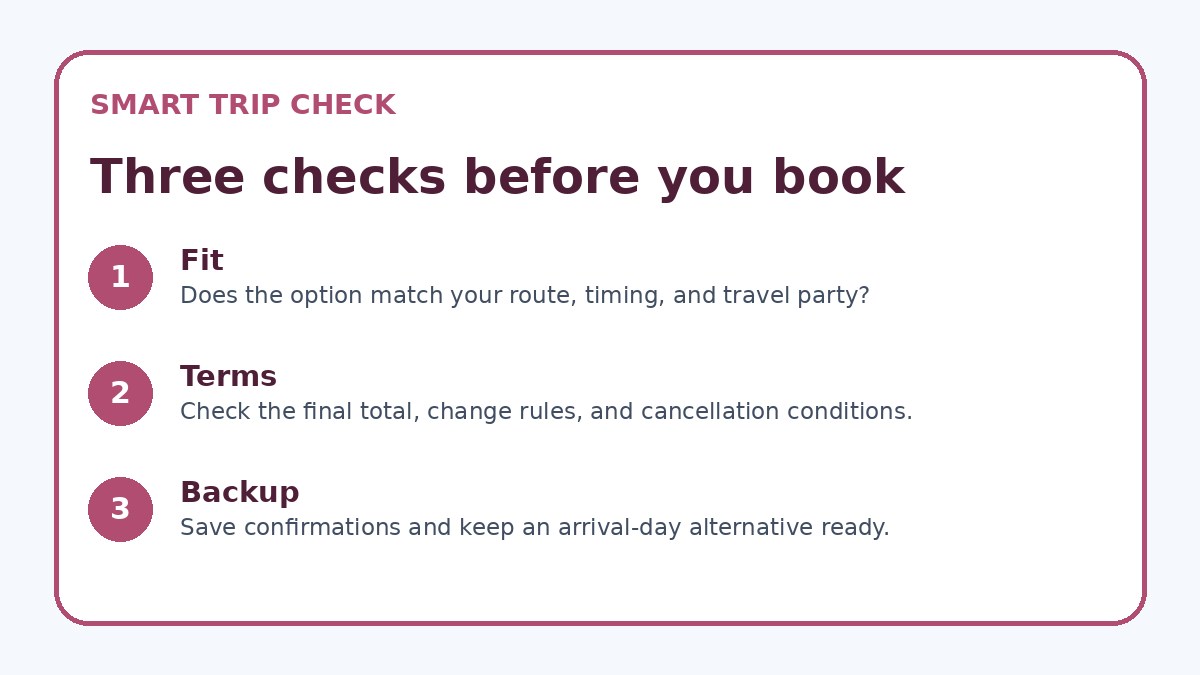
Compare alerted deals against real tradeoffs
When an alert arrives for a Barcelona itinerary, compare it on three axes: flexibility, total door-to-door travel time, and true out-of-pocket costs (baggage, seat selection, airport transfers). A lower headline fare can be offset by stricter change fees or long night-time arrivals that require overnight costs. Put these variables on a single comparison line so you can see whether savings matter for the specific trip; for example, a nonrefundable fare might be fine for a one-day client meeting but not for a multi-leg program with uncertain dates.
Evaluate alternatives: does a slightly higher flexible fare allow same-day changes that could save you in disruption costs? Can a different nearby airport or a different carrier offer better schedule reliability even if the price is marginally higher? For business travelers, consistent arrival times, predictable check-in, and a straightforward claims process often trump small savings. Use alerts to reveal opportunities but weigh them against the operational impact on your itinerary and company policies.
Before you book
- Set alerts only for specific date ranges, departure windows, and airport pairs you actually use for Barcelona trips.
- Require at least two independent price confirmations before booking any alerted fare.
- Enforce a minimum 48–72 hour cooling-off period after a price alert before committing to purchase.
- Verify baggage allowance, change and cancellation rules, and seat selection on the provider’s checkout page.
- Compare total door-to-door travel time and any overnight needs against the savings in the alert.
- Document the final fare terms (screenshot or copy) and note corporate policy compliance before filing the expense.
Practical checks before you commit
Before hitting purchase, verify the provider’s final booking page thoroughly. Confirm whether the fare quoted in the alert is the exact fare at checkout, and check baggage allowances, change and cancellation fees, seat selection rules, and whether protective services like pandemic-era protections or travel insurance are offered. If you use corporate cards or invoicing, ensure the supplier accepts them and that the fare appears in the same form for expense reporting. These checks prevent surprises at reconciliation and avoid making a noncompliant or costly booking.
Also confirm logistical details such as which Barcelona airport you’d use (the alert might not show the airport code), whether the arrival time requires a hotel night, and how the itinerary aligns with meetings and ground transport. If a booking tool or provider displays restrictive wording, copy the exact terms or screenshot the checkout for your records. When provider-specific facts like change fees or connection times could change, always rely on the provider’s final booking page for the authoritative terms rather than the alert summary.
Frequently asked questions
How do I set a realistic alert threshold without missing useful Barcelona fares?
Choose a threshold based on what you actually need, not the lowest possible fare. Start by noting the typical fares you and colleagues accept for the same route and class, then set alerts to notify you when fares fall a set percentage below that baseline or reach a fixed absolute level you’ve preapproved. Keep separate thresholds for refundable vs nonrefundable fares and for different trip lengths. If you’re unsure, start conservative and widen the threshold after you see how many alerts you receive; the goal is to reduce irrelevant noise while keeping genuinely useful opportunities visible.
If an alert shows a great time and price, how should I check it before booking?
First, open the provider’s checkout page and confirm the exact fare, taxes, and fees at purchase. Look closely at fare rules: change fees, refundability, and baggage allowances. If your company requires specific invoicing or a booking channel, verify those options are available. Check connection times and potential overnight layovers that the alert preview might omit. Finally, cross-check the same itinerary in a second tool or with your travel manager to ensure the alert wasn’t a transient display error or inventory mismatch before you commit.
Can I rely on price alerts for last-minute business trips to Barcelona?
Price alerts can help with last-minute travel but are less predictable for immediate departures. For urgent trips, prioritize flexible or refundable fares despite higher costs because they reduce disruption risk. Configure alerts specifically for short-notice travel windows and set a high-priority notification so you see changes quickly, then apply your cooling-off rule flexibly: for last-minute travel you may shorten it but still perform the essential checks on the provider’s final booking page. Balance speed with the need to confirm fare rules, baggage, and any corporate approvals.
Final planning note
Price alerts are a useful signal for Barcelona travel deals, but their value comes from how you turn them into disciplined decisions. By narrowing alerts to match your travel patterns, building simple verification rules, and always checking the provider’s final booking page for fare conditions, you avoid impulsive purchases that conflict with schedules or company rules. Use cooling-off periods, two-source confirmation, and a focus on true travel costs rather than headline fares. Those practices help business travelers extract savings when appropriate while preserving flexibility and minimizing operational risk during Barcelona trips.
Continue planning
Check current options and final conditions
Use the provider page to confirm live availability, the final total, cancellation terms, and every condition that matters to your trip.
This evergreen planning guide was created with AI-assisted drafting and a structured quality review. It does not display live prices, schedules, availability, visa guidance, or provider rankings. Verify current details before booking. Some links are affiliate links; we may earn a commission at no additional cost to you.