
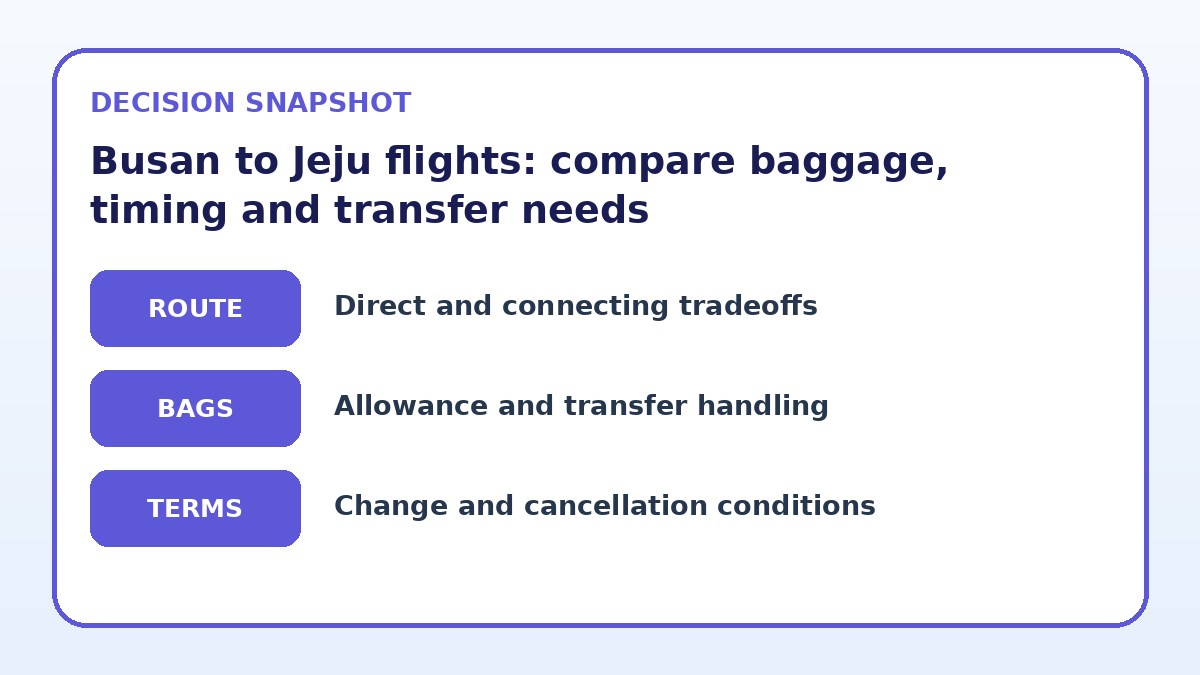
If you’re traveling from Busan to Jeju with more than carry-on, start by confirming baggage rules, aircraft type, and transfer logistics before you book. The practical first steps are: check the carrier’s checked-bag allowance and fees for oversized items, identify whether the flight is direct or includes a connection, and confirm which airport terminals and luggage drop rules apply at departure and arrival. Those basics shape whether you need extra time at the airport, whether a larger checked allowance is worth a fare difference, or whether a different carrier makes the journey simpler. After the essentials, you’ll want to weigh tradeoffs like flight frequency versus baggage flexibility and how refundable or changeable fares handle last-minute shifts. The checklist below turns these considerations into concrete tasks to complete before you hit purchase.
See current options before you compare the details
Availability and final conditions change. Open Trip.com now or keep reading for the practical comparison.
Baggage rules and fees: read the fine print
Airline baggage allowances differ by fare class and sometimes by route. Don’t assume standard checked-bag allowances apply; low-fare tickets frequently exclude checked luggage or impose strict weight and size limits. Before booking, open the specific flight’s fare rules and find the exact permitted weight per bag, the number of included checked bags, and the cost structure for additional or overweight items. Look for separate rules for sporting equipment, musical instruments, or fragile items because those often follow different fees and handling procedures.
When provider-specific facts could change, verify the final baggage allowance and fees on the carrier’s booking page or confirmation screen before payment. If you plan to carry items that exceed normal dimensions—surfboards, skis, bicycles, or a large suitcase—identify whether the carrier requires advance notice, special packaging, or a cargo booking. This step prevents surprise charges and helps you decide whether to increase your fare to include extra baggage or use a third-party freight or ferry option.
Direct vs connecting flights: baggage handling and time
Direct flights reduce complexity for travelers with extra luggage because there’s no need to re-check bags or move between terminals during a layover. But direct service frequency, aircraft type, and fare structure vary; sometimes a connecting itinerary offers a higher baggage allowance for the same price. When comparing options, read each itinerary’s transfer notes carefully: some connections require you to collect and re-check luggage, while others offer through-checked service. Also check minimum connection times at any transfer airport to avoid missed connections with heavy or oversized baggage.
If you face a connection, plan for extra time and check transfer procedures on the carrier site—verify whether both flight legs are on the same ticket and whether the airline guarantees luggage transfer. Where different carriers operate the segments, confirm interline baggage agreements or prepare to claim and re-drop bags. If connection complexity or the risk of delayed transfers feels unacceptable, prioritize direct flights or itineraries on a single carrier even if the base fare seems higher; the extra cost can be worth the reduced hassle and lower risk of lost or delayed luggage.
| Approach | Best for | Tradeoff to check |
|---|---|---|
| Book a higher-fare that includes extra checked baggage | Travelers who value predictability and simpler airport logistics | Higher upfront cost but reduces risk of surprises at check-in |
| Buy a basic fare and pay for extra bags as needed | Travelers who can accurately forecast luggage and want lower initial fares | Possible high fees at the counter and stress if luggage exceeds limits |
| Choose a direct flight where possible | Those carrying bulky or fragile items who want fewer transfers | May be less frequent or more expensive than connecting options |
| Split luggage: ship oversized items separately by freight or courier | People with very large or valuable gear preferring specialized handling | Extra logistics and cost, plus lead time for shipping and pickup |
Ready to check the option that fits your plan?
Use your exact dates and traveler details so the provider page can show the current total and conditions.
Airport logistics in Busan and Jeju: terminals and services
Know which Busan terminal you’ll depart from and whether the terminal has the facilities you need—early check-in counters, oversized-baggage desks, or curbside assistance. Some airports separate domestic and international terminals or have specific counters for sports or fragile items. Confirm whether your airline offers dedicated oversized-baggage handling or drop-off points that let you leave bulky gear without waiting at regular check-in lines. Also check ground transport options from the terminal; hauling large suitcases to distant drop-off points may require a taxi or pre-arranged transfer.
On arrival in Jeju, identify baggage claim arrangements and any on-site services that handle oversized or oversize items. If you need special handling, notify the airline in advance and ask exactly where to collect and sign for such items. If you plan to connect to a ferry, rental car, or bus upon arrival, confirm luggage capacity for those modes too: some shuttle buses and local buses limit luggage size. Planning terminal logistics reduces transfer stress and helps you estimate realistic minimum connection times.
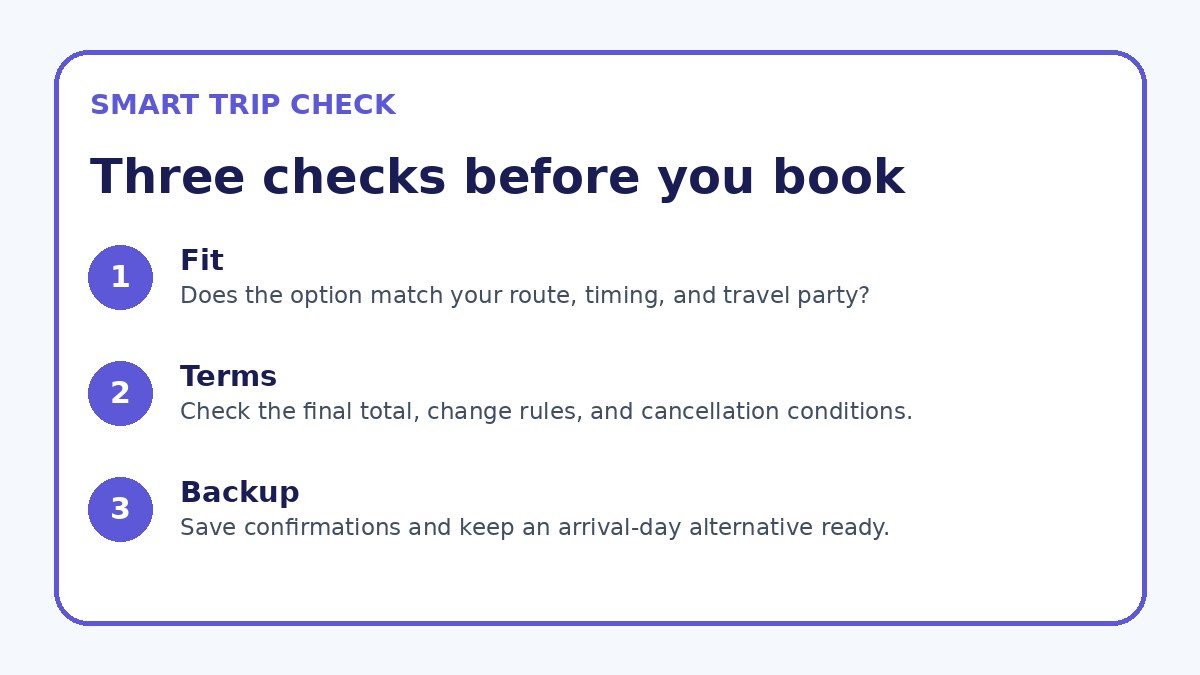
Before you book
- Open the exact flight fare rules and screenshot the checked baggage allowance, weight limits, and size limits shown on the carrier’s booking page.
- Confirm whether the itinerary is direct or has connections and verify on the airline site if baggage will be through-checked or must be reclaimed and rechecked.
- Measure and weigh every bag and special item; compare dimensions and combined weight against the carrier’s published limits for that fare.
- Decide if upgrading to a fare that includes larger baggage is cheaper than adding bags at check-in, then calculate potential counter fees versus upgrade cost.
- Contact the airline or check the booking page about special handling for sporting equipment or fragile items and whether advance notice or packaging is required.
- Plan ground logistics: note departure and arrival terminals, reserve a taxi or assistance if needed, and confirm local transport capacity for oversized luggage.
Fare types and flexibility: choices that protect your luggage plan
Fares vary in what they include beyond the seat—checked bags, flexibility to change flights, and priority boarding that can simplify the check-in process. Compare fare bundles not just on headline price but on which include at least the checked-bag allowance you need. If your schedule is flexible and you want to avoid overweight fees, a slightly higher flexible or premium economy fare that includes larger baggage may be the smarter choice. Also check the carrier’s change and refund policy so you know how baggage options are handled if you change your itinerary.
When the provider’s baggage rules could change, reconfirm on the carrier’s final booking page and in your confirmation email. Consider buying a fare with predictable baggage terms that stay the same even if you switch travel dates. For some travelers with highly variable luggage needs, purchasing separate travel insurance that covers lost or damaged checked items or using a specialized courier for oversized goods may be a worthwhile backup. Weigh the premium for certainty against the cost and inconvenience of dealing with overweight charges at the counter.
Frequently asked questions
How do I judge whether to buy a fare with included baggage or pay per bag for Busan to Jeju flights?
Start by listing the number and weight of bags you expect to check and then find the carrier’s published per-bag fees and included allowances for the specific fare. If the included-baggage fare covers all your bags, multiply the per-bag fee by how many bags you would otherwise pay for and compare that total to the fare upgrade. Also factor in the value of avoiding check-in stress and the small risk of overweight charges; for many travelers the certainty of an included allowance outweighs a marginally cheaper ticket that omits bags.
What should I verify on the airline’s booking page when traveling with oversized or sporting equipment?
On the booking page, look for a baggage policy link that describes size and weight limits for sports gear, the need for special packaging, and whether reservations or advance notices are required. Note any separate cargo procedures or additional fees clearly. If the information is unclear, contact the airline’s customer service before paying and request written confirmation of how the item will be handled. Keep screenshots of the policy and any correspondence along with your booking confirmation in case you need to reference them at check-in.
If my itinerary includes a connection, what baggage-transfer issues should I plan for?
Confirm whether both flights are on the same ticket and whether the carrier or carriers guarantee through-checked baggage. If you must collect and recheck bags during a connection, allow ample transfer time and know where recheck counters are located. If different carriers operate the legs, ask about interline agreements or prepare to handle baggage yourself. Also check the minimum connection time guidance on the airline site and build extra buffer time for heavy or awkward luggage to avoid missed connections.
Final planning note
Booking Busan to Jeju flights with extra luggage is less about finding the absolute cheapest fare and more about matching baggage rules, connections, and airport logistics to your needs. Run through the checklist before you click buy: confirm exact allowances and fees, decide between including baggage in the fare or paying per bag, and verify terminal and transfer procedures. Choose direct flights or same-ticket connections when possible to reduce handling risk. Finally, keep screenshots and confirmation details from the airline’s booking page and, if necessary, consider shipping very large items separately. Trip.com can be useful to compare current availability and conditions, but always verify baggage policies on the airline’s final booking screen.
Continue planning
Check current options and final conditions
Use the provider page to confirm live availability, the final total, cancellation terms, and every condition that matters to your trip.
This evergreen planning guide was created with AI-assisted drafting and a structured quality review. It does not display live prices, schedules, availability, visa guidance, or provider rankings. Verify current details before booking. Some links are affiliate links; we may earn a commission at no additional cost to you.