
Short answer: for most first-time visitors to Manila, a rental car is useful only for trips that leave Metro Manila or when you need flexible access to multiple, widely separated destinations in a single day. The city’s heavy traffic, congested central areas, limited parking, and plentiful alternative transport options (trains, ride-hailing, taxis, and organized day tours) often make hiring a car more hassle than convenience for inner-city sightseeing. That said, if your itinerary includes day trips to Tagaytay, northern Luzon, Batangas beaches, or if you have mobility needs, carrying luggage, or traveling with a group, a rental can add clarity and control. Use the criteria below — where you’re staying, the places you plan to visit, who you’re traveling with, and your comfort with local driving conditions — to decide whether a Manila car rental fits your trip.
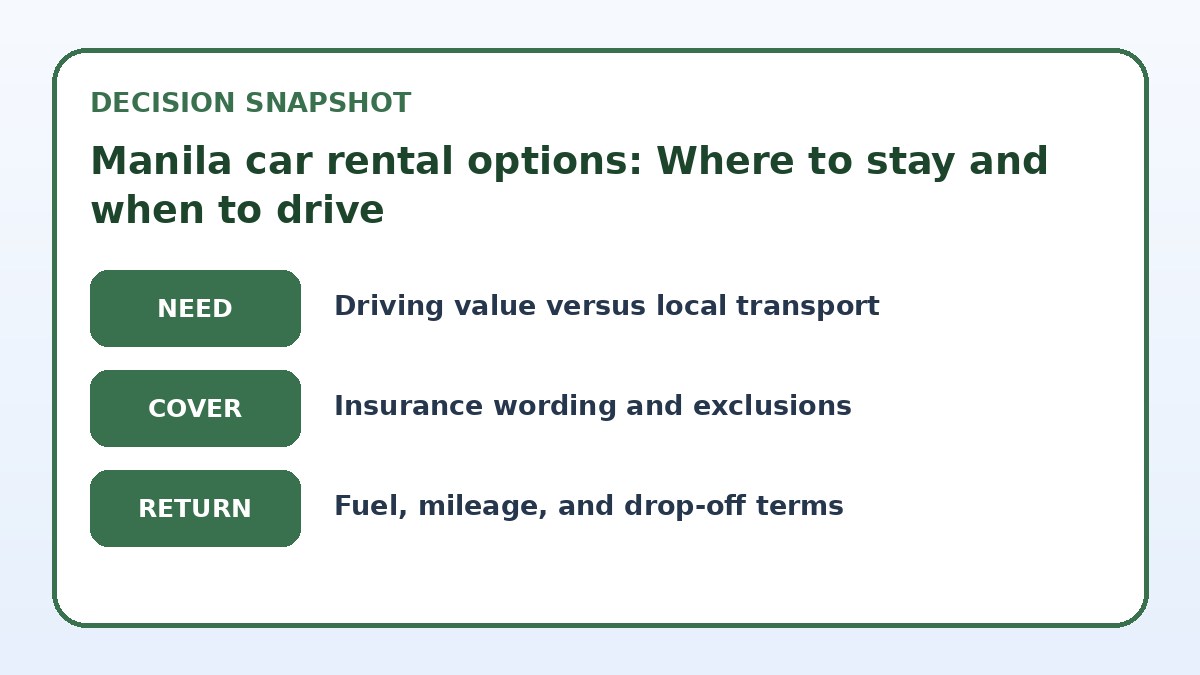
See current options before you compare the details
Availability and final conditions change. Open Trip.com now or keep reading for the practical comparison.
How Manila’s layout and traffic shape the rental decision
Metro Manila is an expansive, densely populated urban region made up of cities and municipalities with fragmented streets, frequent bottlenecks, and variable road quality. Main thoroughfares and expressways can move fast between suburbs at certain hours, but inner-city sections, business districts, and popular tourist corridors are often slow and unpredictable. If your itinerary plans two or three short stops inside Manila in the same day, driving yourself may cost you time and stress that ride-hailing or trains would avoid.
When considering a Manila car rental, map your daily routes and check the distance and likely travel times rather than relying on straight-line distances. Think about where your accommodation sits: staying in an area with scarce parking or narrow one-way streets adds hidden costs and complications. For door-to-door trips outside the urban core, a car gives route flexibility and can save time on transfers that otherwise require coordinating multiple vehicles and schedules.
Alternatives that often outcompete renting inside the city
Ride-hailing apps, metered taxis, the Light Rail Transit (LRT) and Metro Rail Transit (MRT), and jeepneys make getting around central Manila feasible without a private car. These options let you avoid parking headaches and the mental load of navigating busy intersections. For typical first-time tourist days — museums, markets, Intramuros, Rizal Park, and mall hopping — combining a short train ride with ride-hailing for the first- and last-mile is usually quicker and less stressful.
Organized day tours and private drivers are convenient alternatives when you want a vehicle but don’t want to drive. They are especially useful for visiting clustered attractions or provincial tours where local drivers know shortcuts and parking rules. If you prefer to compare broad availability and book options, Trip.com can be a place to see current options for car hire, tours, and drivers, but always verify final terms, insurance, and cancellation rules on the provider’s booking page.
| Approach | Best for | Tradeoff to check |
|---|---|---|
| Rent a car and self-drive | Small groups, multi-stop day trips, travelers needing schedule control | Must handle Manila traffic, parking, and navigation; insurance and fuel add complexity |
| Use ride-hailing and taxis | Singles or couples focusing on central Manila attractions | Per-trip costs can add up; less control over strict multi-destination days |
| Hire a private driver or guided tour | Travelers wanting a vehicle without driving responsibilities | Higher per-day cost than taxis for short trips but saves hassle and local knowledge |
| Public transit (LRT/MRT and buses) | Budget-minded visitors traveling light within well-served corridors | Limited reach to outlying provinces and less convenient for luggage or mobility restrictions |
Ready to check the option that fits your plan?
Use your exact dates and traveler details so the provider page can show the current total and conditions.

When a rental car becomes the smart choice
A Manila car rental is a strong consideration when your trip includes multi-stop day trips beyond the city — for example, moving between volcano viewpoints, provincial beaches, or rural towns with limited public transit. Families traveling with young children, older travelers needing mobility support, or groups carrying equipment or lots of luggage often find the privacy and storage a rental offers worth the tradeoffs. If your schedule demands strict adherence to a timetable (early departures, late returns) and you don’t want to be tied to taxi availability, driving yourself provides control.
Also weigh trip timing: weekend drives and non-peak departures reduce exposure to rush-hour gridlock, making longer drives more pleasant. Conversely, if your core days will require frequent back-and-forth in congested business districts, costs and delays from idling, fuel use, and parking fees may outweigh the benefits. Confirm that your planned daily driving distances are realistic for Manila traffic patterns before committing to a rental.
Before you book
- List every place you plan to visit and mark which are inside Metro Manila versus outside the region.
- Ask your accommodation about secure parking availability, dimensions, and any nightly fees before booking a rental.
- Confirm driver licensing requirements with the rental company and verify whether an International Driving Permit is recommended.
- Compare total expected costs (daily rate, fuel, tolls, parking, insurance, and potential fines) before selecting a booking.
- Decide whether you need unlimited mileage or cross-province permission and verify those limits on the provider’s final booking page.
- Plan routes and likely travel times for key days, avoiding peak commute hours if you choose to drive.
Practical considerations before you book a car
Decide on vehicle size based on passenger count and luggage, and select transmission type you’re comfortable with; automatics are common and often easier for urban driving. Verify what’s included in the rental agreement: third-party and collision coverage, roadside assistance, fuel policy, who can drive the car, mileage limits, and the process for cross-province travel. For international renters, check whether your domestic driving license is accepted or if an International Driving Permit is recommended; always confirm exact requirements on the rental company’s final booking page.
Plan for parking: ask your hotel about available on-site or nearby parking spaces and whether they reserve them for guests. Factor in potential time lost finding spots near attractions and costs for guarded lots. If you intend to use toll expressways, confirm toll payment methods (cash, RFID tags, or electronic toll transponders) and whether the rental car already includes a tag or you must pay on route. These logistics affect both budget and daily schedule reliability.
Frequently asked questions
Can I drive in Manila with a foreign driver’s license?
Rules about foreign driving licenses vary by nationality and sometimes by rental company. Many visitors use an International Driving Permit (IDP) alongside their home license, while some car rental agencies accept certain national licenses directly. Before booking a Manila car rental, confirm the exact documents required with the rental provider and your embassy. Also check whether the rental agreement requires that the renter be present at time of pick-up and whether additional drivers must be named and documented in the contract.
Is parking easy to find at Manila tourist attractions and hotels?
Parking availability varies widely. Large malls and many full-service hotels have guarded parking, while historic districts and small streets in older neighborhoods can have limited or no designated spaces. Some attractions restrict vehicle access or have paid lots that fill early. Contact your hotel to reserve or confirm a spot and plan alternatives — nearby paid lots or arranging drop-offs with a driver. Factor time needed to find parking into daily schedules when you consider a Manila car rental.
How should I weigh tolls, fuel, and traffic when budgeting for a rental?
Budgeting for a Manila car rental means estimating not only the daily rate but fuel consumption for planned routes, expressway tolls, parking fees, and potential traffic delays that increase fuel use and time costs. If you’ll use toll roads often, verify payment methods and whether the vehicle includes an electronic tag; otherwise, allocate cash for manual toll booths. Compare a realistic per-day total against using ride-hailing or hiring a driver to see which option better fits your schedule and wallet.
Final planning note
Deciding whether a Manila car rental fits your first visit comes down to the style and geography of your itinerary. For mostly central-city sightseeing, errands, and museum or mall days, Manila’s mix of trains, taxis, and ride-hailing usually wins for convenience and lower stress. If your trip crosses provincial boundaries, involves several rural or seaside stops, carries lots of luggage, or includes passengers with mobility needs, a rental car gives freedom and a predictable schedule. Before you book, map routes, check parking at your accommodation, confirm license and insurance rules with the provider, and compare the total expected costs against alternatives like private drivers or day tours.
Continue planning
Check current options and final conditions
Use the provider page to confirm live availability, the final total, cancellation terms, and every condition that matters to your trip.
This evergreen planning guide was created with AI-assisted drafting and a structured quality review. It does not display live prices, schedules, availability, visa guidance, or provider rankings. Verify current details before booking. Some links are affiliate links; we may earn a commission at no additional cost to you.