
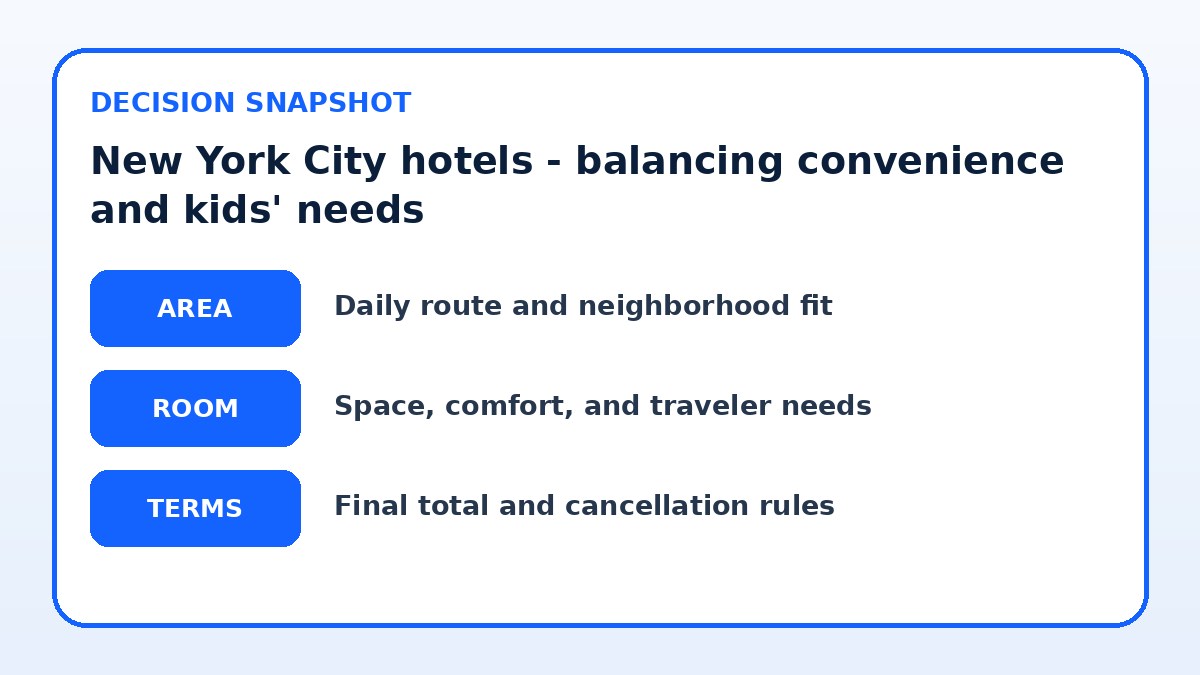
If you’re visiting New York City with children for the first time, the most practical starting decision is choosing a neighborhood that balances short travel times, safe streets, and family-friendly lodging. Prioritize hotels near subway lines or major attractions you plan to visit — that reduces daily transit stress. For many families, Midtown or the Upper West Side are convenient bases: Midtown sits near major sights, while the Upper West Side offers quieter streets, parks, and larger rooms. Brooklyn’s DUMBO and Brooklyn Heights work well for families who want more space and playgrounds, but expect longer subway trips into Manhattan for some attractions. When you search New York City hotels, compare room layouts (suites or connecting rooms), on-site amenities (laundry, breakfast, kid meals), and explicit family policies. Verify the hotel's current cancellation rules, extra-person fees, crib availability, and transport connections on the provider’s final booking page before you confirm.
See current options before you compare the details
Availability and final conditions change. Open Trip.com now or keep reading for the practical comparison.
Neighborhood tradeoffs: pick where your family will live
Neighborhood choice is the highest-leverage decision for first-time visitors. Midtown Manhattan puts you within easy walking distance of Times Square, major museums, and many theaters; it’s efficient for short visits but can be noisy and crowded. The Upper West Side gives calmer streets, access to Central Park and the American Museum of Natural History, and restaurants that tend to be more family-oriented. If you prefer more residential blocks and playgrounds, Brooklyn neighborhoods like DUMBO, Brooklyn Heights, and Park Slope offer a quieter, local feel and often larger rooms for the same budget, though some attractions in Manhattan will require a subway ride.
When you compare areas, think about midday breaks and naps. If your itinerary includes long museum visits or planned nap times, choose a location where you can return mid-day without taking more than 20–30 minutes each way. Also consider proximity to medical care, grocery stores, and playgrounds — small conveniences matter when you travel with kids. Finally, check whether your chosen neighborhood is served by multiple subway lines or reliable bus routes so you have flexible options if one line is delayed.
Room types and family-friendly features to prioritize
Not all rooms are equally useful for families. Suites, connecting rooms, and rooms with sofa beds give sleeping separation that helps maintain routines; some hotels advertise family rooms designed to sleep four or more. Kitchenettes or in-room refrigerators let you handle late-night snacks, breakfast items, and simple reheating. On-site laundry or same-building facilities reduce baggage and let you pack lighter. When comparing New York City hotels, look beyond star ratings and read room descriptions carefully for bed configurations, square footage, and whether the hotel supplies cribs or rollaway beds — always confirm those provisions on the booking page.
Also consider practical amenities: elevator access (especially for strollers), luggage storage for early arrivals or late departures, and flexible housekeeping timing. Hotels that offer early breakfast, kids’ menus, or partnerships with local child-focused services can shrink daily friction. If noise is a concern, ask about room location options when booking — rooms facing inner courtyards or higher floors usually reduce street noise. Finally, factor in any extra-person fees or resort fees; the provider’s booking page will list fees and charge policies that may change, so verify before you finalize.
| Approach | Best for | Tradeoff to check |
|---|---|---|
| Stay in Midtown Manhattan | Families prioritizing short walks to major tourist sites and theater access | Higher noise and smaller rooms compared with residential neighborhoods |
| Stay on the Upper West Side | Families wanting calmer streets, park access, and museum proximity | Slightly longer subway trips to downtown Manhattan attractions |
| Stay in Brooklyn (DUMBO, Park Slope) | Families seeking more space, playgrounds, and a local feel | More time commuting into Manhattan's central sightseeing areas |
| Choose suite or connecting rooms | Families needing separate sleep spaces and flexibility for naps | Higher nightly rates than a single standard room |
Ready to check the option that fits your plan?
Use your exact dates and traveler details so the provider page can show the current total and conditions.

Transport and logisitics: making travel days manageable
Getting around is an everyday task in New York City. The subway is often the fastest way to travel longer distances, but stations can mean stairs and crowds; if you plan to use a stroller, check for elevators at key stations or choose a hotel near an accessible station. Taxis and app-based rides are convenient door-to-door options when you’re carrying luggage or traveling at off-hours, but they can be slower in heavy traffic. If you arrive by plane, consider whether you prefer a hotel with direct airport shuttle options or one that’s easy to reach from express trains — compare transfers and luggage logistics before booking.
Map your itinerary around a small number of hubs to reduce repeated cross-city travel. For example, base yourself near Central Park and one museum, or near a major transit station that serves multiple lines. Factor in walking distances from the hotel to the nearest subway entrance and to likely dining options — a five- to ten-minute walk is different with kids than without. And always check the hotel’s stated accessibility and transport guidance on its booking page for up-to-date elevator access, shuttle arrangements, and arrival instructions.
Before you book
- Map your daily itinerary and choose a neighborhood within a 20–30 minute transit radius of most planned sights.
- Confirm bed configurations, availability of cribs or rollaways, and whether connecting rooms can be reserved together.
- Verify elevator access and stroller-friendly subway stations on the hotel's booking page and city transit maps.
- Check whether the hotel offers in-room refrigerators, kitchenettes, or laundry facilities to simplify family routines.
- Ask the hotel directly (or check the booking page) about extra-person fees, breakfast inclusion, and deposit or cancellation policies.
- Plan arrival logistics: confirm airport or train transfers, luggage storage options, and check-in time to avoid long waits with kids.
Balancing budget, comfort, and convenience
Families often juggle three competing priorities: getting enough space for comfort, saving money, and minimizing transit time. Larger rooms and suites cost more but can reduce the need for separate rooms and give a place for kids to play while adults relax. Hotels slightly outside the busiest tourist strips typically offer more space per dollar, while central locations reduce time lost in transit. When comparing options, calculate the value of saved time — shorter commutes may justify a higher nightly rate if they let you avoid long waits and tired children.
If budget is tight, consider apartments or family rooms with kitchen facilities to lower meal costs, or a hotel that includes breakfast in the rate. Some families find staying in a quieter neighborhood and using a morning commute into Manhattan works best: you gain restful sleep and more living space, then spend daytime hours sightseeing. Whatever you choose, read the hotel’s cancellation and child policy on the final booking page so you understand any fees, age rules for free stays, and what extras (cribs, rollaways) the hotel will actually provide.
Frequently asked questions
Which neighborhood in New York City is best for toddlers and small children?
Neighborhoods with nearby parks and quieter streets generally work best for toddlers. The Upper West Side borders Central Park and offers playgrounds, family-friendly restaurants, and shorter walks to children’s museums. Brooklyn areas like Park Slope and Brooklyn Heights also feature tree-lined streets, nearby parks, and local bakeries where kids can refuel. Midtown puts you close to attractions but can be crowded and noisier; if you pick Midtown, seek rooms facing away from the avenue or higher floors to reduce noise.
What room features should we prioritize when booking New York City hotels for a family?
Prioritize separate sleeping areas (suites or connecting rooms), an in-room refrigerator or kitchenette for snacks and simple meals, and laundry access to pack lighter. Elevators and flat routes between the hotel and transit stops matter when using strollers. Also confirm whether the hotel provides cribs, baby-proofing, or rollaway beds, and read the booking page for any extra-person fees or age limits that affect pricing and occupancy.
How should we factor transit time into choosing a hotel for our first visit?
Estimate door-to-door travel times for your typical day: hotel to first morning attraction, midday return for naps if needed, and the evening plan. If most days require more than 30 minutes each way, consider moving closer to your main hub. Check subway line options and whether key stations have elevators for strollers. Also compare the convenience of taxis or rideshares during off-hours; a slightly pricier central hotel can save time and reduce fatigue, while a quieter neighborhood hotel may be better for longer stays where rest is a priority.
Final planning note
Planning a family-friendly stay in New York City means choosing the right neighborhood, the right room layout, and the right set of amenities for your children’s needs. Start by mapping your must-see sights and then choose a base that minimizes daily travel time while offering practical conveniences like laundry, kitchen access, and elevator service. Balance comfort and budget by weighing the value of saved time against higher nightly rates for larger rooms or central locations. Before you book, verify bed configurations, child policies, fees, and transport details on the provider’s final booking page — and optionally compare availability and current conditions on Trip.com as one resource. With a clear neighborhood choice and a room that supports routines, your first family trip to New York City can be far more relaxed and enjoyable.
Continue planning
Check current options and final conditions
Use the provider page to confirm live availability, the final total, cancellation terms, and every condition that matters to your trip.
This evergreen planning guide was created with AI-assisted drafting and a structured quality review. It does not display live prices, schedules, availability, visa guidance, or provider rankings. Verify current details before booking. Some links are affiliate links; we may earn a commission at no additional cost to you.