
If you’re traveling Sydney to Auckland on business, the most practical rule is: travel as light as possible and arrive at the airport with time to absorb delays but not so early you lose productive hours. That means deciding carry-on versus checked baggage based on meeting type, overnight needs and connection risk; aiming to be at the airport 60–90 minutes before departure for carry-on only and 90–120 minutes with checked bags; and building a buffer for security, immigration processing and any last-minute ticket or gate changes. When booking, compare direct and connecting flights: a direct flight saves time but may limit flexibility with checked baggage allowances and schedule choices. Verify baggage rules, check-in cutoff times, and New Zealand entry requirements on the airline’s final booking page (or Trip.com as a comparison tool) before you commit.

See current options before you compare the details
Availability and final conditions change. Open Trip.com now or keep reading for the practical comparison.
Decide carry-on or checked baggage based on meeting needs
Start by listing what you absolutely need in Auckland: a suit or formal outfit, presentation materials, and any tech you can’t easily replace. If your meeting is a single-day client visit and you can arrive the evening before or return the same day, a carry-on sized to the airline’s rules will save time at both ends. Carry-on also reduces risk of lost luggage, removes wait at baggage claim and lets you work in the lounge or gate area until boarding. Pack versatile clothing and use compression packing cubes to keep a professional look in minimal space.
If your trip requires multiple outfits, bulky equipment, or you prefer not to travel in business attire, check a small hold bag. That choice trades on-the-ground speed for packing freedom and may be necessary for longer stays. When you check a bag, factor in the extra time to drop it at the airline counter or automated kiosk and the possibility of longer waits at arrival baggage claim. Also verify whether a connecting itinerary requires re-checking bags through transit airports — check the airline’s transfer rules on the booking page and include any extra time that may add to your journey.
Time at Sydney airport: practical arrival windows
For business trips where every hour counts, choose an arrival window that balances queue risk with productive time. If you travel carry-on only and have checked in online with a mobile boarding pass, arriving 60–90 minutes before departure is usually sufficient for security and domestic terminal processes at Sydney Airport. Allow extra time during weekday morning peaks, public holidays, or if you need to purchase upgrades, handle last-minute changes, or see a travel agent. Keep a note of the airline’s check-in and boarding cutoffs on your confirmation — these are the rules that will ultimately determine how late you can arrive.
If you plan to check a bag, or if you have a complicated itinerary (like same-day connections), aim for 90–120 minutes before departure. Counters close earlier for checked luggage and international flights can require additional verification steps, especially when carrying restricted items. Also build in a buffer for transport to the airport: city traffic, airport parking, or rideshare surge times can add unpredictability. For extremely tight business schedules, consider the hotel or office proximity to the airport and whether an early arrival lounge booking would let you work while you wait.
| Approach | Best for | Tradeoff to check |
|---|---|---|
| Carry-on only | Short trips, same-day returns, or tight schedules | Less clothing and equipment capacity; must meet size/weight limits and hand-carry restrictions |
| One checked bag plus carry-on | Multi-day stays needing formal wear or extra materials | Longer airport time for drop-off and collection; risk of delay or re-check during connections |
| Ship bulky items ahead | Heavy or delicate equipment that can’t be checked | Extra cost and planning; less flexibility for last-minute changes |
| Hybrid: pack essentials in carry-on, courier extras | High-value meetings where timing and materials matter | Requires advance coordination and possible courier fees |
Ready to check the option that fits your plan?
Use your exact dates and traveler details so the provider page can show the current total and conditions.
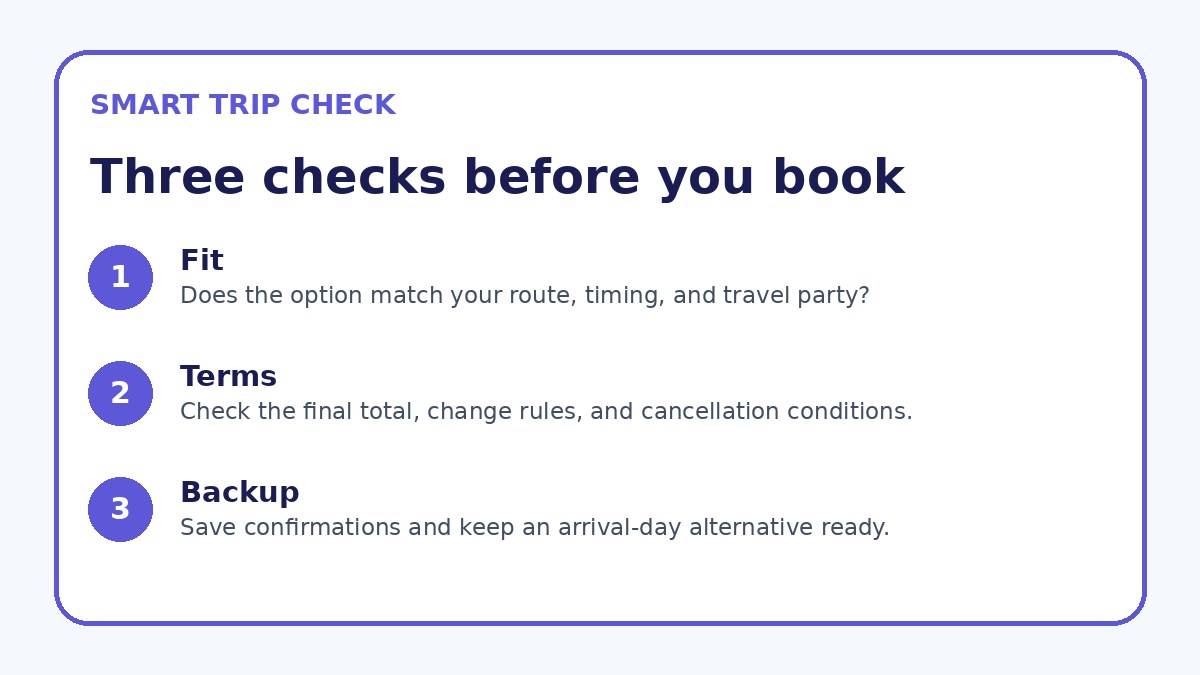
Auckland arrival and immigration considerations
At Auckland, allow time for passport control, potential biosecurity checks, and baggage reclamation. New Zealand has strict biosecurity rules that can lead to additional screening if you’re carrying food, outdoor gear, or certain equipment; declare items as required and know that extra inspection can add time. If you have carry-on only, you’ll usually be able to leave the sterile area quickly, but if your meeting is time-critical, pick a flight that lands with a comfortable buffer before the appointment rather than relying on the fastest connection.
For business travelers connecting onward within New Zealand or meeting clients immediately on arrival, pre-arrange ground transport and share realistic arrival times. When you expect to head straight to a meeting, use digital custom forms and have your passport and any necessary documents ready to present. If you need a local SIM or data on arrival for last-minute coordination, factor the time to get one (or pre-purchase eSIM/data plans before departure). Check the airline’s arrival procedures and any partner ground services on the booking page so you're not surprised by meeting delays caused by airport processing.
Before you book
- Check the airline’s exact carry-on measurements, weight limits and checked-baggage allowances on the final booking page before packing.
- If checking baggage, arrive at Sydney Airport 90–120 minutes before departure; for carry-on only, arrive 60–90 minutes early, adjusting for peak times.
- Scan and save digital copies of passport, itinerary, boarding passes and any meeting documents to offline storage and your mobile device.
- Declare items that fall under New Zealand biosecurity rules and pack food or outdoor gear so it’s easy to present if required.
- Pre-arrange or reserve ground transport in Auckland with a realistic pickup time based on your expected immigration exit time.
- If your trip is critical, include a small “flight essentials” pouch in your carry-on with a fresh shirt, chargers, and physical copies of key documents.
Packing smart for business productivity on the route
Assemble a travel kit that prioritizes what you’ll need inflight and immediately after landing: laptop, chargers, presentation files stored offline, a lightweight blazer, and a small toiletry kit compliant with liquids rules. Put essentials in an easy-to-reach compartment since you may need to pass through security or present electronics separately. If you routinely work on the plane, choose a seat and airline that match your power and Wi-Fi needs — but verify availability on the carrier’s booking page since onboard internet or power outlets vary and can change.
For checked baggage, use a separate small bag for urgent items you can’t afford to be delayed on — a “flight essentials” pouch with meeting notes, a backup shirt, and adaptors. Label your items clearly and photograph contents before departure in case you must claim delayed items. If your schedule is extremely tight or you have critical materials, consider couriering bulky items ahead to your Auckland contact or office; weigh courier time and cost against the risk of baggage delay or loss. Trip.com can be used as a comparison tool to check current options and airline baggage policies, but always confirm final rules on the carrier’s booking page.
Frequently asked questions
How early should I check in online and drop bags for Sydney to Auckland flights?
Check in online as soon as the airline allows to secure seats and reduce queue time; this also lets you skip kiosk lines for many carriers. For dropping checked baggage, arrive at the airline counter within the window published on your booking confirmation: if you must check a bag, aim to be at the airport 90–120 minutes before departure to allow for drop-off, security, and potential extra screening. Always verify the airline’s check-in and bag-drop cutoff times on the booking page, as carriers set their own cutoffs and these determine the latest safe arrival time.
Can I clear immigration before my meeting if I have carry-on only?
Yes, carrying only hand luggage usually shortens the time from aircraft to exit because you skip baggage claim, but passport control and biosecurity can still take time. If your meeting is time-sensitive, pick a flight that gives you at least an hour buffer after scheduled arrival for passport checks and unexpected screening. Keep your passport and any required documents ready, and use smart arrival choices like an e-gates-enabled passport if eligible. Check the airline’s arrival procedures and consider a slightly earlier flight to avoid risking lateness due to processing variability.
What should I verify on the airline’s booking page before finalising my Sydney to Auckland flight?
On the airline’s final booking page, confirm carry-on dimensions and weight, checked-baggage allowances and costs, check-in and bag-drop cutoffs, and boarding time rules. Also review transfer procedures if your itinerary includes connections, and any special handling rules for business equipment or fragile items. Verify cancellation, change policies and whether the fare includes priority boarding or lounge access if those affect your timing. Finally, check the airline’s notes about onboard power and Wi-Fi if you plan to work during the flight. Trip.com can help compare options, but always rely on the carrier’s booking page for binding rules.
Final planning note
For business travelers on Sydney to Auckland flights, deliberate choices about baggage and airport timing save hours and stress. Travel light when possible: carry-on-only trips cut the time spent at both airports and reduce the risk of baggage delays. If you must check a bag, add at least 30 extra minutes to your airport arrival plan and double-check the carrier’s drop-off cutoffs. Always verify baggage dimensions, weight limits and check-in rules on the airline’s final booking page before you leave; if you’re comparing options use Trip.com as a comparison tool but treat the airline’s site as the definitive source. With a small essentials pouch, clear digital copies of documents, and a realistic buffer for immigration or biosecurity, you can focus on the meeting rather than the logistics.
Continue planning
Check current options and final conditions
Use the provider page to confirm live availability, the final total, cancellation terms, and every condition that matters to your trip.
This evergreen planning guide was created with AI-assisted drafting and a structured quality review. It does not display live prices, schedules, availability, visa guidance, or provider rankings. Verify current details before booking. Some links are affiliate links; we may earn a commission at no additional cost to you.