For couples deciding how to travel between Barcelona and Madrid, the practical question is not which single mode is universally better but which ticket flexibility fits your plans. If you value same-day changes, minimal transfer friction and a straightforward city-center arrival, flexible high-speed rail tickets often feel most convenient; if your dates are locked and you want a lower fare, advance-saver tickets or coach options may work. Couples should weigh how luggage, door-to-door transfers, and late changes affect both partners — what one tolerates, the other may not. Below you'll find a clear comparison of rail, coach, and mixed approaches, guidance on terminal fit and luggage handling, plus what to check on any provider's final booking page before you buy.
Choose mode by terminal fit and door-to-door practicality
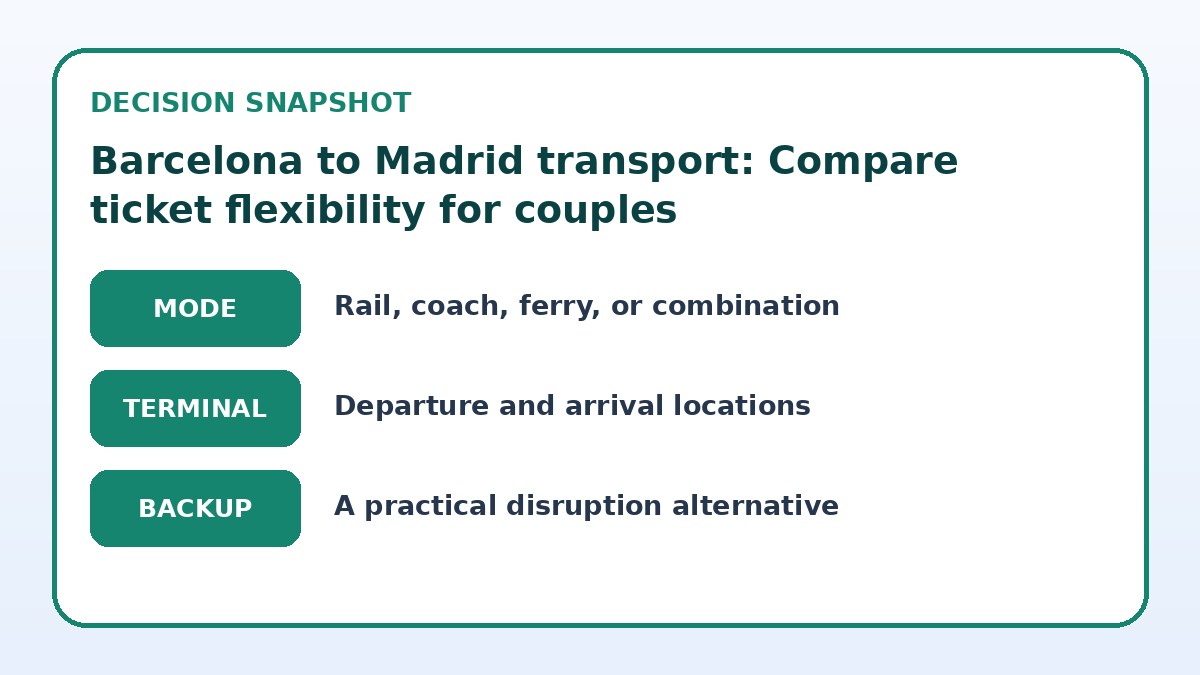
Start by mapping the exact start and end points for your trip: which neighborhood in Barcelona and where in Madrid you want to arrive. High-speed trains typically use central stations that connect to metro and taxis, reducing transfer time and simplifying luggage handling for couples who prefer to move together. Coaches and some intercity connections may use peripheral depots; those can be cheaper but add a transfer leg that matters when one partner is tired or managing heavy bags.
When comparing options, measure door-to-door time, not just ride time. Include walking between lodging and the departure terminal, queueing or check-in delays, security checks if any, and the transfer from arrival point to your accommodation. Couples should also consider whether both partners can comfortably lift and store a suitcase on board or whether extra baggage handling will slow you down; the most practical choice keeps both travelers moving together without repeated trips.
Choose the end-to-end journey plan
| Journey approach | Best for | Friction to check |
|---|---|---|
| Flexible rail tickets (open or refundable) | Couples wanting minimal transfer stress, easy same-day changes, and central arrivals. | Higher upfront cost compared with advance fares; still check exact rebooking channels and fees on the provider page. |
| Advance-saver rail or nonrefundable fares | Couples with fixed travel dates who prioritize lower fares and are confident plans won’t change. | Limited or no refunds and restrictive changes; pair with a clear disruption contingency to avoid costly stress. |
| Long-distance coach tickets | Couples seeking lower-cost travel with generous luggage acceptance and willing to trade central arrival for savings. | Often longer door-to-door time and peripheral boarding points; verify terminal location and transfer options before booking. |
| Mixed approach (train plus car hire/rideshare) | Couples needing last-mile flexibility, scenic detours, or split itineraries that public transport doesn’t easily serve. | Adds logistics and potential extra fees for parking or pickup; ensure combined timings and cancellation rules line up. |
Check live intercity options
Look beyond the ride itself and compare terminals, transfers, luggage, and arrival fit.
Luggage, transfer friction and onboard comfort
Ticket flexibility often interacts with luggage rules. Flexible tickets may let you swap to a later service if you miss your scheduled departure, avoiding extra baggage fees for last-minute changes — but provider baggage allowances still apply. Coaches sometimes accept oversized items more readily than value train fares, while some flexible rail classes provide easier access to luggage racks and more space to sit together. For couples, a single large bag can be easier than two small rolling cases if storage is tight.
Transfer friction also affects decisions: are you comfortable splitting responsibilities so one person manages bags while the other handles tickets or directions? If not, prioritize options with minimal transfers and clear on-board announcements in languages you both understand. Consider the ease of moving between platform and street level; stations with long escalators, multiple levels, or distant coach bays increase friction and the chance of one partner getting delayed.
Timing flexibility: change policies and how to compare them
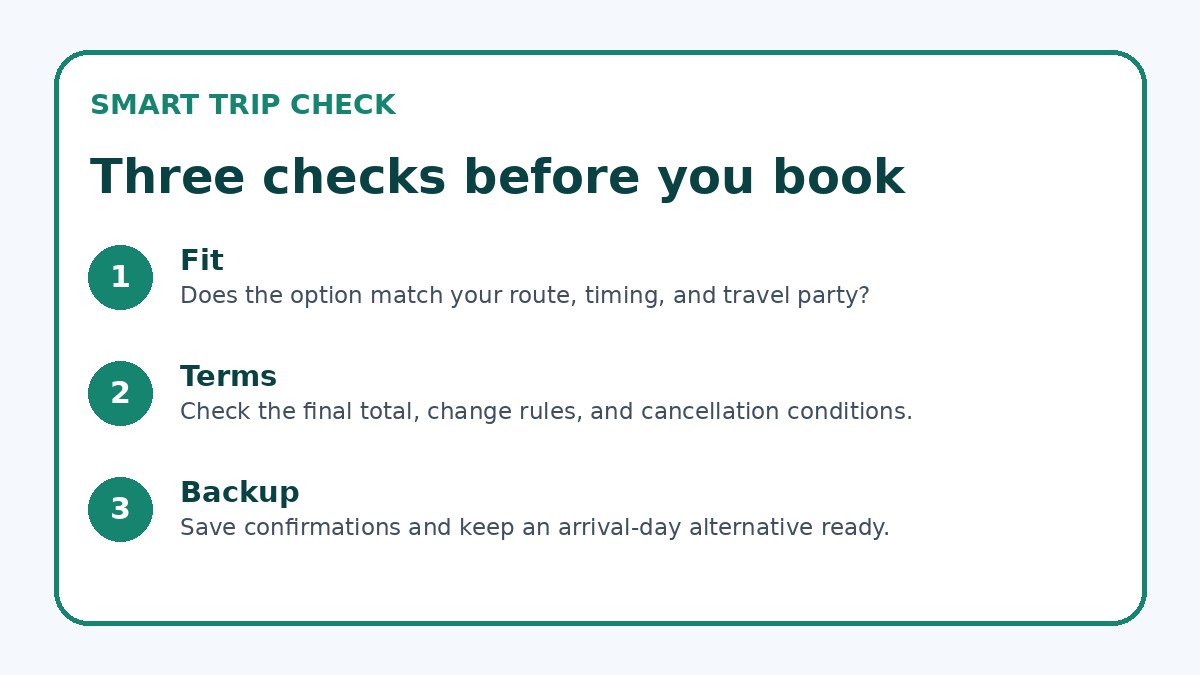
When assessing ticket flexibility, read the final booking page for change and refund rules before you buy. Look for how many hours before departure you can change a ticket, whether changes are free or incur a fee, and whether you can change only to the same fare class. For couples who might split itineraries—one staying longer, one returning sooner—ensure the ticket terms permit partial changes or straightforward refunds; otherwise you may face nonrefundable penalties that erode any savings.
Also compare rebooking procedures and channel convenience: can you change online, via an app, by phone, or must you visit a ticket office? In a last-minute disruption, easy digital changes are invaluable. Check whether flexible fares let you board any service that day without a formal change; some providers allow same-day travel on flexible tickets, others require pre-change. For couples, deciding on a ticket often comes down to whether the change process is quick enough to avoid arguments when plans shift.
Compare the practical alternatives
Use the final page to confirm what is actually offered on your dates and save a workable fallback.
Intercity travel checklist
- Map door-to-door time: add walking, transfers, and expected waits to the advertised journey time before comparing options.
- Read the provider’s final booking page for exact change, refund, and rebooking procedures before purchasing any ticket.
- Decide luggage strategy: measure bags and confirm onboard or depot allowances so both partners can manage storage.
- Confirm departure and arrival terminal addresses and available last-mile options (taxi, metro, rideshare) for each ticketed mode.
- Agree on a simple backup plan for disruptions: preferred later service, alternate carrier, or nearby overnight options.
- Ensure you can manage changes digitally (app or website) and save customer-service contacts and booking references offline.
Disruption backup plans and couples’ split decisions
Accept that delays and cancellations can happen. Build a simple backup: know the nearest later services, identify local coach operators as alternatives, and have a contingency for overnight stays if connections are missed. Couples should agree in advance how decisions will be made—stay together and wait for the next service, or split plans if one partner needs to stay and the other must travel? Clear expectations prevent conflict when stress is highest.
If you rely on tight onward connections like flights or timed tours in Madrid, prefer tickets with more generous change terms or book a later service to buffer disruptions. Keep digital copies of tickets, contact details for customer service, and a lightweight list of alternate departure points. Trip.com can be used to compare current availability and conditions, but always confirm the provider’s final booking page for exact change and refund policies before committing.
Rail & Intercity Transport questions travelers ask
Can couples share a single flexible ticket for Barcelona to Madrid?
Most transport tickets are issued per person, so two people normally need two valid tickets. Some flexible fares allow easy changes for each passenger, but you must check whether the fare’s change or refund terms apply per ticket or per booking. If you plan to split itineraries mid-trip—one partner staying longer or returning earlier—verify whether the provider supports partial changes or refunds, and how any difference in fare is handled. Always confirm on the provider’s final booking page.
If one partner needs to change plans, what’s the best low-stress approach?
First, check the ticket’s official change and refund rules on the booking page: look for allowable change windows, any fees, and whether you can rebook online. If rules are restrictive, use a flexible fare or a service with generous same-day exchange policies. Agree in advance how to handle fees and who covers them. If the original ticket is nonrefundable, consider using later inexpensive services as a backup and keep customer-service contacts handy to explore any goodwill options.
How should couples balance cost versus flexibility when booking?
Start by listing which elements of the trip cannot change (events, flights, work commitments) and which are flexible. If your schedule is fixed, lower-cost advance fares can save money but accept the risk of change fees. If plans might shift or one partner’s needs could alter travel, prioritize flexible tickets even if they cost more; factor savings from avoiding stress, extra transport fees, or emergency overnight stays. Always compare final ticket terms and consider whether the incremental cost of flexibility is worth the peace of mind.
Final decision note
For couples traveling between Barcelona and Madrid, the right ticket balances practical door-to-door convenience with how much schedule certainty you actually need. Flexible rail fares usually minimize transfer and luggage friction and are easiest when plans might change; advance fares and coaches can save money but require a clear disruption plan. Before you book, map your full route, confirm terminals and last-mile options, and read the provider’s final booking page for exact change and refund rules. Agree with your partner on a backup plan so an unexpected delay becomes a small hiccup rather than a big argument.
Continue planning
Check current options and final conditions
Use the provider page to confirm live availability, the final total, cancellation terms, and every condition that matters to your trip.
This evergreen planning guide was created with AI-assisted drafting and a structured quality review. It does not display live prices, schedules, availability, visa guidance, or provider rankings. Verify current details before booking. Some links are affiliate links; we may earn a commission at no additional cost to you.