Practical answer first: if your family values speed and minimal transfers, take the high-speed train option that leaves from Seoul’s main station and arrives close to Gyeongju’s central area; if you need door-to-door convenience with bulky gear or a child seat, a private transfer or rental car is usually the most straightforward choice. Coaches and mixed rail+bus itineraries can save steps if you pack light and accept longer travel time. For any choice, confirm luggage allowances, platform-to-platform transfer details, and pick-up/drop-off points before you book. The rest of this guide explains how to weigh terminal fit, luggage friction, timing flexibility, and contingency plans so you can pick the option that fits your family’s needs and the gear you’ll actually have with you.
How to choose between rail, coach, car, or mixed journeys
Start by matching your family’s priorities: speed, comfort, price sensitivity, or door-to-door convenience. High-speed rail (KTX or equivalent) typically delivers the fastest point-to-point travel between Seoul and cities near Gyeongju but requires moving luggage through larger stations and possibly a short local transfer at the destination. Long-distance express coaches often load luggage into a hold, so the on-board experience is simpler for families who prefer not to haul bags across platforms. A rental car or private transfer removes station friction entirely and gives you freedom to stop en route, but carries the responsibility of driving, parking, and navigating tolls or local roads.
Also consider the ages and needs of your children. Toddlers and infants benefit from direct transfers and quick access to baggage; teens might tolerate a longer coach ride if it’s more affordable. If you have sports equipment, a stroller, or oversized suitcases, confirm whether the chosen mode accepts those items in the luggage hold or cabin. Think about transfers at each end: how many times will you lift bags? Each lift and corridor adds friction, so count transfers when choosing between a single direct rental and a faster but transfer-heavy train-and-taxi option.
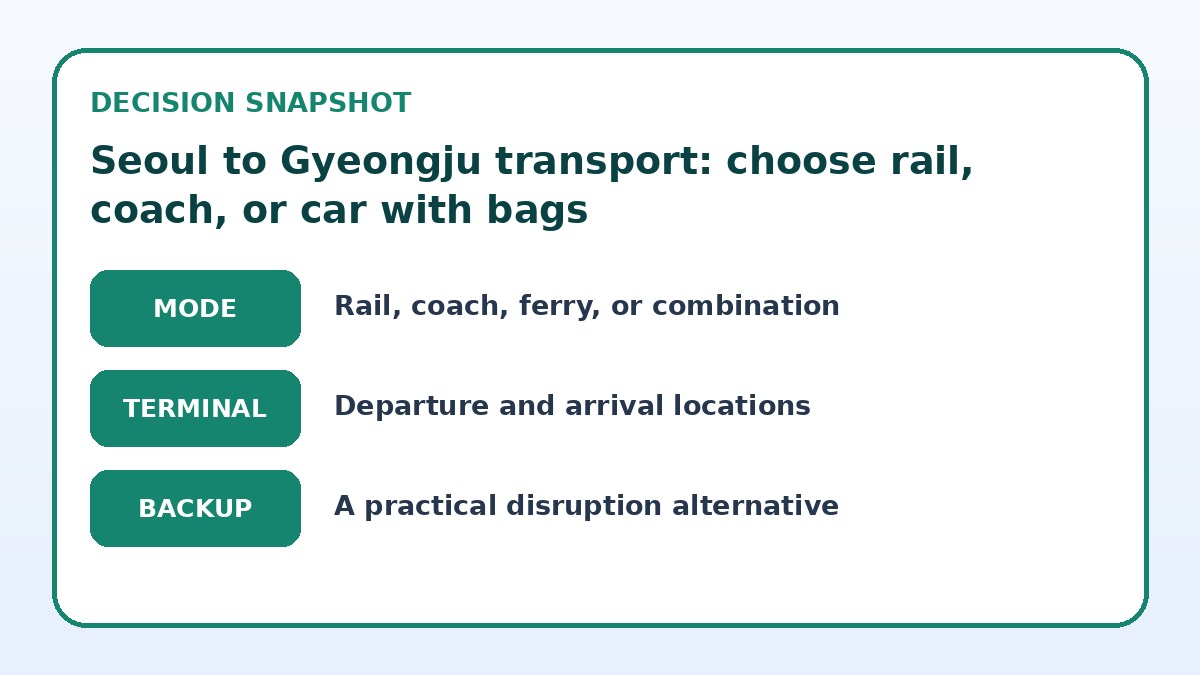
Choose the end-to-end journey plan
| Journey approach | Best for | Friction to check |
|---|---|---|
| High-speed rail plus short taxi | Families prioritizing speed and predictable schedules | Requires moving luggage through stations and a short taxi transfer at the destination |
| Long-distance express coach | Families wanting fewer lifts and simpler on-board luggage handling | Longer travel time and less flexibility for unscheduled stops |
| Rental car or private transfer | Door-to-door convenience, multiple stops, and bulky gear | You handle driving, parking, and may face tolls or narrow roads |
| Mixed: rail plus luggage forwarding or local delivery | Families balancing speed with minimal carry burden | Requires arranging and timing a luggage service and confirming delivery windows |
Check live intercity options
Look beyond the ride itself and compare terminals, transfers, luggage, and arrival fit.
Terminal fit and luggage handling: what to verify before booking
Before you lock in tickets, check exact departure and arrival points and how luggage moves through them. Some rail stations have elevators and escalators near ticket gates, while others require carrying suitcases up ramps or stairs to platforms. For coaches, verify where luggage is loaded—do drivers place bags in an external hold or is there limited cabin space? For car rentals or private transfers, confirm vehicle trunk capacity relative to your bags, international child-seat availability, and whether the driver will assist steps at the door. These details determine whether your stroller, foldable pram, bicycle box, or extra suitcases will be manageable.
If you’ll be making onward connections—hotel check-in, a tour pickup, or another train—identify the most luggage-friendly route between those points. Some families prefer to book hotels near the rail station to minimize street transfers; others accept a short taxi with luggage for the convenience of a scenic hotel in Gyeongju. Make sure you can see images or maps of station exits and nearby taxi stands, and confirm whether luggage forwarding services exist if you want to ship larger items ahead of time.
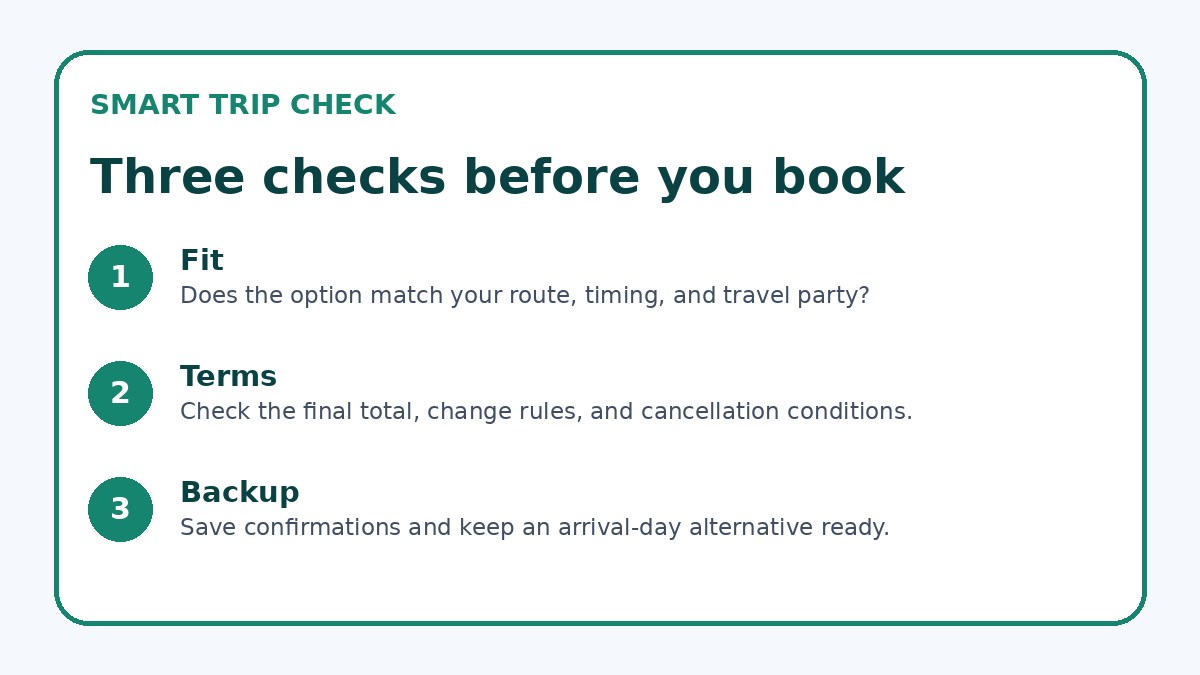
Timing flexibility and family-friendly scheduling
Families often need wiggle room: feedings, rest stops, or bathroom breaks change the ideal departure time. Trains run on set timetables that optimize travel time but offer less flexibility if your schedule shifts. Coaches may have more frequent departures on popular routes, which helps if you prefer a later or earlier trip without rebooking. Driving gives the most flexible departure time and stop schedule, useful when traveling with younger children who need regular breaks or when carrying bulky equipment that slows boarding.
Consider the whole door-to-door time rather than only in-vehicle durations. Account for the time it takes to move luggage from your lodging to the departure terminal, check-in windows, and the final transfer to your accommodation in Gyeongju. Buffer extra time for busy travel days and factor in meal or comfort breaks. If you must be at your destination by a certain time—tour start, hotel check-in—allow a larger buffer for modes subject to traffic or connection delays.
Compare the practical alternatives
Use the final page to confirm what is actually offered on your dates and save a workable fallback.
Intercity travel checklist
- Confirm exact departure and arrival terminals and map the shortest door-to-door route with all transfers.
- Measure your largest bags and compare to vehicle trunk space, luggage hold dimensions, or station elevator access.
- Book seats or request child seats in advance for rental cars or private transfers and verify driver assistance policies.
- Pack an essentials bag with medicines, snacks, chargers, and one outfit per person in case checked luggage is delayed.
- Screenshot or save alternative departure options and local taxi app details for quick backups if your primary plan fails.
- Check the provider’s final booking page for luggage rules, transfer conditions, and any mandatory verification steps before payment.
Disruption backup and what to have ready
Prepare a simple disruption plan: identify the next few departures on alternate modes, know local taxi app options, and carry digital copies of bookings and IDs. For trains and coaches, bookmark or screenshot alternative departures and platform information in case of cancellations or long delays. If you’re driving, have offline maps or a printed route, and confirm roadside assistance coverage for the rental vehicle. For families with infants, pack a small overnight bag with essentials in your carry-on to handle a missed connection without unpacking all checked luggage.
Make sure contact details for your hotel or tour operator are easily available so you can request a late check-in or hold your room if arrival times slip. When possible, choose flexible ticket types that allow changes; if you buy a non-changeable fare, note the refund or exchange rules on the provider’s final booking page before you complete the purchase. Finally, have cash and at least one local payment app option for taxis, small shops, or unexpected fees—some rural services may not accept cards.
Rail & Intercity Transport questions travelers ask
Can I bring a stroller and large suitcases on high-speed trains from Seoul to Gyeongju?
Most families bring a compact stroller and standard suitcases when traveling by high-speed train, but carriage and platform access vary by station. Before booking, verify the train operator’s luggage policy on its official booking page and check station maps for elevator locations, platform gaps, and stroller-friendly exits. If your stroller is bulky or you have oversized equipment, consider folding it for carriage or choosing a private transfer that guarantees trunk space and assistance. For certainty, contact the operator or your accommodation to confirm how much help you’ll get moving bags at each end.
Is hiring a car better than taking a coach with kids and lots of baggage?
Hiring a car often wins on convenience for families with multiple bags, car seats, or the need for unscheduled stops, because it minimizes lifts and door-to-door friction. The trade-offs are driving responsibility, local road knowledge, and parking at Gyeongju accommodations. If you rent, reserve a vehicle with confirmed trunk volume and pre-book child seats if needed. If you prefer not to drive, a private transfer can provide similar door-to-door ease—but confirm assistance with luggage and any limits on size or number of items before you book.
How do I plan a backup if a train or coach is delayed or canceled?
Build a short list of alternatives: the next train or coach departures, local taxis, and private transfer services. Keep screenshots of schedules and the contact numbers for ticket offices and your hotel. If you rely on a connecting local bus or tour, inform them of potential delays so they can advise. Consider flexible fares or tickets that allow changes, and pack an essentials kit so a missed connection won’t disrupt the whole family. For real-time options and availability, check operator booking pages or services like Trip.com to compare current seats and alternative departures.
Final decision note
Choosing the right Seoul to Gyeongju transport for a family with luggage comes down to balancing transfers, door-to-door convenience, and the amount of baggage you have. If speed and a predictable schedule are most important, rail plus a short taxi often fits; if you want minimal lifting and more stops en route, a rental car or private transfer will be easier. Coaches suit families who prefer simple on-board luggage holds and are comfortable with longer ride times. Whatever you pick, verify luggage allowances, station access, and transfer arrangements on the provider’s final booking page before paying, and prepare a short disruption plan so your trip stays smooth even if plans change.
Continue planning
Check current options and final conditions
Use the provider page to confirm live availability, the final total, cancellation terms, and every condition that matters to your trip.
This evergreen planning guide was created with AI-assisted drafting and a structured quality review. It does not display live prices, schedules, availability, visa guidance, or provider rankings. Verify current details before booking. Some links are affiliate links; we may earn a commission at no additional cost to you.