If you need a practical Barcelona to Madrid transport plan, start by deciding whether you prefer speed, flexibility, cost control, or sightseeing along the way. For many first-time visitors, the core choices are high-speed train, long-distance bus, or driving — each works well but serves different trip styles. This article gives a concise recommendation up front, then walks through the tradeoffs and decision checks to build a multi-city ground-transport itinerary that links Barcelona and Madrid while letting you compare options for intermediate stops. You’ll learn what to verify on provider pages before booking, how to align departure/arrival locations with your hotels, and which factors matter most when combining multiple cities on one ground-based route.
See current options before you compare the details
Availability and final conditions change. Open Trip.com now or keep reading for the practical comparison.
Choosing the main link: train, bus, or car
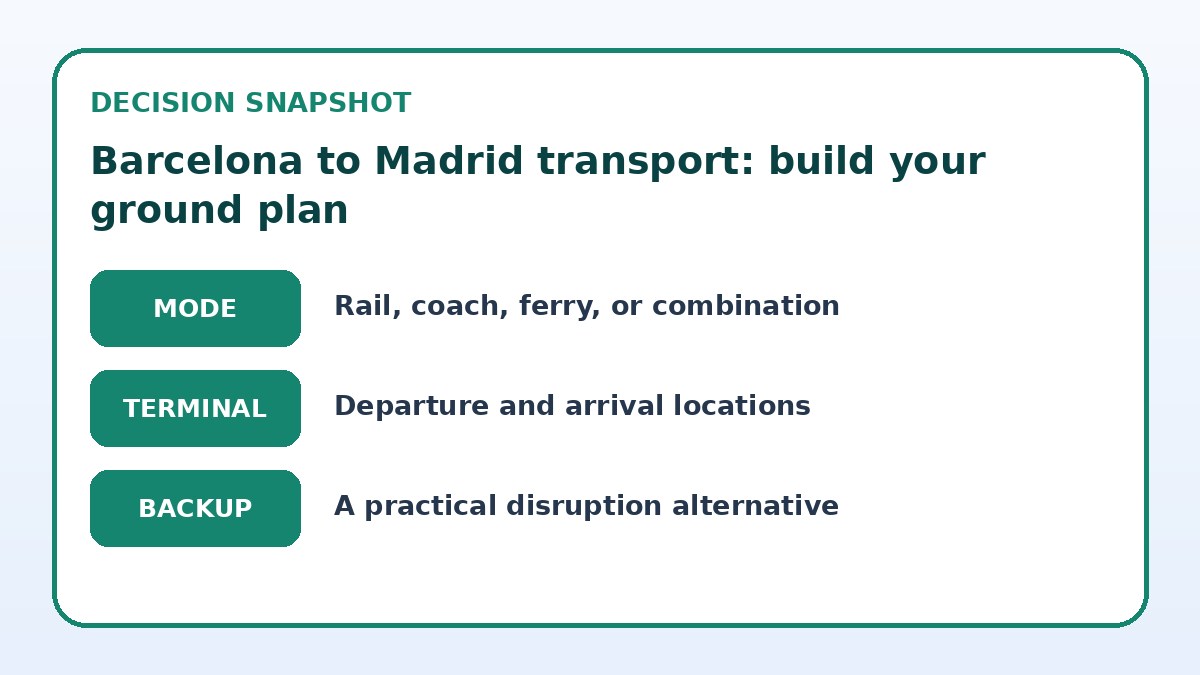
Start by picking the primary Barcelona to Madrid transport mode that will serve as the spine of your multi-city plan. Trains tend to connect major city centers directly, which saves time on airport transfers and integrates quickly with urban transit — ideal if you plan only a couple of stops. Buses frequently offer lower fares and more departure times, which can be helpful if your schedule is tight or if you’re traveling on a budget. Driving gives ultimate flexibility for side trips and rural stops but adds variables like navigation, parking, tolls, and fuel that you must manage across cities.
When choosing, think in terms of door-to-door travel time and your tolerance for transfers. For example, a train may be shorter overall even if its scheduled run time looks similar to a bus, because it typically drops you closer to accommodation. Conversely, car travel can let you visit two or three towns in one day, but traffic and parking can easily erode planned time gains. Whatever spine you choose, structure your itinerary so the main long-distance segment aligns logically with local transport connections at each stop.
Building a multi-city itinerary from Barcelona to Madrid
A practical multi-city plan lists your stops in sequence, the preferred transport between each, and at least one alternative for every segment. Start by mapping must-see towns you want to visit between Barcelona and Madrid; decide which ones are worth an overnight and which can be day trips. Then assign a transport mode for each link: some segments are best handled by regional train, others by bus, and a few may require car rental to reach remote attractions. Keep in mind that switching modes mid-trip (for instance, combining train and car) increases complexity but can yield richer experiences.
Reserve time buffers between connections and between travel and hotel check-in to reduce stress from delays or longer excursions. If you’re combining ticketed long-distance services with local buses or trains, check transfer points carefully so you’re not forced into a taxi because a scheduled bus leaves from a different terminal. Also think about luggage: if you’ll be picking up and dropping off baggage frequently, prioritize options that make handling bags easy and secure.
| Approach | Best for | Tradeoff to check |
|---|---|---|
| High-speed train as main spine | Travelers wanting fast city-center to city-center connections with minimal transfers | Less flexibility to detour into rural towns without connecting local transport or extra planning |
| Long-distance bus as main spine | Budget-conscious travelers with flexible schedules who accept longer travel times | Longer door-to-door time and variable comfort; check luggage rules and terminal locations carefully |
| Rental car as main spine | Visitors prioritizing scenic routes, rural stops, and on-the-fly itinerary changes | More planning for parking, tolls, navigation, and potential city driving restrictions |
| Mixed-mode (train + car or bus + train) | Travelers who want both speed for core legs and flexibility for side trips | Greater logistical complexity and need to coordinate tickets, pickup/drop-off points, and timing |
Ready to check the option that fits your plan?
Use your exact dates and traveler details so the provider page can show the current total and conditions.
What to verify before you book any segment
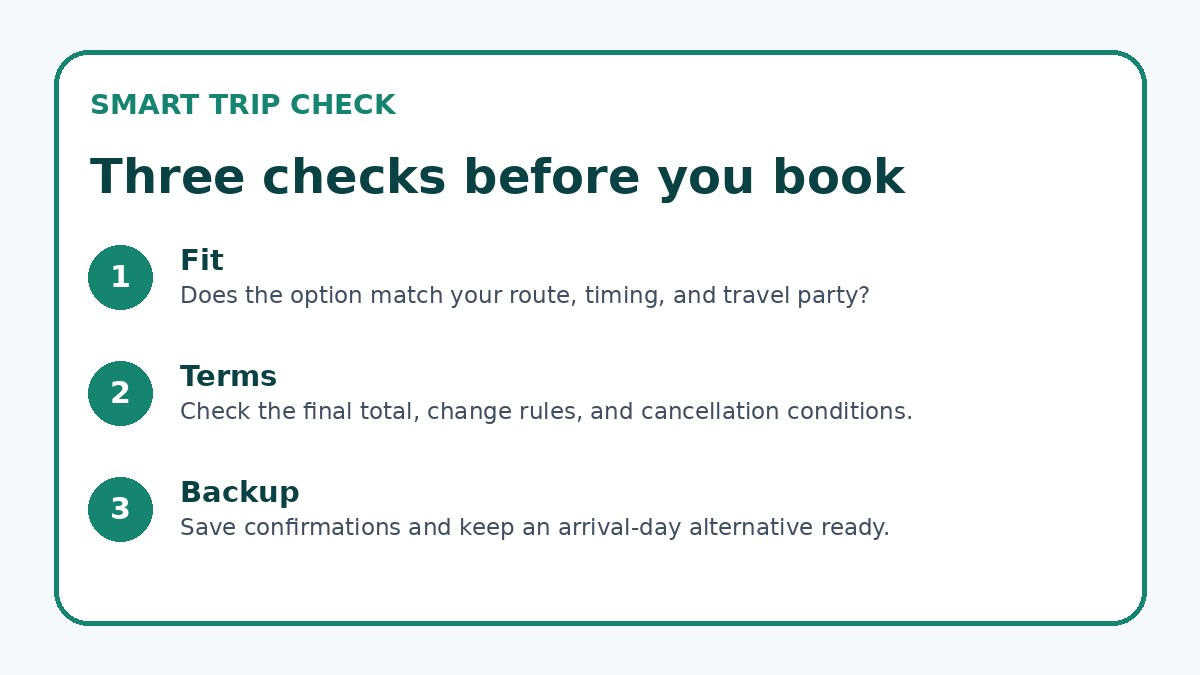
Before finalizing a reservation, verify the provider’s exact departure and arrival locations — some services list stations that share a city name but are different places — and confirm baggage allowances and transfer policies. Check cancellation and change fees on each provider page, because multi-city plans often need flexibility. For rail, look for seat reservations and whether they are included or optional; for buses, check if luggage is included in the fare or charged separately; for car rentals, confirm pick-up/drop-off rules and any geographic restrictions between regions.
Also confirm the level of door-to-door connectivity: how will you get from the station or terminal to your hotel? Look up local transit, ride-hailing options, or shuttle services linked to your arrival point. If you plan to use regional rail passes or multi-leg tickets, read the fine print on validity and covered routes. As you research, keep one browser tab open with each provider’s final booking page so you can compare exact terms, seat maps, and ancillary fees before making a payment.
Before you book
- Map each leg of your route and note the exact departure and arrival addresses or station names for every segment.
- Open the final booking page for each provider to verify baggage rules, change/cancellation fees, and seat-reservation requirements.
- Build at least one time buffer of 60–180 minutes between connections depending on mode and local transit options.
- Reserve or prebook city transfers (airport shuttles, taxis, or metro tickets) when arriving late or with heavy luggage.
- Pack light, secure luggage and a small day bag with essentials to ease multiple check-ins and short hops.
- Save contact details and booking references offline (screenshot or print) in case you lose mobile access.
Packing logistics, comfort and contingency planning
Think through luggage and comfort for each transport mode: long-distance buses often have larger storage under the coach but less room to move during the journey; trains usually allow easier access to luggage on board and permit short walks during longer trips. If you plan multiple short hops, use lighter, easily wheeled luggage so you can move through stations and streets with minimal effort. Also prepare small comforts for longer segments — water, snacks, a power bank, and a compact pillow — and pack a day bag with essentials for overnight stops or unplanned detours.
Make contingency plans for delays or missed connections: allow buffer time between segments, keep digital and printed copies of tickets and important booking numbers, and note local emergency contacts or embassy information. If you’ll be driving, include roadside assistance details and local traffic resources. For any long transfer that crosses into different regions, check whether local transit strikes or seasonal closures are common and build alternate routing options into your plan.
Frequently asked questions
Is the train always faster than the bus between Barcelona and Madrid?
Not always; trains often offer faster city-center to city-center travel, but total door-to-door time depends on where your hotels are located and how you transfer to and from stations. Buses can be competitive if they depart from locations near your lodging or run overnight, saving a night’s accommodation. Compare total travel time, including transfers and local transit, rather than just scheduled journey time. Always check the provider’s departure and arrival locations and projected travel duration on the final booking page before deciding.
Can I mix car rental and trains in a single multi-city plan?
Yes — many travelers combine a long-distance train for the main Barcelona–Madrid link with rental cars for day trips near intermediate stops. If you plan that, coordinate pick-up and drop-off locations carefully; returning a car to a different city may involve extra fees or limited availability. Also verify whether train stations have nearby rental locations that allow one-way rentals. Confirm all rental terms, insurance needs, and geographic restrictions on the rental company’s booking page before committing.
How much buffer time should I allow between connections when building a multi-city route?
Buffer time depends on mode and local transfer complexity. For simple train-to-train transfers within the same station, 30–60 minutes can be adequate for many travelers. For transfers that require switching terminals, moving between bus stations, or traveling with heavy luggage, budget 90–180 minutes. If you’re unfamiliar with local transit or travel during peak hours, err on the longer side. Factor in contingencies like delays, security checks, and time to find taxis or rideshares at arrival points.
Final planning note
Building a Barcelona to Madrid transport plan for first-time visitors becomes manageable when you select a clear spine — train, bus, or car — and then design each intermediate link to match your priorities of speed, cost, and sightseeing. Use the spine to structure your days, add local transport or rental days where needed, and always keep alternatives ready for each segment. Before you book, verify departure/arrival points, baggage allowances, seat reservations, and change/cancellation terms on the provider’s booking page. Compare live options on sites like Trip.com if you wish, but rely on the provider pages for exact terms and final confirmation. With a few practical checks and sensible buffers, you’ll move comfortably from Barcelona to Madrid and enjoy the stops in between.
Continue planning
Check current options and final conditions
Use the provider page to confirm live availability, the final total, cancellation terms, and every condition that matters to your trip.
This evergreen planning guide was created with AI-assisted drafting and a structured quality review. It does not display live prices, schedules, availability, visa guidance, or provider rankings. Verify current details before booking. Some links are affiliate links; we may earn a commission at no additional cost to you.