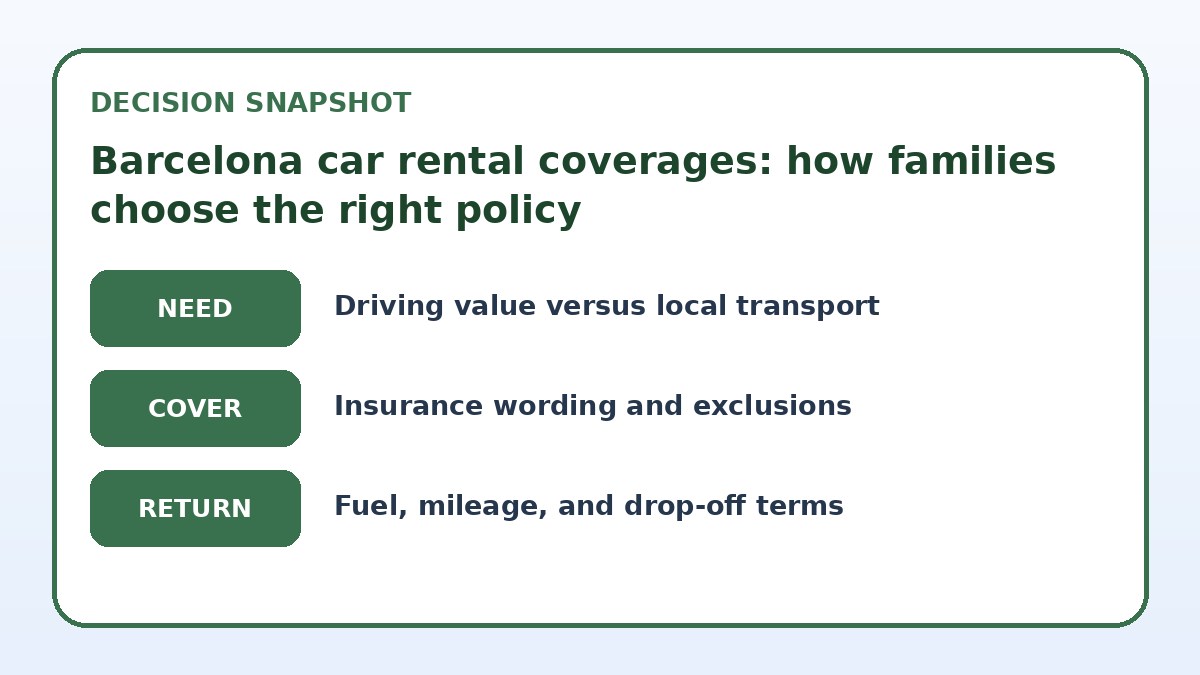
Practical short answer: for families renting a car in Barcelona, prioritize collision damage waiver (CDW) and theft protection limits, confirm the excess amount and who is an authorized driver, and check whether roadside assistance and third-party liability meet Spanish minimums. If you have a credit-card or third-party policy, verify exactly which damage types and charges it covers, and whether it covers tyres, glass, or undercarriage. When you pick up the car, read the rental agreement line by line — don’t rely on summary screens — and get any promised waivers or additional cover written into the contract. Tradeoffs: cheaper base rates often mean higher excess and fewer covered items; broader protection raises daily cost but reduces stress with kids in the car. Below I explain common policy language you’ll see, how to compare options, and which questions to ask at the desk so your family can focus on the trip, not paperwork.
See current options before you compare the details
Availability and final conditions change. Open Trip.com now or keep reading for the practical comparison.
Understanding the core coverages and common wording
Rental companies use a handful of terms repeatedly: Collision Damage Waiver (CDW), Super CDW (or Excess Reduction), Theft Protection, Third-Party Liability, and Roadside Assistance. CDW limits your liability for damage to the rental car but usually still leaves you responsible for an excess (also called deductible). Super CDW or an excess-reduction option lowers that excess or removes it entirely for an extra daily fee. Theft protection limits your responsibility if the car is stolen, but most providers still require you to show reasonable precautions (locked car, no valuables visible) to qualify.
Third-party liability covers damage or injury to others and is legally required; Spanish law sets minimums that the rental company should meet, but those minimums might not cover higher-cost claims. Roadside assistance is sometimes included and sometimes sold as an add-on — check whether assistance includes towing, labour, and cover for events like locked keys or a flat tyre. Also watch for exclusions listed in small print: driving off-road, using the car in certain areas, or breaches of the terms (like driving under the influence) can void cover.
Excess, deposits, and how hold authorizations work
The excess is the amount you must pay if the rental car is damaged or stolen; it is often secured with a hold on your card at pick-up. This hold is not a charge but a temporary authorization for an amount that can be several hundred to several thousand euros depending on vehicle category and insurer terms. Some companies allow you to use a debit card but will typically require a larger hold or additional ID. Ask the agent for the exact hold procedure and how long it will take to release funds after return — the release time depends on your bank, not the rental company.
If you buy an excess-reduction or 'super' product from the rental firm, confirm whether it eliminates the hold entirely or simply reduces it. Some supplementary protections are administrative only and do not change the required hold amount, so the key question is whether the contract states 'no excess' and whether the card hold is removed at collection. On arrival, document the vehicle’s condition with timestamped photos and ensure every pre-existing scratch or dent is listed on the check-out report; this reduces disputes when the deposit hold is released.
| Approach | Best for | Tradeoff to check |
|---|---|---|
| Buy full excess reduction from the rental company | Families wanting minimal out-of-pocket risk and fewer claims hassles at return | Higher daily rental cost; confirm whether the hold on your card is removed at pickup |
| Use credit-card insurance as primary cover | Families with strong card benefits who want to avoid counter add-ons | Must confirm in-writing coverage specifics and driver eligibility; gaps like tyres or windscreen may remain |
| Purchase independent excess-waiver from a third party | Cost-conscious families who want lower excess without paying rental counter rates | You may still need to pay rental company at incident and reclaim reimbursement later; read claim process carefully |
| Stick with basic rental insurance and self-insure small risks | Short drives with low perceived risk and families willing to handle minor repairs themselves | Higher potential out-of-pocket costs for larger damage, and time lost dealing with claims while traveling |
Ready to check the option that fits your plan?
Use your exact dates and traveler details so the provider page can show the current total and conditions.
Third-party policies, credit-card cover, and gaps to watch for
Many families rely on credit-card insurance or independent car-rental insurance to avoid buying redundant coverage from the counter. If you plan to use these, request a written confirmation from the card issuer or insurer that clearly states: coverage applies to rentals in Spain, the vehicle categories covered, whether the policy is primary or secondary, and exact exclusions (tyres, glass, undercarriage, driver age limits, commercial use). The difference between primary and secondary coverage matters: primary pays the claim first, whereas secondary only covers what your other insurer doesn’t.
Common gaps in third-party policies include spares like tyres and windscreen, losses due to negligence (leaving the keys inside), and certain vehicle types (premium vans or SUVs). Also check driver eligibility — some policies exclude drivers under 25 or require that the renter be the primary cardholder. If your backup policy doesn't cover a specific damage type, consider buying that specific waiver from the rental firm or purchasing a standalone excess-waiver product from a specialist provider online.
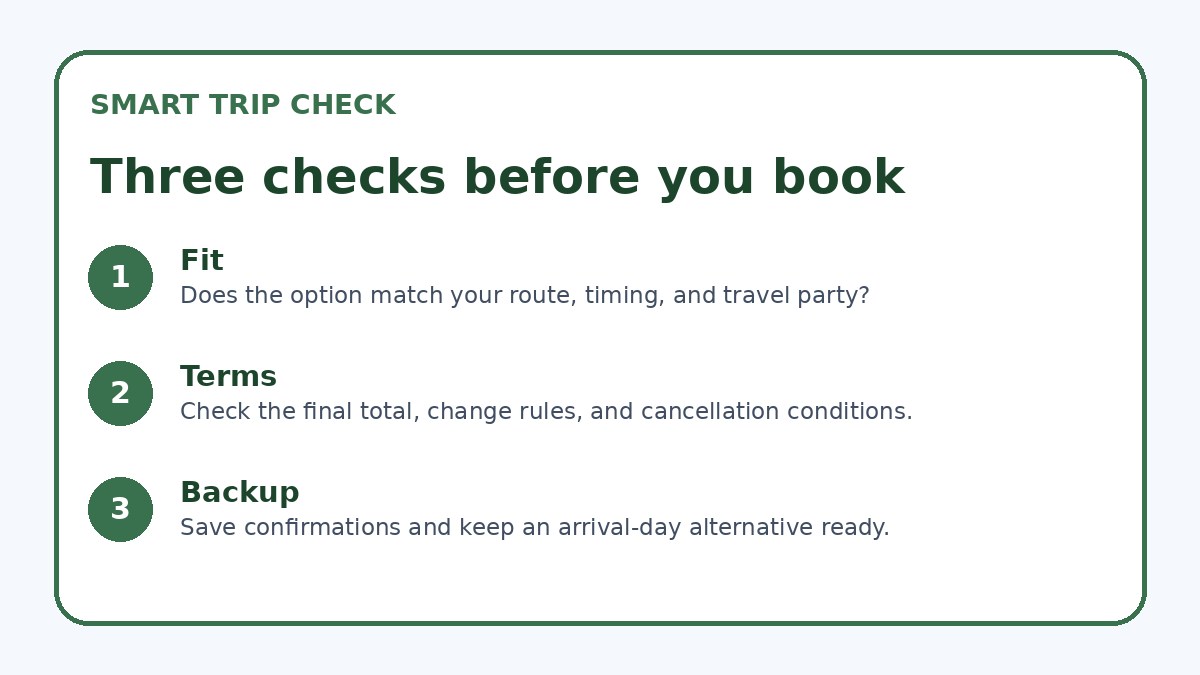
Before you book
- Request written proof from any credit card or third-party insurer that confirms coverage for rentals in Spain and any driver-age limitations.
- Photograph the car (all sides, interior, odometer) with timestamps before leaving the lot and ensure the rental inspector signs the condition form.
- Ask the agent to state the excess amount and the exact hold procedure, then request a printed statement showing any reductions applied.
- Verify whether tyres, windscreens, and undercarriage are covered; if not, buy those specific waivers or plan a budget for potential repairs.
- Confirm the list of authorized drivers and have each driver’s license added to the contract to avoid denial of cover after an incident.
- Keep the rental agreement and claim contact numbers in your phone and a printed copy in the glovebox for quick reference during your trip.
What to check and say at the rental desk with kids in tow
Bring all relevant documents: the printed rental agreement, the credit-card policy in writing if you plan to rely on it, driver licenses for all drivers (and international driving permits if needed), and contact numbers for roadside assistance. While the agent is preparing the paperwork, walk the vehicle exterior and interior with them, point out and have them record any marks, and ask for printed confirmation of the level of cover you purchased. If you added extras like child seats or booster cushions, confirm whether damage to those items is insured or refundable if damaged.
Ask these specific desk questions: 'What is the excess and how is it secured on my card?', 'Does the coverage include tyres, glass, and undercarriage?', 'Who is named as an authorized driver and are there age-related fees?', and 'How long will the deposit hold remain after return?' Get any verbal promises added to the contract. If there’s any unclear language, request a plain-English explanation and, if necessary, a manager to clarify before signing.
Frequently asked questions
Does Spain require extra car insurance beyond what rental companies provide?
Rental companies include third-party liability to meet Spanish legal minimums, but those minimums might not cover high-cost damages. You should verify the level of third-party liability shown on the contract and consider supplemental cover if your family wants broader protection for severe claims. Also confirm whether roadside assistance and cross-border travel are included if you plan day trips outside Catalonia. Always read the insurer’s or rental agreement’s exclusions, and if anything is unclear, ask the provider to put standard limits and exclusions in writing before you finalize the booking.
Will my credit card’s rental insurance cover a collision in Barcelona?
Many credit cards offer rental car insurance, but coverage varies widely. Before relying on it, obtain a written policy document from the card issuer that lists countries covered (Spain), whether the policy is primary or secondary, vehicle types excluded, driver age rules, and the claims process. If the card policy excludes items like tyres or glass, you may still face charges at the rental desk. If the card issuer’s document doesn’t clearly state these points, call the issuer and get explicit confirmation in writing to present at pick-up if needed.
How do I handle a claim if something happens during my family trip?
Immediately report the incident to local police if required and to the rental company, following their loss or accident procedure in the contract. Take photos, gather witness details, and keep copies of any police reports. If you purchased third-party excess-waiver coverage, follow its claims procedure promptly — many require notification within a short timeframe and supporting documentation. Retain all rental paperwork, repair invoices, and correspondence. Remember that reimbursements can take time; if you used a third-party insurer or your credit card, expect to submit the rental company’s final damage invoice as part of your claim.
Final planning note
Families renting a car in Barcelona can simplify decisions by focusing on three things: the excess amount and how it is secured, the exact list of covered items (tyres, glass, undercarriage) and whether those are excluded, and driver eligibility requirements. Decide whether peace of mind (buying a full excess-reduction at the counter) is worth the extra daily fee, or whether your credit card or a third-party waiver covers the gaps you care about. At pick-up, insist on written confirmation of cover levels, document vehicle condition thoroughly, and keep all paperwork handy. A little time spent verifying wording up front will save stress and lost vacation time if the unexpected happens on your family trip.
Continue planning
Check current options and final conditions
Use the provider page to confirm live availability, the final total, cancellation terms, and every condition that matters to your trip.
This evergreen planning guide was created with AI-assisted drafting and a structured quality review. It does not display live prices, schedules, availability, visa guidance, or provider rankings. Verify current details before booking. Some links are affiliate links; we may earn a commission at no additional cost to you.