Short answer: for most families visiting central Bangkok, a rental car is more hassle than help — but it can make sense for certain itineraries. Bangkok’s core neighborhoods, major tourist attractions and large shopping centres are served by trains, river boats, taxis and rideshares that remove the need to navigate heavy traffic and limited parking. However, if your plan includes day trips outside the city, traveling with small children and lots of luggage, or staying in suburbs where public transport is sparse, a car can add convenience and flexibility. This guide gives clear decision criteria you can use while planning, practical tradeoffs to expect, and the checks to run on rental pages and accommodation information before you commit to booking a vehicle.
When a rental car is worth it for families
A rental car becomes worth the trouble when your family’s itinerary stretches beyond the central city and public transport options are inconvenient or unavailable. If you plan multiple day trips to places where timetabled buses are infrequent, or your stops include attractions outside walking distance and away from transit nodes, a car can cut waiting and transfer time. It’s also valuable when traveling with infants or toddlers who need frequent breaks, or when lugging bulky equipment like strollers, large suitcases, or sports gear that would be awkward on trains and peak-hour taxis.
Another situation where renting helps is when your family values flexibility — not just the time saved but the ability to set your own schedule without aligning to transit timetables. For multi-destination road days with several stops, being in your own vehicle lets you leave early or late, stretch on demand, and carry food or child supplies comfortably. If you plan overnight stays outside Bangkok where public connections are slow or the last bus departs early, a car provides reliable door-to-door movement and reduces the stress of coordinating transfers with tired children.
Why cars are often a headache in central Bangkok
Traffic congestion in and around central Bangkok is unpredictable and frequently severe during peak hours. Close-in attractions and neighborhoods are often better reached by elevated or underground trains, river taxis, or short rideshares that avoid jams and remove the stress of driving in a dense city. Parking near tourist spots or inside hotels can be limited or costly. Narrow lanes and one-way systems in older districts also make navigation more complex, which can be a source of fatigue for parents trying to manage children and directions under pressure.
Aside from congestion, consider that many family-friendly hotels in central areas expect guests to rely on transit and may not have free private parking or might charge for it; street parking rules can be strict and enforced. While rideshares and taxis are plentiful and can be more convenient for short hops, they can add up for larger families or when you need child seats. When deciding against a rental, factor in simple logistics like door-to-door ease, the proximity of public transit stops to your accommodation, and whether attractions on your itinerary are clustered close enough to avoid repeated car journeys.
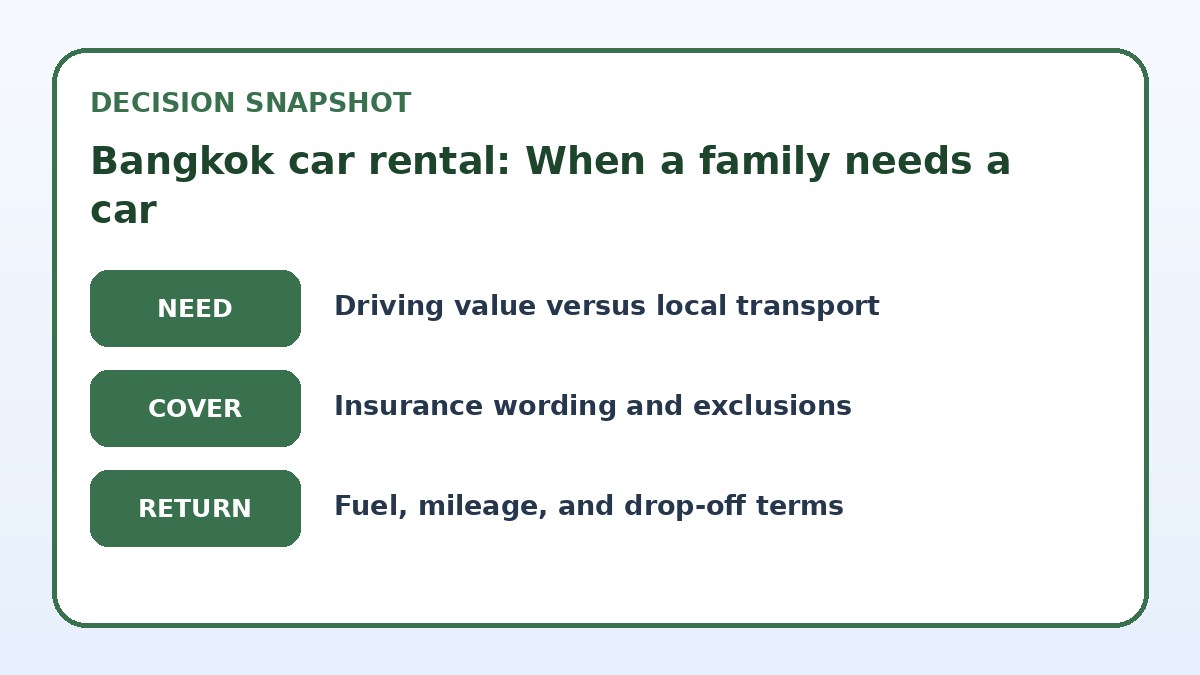
| Approach | Best for | Tradeoff to check |
|---|---|---|
| Rent for the entire stay | Families doing several multi-stop day trips or staying outside city center | Higher costs, parking hassles, and driving in city traffic |
| Rent only for specific day trips | Families who mainly use city transit but need a car for occasional excursions | Extra time to pick up/return car and possible one-day rental premiums |
| No rental — rely on public transport and taxis | Families staying central and visiting clustered attractions | Less flexibility for off-grid destinations and limited luggage convenience |
| Hybrid: taxis/rideshares for city, private transfer for airport | Families wanting stress-free airport moves and no daily driving | Potentially higher per-ride costs and variable availability late at night |
How to compare rental vs. public transport for your specific trip
Make a side-by-side comparison for a typical day in your trip: estimate door-to-door travel times and total cost for each key day — morning airport transfer, museum or park day, and any long day trips. For each journey, list total time door-to-door using public transit plus walking, including transfers and wait times, and contrast that with estimated drive time plus parking and walking to the attraction. Be realistic about Bangkok congestion windows (weekday rush hours, weekend markets) and add buffer time for parking and finding your way with children in tow.
For costs, add up taxi or rideshare fares for the whole day and compare them with rental daily rates, fuel estimates, parking fees, and any tolls. Factor in child-seat rentals if required — these can be an additional expense with car companies and might not match your safety expectations. Also check if your accommodation provides free parking or charges a substantial daily rate. If you’re still unsure, try a hybrid option: use public transport in the city and rent a car just for the day(s) when a road trip is planned.
Before you book
- List each day’s main journeys and compare door-to-door time for driving versus public transport.
- Ask your hotel whether they provide secure, family-sized parking and whether any fees apply.
- Confirm child-seat availability, type, and cost directly with the rental company before booking.
- Check the rental agreement for insurance excess, additional driver rules, and geographic restrictions.
- Estimate fuel and tolls for planned routes and add parking fees to the daily rental cost.
- Book a rental only after verifying pickup/drop-off hours, late-return penalties, and required documents.
Practical checks before you book a family rental
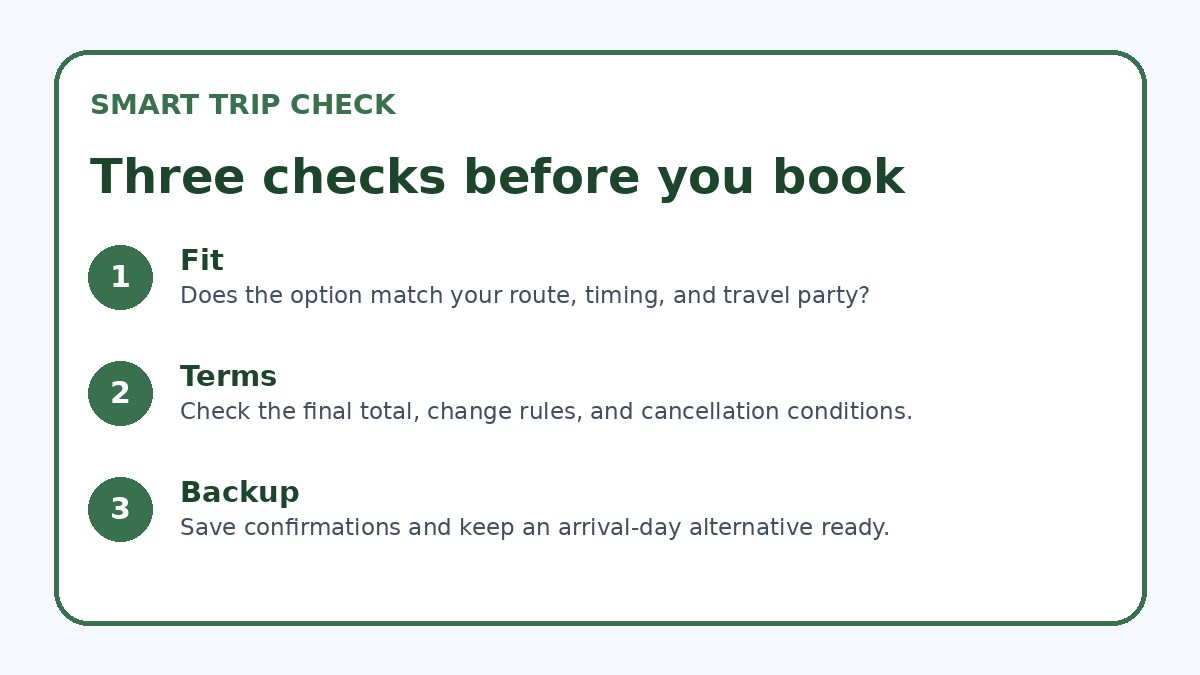
Before you book, verify several provider specifics on the rental company’s final booking page: exact insurance coverage and any deductibles; rules and cost for adding an additional driver; child-seat availability and compatibility; and mileage limits or geographic restrictions. Rental agreements can restrict where you can drive (for example, cross-border travel) and may keep strict policies about returning the vehicle with a full tank. Confirm pickup and drop-off locations, after-hours return procedures, and what documentation the driver must present, such as an international driving permit if required for your nationality.
Also check accommodation details for parking size and access, or ask the hotel directly about family-friendly parking arrangements. If you’ll be using toll roads, find out how tolls are handled: electronic tags, on-the-spot payment, or post-rental charges. Finally, consider guest safety and convenience features you want — GPS or offline maps, a reliable air-conditioning system, rear-seat space for child seats, and easy-to-clean upholstery — and confirm these features with the provider before booking. If you prefer, compare availability and current terms on Trip.com as one option to review providers, but verify the supplier page before finalizing.
Frequently asked questions
Can I use a standard international driving license in Bangkok for a rental?
Driving license requirements depend on your nationality and the rental company’s policies. Many visitors need an international driving permit (IDP) in addition to their home-country license, while others may be able to use a national license if it’s in English. Rental companies will state requirements on their booking pages; check that page carefully and carry both the physical license and passport when picking up the vehicle. If in doubt, contact the supplier directly to confirm accepted documents before making a reservation.
Are child seats required and are they safe to rent with Bangkok car rentals?
Child-seat laws and enforcement can vary, and rental companies typically offer child seats for an extra fee. If you need a specific type (rear-facing for infants, forward-facing with a harness, or boosters), confirm availability and exact model with the provider’s final booking confirmation. Inspect the seat on pickup for proper fit, cleanliness, and secure installation. Many families bring their own compact travel seat if they have strict safety preferences; otherwise, verify the supplier’s maintenance and inspection policies before accepting the rental seat.
How do I handle parking and traffic when driving in Bangkok with kids?
Expect congested peak periods and allow generous extra time for any scheduled plans. Choose hotels with guaranteed onsite parking or secure nearby garages, and ask staff about quickest entrance routes to avoid narrow lanes. For daily outings, plan routes that use main arterial roads when possible and identify parking options close to each stop in advance. Keep an emergency kit with water, snacks, and sun protection for children, and consider avoiding long inner-city drives during rush hours to reduce stress. When you’re uncertain about a parking spot, use secure public garages rather than street parking.
Final planning note
For many families visiting central Bangkok, public transport plus targeted taxis or rideshares offer the best balance of convenience, cost and stress reduction. But a rental car can be the right choice if your trip includes several day trips outside the city, you’re traveling with young children and lots of gear, or you’ll be staying in neighborhoods with limited transit access. Make the decision by mapping typical daily movements, comparing total time and costs, and verifying all rental and hotel parking details on provider pages before booking. If you take a car, prioritize confirmed child seats, clear insurance terms and a realistic plan to avoid peak congestion windows.
Continue planning
Check current options and final conditions
Use the provider page to confirm live availability, the final total, cancellation terms, and every condition that matters to your trip.
This evergreen planning guide was created with AI-assisted drafting and a structured quality review. It does not display live prices, schedules, availability, visa guidance, or provider rankings. Verify current details before booking. Some links are affiliate links; we may earn a commission at no additional cost to you.