If you need a practical answer: choose the mode that matches what matters most—comfort and scenery (train), lowest complexity and frequency (coach), flexibility for a car or coastal stopovers (ferry plus driving or connection), or speed and reach (flight). Auckland to Wellington transport is not a one-size-fits-all decision: schedules, luggage needs, comfort expectations, and how much of the route you want to see affect the right choice. This guide explains the strengths and tradeoffs of rail, long-distance coach, ferry-plus-drive, and driving yourself, with clear decision criteria for first-time visitors. Read the quick take if you want an immediate recommendation, then use the sections to check the logistics you must verify on the provider’s booking page before committing.
Train: comfort and scenery, with booking checks
A train-based journey appeals if you want to relax, read, or watch changing landscapes without concentrating on navigation. Trains usually offer more room to move, larger windows, and a calmer environment than coaches. For first-time visitors the appeal is the steady pace and the chance to arrive refreshed. Keep in mind that train services on this route may not be as frequent as other modes, so selecting times that match your onward plans matters.
Before booking, verify seat and baggage policies on the provider’s official page, including whether seat reservations are required and what quantities and sizes of luggage are included. Check whether food service is present or if you should pack snacks and water. If the train has sleeper or premium seating options, confirm the exact amenities and cancellation terms. Use Trip.com or the provider’s site only to compare current availability and to confirm the final booking conditions shown at checkout.
Coach: simple, frequent, and easy to compare
Coaches are typically the most straightforward way to move between cities when you want frequent departures and simple door-to-door routes. They tend to run on major roads and call at convenient urban stops, which is useful if you’re staying near a central station. For first-time visitors, coaches reduce the need to organise transfers or parking and often have flexible ticketing options that suit uncertain plans.
When comparing coach options, check the provider page for exact pick-up and drop-off addresses, luggage allowances, and whether onboard amenities like Wi-Fi or toilets are included. Confirm whether the service is direct or makes many stops, as indirect services can extend journey times. Look at the change and refund policy carefully if your schedule might shift. Trip.com can be useful to see what operators currently show, but always verify seating and baggage rules with the carrier before paying.
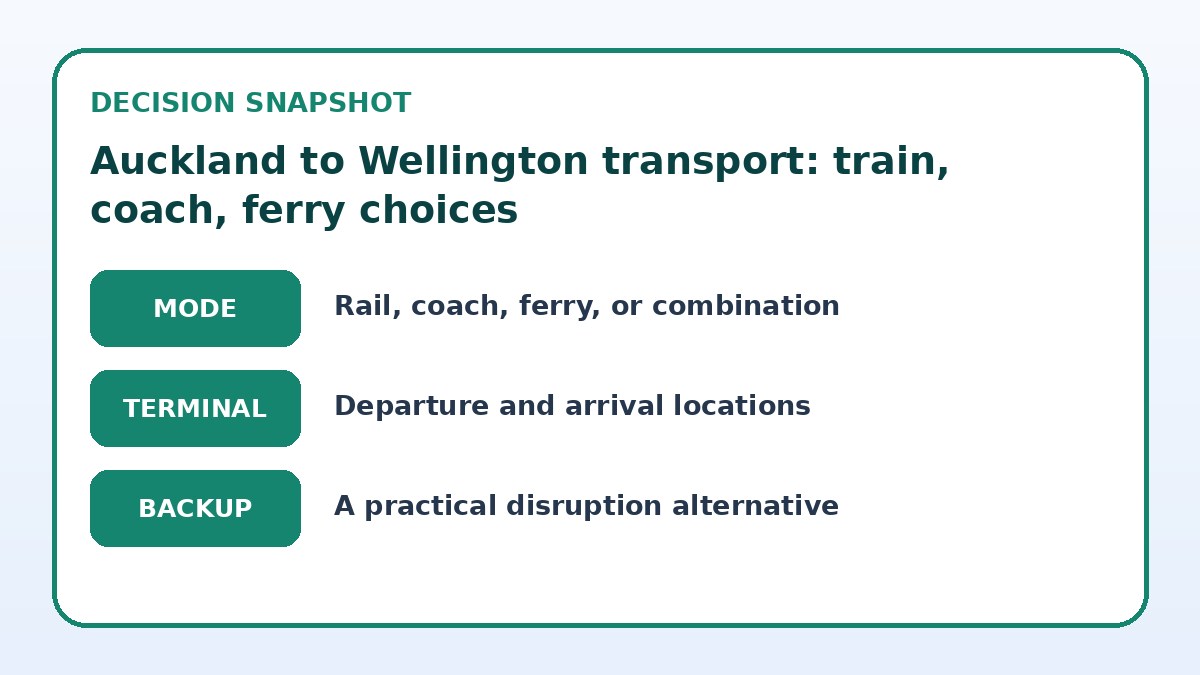
| Approach | Best for | Tradeoff to check |
|---|---|---|
| Train | Travellers who prioritise comfort, scenic views, and relaxed pacing. | Fewer departures and potentially more restrictive luggage rules than buses. |
| Coach | First-time visitors wanting simple, frequent services and direct urban stops. | Longer time on the road with less space to move and fewer scenic viewpoints. |
| Ferry plus driving/connections | Those wanting coastal stops and a flexible, exploratory itinerary. | More planning and transfers; schedules for ferries and connecting services must align. |
| Drive or fly | Travellers needing speed, full itinerary control, or access to remote stops. | Higher effort or cost; driving requires navigating and responsibility for the vehicle. |
Ferry plus driving or connecting links: flexible but layered
Combining a ferry crossing with driving or local connections is the best option for travellers who want to include coastal scenery and stopovers along the way. This approach is more of a mini-road-trip than a single-mode transfer: you can disembark to explore harbourside towns, take different routes overland, and control your itinerary. For visitors who value flexibility and exploring off-the-beaten-route stops, ferry-plus-drive opens possibilities that direct surface services do not.
This option requires more planning: verify the ferry operator’s vehicle and foot-passenger terms, boarding windows, and how transfers are timed with road or bus connections. If you plan to hire a car, confirm the pickup and drop-off locations and any one-way fees on the rental company’s booking page. Check how long typical connections take between landing and the next leg, and factor in extra time for unexpected delays or busy holiday periods.
Before you book
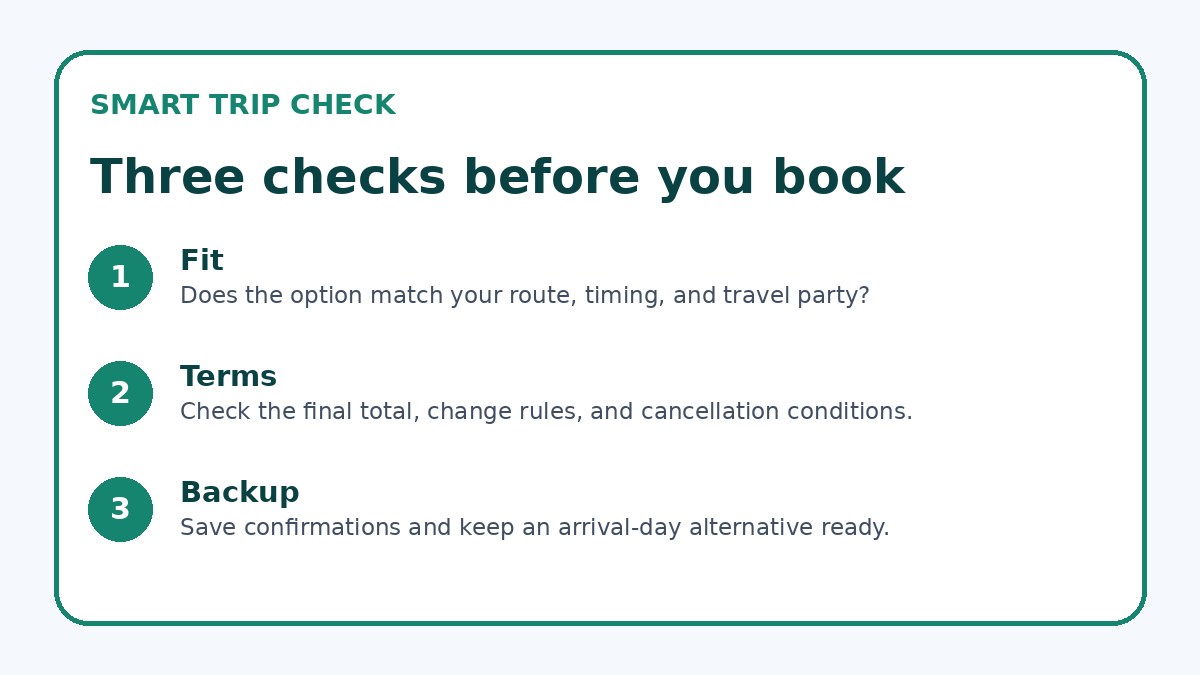
- Confirm exact departure and arrival locations and how you will get to and from them on arrival.
- Verify luggage limits, seat reservation rules, and whether meals or refreshments are included.
- Check cancellation, change, and refund terms on the provider’s final booking page before paying.
- If combining modes, allow generous connection time between services to absorb delays.
- If renting a car, inspect insurance coverage, driver restrictions, and the fuel/return policy.
- Compare total door-to-door travel time, not just advertised transit time, when choosing a mode.
Self-drive or fly: speed versus scenery and effort
Renting a car or taking a flight prioritises speed and independent timing. Driving gives you total control of where to stop, which side roads to take, and how long to linger at viewpoints; it’s ideal if you want a personalised itinerary that includes off-route attractions. Flying cuts the transit time between the two cities but transfers to and from airports and baggage handling may offset door-to-door time for some travellers.
If you choose to drive, confirm insurance cover, local road rules, and any required tolls or vehicle permits on your rental agreement. For flights, compare total travel time including airport transfers and the baggage rules on the airline’s site before booking. Whether renting or flying, verify refund and change policies and consider booking flexible fares or insurance if your plans might shift. Always check the provider’s official page for exact pickup/drop-off locations and the final terms at checkout.
Frequently asked questions
Is there a single best way to travel from Auckland to Wellington?
There isn’t a single best option — it depends on what you value most. If you want a relaxed journey with views and more space, choose the train. If you prefer frequent, simple departures that drop you in city centres, a coach is practical. Ferry plus driving suits flexible explorers who want coastal stops. If door-to-door speed matters, compare flight options while factoring in airport transfers. Decide by weighing comfort, total travel time, convenience, and how many transfers you’re willing to manage.
How should I compare total travel time between modes?
Compare door-to-door time: add transfer times to and from stations or airports, expected waiting for connections, and luggage handling. For ferries, include boarding windows and any time spent driving after disembarkation. For rentals, add time for pick-up, paperwork, and potential one-way drop fees. Use provider pages to confirm typical connection and boarding windows, then add a buffer for traffic or delays. That gives a realistic sense of how long the trip will actually take, not just the transit segment.
Where can I check current schedules and book tickets?
Use the operators’ official websites to confirm the latest schedules, exact terms, and vehicle or baggage rules before booking. Trip.com can be used as one place to compare current availability across modes, but always review the carrier’s final booking page for the definitive conditions and any optional extras. If your itinerary mixes providers, read each provider’s connection and refund policies to avoid surprises when plans change.
Final planning note
Choosing the right Auckland to Wellington transport option comes down to priorities: choose the train for comfort and scenery, a coach for simplicity and frequency, ferry-plus-drive to explore the coastline, or driving/flying for speed and control. First-time visitors should map their must-dos, then verify pickup locations, luggage rules, and cancellation terms on provider booking pages before buying. Allow extra time for transfers and factor in how much effort you want to spend navigating connections. With those checks completed, you can book the mode that matches your travel style and feel confident about the journey.
Continue planning
Check current options and final conditions
Use the provider page to confirm live availability, the final total, cancellation terms, and every condition that matters to your trip.
This evergreen planning guide was created with AI-assisted drafting and a structured quality review. It does not display live prices, schedules, availability, visa guidance, or provider rankings. Verify current details before booking. Some links are affiliate links; we may earn a commission at no additional cost to you.