
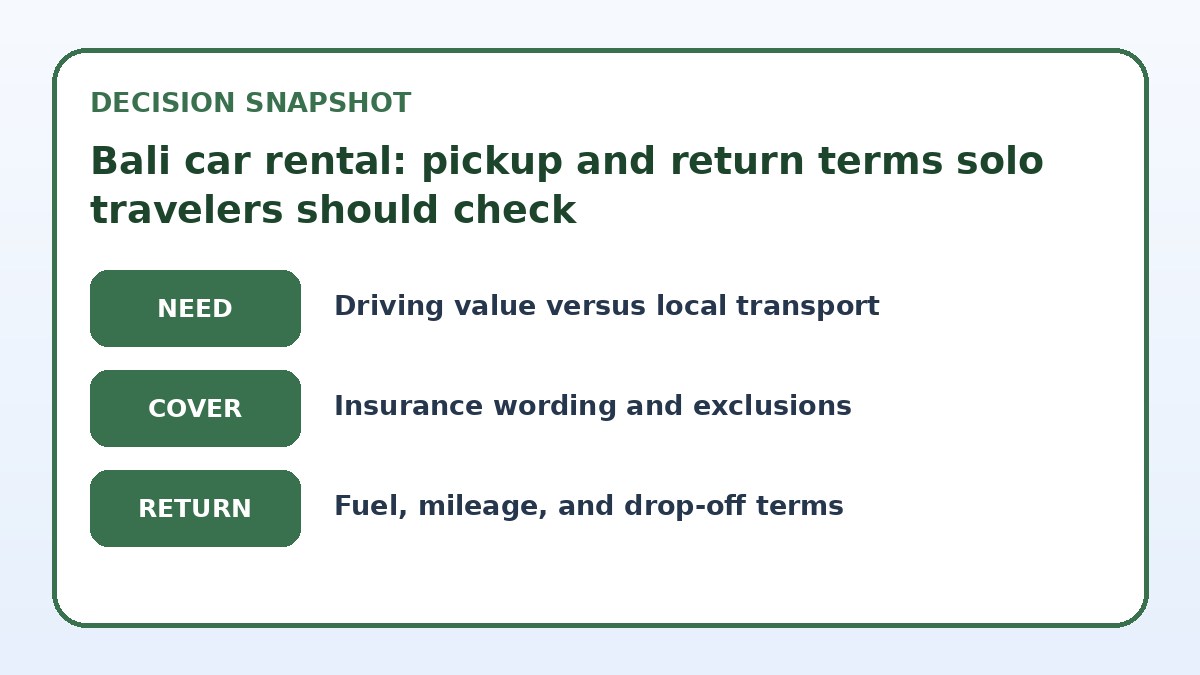
If you’re a solo traveler renting a car in Bali, the most practical first step is to read the pickup and return terms before you book. Those contract lines define when you’re liable for damage, whether you can cross the island’s ferry links, who pays for fuel and late returns, and what documentation a single driver needs. Many issues that become stressful on arrival—unexpected fees, a denied pickup because of ID or license format, or a claim over minor scratches—are preventable when you compare key terms and plan contingencies. This guide lays out the exact clauses and checks to focus on, tradeoffs between airport pickup and off-airport pickup, and how to inspect the car and document condition. It also shows how to decide between cheaper basic coverage and higher protection for peace of mind, and which provider statements you must verify on the booking page before you finalize payment.
See current options before you compare the details
Availability and final conditions change. Open Trip.com now or keep reading for the practical comparison.
What to check on the pickup page
Start by reading the provider’s pickup section line by line. Confirm the exact pickup address, meet-and-greet procedures, and whether you’ll collect at the airport arrivals area, an off-airport lot, or from a shuttle desk. For solo travelers, the most common problems are mismatched pickup hours and airport transfer details: if the supplier requires a phone call on arrival or doesn’t staff the lot overnight, you need that instruction in writing. Also validate ID and license requirements—the booking page should state whether your country’s license is accepted, whether an International Driving Permit is required or recommended, and any translation or notarisation rules.
Next, check vehicle condition and documentation expectations at handover. The supplier should state how pre-existing damage is recorded: many companies provide a digital checklist or photo report during pickup. Ask whether you’ll get a printed or emailed rental agreement and how the company documents the fuel level and odometer reading. If you plan to use toll roads or ferries, confirm whether the vehicle is fitted with the provider’s toll device or whether you’ll reimburse tolls yourself. Finally, check the designated contact method for late arrival—WhatsApp, phone, or desk—and save those details in two places.
Insurance, excess, and single-driver risks
Insurance descriptions can be dense but are essential for solo trips. The booking page should clearly list third-party liability, collision damage waiver (CDW), theft protection, and the amount of any excess or deductible. For solo travelers, the main decision is whether to accept the CDW with a high excess—and buy separate excess-waiver coverage elsewhere—or to book a more comprehensive package from the supplier. Be wary of wording that excludes certain types of roads, driver ages, or ferry crossings; exclusions can void cover in common Bali situations, such as taking the car onto Lombok or remote coastal tracks.
Also check who is an authorised driver and what happens if you lend the car. Some contracts restrict additional drivers or charge a daily fee. If you’re the only driver, ensure the policy names you explicitly and that your license details are recorded. Confirm what documentation the company requires to process a damage claim and whether roadside assistance is included. If roadside help is limited or slow, solo travelers should plan for simple contingencies: a charged power bank, local emergency numbers, and a backup ride app installed.
| Approach | Best for | Tradeoff to check |
|---|---|---|
| Airport pickup | Arrivals with luggage and immediate departures | Higher handling fees, possible queues, and stricter ID checks on arrival |
| Off-airport pickup | Lower cost and faster handover for daytime arrivals | Requires a short transfer and clearer communication for meet-and-greet |
| Basic insurance with high excess | Lower upfront rental rate if you accept financial risk | You may face large out-of-pocket costs for damage unless you buy excess waiver |
| Comprehensive supplier cover | Solo travelers prioritizing convenience and minimal paperwork on return | Higher rental price but fewer disputes and simpler claims process |
Ready to check the option that fits your plan?
Use your exact dates and traveler details so the provider page can show the current total and conditions.
Return terms, timing, and fuel policy
Return terms are where unexpected charges often appear. Confirm the return location and whether different drop-off points incur a one-way fee. Note the supplier’s allowed return window—some contracts allow a grace period of 29–59 minutes before charging an hourly or daily rate, while others bill a full extra day for late returns. For solo travelers catching a flight or ferry, work backwards from your departure time to allow for refuelling, inspection, and a quick damage check report with a staff signature or timestamped photos.
Fuel policy deserves explicit attention. Full-to-full is the most transparent: you pick up with a full tank and return full to avoid fuel reconciliation charges. Pre-paid fuel can look convenient but often involves paying for an entire tank even if you return partly full. If the provider uses a fuel service to top up on return, ask how they calculate the charge and whether you’ll receive fuel receipts. Always photograph the fuel gauge and odometer at pickup and drop-off and keep those images with your booking confirmation.
Before you book
- Screenshot the supplier’s pickup and return address, hours, and contact number from the final booking page before payment.
- Confirm that your driving license format is accepted and whether an International Driving Permit is required; upload or photograph the documents if requested.
- Take timestamped photos of the car’s exterior, interior, odometer, and fuel gauge at pickup and again at return; keep copies separate from the vehicle.
- Record the rental agreement number and any staff name who inspects the car; ask for a stamped or emailed condition report at handover.
- Verify insurance inclusions, the exact excess amount, and whether ferry crossings or island returns are excluded in writing.
- Plan return timing with a buffer for refuelling and inspection; if your travel crosses airports or ferries, allow extra time to avoid late fees.
Practical pickup and return strategies for solo travelers
Choose pickup and drop-off locations to match your itinerary and risk tolerance. Airport pickups are convenient but can carry handling fees, longer queues, and stricter ID checks; off-airport locations may be cheaper and quicker but require a short transfer. If you arrive late at night, prefer suppliers with documented 24/7 handover processes or those offering after-hours pickup without needing real-time staff. When renting for a one-way trip between regions or islands, confirm in advance whether cross-island travel is permitted and what administrative steps the company requires for returns on different islands.
At both pickup and return, document everything. Walk the car with staff, point out existing scratches, and insist on a stamped or emailed condition report. Take timestamped photos of every side of the vehicle, the interior, the trunk, and close-ups of existing damage and the fuel gauge. If a dispute arises on return, having these images and a recorded handover time will make it far easier to contest a damage charge. Keep the supplier’s contact details handy and screenshot the booking confirmation and terms shown on the provider’s final booking page before you pay.
Frequently asked questions
Can a solo traveler pick up a rental car at Ngurah Rai Airport without extra ID?
Most suppliers list specific ID and license requirements on their booking pages. For Bali pickups at Ngurah Rai (Denpasar), verify whether the provider accepts a foreign license alone or requires an International Driving Permit and passport. Also check if the company requires a credit card in the driver’s name for the security deposit and whether debit cards are accepted. Always confirm these points on the provider’s final booking page and bring printed copies of any documents the supplier requests.
What should I do if the car has damage that wasn’t listed on the check-in report?
If you discover unrecorded damage at pickup, do not accept the keys until the issue is documented. Insist the staff update the condition report, take timestamped photos, and provide a signed or emailed copy. If staff are uncooperative, escalate to the supplier’s local office or customer service contact shown on the booking page and note the time. If a claim appears after return, your timestamped photos and any communications from pickup are your strongest evidence to dispute charges.
Is it safe to drive a rental car solo on Bali’s roads and across to nearby islands?
Driving solo in Bali is common but requires cautious judgment: traffic can be congested in tourist areas, and narrow coastal roads may be uneven. Check the rental terms for explicit permissions or exclusions regarding ferry crossings to nearby islands such as Nusa Penida or Lombok; some policies void insurance if the car is taken on a ferry. If you anticipate island travel, verify ferry allowances and any extra paperwork on the supplier’s booking page. Plan routes conservatively, avoid night driving in remote areas, and ensure roadside assistance contact details are clear.
Final planning note
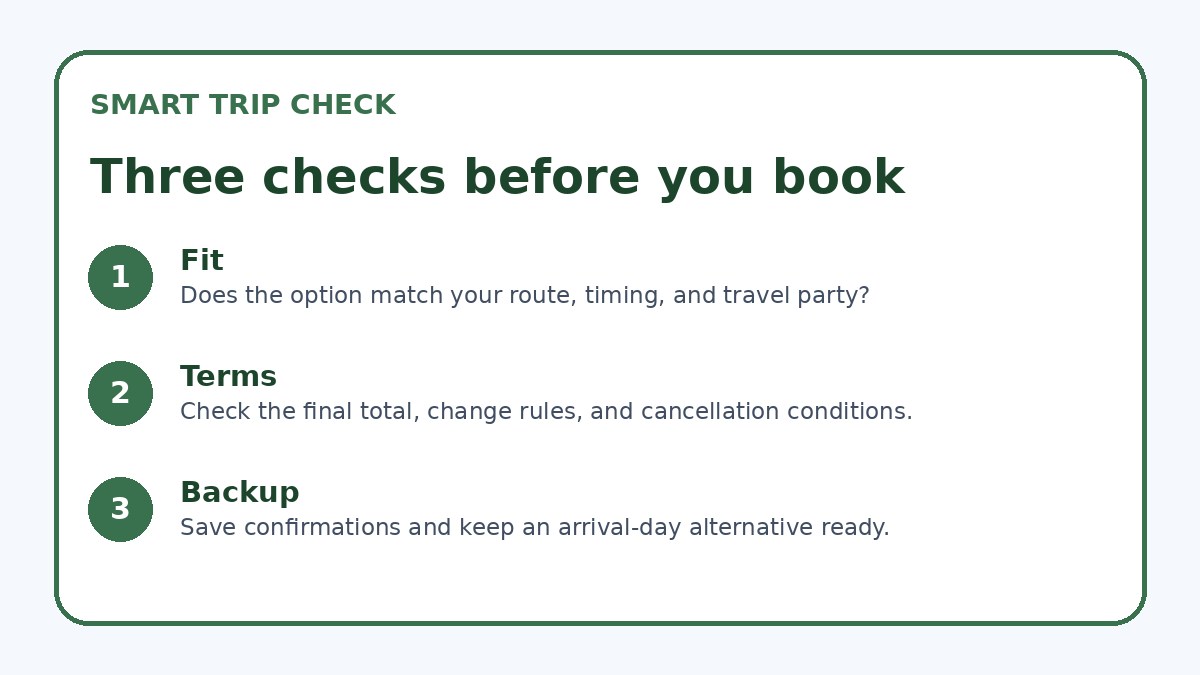
For solo travelers, the smallest unchecked clause in pickup or return terms can create a stressful or costly situation. Focus on three things before you book: confirm pickup and return logistics and times, understand exactly what insurance and excess you accept, and document the car at both handover and return. Choose pickup locations and coverage levels to match your comfort with risk and the structure of your itinerary. Finally, always verify the precise terms on the supplier’s final booking page—if something is unclear, message the provider and save their written response. Trip.com is one option to compare current availability and provider notes, but treat every supplier’s booking page as the definitive source you must verify.
Continue planning
Check current options and final conditions
Use the provider page to confirm live availability, the final total, cancellation terms, and every condition that matters to your trip.
This evergreen planning guide was created with AI-assisted drafting and a structured quality review. It does not display live prices, schedules, availability, visa guidance, or provider rankings. Verify current details before booking. Some links are affiliate links; we may earn a commission at no additional cost to you.