Practical answer first: plan Auckland family travel for the shoulder seasons—late autumn (March–May) and early spring (September–November)—if you want fewer crowds at popular attractions, more hotel availability in family rooms, and better chances of mild weather without the summer rush. For families who prioritize predictable outdoor days, book accommodation before the shoulder windows begin and keep flexible flight options; for those who value school holiday alignment, weigh the benefit of slightly higher demand against easier local transport and event availability. The tradeoffs are straightforward: you may still hit a rainy day in shoulder months, and some seasonal services can operate on reduced hours. Use the guidance below to decide which shoulder window fits your family's rhythms, how to compare offers, and exactly what to verify on providers’ booking pages before you finalize plans.
Choosing which shoulder season fits your family
Decide whether late autumn or early spring suits your household routines. Autumn often delivers stable, cooler-but-comfortable days after the summer crowds have thinned; spring brings earlier daylight and blossoming parks, which can energize children for outdoor play. Consider children’s school timetables, parental work flexibility, and whether you prefer to see seasonal blooms or crisp autumn light for sightseeing photos. Also weigh local event calendars—festivals and regattas often sit outside peak summer and can affect availability regardless of season.
Think about activities you want to prioritize. If island ferries and coastal walks are central, choose a window with historically calmer seas and longer daylight, and be prepared to swap days if a forecast turn occurs. If museum days and indoor attractions anchor your itinerary, either shoulder season works but check operating hours—some attractions reduce schedules off-peak. Balance weather risk tolerance, the need to avoid high-season crowds, and the convenience of travel days for children when selecting your window.
What to book first and what to leave flexible
Start with flights and accommodation as your anchors. For families, securing a room with the necessary sleeping arrangements is more important than chasing the lowest fare; having a confirmed family room or apartment reduces stress on arrival. Choose flight options that offer reasonable change policies and consider itineraries with fewer connections. When comparing fares, factor in total travel time and the number of transfers—both matter more with kids than a small fare saving.
Keep internal plans flexible where possible. Book key paid experiences that have limited capacity (like certain child-friendly wildlife tours) early, but postpone day-to-day bookings such as restaurants or optional tours until closer to travel when you can check weather and energy levels. If you plan to rent a car for day trips outside Auckland, reserve a vehicle suitable for car seats and family luggage but review cancellation terms so you can adapt dates if better shoulder-season days open up.
| Approach | Best for | Tradeoff to check |
|---|---|---|
| Book early for the shoulder window | Families needing specific room types or multiple connecting rooms | Less flexibility if you want to shift dates to chase better weather |
| Wait for last-minute shoulder deals | Families with flexible schedules and tolerance for itinerary changes | Risk of limited availability for larger family rooms or childcare services |
| Choose flexible fares and refundable accommodation | Families prioritizing weather and schedule adaptability | Often higher upfront cost or less favorable non-refundable rates |
| Lock accommodation, keep activities adjustable | Families who want a stable base but adaptable daily plans | May miss discounts on fully prepaid bundled packages |
Comparing accommodation types and locations
For families, location often beats star rating. A centrally located apartment or family suite near public transport reduces transit time and fatigue—essential with small children. Look for properties that explicitly list family amenities: extra beds, kitchen or kitchenette, laundry facilities, and quiet sleeping areas. When evaluating deals, compare total convenience: fewer transfers from the airport, proximity to parks and playgrounds, and easy access to ferry terminals if you plan a day trip to nearby islands.
Trade cost against convenience with a clear checklist. Self-catering accommodations help with picky eaters and late bedtimes, but factor in if you want daily cleaning or on-site babysitting. Hotels may offer more predictable services but could be pricier for larger rooms. Verify room types, bedding configurations, and child policies on the provider’s booking page before committing. If you’re using an aggregator like Trip.com to compare availability, cross-check the property’s own site and cancellation terms to confirm exactly what’s included for families.
Before you book
- Match your preferred shoulder-season window with school schedules and local event calendars before setting travel dates.
- Reserve family-appropriate accommodation first—confirm bed layouts, kitchen access, and child facilities on the booking page.
- Compare flight options by total travel time and changeability, not just headline fare amounts; verify baggage rules before booking.
- Book limited-capacity family experiences early, but hold off on nonessential day tours until you can check weather forecasts.
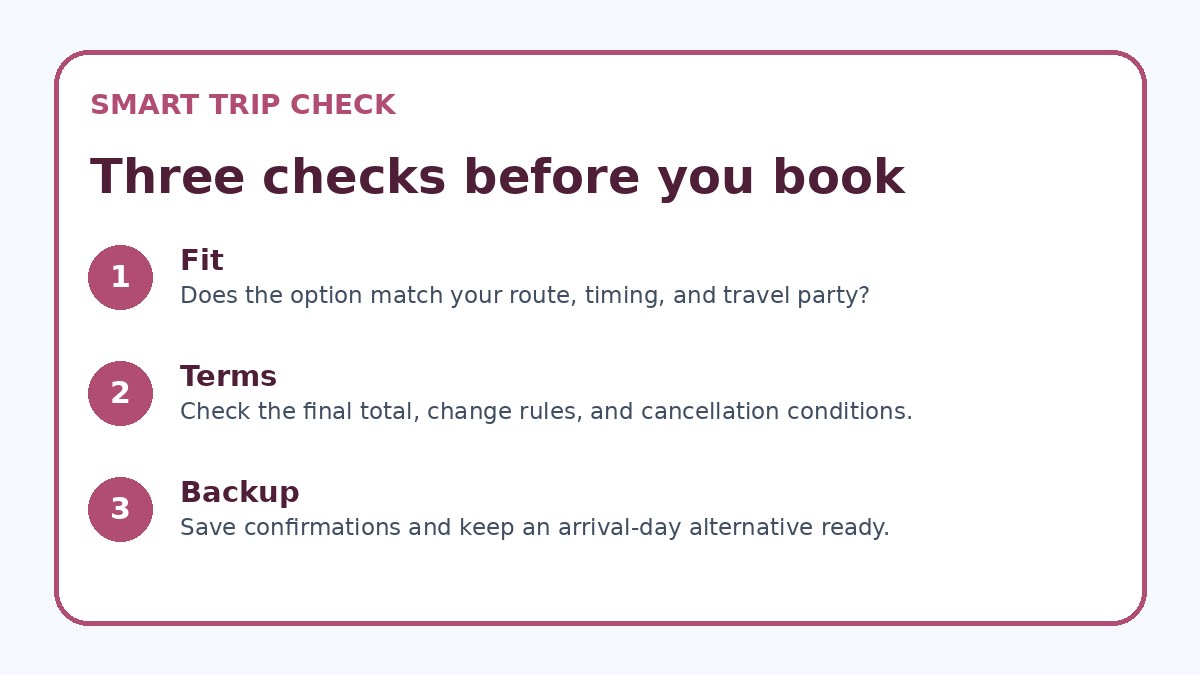
- Confirm cancellation and change policies for each booking element and screenshot or save the confirmation pages.
- Verify local transport timetables, ferry schedules, and attraction hours for your exact dates on provider pages before final payment.
Practical checks before you hit the ‘book’ button
Always confirm cancellation and change policies for each booking element—flights, accommodation, and any prepaid activities. For flights, read the fare rules so you know change fees and baggage allowances. For accommodation, verify bed layouts, on-site facilities, and whether any taxes or resort fees are shown at checkout. When dealing with child-specific extras—cribs, rollaway beds, or extra towels—check whether those are free or charged and how they are requested and confirmed.
Double-check local transport links and operating hours nearer your travel dates. Ferry schedules, certain regional buses, and some attractions may alter timetables outside peak season; confirm these on providers’ final booking pages. If you plan on driving, ensure your chosen vehicle can legally and comfortably fit car seats and luggage, and verify any young-driver restrictions. Finally, scan reviews with an eye for family mentions—practical notes like noise levels, stair access, and kitchenette usability matter more than overall ratings for family stays.
Frequently asked questions
Are shoulder seasons in Auckland genuinely cheaper for families?
Shoulder seasons often reduce competition for family-size rooms and can offer better availability, but not always cheaper fares—prices fluctuate by event timing, school holidays, and supplier promotions. Instead of assuming lower cost, compare total trip value: family-friendly room configurations, added benefits like included breakfasts or kitchen facilities, and flexible change policies can make slightly higher-priced options better for families. When you find a promising deal, verify the full price breakdown and cancellation terms on the provider’s booking page before committing. You can compare current options on platforms like Trip.com but always cross-check the property or carrier details directly.
How should I weigh weather uncertainty when booking a shoulder-season family trip?
Accept that shoulder seasons carry more variable weather than high summer or midwinter. Plan a mix of indoor and outdoor activities so a rainy day still offers rich options—museums, aquariums, and hands-on learning centers are good backups. Book any essential outdoor experiences with flexible policies or refundable options, and keep one or two buffer days for rescheduling. Also consider accommodations that allow relaxed mornings (kitchenette, laundry) so a wet morning won’t derail the schedule. Always check provider cancellation and change rules before booking.
Should I prioritize a central base or quieter suburbs when traveling with kids?
A central base reduces transit time, making naps, midday rests, and quick returns easier—especially valuable if you plan frequent short excursions. A quieter suburban stay might offer more space, playgrounds, and lower noise, but it usually increases daily transit time and may complicate evenings. Evaluate your family’s tolerance for travel time, desire for on-site amenities, and whether you’ll rely on public transport or a rental car. Verify proximity to transport links and check real guest feedback about stroller access, stairs, and local noise on the booking page before deciding.
Final planning note
Planning Auckland family travel around shoulder seasons is about balancing fewer crowds and more family-friendly availability against variable weather and occasional reduced services. Choose the shoulder window that aligns with your family’s school calendar, activity priorities, and weather tolerance. Anchor your trip by booking family-appropriate accommodation first, then secure flexible flights and the few must-do experiences. Keep day-to-day plans adaptable and confirm detailed terms—bed layouts, cancellation rules, and operating hours—on providers’ booking pages before finalizing. With a little flexibility and a clear checklist, shoulder-season travel can deliver a calmer, more manageable Auckland visit for families.
Continue planning
Check current options and final conditions
Use the provider page to confirm live availability, the final total, cancellation terms, and every condition that matters to your trip.
This evergreen planning guide was created with AI-assisted drafting and a structured quality review. It does not display live prices, schedules, availability, visa guidance, or provider rankings. Verify current details before booking. Some links are affiliate links; we may earn a commission at no additional cost to you.