
If you’re a solo traveler shopping Abu Dhabi travel deals, don’t let a low headline fare or room rate decide your booking. The practical decision is based on total trip cost: airfare plus airport transfers, mandatory or recommended health checks, visa or entry processing, domestic transport, sensible travel insurance, and a realistic daily budget for food, sightseeing, taxis, and incidental fees. Taxes, baggage, seat selection, and optional tours can push a deal above a comfortable spend threshold. Start by building a single-table estimate that adds firm costs (what you’ll pay at checkout) and likely variable costs (what you’ll probably pay while there). That combined figure lets you compare packages, standalone flight+hotel options, and flexible ticket choices on equal ground before you commit.
See current options before you compare the details
Availability and final conditions change. Open Trip.com now or keep reading for the practical comparison.
Break down headline fares into checkout-ready costs
A flight or hotel headline price rarely equals what you’ll pay at checkout. Airfare frequently shows the base fare separately from carrier-imposed taxes, fuel surcharges, and mandatory airport fees. Hotel rates may exclude city taxes, resort fees, or service charges that appear later in the booking flow. When you find an attractive flight+hotel combo, click all the way to the final booking page and note the total charged to the card. If a site stops short of showing fees, add a conservative percentage for taxes and service charges to your manual total so comparisons are honest.
Also account for baggage and seat selections that you consider necessary. Low-cost carriers may require you to pay for checked luggage, larger carry-ons, or assigned seats—add these to the ticket cost for a fair comparison. On the hotel side, think about breakfast inclusion, Wi-Fi tier, or an airport shuttle: a slightly higher room rate that includes breakfast and transfer can be cheaper than a low-rate room that needs add-ons. Record each mandatory and likely optional fee in separate columns so you can see how the initial deal grows.
Visa, entry, and pre-travel requirements to include
Visas and entry processing can be a meaningful portion of the trip cost and differ by nationality. Some solo travelers will apply for an e-visa or pay for a visa-on-arrival service, while others require sponsored visas or additional paperwork. Factor in service fees for visa agencies if you use one, courier costs for documents, and the time cost of appointments. If any vaccinations or medical certificates are recommended or required, include the clinic fees and possible wait times; last-minute appointments are often pricier.
Beyond paperwork, check whether arrival procedures—like fast-track entry, mandatory testing, or health screening—have fees or optional paid lanes. If you plan to land late at night, an airport-to-city taxi or pre-booked transfer might cost more than daytime options; include a late-arrival premium. When provider-specific facts could change, verify exact visa fees, required documents, and any arrival service prices on the provider’s official booking or government immigration pages before you finalize your booking.
| Approach | Best for | Tradeoff to check |
|---|---|---|
| Book cheapest nonrefundable fare and hotel | Travelers with rigid dates who want the lowest upfront spend | Saves money now but risks losing most of the trip cost if plans change |
| Buy refundable or flexible tickets and rooms | Travelers who value schedule flexibility or anticipate changes | Higher upfront cost but reduces risk and potential rebooking fees |
| Package flight+hotel deals | Those who prefer one-stop booking and potential bundled savings | Can include restrictions; compare the all-in final checkout total carefully |
| Book flights and hotels separately | Travelers who want granular control and to cherry-pick suppliers | May get better customization but requires more time to compare full costs |
Ready to check the option that fits your plan?
Use your exact dates and traveler details so the provider page can show the current total and conditions.
Local transport, activities, and daily budget realism
Estimate daily costs using conservative figures and divide essentials from extras. Essentials are things you must pay for: public transit or rideshare to get between neighborhoods, a modest daily meal budget, water and snacks, and entrance fees for any required attractions or museum reservations you plan to use. Extras include guided tours, day trips to nearby sights, or a couple of nicer meals. Solo travelers should allow a small buffer—single rooms are often pricier per person, and some tours or transfers have per-person minimums that affect the cost.
Don’t forget practical micro-costs that add up: SIM card or eSIM data, portable battery rentals, tipping where customary, and the occasional convenience purchase like a bottled cold drink in summer. If you’ll rely on taxis late at night, factor higher fares. For intercity or day-trip planning, compare scheduled bus or train fares with shared transfers or private car hires and include round-trip comparisons rather than one-way quotes so you’re not surprised on the return leg.
Before you book
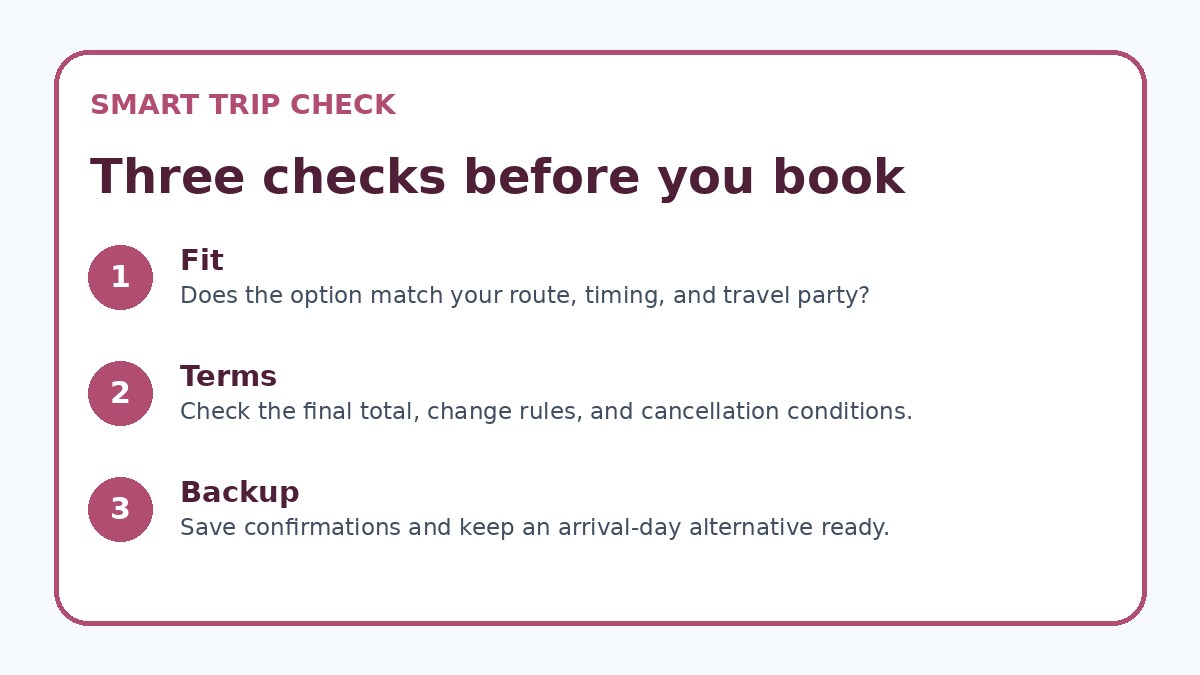
- Open the full booking flow for flights and hotels to capture the final checkout price including taxes and mandatory fees.
- Add visa and any required health or entry-related costs shown on official government or provider pages.
- Estimate a conservative daily budget for meals, local transport, attractions, and an emergency buffer.
- Compare refundable and nonrefundable options and note change/cancellation deadlines on the provider’s final booking page.
- Get quotes for airport transfers at arrival times you expect and compare with public transit alternatives.
- Choose and price a travel insurance policy that covers your main risks and confirm its cancellation terms.
Insurance, refundability and deciding how much flexibility to pay for
Travel insurance can look like an optional add-on until you need it; its cost should be folded into the total trip price. Compare the coverage levels: medical evacuation and COVID-related interruptions (if relevant), trip cancellation for specified reasons, and baggage protection. If your plans are firm, a cheaper policy with limited cancellation cover might suffice. If there’s any chance you’ll change dates, pay attention to whether the fare or hotel rate allows free changes, partial credit, or only a full forfeiture.
Weigh the premium for refundable or changeable bookings against the likely cost of a change. For solo travelers, paying a bit more for flexibility can be worthwhile because you’re responsible for the whole room or seat. When comparing options, write the nonrefundable total and the refundable total side by side, then ask whether the price gap is worth the peace of mind. Always verify cancellation and change policies on the provider’s final booking page so you understand deadlines, fees, and refundable amounts.
Frequently asked questions
How should I compare an advertised Abu Dhabi package deal with booking components separately?
Start by listing every cost line for the package as shown at checkout: airfare, hotel with taxes, transfers, and any advertised extras. Then build a separate table for an independent booking: a comparable flight (including baggage and seat fees), a hotel room of similar category (including city or service taxes), transfer costs, and individual attraction or tour fees. Compare the two totals and factor in nonfinancial differences like refundability, loyalty points, or convenience. If exact checkout totals aren’t visible for one option, contact the provider or use a conservative estimate for hidden fees before deciding.
What unexpected expenses should a solo traveler to Abu Dhabi prepare for?
Allow for single-occupancy pricing where applicable, higher late-night transfer fares, and local tourist taxes that may be charged on arrival or at hotels. Mobile data or SIM purchases, tipping in taxis or service contexts where customary, and fees for guided tours or timed-entry attractions all add up. If you plan day trips outside the city, check transport options—private transfers and small-group tours often include per-person minimums. Finally, include a modest emergency fund for medical co-payments or last-minute changes.
Is travel insurance necessary for a solo trip to Abu Dhabi and what should it cover?
Insurance is strongly recommended for solo travelers because you shoulder the full cost of cancellations, medical expenses, and baggage loss. Choose a policy that at minimum covers overseas medical treatment and emergency evacuation, and consider trip cancellation or interruption coverage if your dates are inflexible. Check whether policies cover reasons important to you—work cancellation, illness, or travel advisories—and read exclusions carefully. Always verify coverage limits and the claims process on the insurer’s documentation before purchasing.
Final planning note
For solo travelers comparing Abu Dhabi travel deals, the decisive metric is total trip cost, not a headline fare or nightly rate. Build a simple but complete budget that includes the final checkout prices, entry requirements, realistic daily spending, transfers, and insurance. Compare refundable options against nonrefundable savings to judge whether flexibility is worth the premium. Use the checklist to confirm every line item on the provider’s final booking page before you pay. That method keeps surprises down, helps you pick the right balance of cost and flexibility, and ensures the deal you book fits both your budget and travel priorities.
Continue planning
Check current options and final conditions
Use the provider page to confirm live availability, the final total, cancellation terms, and every condition that matters to your trip.
This evergreen planning guide was created with AI-assisted drafting and a structured quality review. It does not display live prices, schedules, availability, visa guidance, or provider rankings. Verify current details before booking. Some links are affiliate links; we may earn a commission at no additional cost to you.