If you want a short, practical answer: most solo travelers visiting Busan will find public transport sufficient, efficient, and less planning-intensive; rent a car when you need flexibility for remote beaches, a multi-day inland loop, or strict timing that buses and trains can't meet. Public transit covers central neighborhoods, major attractions, and the airport-rail link with frequent, predictable services and straightforward fares. Driving gives you freedom to chase off-the-beaten coastal points, set your own schedule, and carry more gear, but adds navigation, parking, and insurance decisions. This article lays out the tradeoffs, simple criteria to decide, and precisely what to check while booking a Busan car rental or planning a transit-centered solo itinerary.
See current options before you compare the details
Availability and final conditions change. Open Trip.com now or keep reading for the practical comparison.
How public transport works for solo travelers in Busan
Busan’s public transport system is compact and connected: a multi-line metro, extensive local buses, airport rail connections, and intercity trains linking to other cities. For solo travelers whose plans center on Haeundae, Seomyeon, Nampo-dong, and Gamcheon Culture Village, public transit typically covers the day’s needs without the stress of driving. Metro stations are frequent, signs include English in major hubs, and single-journey fares are straightforward. Using a reloadable transit card keeps transfers smooth and reduces the need to buy individual tickets for each ride.
Public transport keeps costs predictable and removes parking and toll responsibilities, which is a major advantage for a traveler focused on sightseeing rather than logistics. It also reduces the mental load of navigation and local driving rules. However, buses to remote beaches, mountain trails, or some coastal scenic routes can be infrequent; reaching those spots may require a longer walk from the nearest stop or a timed connection. If your itinerary includes several off-grid sites or late-night terminus returns, factor those gaps into your decision.
When renting a car makes sense for a solo itinerary
Consider a Busan car rental if your trip includes flexible, location-flexing plans: early-morning drives to coastal lookouts, day trips to coastal towns beyond regular rail, or carrying bulky items like surfboards or photography gear. A car can shorten transfers between dispersed attractions and let you leave when you want, rather than aligning with bus timetables. For solo travelers who enjoy driving and solo control over timing, a rental converts travel time into productive or relaxed transit, especially on scenic coastal roads where public options are slow or indirect.
That freedom comes with responsibilities that weigh more heavily when you’re alone. You’ll need to manage navigation, parking searches, and local traffic rules without a traveling companion to divide tasks. Planning becomes more detailed: confirm pickup and drop-off logistics, understand insurer coverage and what roadside assistance includes, and map likely parking options near accommodations and sights. If any of those details feel onerous, public transit is often the calmer choice.
| Approach | Best for | Tradeoff to check |
|---|---|---|
| Public transport (metro, bus, train) | Solo travelers staying in city center, low-stress itineraries, or short stays | Less flexible for remote or late-night trips; requires schedule planning and occasional walking from stops |
| Car rental | Solo travelers doing multi-stop day trips, carrying gear, or visiting remote coastal and countryside sites | Adds navigation, parking, insurance decisions, and potential traffic stress when alone |
| Mixed approach (public transit plus short-term car hire) | Solo travelers who want city simplicity but occasional access to remote spots | Requires extra planning to coordinate rentals and may be costlier than a single mode |
| Taxi or ride-hailing for occasional needs | Solo travelers needing late-night returns, short transfers, or last-mile convenience | Can be convenient but adds up if used for many long trips compared with a rental or transit card |
Ready to check the option that fits your plan?
Use your exact dates and traveler details so the provider page can show the current total and conditions.
Cost, convenience, and hidden choices to compare
Compare upfront rental rates with the realistic costs of fueling, parking, and insurance add-ons rather than relying on the quoted base price. Parking in busy districts can be limited or subject to hourly paid lots; if your hotel doesn’t provide convenient parking, nightly fees or time spent searching for a space can erode the benefits of a rental. Conversely, transit costs are easier to estimate with a reloadable card and predictable fares, though many point-to-point trips on rural routes may add up if you’re making many off-grid visits.
Time is part of the cost equation too. Evaluate door-to-door travel time for each major day on your itinerary: a car may reduce transfers and total travel time for dispersed sites, while trains and metro are faster on core city-to-city segments. Also consider personal comfort: after long solo days, the convenience of stepping out of a metro and into your hotel can beat navigating a foreign parking garage, while a car can be a private space to rest between dispersed stops.
Before you book
- Map your day-by-day itinerary and mark each attraction as 'well-served by transit' or 'likely needs a car' to see which mode covers more of your plan.
- If considering a rental, confirm pickup/dropoff addresses, whether airport pickup adds fees, and opening hours on the rental provider’s booking page.
- Check insurance options carefully: confirm what the basic rate includes, optional coverage costs, deductible amounts, and roadside assistance scope before accepting.
- Identify parking availability and typical parking zones near each overnight stay and major attractions; note whether your accommodation supplies guest parking.
- For transit travel, buy or top up a reloadable transit card and download a real-time transit app or bookmark official schedules for bus and metro lines you’ll use.
- Before departure, compare last-mile options (taxi, ride-hail, or walking) for late arrivals or early departures so you aren’t stranded after services end.
How to decide: quick checklist and booking checks
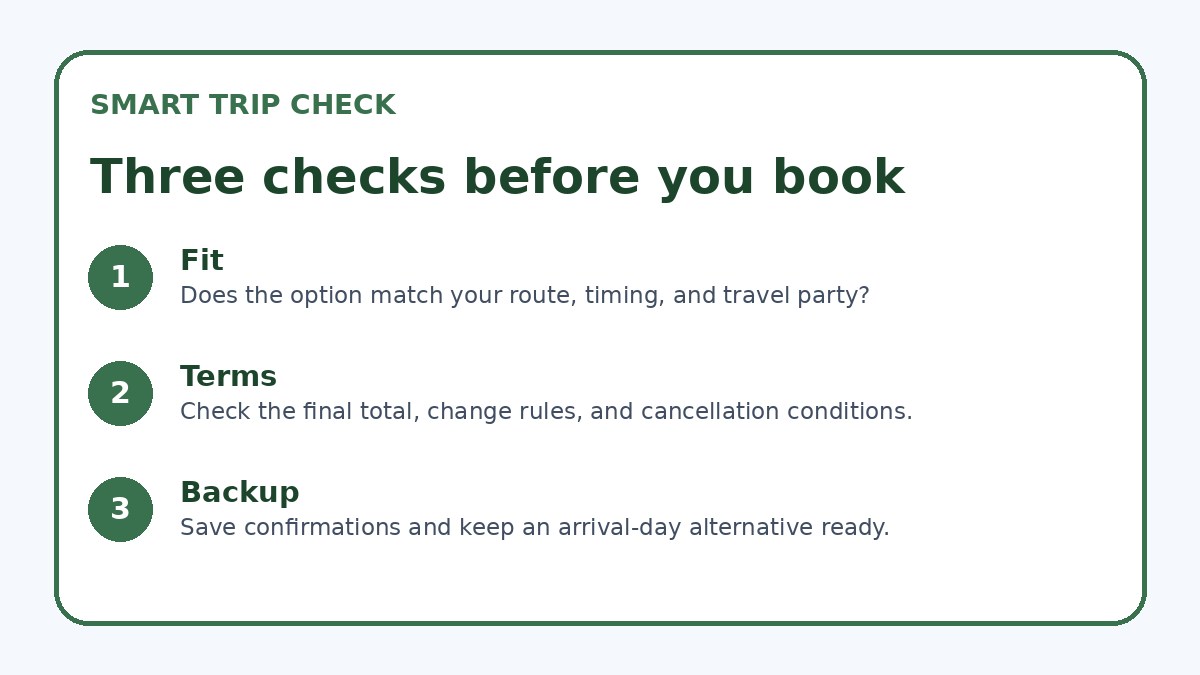
Use three simple criteria: 1) geography — are most attractions well-served by metro or buses? 2) schedule — do you need off-hour departures or same-day itinerary changes? 3) comfort — are you confident driving, navigating tolls, and finding parking solo? Weight the geographic factor double if your plan includes multiple remote points; weight schedule higher if you have fixed tour times or early flights. If public transport satisfies two of the three criteria, it’s usually the less stressful pick for solo travelers.
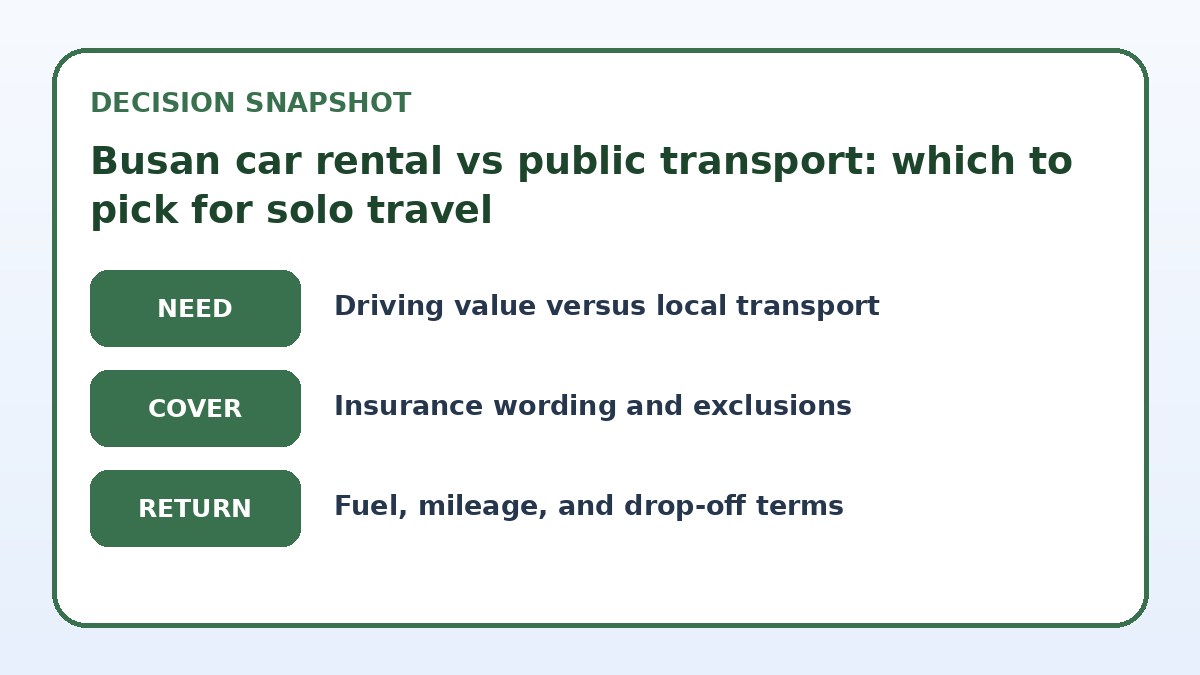
When you move to booking, verify these specifics on the provider’s page before purchase: exact car pickup/dropoff addresses, fuel and mileage policies, what insurance covers and the deductible amount, roadside assistance terms, and whether parking is included or easily available. For transit-focused plans, check up-to-date metro and bus timetables, station accessibility, and any service notices. Trip.com is a place you can compare current rental availability and transit options, but always confirm provider terms on the final booking pages.
Frequently asked questions
Is driving in Busan difficult for someone who rarely drives abroad?
Driving in a foreign city can be challenging if you’re not used to local signage, lane discipline, and traffic patterns. Busan has busy arterial roads, unfamiliar roundabouts, and frequent merging near bridges and tunnels; single drivers must handle navigation, parking, and toll spots alone. If you rarely drive abroad, consider whether those stresses outweigh the benefits of on-demand mobility. You might test a one-day rental for a specific excursion to evaluate comfort before committing to multiple rental days.
Can public transport take me to Busan’s best beaches and scenic spots?
Public transport reaches many popular coastal areas and tourist hubs, especially seasonal buses and local trains to well-known beaches and viewpoints. However, smaller coves, remote coastal drives, and inland mountain trails can be served by infrequent buses or require long walks from the nearest stop. If your plan prioritizes reaching several dispersed scenic spots in a short time frame, a car may save time; otherwise, the metro and private buses remain reliable options for core beach and city sightseeing.
What should I check about fees and insurance when booking a Busan car rental?
On the rental booking page, confirm the fuel policy (full-to-full vs. other arrangements), mileage limits, and any additional driver fees if you plan to switch drivers. Review the insurance included: what coverage the basic rate provides, the collision and theft deductibles, and the cost and coverage details of optional waivers. Also check roadside assistance terms, payment deposit requirements, and the acceptable ID and license documents to present at pickup. If anything is unclear, contact the provider directly before finalizing the booking.
Final planning note
For most solo travelers staying in Busan’s central neighborhoods and aiming to see the city’s main sights, public transport is the simpler, lower-stress choice: it reduces planning, avoids parking hassles, and is efficient on core routes. Rent a car when your trip includes multiple remote stops, heavy gear, or strict timing that public transit won’t meet; accept the extra tasks of navigation, parking, and insurance management that come with driving alone. Use the checklist and decision criteria above to weigh geography, schedule flexibility, and personal comfort. Finally, verify all rental terms, pickup details, and current transit schedules on provider pages before you commit.
Continue planning
Check current options and final conditions
Use the provider page to confirm live availability, the final total, cancellation terms, and every condition that matters to your trip.
This evergreen planning guide was created with AI-assisted drafting and a structured quality review. It does not display live prices, schedules, availability, visa guidance, or provider rankings. Verify current details before booking. Some links are affiliate links; we may earn a commission at no additional cost to you.