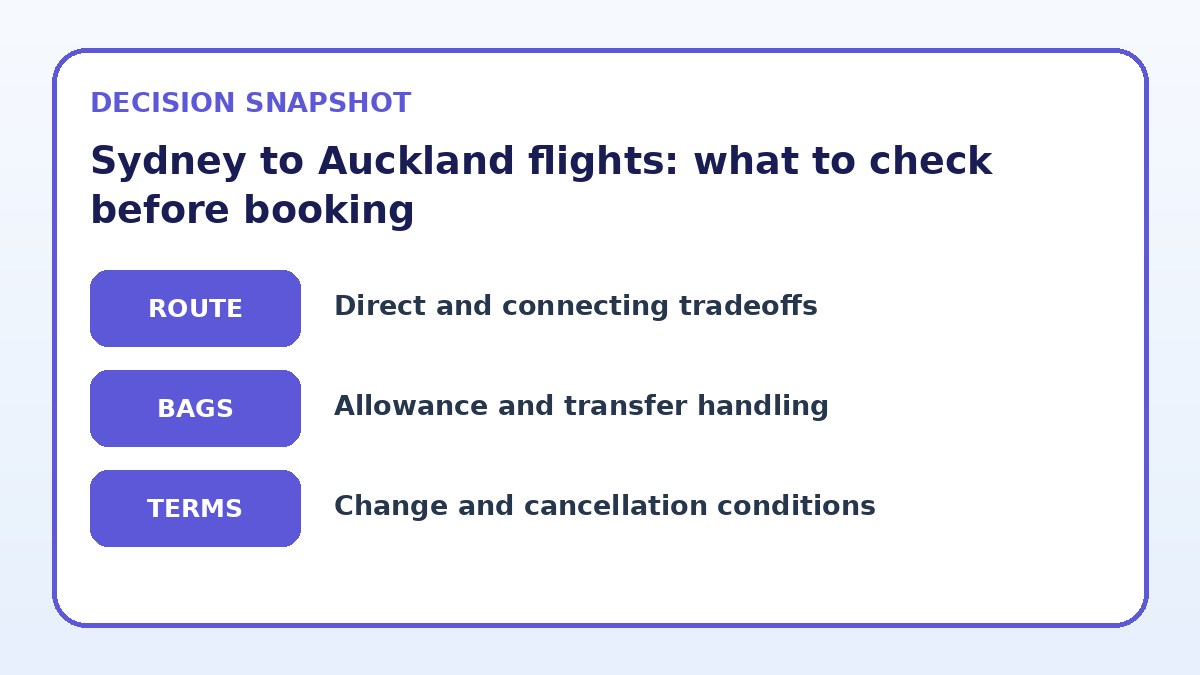
If you’re traveling alone between Sydney and Auckland, the most useful thing to decide early is how flexible you want your ticket to be. A flexible fare can protect you from last-minute changes—illness, work, or itinerary tweaks—but it usually costs more and sometimes imposes fare-class restrictions that affect seat choice or baggage. Conversely, a lower-cost non-refundable fare reduces upfront expense but raises the chance of losing part or all of your payment if plans change. Before you pick a flight, compare the carrier’s change fee, refundability, fare difference policy, and the exact conditions around schedule changes initiated by the airline. Verify these terms on the airline’s final booking page and your ticket conditions; if using an agent or aggregator (Trip.com can be a place to compare), confirm the agent’s change/refund handling and any service fees in writing.
See current options before you compare the details
Availability and final conditions change. Open Trip.com now or keep reading for the practical comparison.
How fare types affect change and cancellation options
Airlines usually sell multiple fare types: basic or economy saver, standard economy, premium economy, and business. Each fare type bundles a different level of flexibility: cheaper fares may be non-changeable or charge high fees for amendments, while premium fares often allow free or low-cost changes. As a solo traveler, consider the likelihood you’ll need to shift dates or change airports; if that possibility is realistic, a slightly more expensive flexible fare can save time, money, and stress later.
When comparing offers, read the fare rules carefully. Look for explicit language about change fees, whether name changes are allowed, if refunds are permitted, and how any fare differences are applied. Also verify ancillary rules—seat selection, checked baggage, and upgrade eligibility—because these can interact with changes (for example, a cheaper fare class may be unavailable on your new date, increasing the cost). Always copy or screenshot the fare rules page at checkout in case of later disputes.
Understanding airline-initiated changes vs passenger-initiated changes
If the airline changes the schedule, regulations and carrier policies often give passengers stronger remedies—alternate flights, refunds, or rebooking at no extra cost—compared with passenger-initiated changes. However, what counts as a major change (time, routing, or long delay) depends on the carrier’s definition. Solo travelers should check exactly how the airline defines a significant schedule change, any time thresholds for automatic rebooking or refund eligibility, and the process for requesting compensation or alternate travel.
For passenger-initiated changes, examine both the fee and any fare difference you’ll be charged. Some carriers waive change fees but still require payment of any higher fare for the new travel date; others charge a flat administrative fee plus fare difference. Note also cancellation-to-credit policies: some airlines issue travel credit rather than a cash refund for non-refundable tickets, with expiration windows and usage restrictions. Verify these outcomes on the booking confirmation and the carrier’s policy pages.
| Approach | Best for | Tradeoff to check |
|---|---|---|
| Flexible fare with free changes | Travelers who need maximum date and routing flexibility | Higher upfront cost and possible limits on lowest cabin inventory |
| Lowest non-refundable fare | Very fixed itineraries with low likelihood of changes | Risk of losing most or all of the ticket value if plans change |
| Mid-tier refundable or partially refundable fare | Balanced travelers who want some protection without premium pricing | Moderate price premium and varying refund processing times |
| Book via agent/aggregator | Shoppers wanting a quick comparison and bundled support | Extra service fees and longer or more complex change/refund paths |
Ready to check the option that fits your plan?
Use your exact dates and traveler details so the provider page can show the current total and conditions.
Booking through third parties and what to verify
Booking via an online travel agency or aggregator can be convenient and sometimes cheaper, but it adds an extra layer to changes and cancellations. If you need to change your flight, you may have to contact the agent first; some agents charge their own processing fees or take longer to submit requests to the airline. Before buying, find the agent’s change and refund process, their working hours for customer service, and whether they will issue the refund or the airline will do so directly.
If you use an aggregator like Trip.com to compare options, do not assume the displayed change/cancellation text is definitive. After selecting a fare, review the fine print on the airline’s final booking page and the ticketing confirmation for exact conditions. Keep screenshots of both the agent’s fare page and the airline’s ticket rules; if there’s a discrepancy later, the airline’s published fare rules usually govern but the agent’s policies can affect timing and convenience of a resolution.
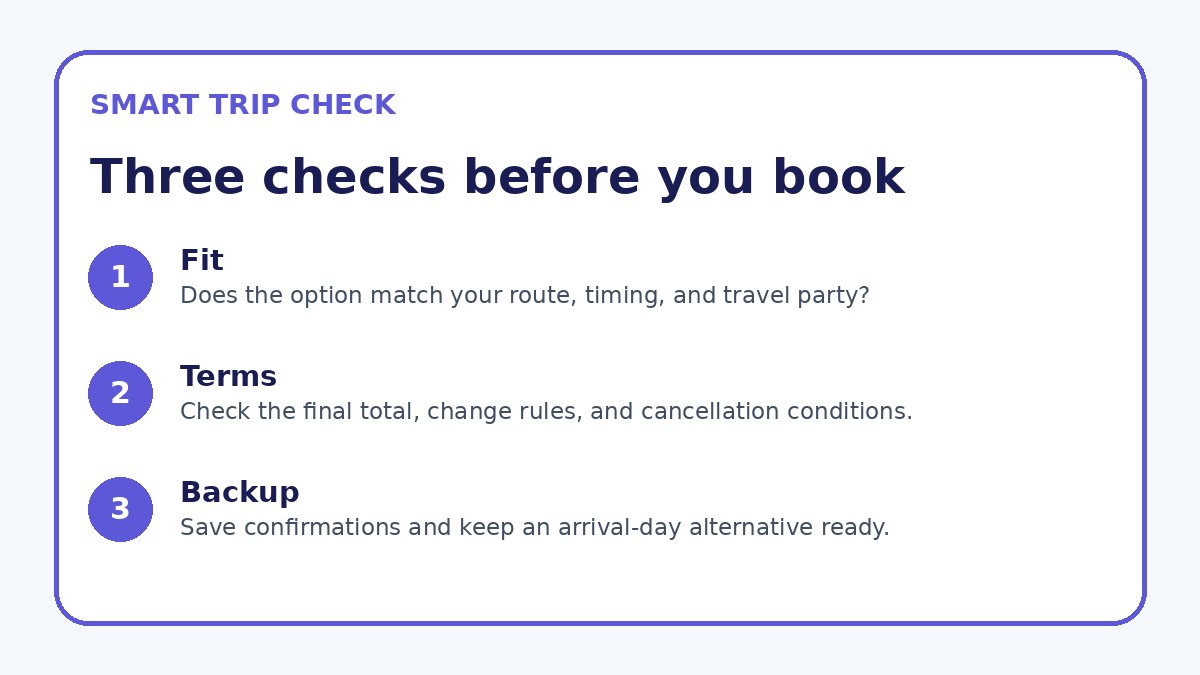
Before you book
- Read the airline’s fare rules on the final booking page and screenshot them before completing payment.
- Confirm exactly what counts as a ‘major schedule change’ and what remedies the airline offers (rebook, refund, credit).
- Check whether the fare allows name changes, date shifts, or only travel-credit refunds and note any expiry windows.
- Ask the agent or aggregator (if used) how they handle refunds, change fees, and their expected processing time in writing.
- Verify baggage and seat selection rules for the fare you pick, since those may change after a rebooking to a different class.
- Consider a travel insurance policy that covers cancellations and delays not protected by the fare rules and keep its policy number handy.
Decision criteria for solo travelers: safety, cost, and convenience
Solo travelers often balance a desire for low cost with the need for personal safety and time certainty. If you’re traveling for a fixed event (conference, family obligation), prioritize tickets with clear change or refund benefits that protect you from disruptions. If your itinerary is flexible or you’re comfortable absorbing some risk, a cheaper fare with strict rules might be acceptable—just be prepared with travel insurance or an emergency backup plan.
Also assess support channels: does the carrier offer 24/7 phone support in your time zone, or an easy online change portal? How long does the agent say changes take to process? Consider transit contingencies—if a delay in Sydney affects connections in Auckland, know the rebooking options and whether the airline will cover missed onward travel. Choose the mix of fare flexibility, accessible customer service, and backup arrangements that feels right for your tolerance for hassle.
Frequently asked questions
Can I change my Sydney to Auckland flight date without paying the fare difference?
Sometimes—but it depends on the fare rules. Some flexible fares waive change fees but still require payment of any fare difference if the new date’s ticket is more expensive. Conversely, fully refundable or premium tickets may allow date changes with no fee and no fare difference. Always check the airline’s specific language on fee waivers and fare differences on the booking confirmation page, and request written confirmation if you’re told a fee will be waived at phone check-out.
If the airline cancels or significantly changes my flight, what are my typical options?
When the carrier cancels or makes a materially different schedule, most airlines offer rebooking on another flight at no extra charge, a full refund, or travel credit. The precise remedies depend on the carrier’s policy and local passenger rights rules. Verify the time thresholds and definitions for a ‘significant change’ on the airline’s policy page, and ask whether you can request a specific alternative flight or a cash refund rather than credit. Keep all communications and confirmations until the change is fully resolved.
Should I buy travel insurance or select a flexible ticket for protection?
They serve different purposes and can complement each other. A flexible ticket handles schedule changes and refunds through the airline, while travel insurance can cover trip cancellation for personal reasons, medical emergencies, or missed connections beyond the airline’s responsibility. Evaluate the likely risks (illness, work changes, weather), compare the cost difference between fare types, and read the insurance policy exclusions carefully. If you choose insurance, make sure it explicitly covers the risks you want protected and note claim submission deadlines.
Final planning note
For solo travelers on the Sydney to Auckland route, the practical choice comes down to how much risk you’re willing to take and how much time you want to spend managing changes. Flexible fares reduce stress at the cost of higher upfront payment; cheaper tickets save money but transfer the risk of loss or complex refunds to you. When booking, always read and save the airline’s fare rules on the final booking page, confirm what the agent will do in the event of a change, and decide whether travel insurance adds value for your situation. These steps keep you ready for disruptions and help you travel with confidence.
Continue planning
Check current options and final conditions
Use the provider page to confirm live availability, the final total, cancellation terms, and every condition that matters to your trip.
This evergreen planning guide was created with AI-assisted drafting and a structured quality review. It does not display live prices, schedules, availability, visa guidance, or provider rankings. Verify current details before booking. Some links are affiliate links; we may earn a commission at no additional cost to you.