For couples deciding how to travel between Sydney and Auckland, pick the balance that suits your priorities: a tighter, more convenient itinerary with fewer connections, or a looser schedule that accepts tradeoffs for lower stress or more options. If you prize convenience — fewer transfers, predictable schedules, and simple baggage handling — look first at the more direct routing options and flight times that match your preferred arrival window. If flexibility matters most — cheaper midweek departures, refundable fares, or a plan that tolerates delays — prioritize tickets and carriers with flexible change policies and comfortable buffer times. Below you’ll find practical steps to compare options, what to check before you book on any provider’s final page, and a short checklist tailored to couples planning together.
See current options before you compare the details
Availability and final conditions change. Open Trip.com now or keep reading for the practical comparison.
Start by defining your couple priorities
Before searching flights, sit down and list what matters most to both of you. Do you want to maximize time together in Auckland, reduce airport stress, or keep the option to change plans? Couples who travel for a short city break often choose convenience: flights that minimize transfers and land at times that make the first evening easy. Others prioritise flexibility, wanting options to shift dates, add a stop, or respond to unexpected work or family changes. Clarifying which of these outcomes is more important will guide every comparison you make.
Also consider personal tolerance for uncertainty and late nights. If one partner dislikes tight connections or early departures, factor that into the route choice. If you hope to use loyalty benefits, seating upgrades, or specific aircraft features, add those preferences to the list. The resulting ranked priorities—convenience, flexibility, cost, time of day, carrier policies—become objective criteria for comparing itineraries instead of relying solely on price or brand familiarity.
Compare direct versus connecting itineraries
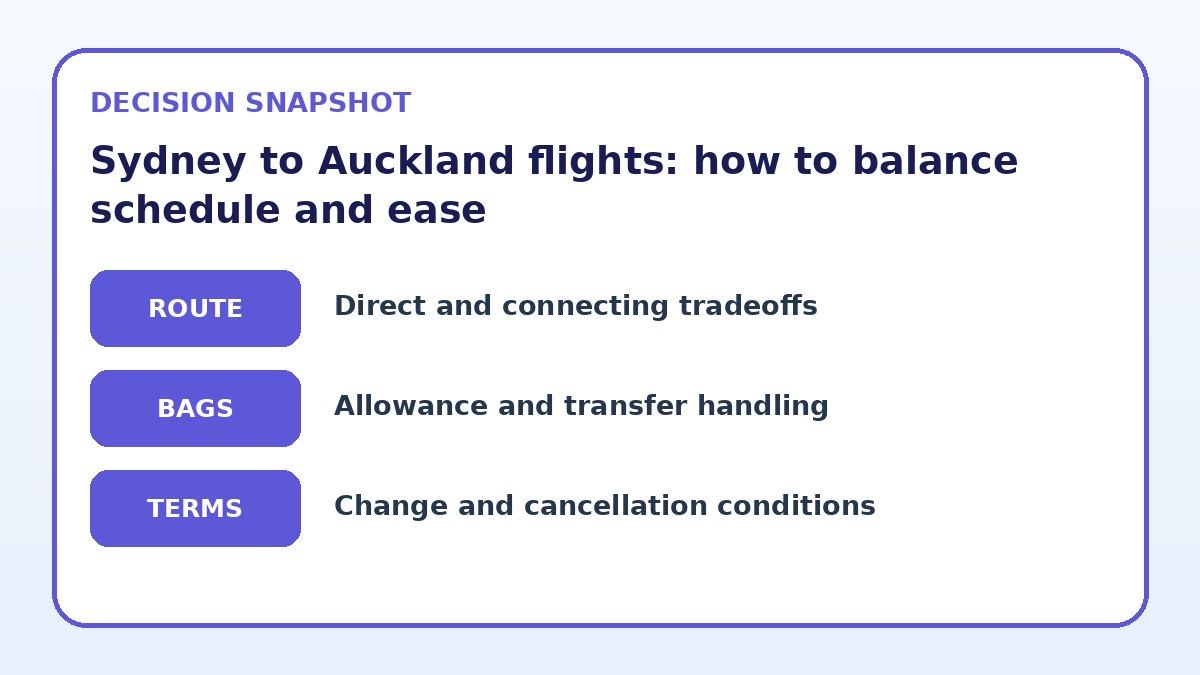
Direct flights usually save time and reduce stress from transfers, luggage re-checks, or missed connections. For couples who want a simple door-to-door experience, direct routing often wins: fewer moving parts make it easier to keep to plans and start your trip together. However, direct options may have fewer departure times, which could force inconvenient arrival hours in Auckland or limit your freedom to choose preferred travel days.
Connecting itineraries expand the schedule pool and sometimes give access to lower fares or more convenient departure times from Sydney, but they add complexity. If you pick a connection, build extra buffer time between flights, especially when switching carriers or airport terminals. Compare total travel time, likely connection windows, and whether checked baggage will transfer automatically. When in doubt, favor longer layovers that maintain an easy onward pace over very tight connections that cause stress.
| Approach | Best for | Tradeoff to check |
|---|---|---|
| Direct flights with fixed schedules | Couples who prioritise speed and minimal airport hassle | Fewer departure options and sometimes higher fares or less flexible tickets |
| Connecting flights with longer layovers | Couples who need more schedule choices or lower upfront cost | More moving parts, longer total travel time, and potential for missed connections |
| Flexible/refundable fares | Couples who may change dates or want peace of mind | Higher ticket cost compared with non-changeable economy fares |
| Lowest non-refundable fares | Couples with fixed plans and high tolerance for limited changes | Little to no changeability and possible fees for seat selection or baggage |
Ready to check the option that fits your plan?
Use your exact dates and traveler details so the provider page can show the current total and conditions.
Weigh fare rules and changeability
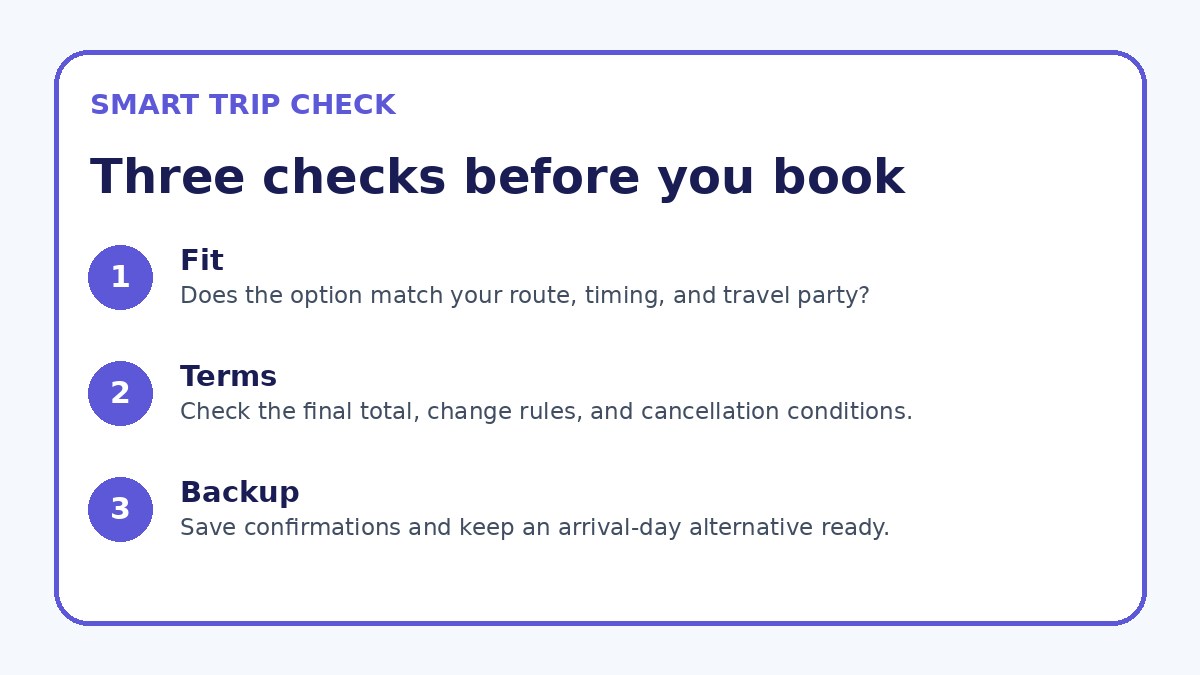
If flexibility ranks high for you as a couple, study fare conditions closely before booking. Look for fares that allow date changes with low penalties or full refunds. Many carriers and fare classes differ in how they handle changes, baggage, seat selection, and upgrades. For couples who might shift travel plans due to work, health, or family, a flexible fare can be worth the cost difference compared with a non-changeable low fare.
When provider-specific facts could change, always verify the final fare rules, fees, and change options on the carrier or travel agent’s booking page before paying. Check whether ancillary services like seat selection or extra baggage can be refunded or rebooked. If you’re using a third-party site to compare availability, cross-check the chosen itinerary and its terms on the carrier’s official page as well—this prevents surprises at check-in if policies differ.
Before you book
- Agree on whether convenience or flexibility is the top priority and write down the top three dealbreakers for both partners.
- Search both direct and one-stop itineraries and note total door-to-door time, number of transfers, and typical arrival windows in Auckland.
- On any selected itinerary’s final booking page, verify the exact change, cancellation, and baggage policies before entering payment details.
- Reserve seats together at booking if seating together is important, and confirm whether paid seat selection is refundable under your fare.
- Plan airport arrival time together with extra buffer for security and check-in; set a shared alarm and transfer booking if needed.
- If you need flexibility, pick a fare class that explicitly permits changes with acceptable fees and save screenshots of the booking terms.
Practical day-of-travel choices for couples
Decide together how much pre-flight time you want. Couples who value convenience often arrive earlier to reduce stress and enjoy lounge access or a relaxed cafe before boarding. If you prefer flexibility and fewer schedule constraints, leaving a longer buffer in your travel plans for either partner’s delays or last-minute changes may be wiser. Factor in transit time to Sydney airport, the potential for airport queues, and how fresh you want to be on arrival in Auckland.
Also align on in-flight priorities like seating and meals. If one partner needs an aisle or extra legroom, book those seats early; if you’d rather sit together, prioritize seat assignments even on lower fares. For overnight or redeye flights, weigh sleep needs against arrival time in Auckland. Small choices—checked luggage versus carry-on only, priority boarding or not—add up and influence whether your trip feels convenient or precarious once the journey begins.
Frequently asked questions
Should couples always choose the direct Sydney to Auckland flight if available?
Not necessarily. Direct flights reduce connection risk and save time, which many couples value for short trips or milestone travel. But direct options may fly at less convenient times, have higher fares, or offer fewer days each week. If schedule choice, loyalty routing, or price is more important, a one-stop itinerary could be better. Compare total travel time, departure and arrival times, and the fare rules before deciding. Always verify baggage transfer and seat options on the final booking page to avoid surprises.
How much buffer time should couples allow for connecting flights?
Aim for conservative buffer time that matches the complexity of the transfer. If both flights are on the same ticket with automatic baggage transfer, a shorter connection can be fine, but many couples still prefer one to two hours to avoid stress. For connections requiring terminal changes, separate tickets, or immigration clearance, add more time—three hours or more is safer. Consider your tolerance for rushing, whether one partner manages mobility concerns, and seasonal airport crowds. Confirm minimum connection times with the carrier before booking.
What booking details should couples verify together before paying?
Review fare rules (change and refund conditions), baggage allowance, seat selection policies, and whether loyalty points apply. Check the exact flight times and any required transfer procedures or terminals. If using a third-party site, cross-check the same itinerary on the airline’s official booking page to confirm policies and to see if any additional fees apply. Save or screenshot the fare rules and booking confirmation; note contact details for the carrier’s customer service in case you need to change plans after purchase.
Final planning note
Balancing schedule flexibility and convenience for Sydney to Auckland flights is a matter of priorities and compromise. Couples who value a simple, stress-free journey should give weight to direct routings, predictable arrival times, and booked seats together. If you need wiggle room for date changes, select fare classes and carriers that make adjustments feasible and budget for a little extra cost. Always compare itineraries by total travel time, fare conditions, and how each option fits your jointly ranked priorities. Before you pay, verify all fare rules and restrictions on the provider’s final booking page; you can also compare availability on Trip.com if you want an additional comparison point.
Continue planning
Check current options and final conditions
Use the provider page to confirm live availability, the final total, cancellation terms, and every condition that matters to your trip.
This evergreen planning guide was created with AI-assisted drafting and a structured quality review. It does not display live prices, schedules, availability, visa guidance, or provider rankings. Verify current details before booking. Some links are affiliate links; we may earn a commission at no additional cost to you.