
If you and your partner want the simplest practical answer: prioritize schedule convenience for short city breaks and prioritize flexibility if your trip dates might change. For many couples a direct early-evening train or short flight that minimizes ground transfers wins on convenience; flexible fares or refundable tickets reduce stress when plans are uncertain. Before you book, compare door-to-door journey time, total transfer hassle, and the exact change/cancellation terms on the carrier’s final booking page. Also decide whether you value predictable departure times and easy luggage handling over the ability to change plans with minimal cost. This article outlines how to weigh those tradeoffs, what to compare on booking pages, and a concise checklist so you can pick the approach that matches your relationship’s travel style and tolerance for logistical friction.
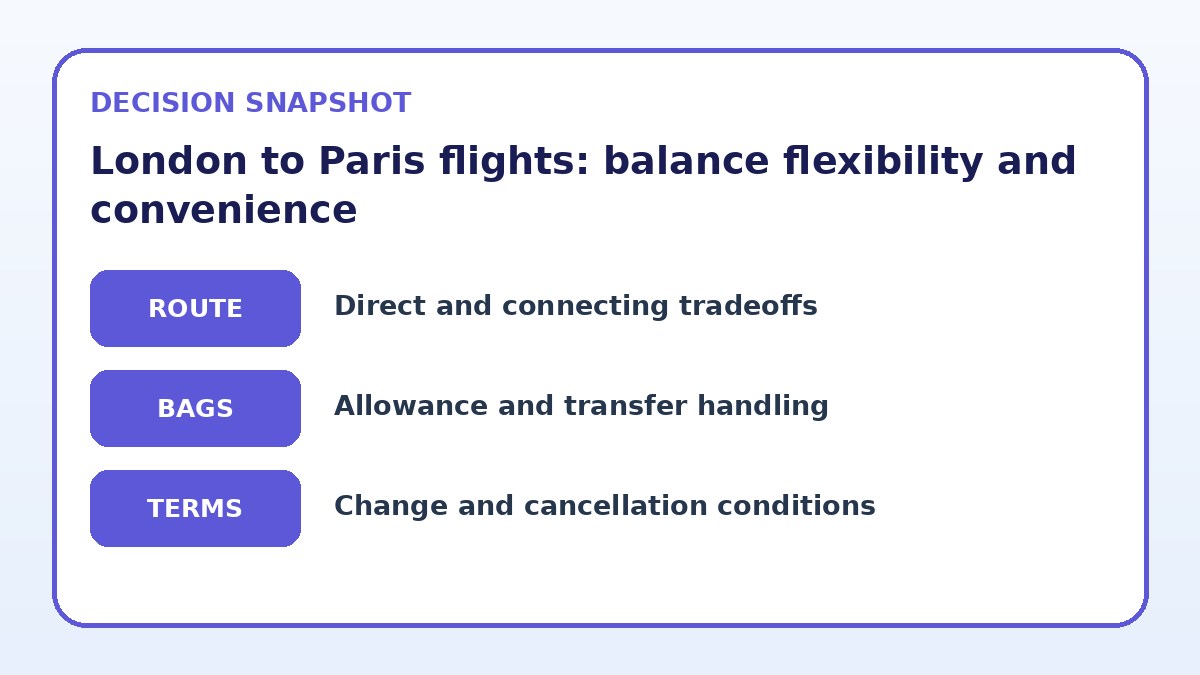
See current options before you compare the details
Availability and final conditions change. Open Trip.com now or keep reading for the practical comparison.
Deciding between convenience and flexibility
Start by ranking what matters most to both of you: minimizing transit time, avoiding early starts, luggage ease, or keeping the option to change plans. Convenience usually means fewer changes, shorter transfers, and predictable schedules—ideal for short, romantic trips where every hour in the city counts. Flexibility typically means paying more up front for refundable or changeable tickets, or building buffer days into your itinerary. Discuss how much stress each partner tolerates; a single missed connection can sour a trip, so your combined tolerance for risk should guide the core decision.
Compare not just ticket rules but the entire experience: if a flexible fare still routes you through long transfers, it could cost more in time and inconvenience than a nonrefundable direct option. Likewise, a cheap flexible ticket that requires complex rebooking procedures or phone calls may not provide practical flexibility when you’re jet-lagged or sightseeing. Use the provider’s booking page to verify change fees, refund timelines, and any blackout restrictions—do this before selecting a fare class or adding extras like seat assignments or baggage.
Comparing direct and connecting options
Do not assume every search result is direct. When comparing options, list the total door-to-door travel time rather than just airborne minutes. A connecting flight with a long overseas transfer, or one that departs from an outlying airport, can end up taking more time than a slightly slower direct service or a rail alternative. For each option, check connection minimums, layover airports, and whether transfers require re-clearing security or customs, and confirm those specifics on the carrier’s or operator’s final booking page.
Think about disruption risk. Direct journeys reduce the number of points of failure—fewer connections mean fewer opportunities for delays to cascade. Connections can be useful when they offer a significantly lower fare or an otherwise impossible itinerary, but remember that flexibility around changes can partially mitigate connection risk. If you choose a connecting route, prioritize reasonable layover windows and an airline or operator with clear communication and rebooking policies, which you should verify before committing to the ticket.
| Approach | Best for | Tradeoff to check |
|---|---|---|
| Choose direct, nonflexible fares | Short weekend breaks where maximizing city time matters | Less ability to change plans without fees or forfeiting the fare |
| Buy flexible/refundable tickets | Couples with uncertain schedules or higher aversion to change | Typically higher upfront cost and sometimes limited seat availability |
| Select connecting itineraries | Travelers prioritizing lower fares or specific departure times | Greater risk of missed connections and longer door-to-door time |
| Use a mix: flexible ticket with convenient transfer | Couples balancing timetable comfort and the right to reschedule | Can be costlier and requires careful confirmation of transfer rules |
Ready to check the option that fits your plan?
Use your exact dates and traveler details so the provider page can show the current total and conditions.
Logistics that matter to couples
Luggage and transfers often determine whether a trip feels relaxed or stressful. Check the included baggage allowance and how easy ground transfers are at both ends—an extra half-hour taxi vs. a simple metro ride can change your day dramatically. For couples sharing one checked bag and two carry-ons, verify seat-pairing options and whether assigned seats are included or cost extra. If you’ll be carrying a stroller, sports gear, or special items, confirm handling rules and any advance notices required on the booking page.
Timing also affects mood: late arrivals can eat into your first evening plans, while very early departures may require an overnight near the airport. Consider airport hotels, early check-in rules at where you’re staying in Paris, or pre-booked transfers to reduce arrival stress. If either partner prefers avoiding busy terminals, choose services that minimize crowd exposure—smaller airports, direct trains, or flights at off-peak times can be gentler. Always verify transfer options and estimated journey time from the airport or station to your Paris accommodation on the operator’s site before you buy.
Before you book
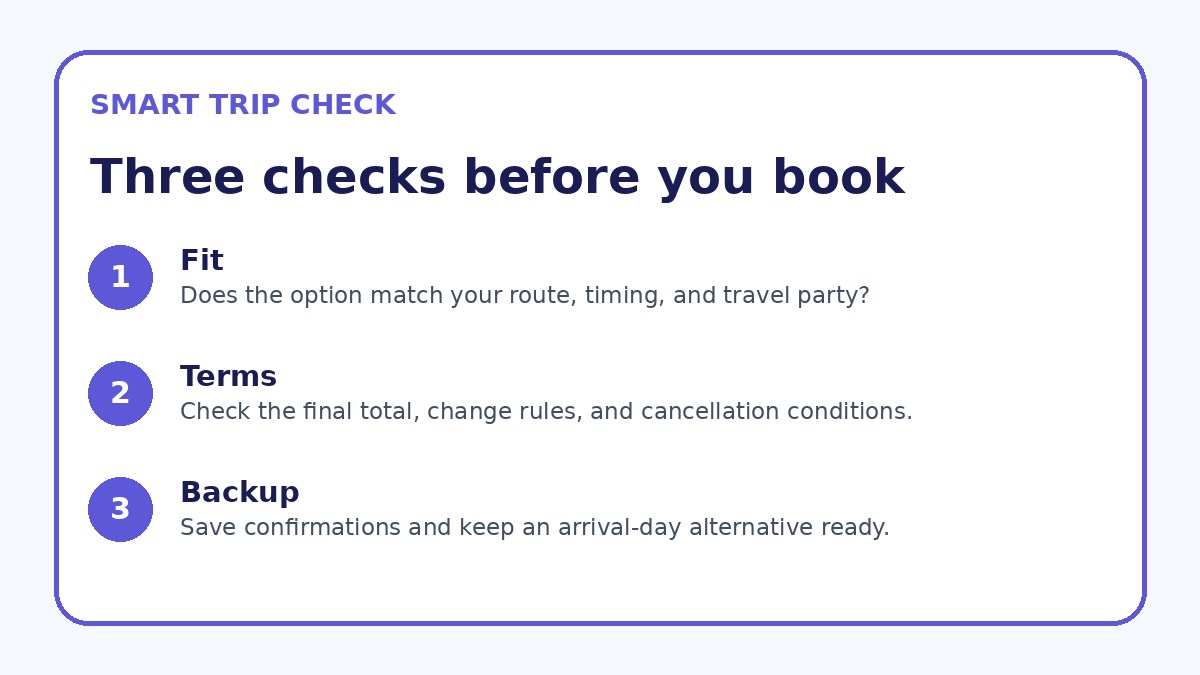
- Compare total door-to-door journey time for each option, including transfers and likely ground transport at both ends.
- Read the final booking page to verify change, cancellation, and refund policies before you confirm any fare.
- Confirm baggage allowance and seat-pairing conditions for the fare class you plan to purchase.
- Check transfer logistics: whether transfers require re-clearing security, customs, or long terminal changes.
- Save carrier/operator contact details and customer-service procedures in case you need to rebook or claim refunds.
- Decide who carries which documents and items, and photograph tickets/booking confirmations to share between you both.
How to book with minimal regret
Make a decision matrix: list each option and score them for total travel time, flexibility, cost (relative to your budget), and personal comfort. For couples, weigh emotional factors—does one partner value predictability more than the other? If so, let that preference carry more weight to preserve harmony. Use filters on booking sites to compare refundable vs. nonrefundable fares, and read the fine print on change fees and refund processing times. If you rely on a third-party seller, check their change policy separately from the airline’s, because reseller rules can differ.
Before confirming, save the carrier’s or operator’s contact information and customer-service channels in case you need to rebook. Consider buying a moderate-level travel protection policy only after checking exactly what the ticket covers and how claims are made. If you prefer simple one-stop planning, a service like Trip.com can show current availability, but always verify the final fare conditions and baggage rules on the operator’s own booking page before accepting any ticket.
Frequently asked questions
Should couples prefer trains or flights between London and Paris for convenience?
Trains and flights both have advantages; convenience depends on your priorities. Trains often provide city-center to city-center service with less airport transfer hassle, while flights can offer shorter airborne time but usually require more ground time and earlier check-in. For a short escape where every hour matters, compare the door-to-door time and the hassle of transfers. If you need to change plans easily, check the change and cancellation rules for both rail and air providers on their respective booking pages before deciding.
How much extra should we budget for flexible fares or refundable tickets?
The premium for flexibility varies widely and can depend on travel dates, demand, and the provider’s fare structure. Rather than relying on a fixed number, calculate the cost difference between the refundable/flexible option and the nonrefundable fare for your dates, then weigh that against the potential cost of changing plans later. Also consider non-ticket costs like lost prepaid tours or lodging penalties. Always confirm the precise fee structures and refund timelines on the booking page so you know whether the premium provides the practical flexibility you expect.
If one partner is a high-anxiety traveler, how should we factor that into choosing flights?
Take emotional comfort seriously: a smooth, predictable itinerary can make the trip enjoyable for both partners even if it costs more. Prioritize options with fewer transfers, convenient departure times, and straightforward rebooking processes. Discuss compromise points—maybe splurge on a flexible fare only for the return journey or pick a slightly more expensive direct routing to reduce stress. Before booking, read the exact terms on the carrier’s page so you understand how simple it will be to change the ticket if anxiety-driven changes are needed.
Final planning note
For couples deciding between London and Paris, the practical choice depends on whether you value guaranteed convenience or the ability to change plans. Short, tightly scheduled trips usually benefit from direct, simple itineraries that maximize time in the city and minimize transfers. If your dates are fluid or one partner needs reassurance, invest in a fare with flexible change options and verify those terms carefully on the provider’s booking page. Use the comparison approach here—score travel time, flexibility, cost, and comfort—and pick the option that preserves your trip’s mood. When in doubt, favor the choice that reduces stress for both partners; relaxed travel usually creates better memories than squeezed savings.
Continue planning
Check current options and final conditions
Use the provider page to confirm live availability, the final total, cancellation terms, and every condition that matters to your trip.
This evergreen planning guide was created with AI-assisted drafting and a structured quality review. It does not display live prices, schedules, availability, visa guidance, or provider rankings. Verify current details before booking. Some links are affiliate links; we may earn a commission at no additional cost to you.