The most practical family choice from Seoul to Jeonju depends on what matters to you: speed, luggage ease, seat space, or a relaxed schedule. For many families the intercity train strikes the best balance—comfortable seats, space for strollers or bags, and fewer transfers—but coaches, driving, and even mixed ferry-plus-land options can suit different priorities. Read this guide to weigh travel time flexibility, motion comfort for children, luggage handling and on‑board facilities, then use the decision checklist to pick and book the right option. When you reach a booking portal, verify schedules, direct versus connecting services, luggage rules and seat reservations on the provider’s final page. You can also check availability on Trip.com as one comparison point, but always confirm details with the transport operator before payment.
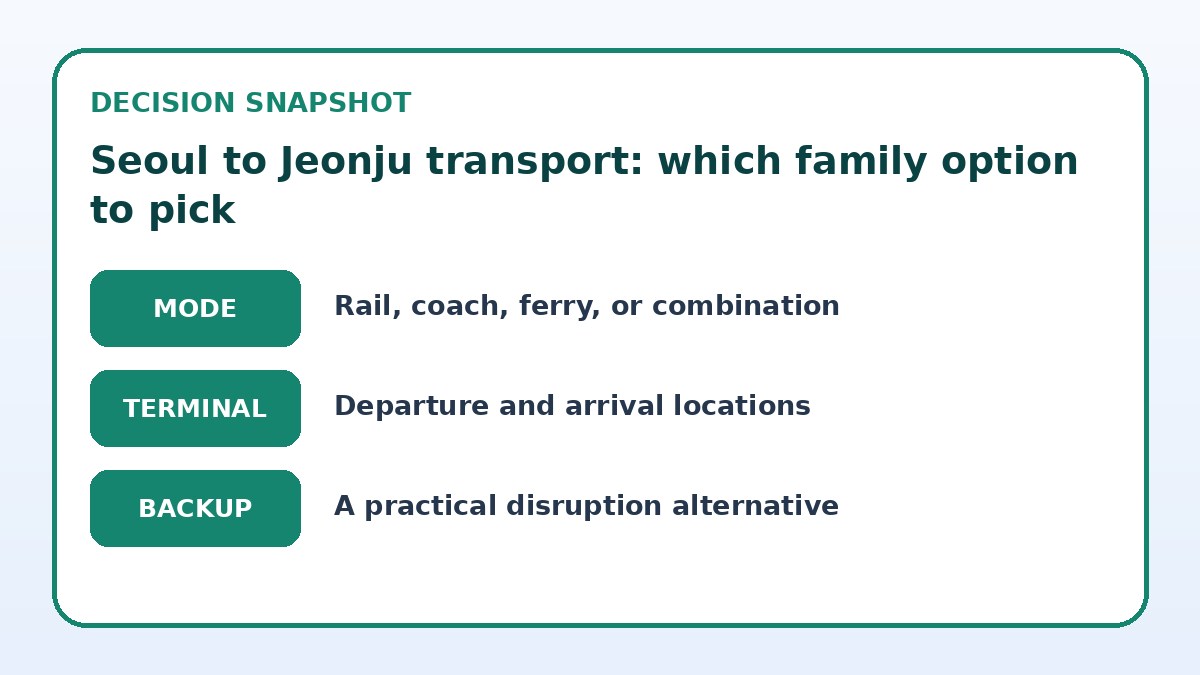
See current options before you compare the details
Availability and final conditions change. Open Trip.com now or keep reading for the practical comparison.
Train: comfort, predictability, and what to check
Intercity and high‑speed trains are commonly chosen by families for their predictable schedules, roomy seating and gentler motion compared with road travel. Look for trains that allow seat reservations because a guaranteed row with a baby seat or space for a carry‑on stroller makes boarding and the journey easier. Check whether the service is direct or requires a connection; a short transfer at a larger station can be manageable, but multiple changes with children add complexity.
Before booking, confirm luggage rules, stroller policies and whether there is step‑free access at both departure and arrival stations. Verify exact journey duration and any onboard amenities you need—power outlets, toilets and a place to change diapers. If you have mobility needs or a large foldable stroller, check platform access and elevator availability on the operator’s site. Finally, compare arrival station locations against where you are staying in Jeonju to minimize onward local transfers.
Coach: budget flexibility and practical tradeoffs
Long‑distance coaches can be a sensible choice for families on a tighter budget or with flexible timing. Modern coaches often offer reclining seats and overhead storage; larger luggage usually goes in a locked hold beneath the bus. Coaches tend to be more frequent than some train services, giving families options to adjust plans without rebooking, but coach rides can be bumpier and more affected by traffic. If motion sickness is a concern, consider whether frequent stops or a slightly longer but smoother route is available.
When comparing coach options, verify baggage allowances and whether seats can be prebooked together—boarding with young children is easier if you know your seats in advance. Check how close the coach terminals are to your Seoul departure point and your destination in Jeonju; if a terminal requires additional transfers, factor that time and cost in. Also confirm restroom availability and scheduled rest stops on the operator’s booking page if you need regular breaks for small children.
| Approach | Best for | Tradeoff to check |
|---|---|---|
| Train | Families wanting a smooth, predictable trip with seat reservations and easier luggage handling | May require a transfer on some services and can be less flexible on departure times |
| Coach | Budget‑conscious families who value frequent departures and straightforward boarding | Subject to traffic, with a bumpier ride and fewer on‑board facilities than trains |
| Driving / Car hire | Families needing full control over stops, timing and luggage, or traveling with lots of gear | Requires a driver, parking planning, and more stress managing kids while on the road |
| Mixed routes (train+bus/ferry) | Families wanting a scenic or flexible itinerary and willing to handle transfers | Adds connection planning and possible luggage handling between services |
Ready to check the option that fits your plan?
Use your exact dates and traveler details so the provider page can show the current total and conditions.
Driving or car hire: control versus responsibility
Driving gives families the freedom to travel on their schedule, stop where you like and carry as much luggage or child equipment as the car fits. For multi‑stop sightseeing or traveling with a lot of gear, a private car can be the most convenient door‑to‑door option. However, consider driver fatigue, parking in Jeonju’s popular areas, tolls and local driving conditions. Driving with young children also means planning for meal breaks, potty stops and safe child restraint installation.
If you’re renting a car, confirm the provider’s child seat and booster seat availability, as local regulations and inventory can vary. Plan your route with realistic driving time and backup rest stops, and check parking options near the hanok village or other attractions to avoid long walks. If someone in your party prefers not to drive, consider a driver service or split longer legs with a train to minimize time behind the wheel while still keeping some flexibility.
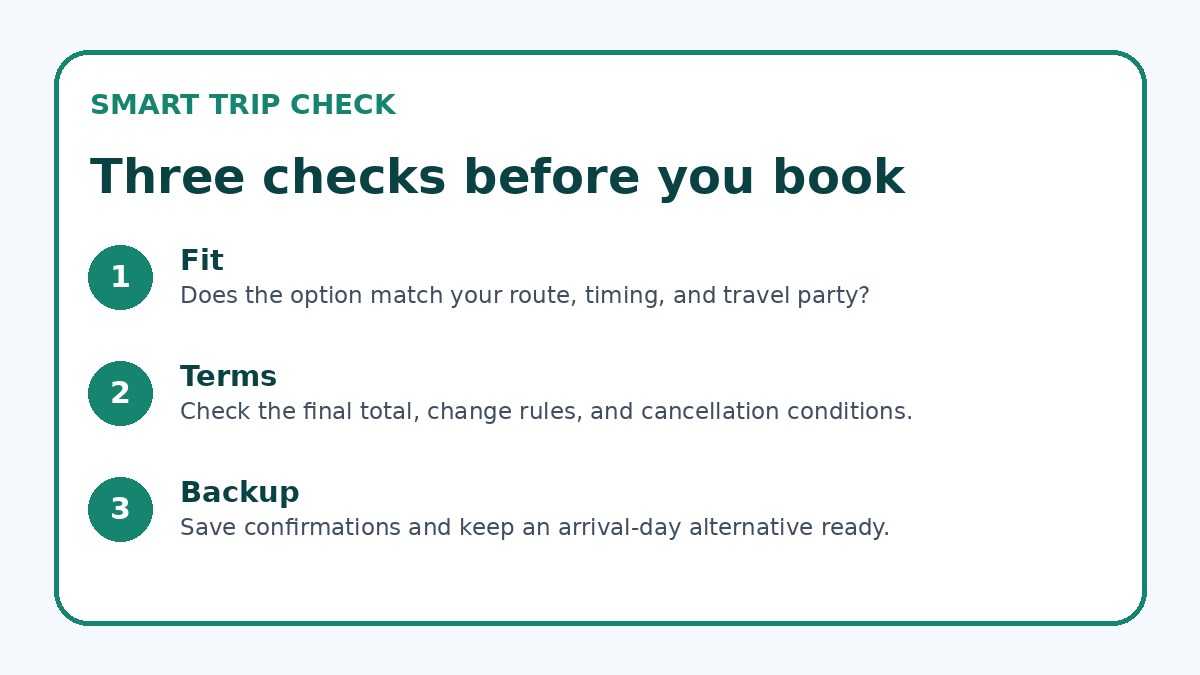
Before you book
- Decide your priority: shortest door‑to‑door time, lowest cost, or least transfers—rank these before comparing options.
- If traveling with infants, confirm stroller and diaper‑changing facilities on board and at stations from the operator’s booking page.
- For children needing booster seats, ask the coach or car rental provider about seat availability and legal requirements.
- Map door‑to‑door time: include station-to-hotel transfers, expected waits, and buffer time for feeding or restroom breaks.
- Compare direct versus connecting services and only choose a connection if transfer time is comfortable with your children and luggage.
- Before final payment, verify luggage allowances, refund/change policies and exact pickup/dropoff addresses on the provider’s confirmation page.
Mixed routes and less common options: creative family choices
Mixing modes can solve particular family needs: a high‑speed train to a nearby port followed by a scenic local ferry, or a coach for part of the leg plus a short taxi at either end. Such combinations can reduce driving time for parents or give kids variety during travel. If you value sightseeing en route, plan extra transfer time and verify luggage handling between modes so you aren’t juggling bags and children during tight connections.
For any mixed itinerary, make sure to check connection times, whether you need to recheck bags, and the exact boarding points for each leg. Confirm ticket refund and change rules in case delays force a reschedule. If you opt for a multi‑stage route, map the entire door‑to‑door time and include buffer minutes for restroom stops, feeding and stroller folding. Always view the operator’s final booking page to double‑check schedules and transfer instructions.
Frequently asked questions
Is the train always the fastest way from Seoul to Jeonju for families?
Not always. High‑speed or intercity trains often offer the quickest scheduled travel, but a train that requires a connection can take longer than a direct coach. Also factor in time to reach the departure station and transfer time at congested stations. For families, total door‑to‑door time and comfort matter more than raw in‑vehicle speed. Always check whether the service is direct, the number of transfers and the transfer logistics (platform changes, stairs) on the operator’s booking page before choosing.
Can I bring a stroller and lots of luggage on coaches and trains?
Most transport options accommodate a stroller and typical family luggage, but storage rules vary. Trains often have dedicated luggage areas and more room between seats, while coaches place large bags in an underfloor hold. If you rely on a bulky stroller, confirm whether it must be folded for boarding and whether stations have elevators. Check the specific operator’s baggage and stroller policy on their final booking page so you can plan whether to gate‑check, fold, or bring a compact stroller.
Should I book seats in advance or wait until the day of travel?
Booking seats in advance reduces stress—especially with children—because you can secure adjacent seats and avoid sold‑out departures. If your plans are flexible, same‑day tickets can work for coaches with frequent services, but risk fewer seat choices. For trains that offer reserved seating, booking earlier gives you the best chance of getting configurations that suit a family (a row, table seating or a larger space). Always read the provider’s booking terms about reservations and changes before purchasing.
Final planning note
Families traveling from Seoul to Jeonju should weigh predictability and comfort against cost and flexibility. Trains often win on comfort and smoother rides, coaches can be wallet‑friendly with frequent departures, driving provides maximum control at the cost of planning and fatigue, and mixed options let you balance sightseeing with practicality. Decide what matters most—fewer transfers, guaranteed adjacent seats, control over stops, or lower cost—then check operator pages for direct versus connecting services, baggage and stroller rules, seat reservation options and refund policies. With those checks done, you’ll have a clear family‑friendly plan for the trip.
Continue planning
Check current options and final conditions
Use the provider page to confirm live availability, the final total, cancellation terms, and every condition that matters to your trip.
This evergreen planning guide was created with AI-assisted drafting and a structured quality review. It does not display live prices, schedules, availability, visa guidance, or provider rankings. Verify current details before booking. Some links are affiliate links; we may earn a commission at no additional cost to you.