
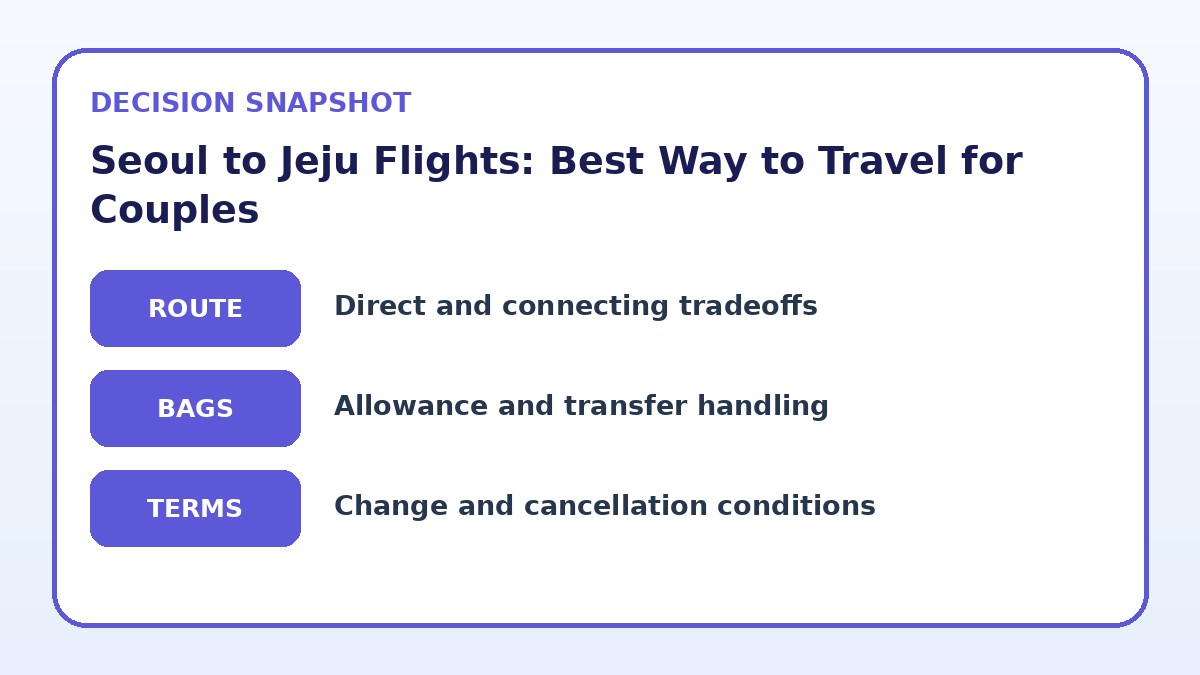
If you and your partner want the fastest, least stressful option, pick a direct flight from Seoul to Jeju. If you value lower fares, a scenic detour, or reusing miles or award space, a connecting itinerary can make sense—but it usually adds travel time and complexity. Start by deciding which tradeoff matters most: time versus flexibility and price. Couples traveling with limited time or tight itineraries typically prioritize direct flights. If you’re treating the trip as part of a longer multi-city journey, or want to add a stopover for food or photos, connections can be attractive. Before you book, compare total door-to-door travel time, the number of transfers, baggage rules, and change/cancellation policies. Check the airline’s final booking page for baggage allowances, seat selection costs, minimum connection times, and whether separate tickets create separate responsibilities for delays.
See current options before you compare the details
Availability and final conditions change. Open Trip.com now or keep reading for the practical comparison.
Time, stress and the value of direct service
A direct flight removes an entire layer of logistics: no extra check-in, no connecting terminals, and no tight transfer windows to worry about. For couples traveling on a short break or with special plans—like a surprise dinner reservation or a timed activity—minimizing travel time matters because lost hours at airports are lost time together. Direct routing also simplifies packing: you won’t need to worry about retrieving and rechecking hold luggage between carriers if your booking is on a single nonstop ticket. Consider your personal tolerance for airport activity: if one of you dislikes long security lines or moving between terminals, the predictability of a single flight can reduce friction.
On the other hand, direct service can be more limited in frequency at off-peak times and might restrict schedule flexibility if you miss one particular flight. For couples who prize spontaneity and don’t mind a longer travel day, direct flights are still easiest, but you should factor in how early you need to leave home and how you’ll get to the airport. Also think about arrival time at your destination: a nonstop that lands late may cost you an evening of exploring, while a connection that times a morning arrival could extend your usable day despite adding travel time.
Why couples choose connecting itineraries
Connecting flights can unlock cheaper fares, alternative schedules, or the opportunity to add a short stop in another city. Couples who enjoy turning travel into part of the experience may use a connection to taste local food, stretch legs on a quick city tour, or gather photos for a memorable album. If you’re maximizing loyalty program benefits, a connecting routing on a preferred carrier or alliance might let you redeem points more effectively or accrue miles for future trips. Connections can also provide more late-evening or early-morning options than limited direct services, depending on season and carrier patterns.
However, connections introduce variables that affect comfort and risk: longer total travel time, potential missed connections if delays occur, and the need to navigate unfamiliar terminals—possibly with checked bags in tow. For couples, these factors are often manageable if you plan buffer time between flights, purchase through-checked itineraries when possible, and carry essentials in your hand luggage. If your connecting flight requires a separate ticket, be prepared for the extra steps: recheck baggage, pass immigration or security again, and account for transfer transit between airports or terminals.
| Approach | Best for | Tradeoff to check |
|---|---|---|
| Direct flight | Couples with limited time or those who prefer simplicity and fewer travel risks. | Typically fewer schedule options and may be pricier or less flexible on mileage redemptions. |
| Single-ticket connecting flight (same carrier/alliance) | Couples balancing cost savings with protection—baggage can be through-checked and rebooking support exists. | Longer total travel time and more exposure to delays, though itinerary protection is stronger. |
| Separate-ticket connection (different carriers) | Couples seeking the lowest possible fare or unique schedule combos when no single operator serves the route. | Higher disruption risk, no through-checked bags, and you may bear responsibility for missed onward flights. |
| Planned stopover connection | Couples who want to turn transit into part of the trip and add a short visit without rushing. | Adds complexity to logistics, potential overnight costs, and more time spent moving rather than relaxing. |
Ready to check the option that fits your plan?
Use your exact dates and traveler details so the provider page can show the current total and conditions.
How to compare options and run the numbers
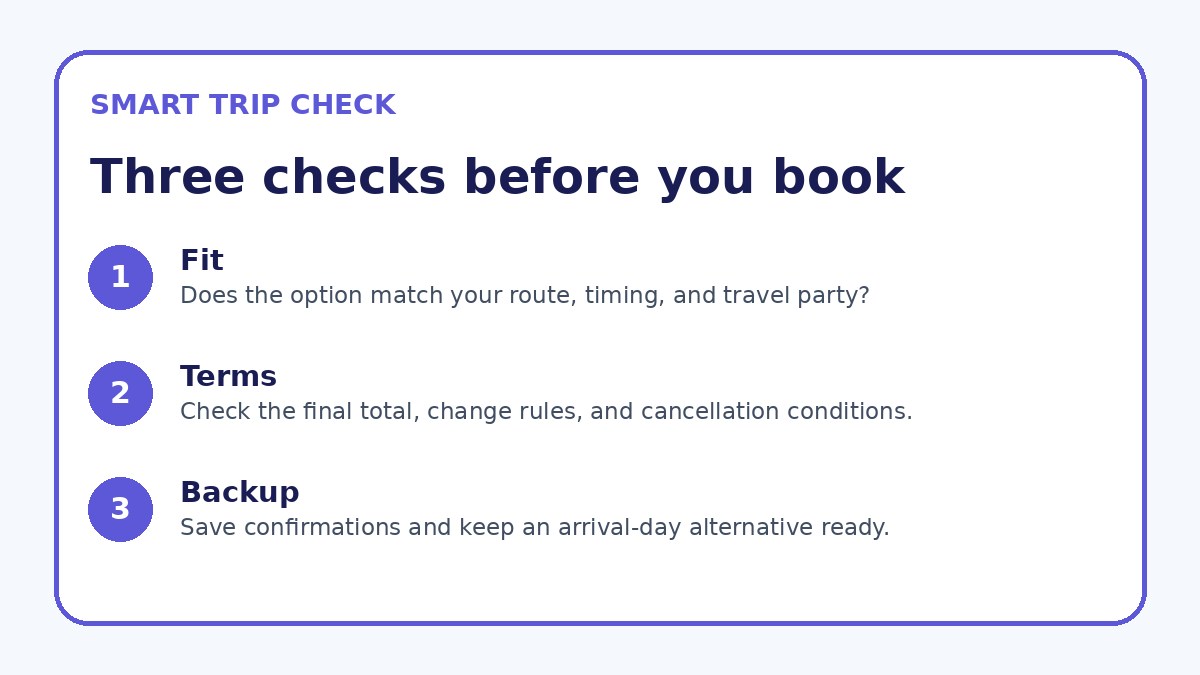
Start by comparing total door-to-door time: include your travel to the Seoul airport or station, recommended check-in times, connection layovers, and ground transport on Jeju. Multiply that by how many hours you’d realistically like to spend on the island. Put a simple value on those hours—for example, lost sightseeing or a missed dinner—and add it to the fare difference to see the true cost. Also factor in change and cancellation policies: a slightly cheaper connecting ticket that charges hefty fees to modify plans may be less flexible for couples who want the option to rearrange.
Next, examine comfort and convenience extras: legroom, seat selection fees, and whether the fare includes checked bags. A direct flight with included baggage and free seat selection may feel better than a connecting itinerary with low-cost segments that tack on add-ons. If the connection involves a long layover that lets you leave the airport, consider whether you’d enjoy a mini-stopover versus sleeping in an airport lounge. Use aggregator sites and airline booking pages to compare total costs and verify exact terms; Trip.com can be one place to check availability, but always read the carrier’s final booking page to confirm baggage rules and transfer responsibilities.
Before you book
- Compare total door-to-door travel time, including transfers, not just airborne time.
- Verify baggage allowance and seat selection rules on the airline’s final booking page before purchase.
- Prefer single-ticket connections on the same carrier or alliance if you want through-checked baggage and rebooking support.
- Pack essential items and one change of clothes in carry-on luggage in case checked bags are delayed.
- Confirm minimum connection times and terminal transfer details when considering a connecting itinerary.
- Check change and cancellation fees or refundable fare options if your travel plans may shift.
Practical tips for planning as a couple
Decide who manages which part of the trip: one partner can handle flight research while the other plans on-island activities. When comparing tickets, keep a shared checklist of must-haves—arrival time range, baggage allowance, seat preferences, and acceptable layover length. For connections, favor itineraries with the same carrier or alliance to increase the chance of through-checking bags and receiving rebooking support if flights are delayed. Pack a small overnight kit in carry-on luggage so you’re ready if a long delay forces an unexpected night away from planned accommodation.
Communicate preferences clearly: if one of you needs more legroom or dislikes early departures, let that guide the search. Consider travel insurance that covers missed connections if you choose separate tickets, and confirm whether the fare allows free changes or offers credit toward rebooking. Finally, check airport transfer options and the time it takes to get from Jeju Airport to where you’ll stay; a slightly later arrival that still gets you checked in before dinner may be preferable to an earlier but longer, more exhausting travel day.
Frequently asked questions
Should couples always choose a direct flight between Seoul and Jeju?
Not always. Choose a direct flight when you prioritize time together, ease of travel, and predictability—especially for short trips. But if you’re adding a stopover to extend the experience, trying for lower fares, or optimizing frequent-flyer redemptions, a connecting itinerary can make sense. Weigh total travel time, how much of your day will be spent in transit, and the potential cost of delays or missed connections. Also check whether a connection is on a single ticket to reduce risk.
How much layover time should couples plan for when connecting?
Plan layovers with a comfortable margin rather than the tight minimums listed by booking systems. If your connection stays within the same terminal and is on a single ticket, an hour or more may be workable, though more time reduces stress. For transfers requiring terminal changes, passport control, or separate tickets, build several hours to allow for queues and bag handling. Consider your tolerance for rushing: if either partner prefers a relaxed pace, choose longer layovers or a direct flight instead.
What should couples check about baggage and rebooking before paying?
Always read the carrier’s final booking page carefully—confirm what’s included with your fare, whether checked bags are permitted, and if seat selection costs extra. For connecting itineraries, check whether baggage is through-checked or if you must collect and recheck it, and whether the airline will assist with missed connections. If you booked separate tickets, note that you may be responsible for missed onward flights. Consider travel insurance or tickets with flexible change terms if your schedule could change.
Final planning note
Choosing between direct and connecting Seoul–Jeju flights comes down to a few clear tradeoffs: how much time you can afford, how much complexity you’re comfortable managing, and whether cost or loyalty considerations matter more than convenience. For short couple getaways, direct flights usually preserve time and minimize stress. If you want to add an extra stop, save money, or work within a points strategy, connecting options can be attractive—just plan buffer time, verify baggage and rebooking policies, and decide how much unpredictability you can tolerate together. Compare full trip time, not just fares, and always confirm terms on the airline’s booking page before you finalize.
Continue planning
Check current options and final conditions
Use the provider page to confirm live availability, the final total, cancellation terms, and every condition that matters to your trip.
This evergreen planning guide was created with AI-assisted drafting and a structured quality review. It does not display live prices, schedules, availability, visa guidance, or provider rankings. Verify current details before booking. Some links are affiliate links; we may earn a commission at no additional cost to you.