
If you travel to Gyeongju for work, price alerts can save time and money — but they can also trigger impulsive decisions that complicate itineraries. The practical approach is to treat alerts as intelligence, not an order to buy: set clear parameters for target fares or room rates, define non‑negotiable trip needs (meeting times, hotel location near your office or conference venue, refundability), and set a review window before any purchase. Use alerts to narrow options and prepare fallback plans rather than to force a booking on sight. This article shows how to set useful alerts, decide when to act, compare refundable and nonrefundable options, and document what to verify on the provider’s final booking page so your Gyeongju trip stays aligned with business commitments.
See current options before you compare the details
Availability and final conditions change. Open Trip.com now or keep reading for the practical comparison.
Where to place alerts and how to scope them
Not all alerts are equally useful. For a business trip to Gyeongju, focus on the core dimensions that affect your schedule: arrival date/time near your meeting, hotel within a short transfer from your venue, and train or flight options that allow backup connections if needed. Create separate alerts for each dimension rather than a single generic search; for example, one alert for morning arrivals and another for late‑afternoon arrivals. This gives you targeted signals you can compare quickly when you have limited decision time between meetings.
When scoping an alert, use narrow but realistic parameters. Don’t watch every cabin class or every neighborhood—pick the options that fit your calendar and commute tolerance. Include refundable vs nonrefundable filters if you value flexibility. If you use a metasearch or an app that sends many notifications, set throttles or thresholds so you receive only alerts that meet your predetermined fare or rate ceiling; that keeps alerts actionable and reduces the temptation to book instantly on impulse.
Decision rules: when to act on an alert
Turn alerts into decisions by creating simple, repeatable rules. For example: if a flight or hotel falls below your preset ceiling and the itinerary requires no schedule changes, open the booking page and confirm key conditions within 24 hours. If the fare is lower but requires a tight connection or has strict cancellation penalties, add it to a short list and wait for a second confirmation alert or a colleague’s input. These rules prevent last‑minute emotional purchases and make your responses consistent across trips.
Use timeboxing for decisions to match business rhythms. Allow a short review window—say 24 to 72 hours—during which you check the alert against meeting constraints, transport timings, and company travel policy. If an alert expires before your decision window, let it go unless it exactly matches your nonnegotiables. Having these rules helps you act confidently without sacrificing necessary flexibility for unexpected changes in your work schedule.
| Approach | Best for | Tradeoff to check |
|---|---|---|
| Immediate booking on alert | Travelers with fixed, time‑critical meetings and clear fare ceilings | May lock in restrictive change/cancellation terms and reduce flexibility for schedule shifts |
| Shortlist and monitor | Those who want to weigh options and confirm with colleagues before committing | Could miss a lower nonrefundable fare but preserves room to change plans |
| Prefer refundable options | Travelers whose schedules are likely to change or who value ease of rebooking | Often carries a higher upfront cost compared with nonrefundable rates |
| Wait for company approval before buying | Trips requiring expense preapproval or specific corporate booking rules | Approval delays can reduce chances of securing the lowest available fare alerted |
Ready to check the option that fits your plan?
Use your exact dates and traveler details so the provider page can show the current total and conditions.
Comparing refundable vs nonrefundable options
When price alerts deliver a tempting low rate, the key tradeoff is between saving money and preserving flexibility. For business travelers whose schedules can shift, refundable rates or those with reasonable change policies are often worth the extra cost. If your company reimburses travel and requires low cost, document the change and cancellation terms clearly before booking. If you opt for a nonrefundable fare, pair it with contingency plans, such as later alerts for higher‑flexibility options or travel insurance that covers meeting cancellations if that fits company policy.
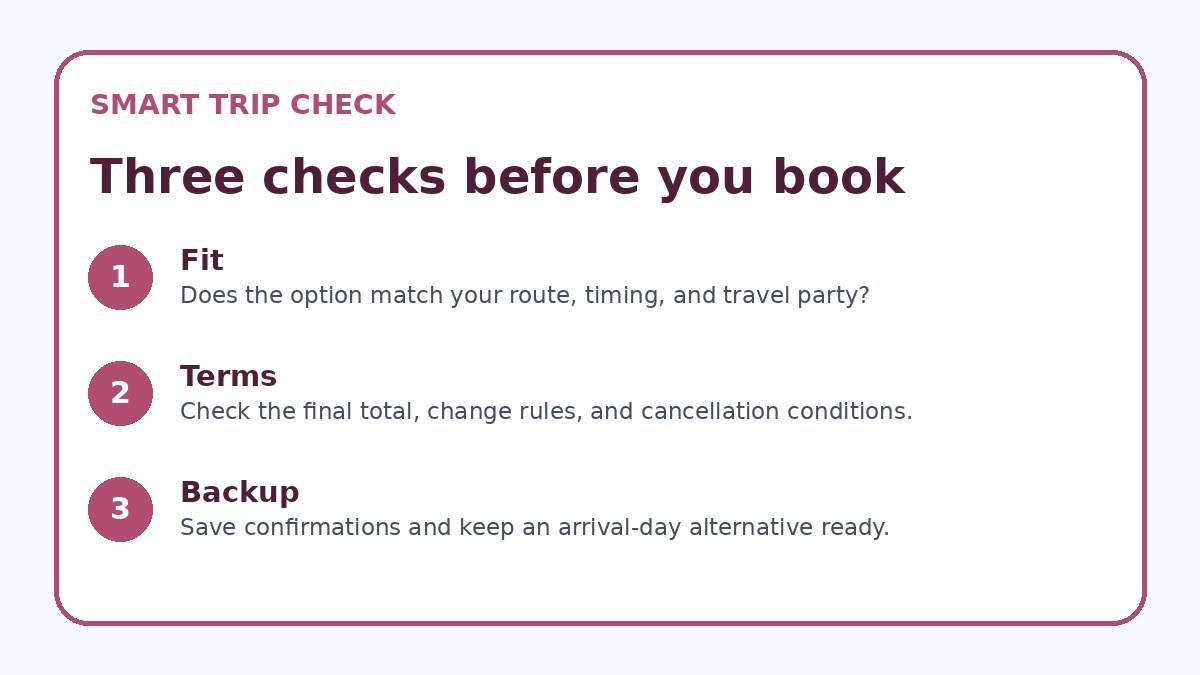
To compare options efficiently, add a simple spreadsheet or note with the essential fields: total out‑the‑door price, change penalty, refundability window, arrival time relative to meetings, and alternative options’ costs. Always verify the provider’s final booking page for exact change and cancellation rules, luggage allowances, and any seat selection or mandatory fees before completing a purchase. Knowing these elements in advance prevents surprises that can cost time or disrupt your schedule during a business trip.
Before you book
- Create separate alerts for flights and hotels with narrow arrival/departure windows matching meeting times.
- Set a maximum acceptable fare or rate and a decision window (24–72 hours) before you act on an alert.
- Open the provider’s final booking page to confirm baggage rules, change fees, and cancellation terms before purchase.
- Compare total door‑to‑door travel time, including transfers to Gyeongju, not just the headline price.
- Document fare class and refundability for expense approval or corporate policy compliance before booking.
- Keep screenshots or saved confirmations of terms and policies in case plans change or disputes arise.
Practical checks before finalizing Gyeongju bookings
Before you hit purchase, verify a short list of facts that often change: whether the ticket requires a name field match to a corporate ID, baggage inclusions, exact change fees, and whether a hotel’s listed distance matches your intended transfer plan. If your itinerary involves a domestic transfer or a train segment to Gyeongju, compare total door‑to‑door time rather than only price. Check public transport, taxi, or car hire options from the arrival station or airport to ensure the timing aligns with your meetings and that an alternative is available if a connection is missed.
When a provider’s terms could change (fare class rules, baggage limits, or cancellation windows), confirm those items on the provider’s final booking page and save or screenshot the confirmation and policy text. If your company requires preapproval, include the exact fare class and refundability details in your approval request. If you like, use one aggregator such as Trip.com to compare availability, but always rely on the chosen provider’s final booking page for binding terms and conditions.
Frequently asked questions
How many alerts should a business traveler set for a single Gyeongju trip?
Set only the alerts you genuinely need: one for outbound travel timing, one for return timing if relevant, and one for the hotel or accommodation area closest to your meetings. If you have multiple meeting locations, add an alert for an alternate hotel near the secondary venue. Limiting alerts to these core elements avoids information overload and reduces the urge to book impulsively. Use thresholds so each alert only notifies you when it meets your predefined price or schedule criteria.
What should I prioritize if an alert shows a cheaper rate but with strict change penalties?
Prioritize alignment with your meeting schedule and the cost of disruption. If missing or rescheduling the trip would be expensive or difficult, favor fares with flexible change or refund terms even if they cost more. If your trip is low‑risk and your company’s reimbursement rules emphasize lower cost, note the penalties clearly and consider travel insurance or contingency plans. Always confirm exact change and cancellation rules on the provider’s final booking page rather than relying solely on the alert summary.
Can I rely on a third‑party app to guarantee the best alert recommendations for Gyeongju travel deals?
Third‑party apps are useful tools for spotting market movement, but they aren’t a guarantee. Use them to surface options, then verify those options on the airline, train operator, or hotel’s actual booking page. Some aggregators like Trip.com can be convenient for initial comparison, but binding terms—baggage allowances, change fees, name‑change policies—are set by the provider and must be checked directly before purchase. Treat alerts as prompts to investigate, not final offers to accept without verification.
Final planning note
Price alerts can be a valuable asset for business travelers heading to Gyeongju when used with discipline. Define the alerts you need, set clear fare or rate ceilings, and adopt decision windows so you evaluate alerts against meeting schedules and company policy rather than emotion. Weigh refundable options against lower nonrefundable fares, and always confirm the provider’s final booking page for change, cancellation, and baggage rules before purchase. With a short checklist and consistent rules, alerts will help you spot opportunities without creating avoidable complications during your work trip.
Continue planning
Check current options and final conditions
Use the provider page to confirm live availability, the final total, cancellation terms, and every condition that matters to your trip.
This evergreen planning guide was created with AI-assisted drafting and a structured quality review. It does not display live prices, schedules, availability, visa guidance, or provider rankings. Verify current details before booking. Some links are affiliate links; we may earn a commission at no additional cost to you.