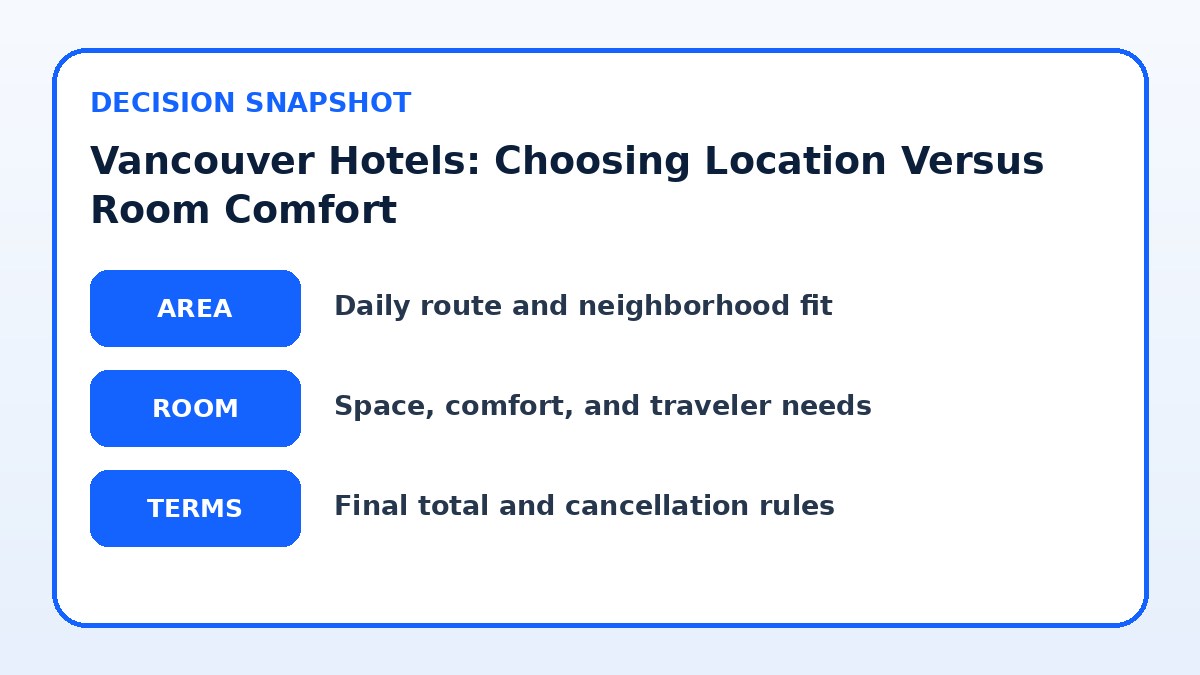
Short practical answer: pick a neighbourhood that matches your daily priorities, then choose a room type and hotel amenities that compensate for tradeoffs. If you plan to spend most days in downtown museums, restaurants, and transit corridors, prioritize a central hotel or one very near a SkyTrain station. If you value quiet nights, larger personal space, or a kitchenette for longer stays, accept a slightly farther location with easy transit or a nearby bus route. Solo travelers benefit most from balancing walkability and access to transit with room features that support rest, work, and safety. Before you book, compare transit travel time from the hotel to your top three destinations, confirm bed and noise-control options on the hotel page, and check the provider’s final booking details for cancellation and included services. Trip.com can be one place to compare current availability and provider terms.
See current options before you compare the details
Availability and final conditions change. Open Trip.com now or keep reading for the practical comparison.
Decide what you’ll trade for location
Start by listing how you intend to spend your time in Vancouver: sightseeing clusters (Stanley Park, Granville Island, Gastown), dining and nightlife, nature outings, or work and meetings. If most of your activity centers in downtown and the nearby waterfront, a central hotel will reduce door-to-door travel time and make evenings simpler. A downtown location also gives you more spontaneous options for cafés, late-night dining, and transit to day-trip departure points. However, central hotels often have smaller rooms and more street noise, so if you need quiet recovery time after long days, be prepared to trade proximity for better in-room comfort.
If your priorities lean toward green space, extended solo stays, or longer work sessions, consider neighbourhoods like Kitsilano, Mount Pleasant, or the West End for more residential calm and larger rooms or suites. These areas usually require a 10–30 minute transit or rideshare into the downtown core, so check the frequency of buses or SkyTrain connections during the times you’ll travel. Balancing means deciding whether you value the convenience of arriving faster each morning or the daily comfort of a more restful, spacious room. Map your top daily routes and compare door-to-door times rather than just straight-line distance.
How room features change the neighbourhood decision
A standard small downtown hotel room can work well for short solo city breaks when most time is spent outside; the key is to ensure good sleep and secure storage. Look for confirmed bed size, blackout curtains, and soundproofing notes on the hotel page. For work or longer stays, search for rooms that specifically list a desk, reliable Wi‑Fi, and accessible outlets; suites or aparthotels often list kitchenettes and more living area, which can make a slightly outlying location more livable and self-sufficient.
If you find a centrally located property without the in-room comforts you need, see whether the hotel offers upgrades such as quiet-room guarantees, larger queen or king beds, or rooms on higher floors. Sometimes a small surcharge for a larger room or a corner unit gives substantially better rest and workspace. Also consider on-site amenities that matter to you—24-hour front desk, luggage hold, laundry, or a fitness facility—which can substitute for the calm you’d get from a residential neighbourhood and make a central stay more comfortable.
| Approach | Best for | Tradeoff to check |
|---|---|---|
| Central downtown hotel with small room | Exploratory solo travelers who value minimal transit time | Smaller room and more street noise; fewer in-room amenities |
| Apartment-style hotel or suite farther out | Longer stays or those needing workspace and cooking facilities | Longer daily commute to core attractions; check transit frequency |
| Midtown or residential hotel near a SkyTrain station | Balanced commuters who want quiet and reasonable transit access | May cost more per night than outer residential options; assess walkability |
| Budget hostel/private room in lively neighbourhood | Social solo travelers who prioritize meeting people and lower costs | Shared facilities or less privacy; verify security and quiet hours |
Ready to check the option that fits your plan?
Use your exact dates and traveler details so the provider page can show the current total and conditions.
Transit, timing, and solo-traveler safety
Vancouver’s transit network — buses, SeaBus, and SkyTrain/Canada Line — will shape how far you can reasonably live from downtown without losing time. For solo travelers, proximity to frequent service (not just one bus an hour) matters more than pure distance: a 15-minute walk to a frequent SkyTrain station can be faster and safer than a five-minute walk to a seldom-route bus stop. Check evening and weekend frequencies for the lines you will use; verify exact schedules and route maps on transit authority or provider pages before booking.
Safety considerations for solo travel include well-lit streets, clear walkways to transit, and hotel policies for late arrivals. Hotels with 24-hour staffing, secure key-card access to floors, and clear after-hours entry instructions provide peace of mind. If you expect late returns, make sure your chosen hotel is on a well-traveled street or within a short, direct route from the station. Always confirm parking, taxi access, or rideshare pickup points with the hotel when those will be part of your arrival or departure plan.
Before you book
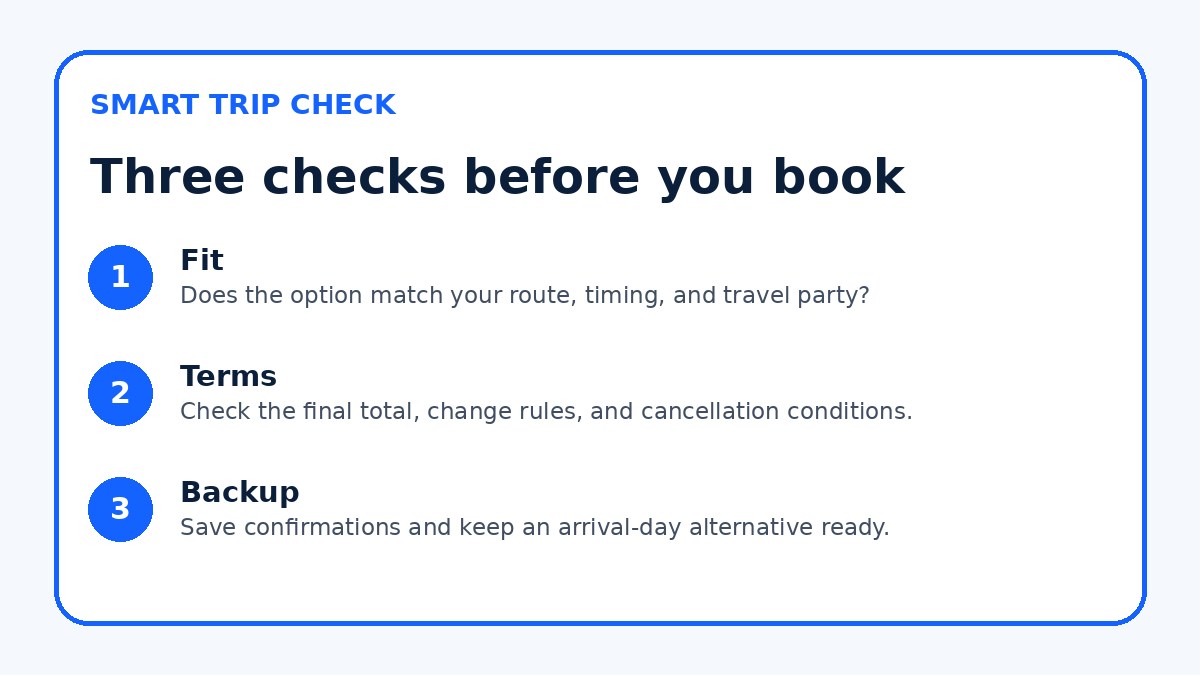
- Map your three top daily destinations and record door-to-door transit times from each hotel option before choosing.
- Confirm exact bed type, room size, and floor assignment options on the hotel’s booking page or by messaging the property directly.
- Check evening and weekend transit schedules for the lines you’ll use; plan your return route and alternative options for late nights.
- Ask the hotel about 24-hour staffing, secure access procedures, and any specific check-in requirements for late arrival.
- Compare the total daily cost by adding likely transit fares, meal costs if no kitchenette, and any hotel service fees to the nightly rate.
- Save screenshots of the hotel’s policy pages (cancellation, extra-guest fees, Wi‑Fi terms) or copy the exact terms into your travel notes before completing a reservation.
Budgeting the balance: value beyond nightly rate
Don’t evaluate a hotel solely by the headline nightly rate. For solo travelers, the value equation includes transit costs and time, the need to pay for meals if your room lacks a kitchenette, and any fees for Wi‑Fi or business services. A centrally located small room might look cheaper on the booking page but cost more in daily rideshares or paid meals. Conversely, a slightly higher nightly rate in a quieter neighbourhood with kitchen access can reduce daily spending and improve comfort for multi-night stays.
When comparing options, list at least three concrete daily costs: expected transit or taxi fares, additional meal costs if you have no in-room food prep, and any luggage or late-check-in fees. Add those projected expenses to the nightly rate to find the real per-day cost. Verify all service fees, Wi‑Fi terms, and any extra charges on the hotel’s final booking page before you complete the reservation. Trip.com or similar booking platforms can show availability, but always confirm provider details on the hotel’s page.
Frequently asked questions
Is it better to book downtown Vancouver hotels or a neighbourhood apartment for a solo trip?
There’s no single right choice — it depends on how you plan to spend your days. Book downtown if minimizing travel time to core attractions and restaurants matters most, and you can tolerate smaller rooms. Choose a neighbourhood apartment-style hotel if you value larger personal space, a kitchenette for self-catering, or quieter evenings; expect more commute time. To decide, list your top activities, estimate daily transit time from both options, and compare the real daily cost including transport and meals. Confirm room amenities and transit connections on the final booking pages before committing.
How can I judge a hotel’s noise level and safety from photos and descriptions?
Photos give clues but aren’t definitive. Look for mentions of soundproofing, higher-floor options, or quiet-room guarantees in descriptions; floor plans and room size indicators help assess personal space. For safety, check whether the hotel lists 24-hour reception, secure key-card access to guest floors, and clear arrival instructions. Read recent guest comments on official booking pages for consistent themes about noise or security, and verify any claims like front-desk hours or access policies directly with the hotel before booking.
What room features should solo travelers prioritize in Vancouver hotels?
Prioritize a comfortable bed and blackout curtains if you value sleep, and a workspace with reliable Wi‑Fi if you’ll work remotely. A kettle or small fridge is handy for late-night snacks or basic meal prep; a kitchenette becomes more valuable for multi-night stays. Also consider luggage storage, 24-hour reception, and in-room safe or secure storage. If you expect late returns, confirm easy after-hours entry and clear instructions for pickups; verify all these amenities on the hotel’s reservation page so you’re not surprised at check-in.
Final planning note
Balancing location and room comfort in Vancouver means matching your daily rhythms to practical details: transit frequency, evening safety, and the in-room amenities that matter most to you. Solo travelers who prioritize exploring broadly will save time and hassle with a central hotel, while those who need space to rest or work should consider neighbourhood properties with kitchenettes or larger suites. Always translate a headline rate into a realistic per-day cost by adding likely transit and meal expenses, and confirm bed type, noise-control measures, and access policies on the hotel’s final booking page. With a short checklist and a confirmed map of your main routes, you can choose the hotel that fits your individual balance of convenience, comfort, and peace of mind.
Continue planning
Check current options and final conditions
Use the provider page to confirm live availability, the final total, cancellation terms, and every condition that matters to your trip.
This evergreen planning guide was created with AI-assisted drafting and a structured quality review. It does not display live prices, schedules, availability, visa guidance, or provider rankings. Verify current details before booking. Some links are affiliate links; we may earn a commission at no additional cost to you.