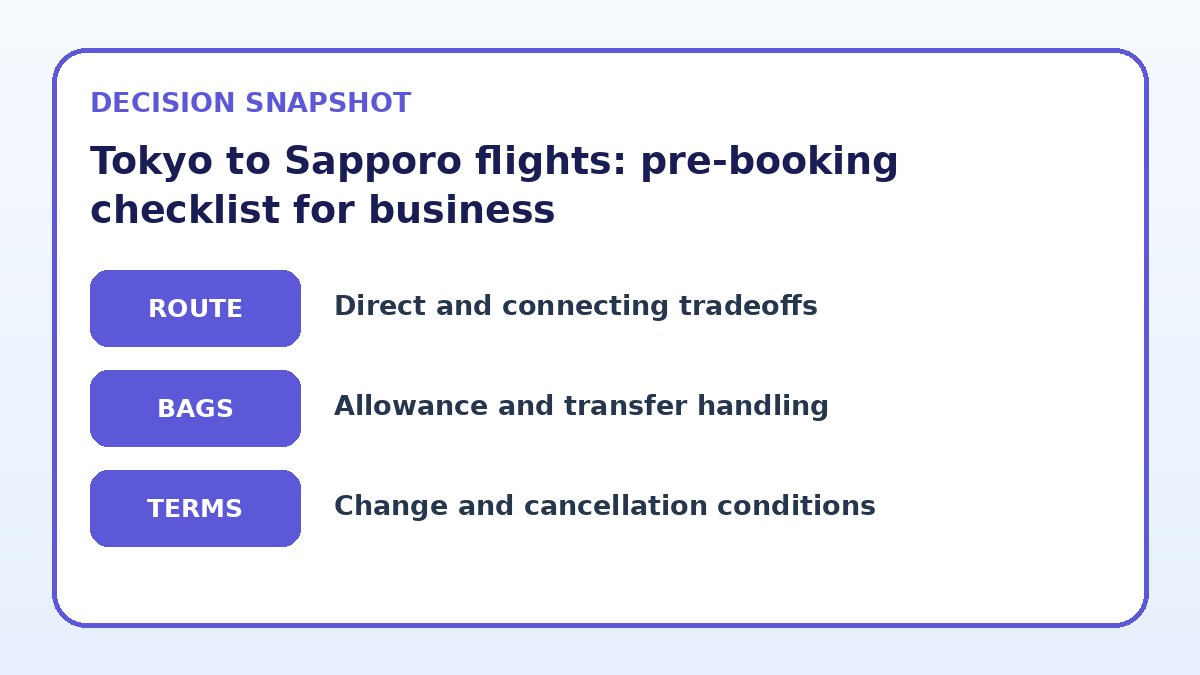
If you need to travel from Tokyo to Sapporo for work, the quickest practical step is to build a tight, action-focused pre-booking checklist so you can decide between speed, cost, and schedule reliability. Start by confirming departure and arrival airports, whether the flights offered are non-stop or require connections, and how each option fits your meeting times. Next, map the door-to-door time including transfers to and from airports in Tokyo and Sapporo, and factor in check-in, security, and possible delays. This article gives a compact checklist you can use immediately, explains the tradeoffs between direct and connecting itineraries, and highlights the specific verification points to review on the airline or booking page before committing.
See current options before you compare the details
Availability and final conditions change. Open Trip.com now or keep reading for the practical comparison.
Airports, schedules and door-to-door timing
Start by identifying the Tokyo airport options in the itinerary because Haneda and Narita offer very different ground-transfer profiles. Haneda is usually closer to central Tokyo and can save substantial time for early-morning or late-evening departures; Narita often requires longer transfers. In Sapporo, check whether the flight lands at New Chitose Airport and how you’ll get from there to your final meeting location. For every candidate flight, map out the full door-to-door time: your departure address to the Tokyo airport, recommended airport arrival time for domestic business travel, elapsed airborne time, and transfer time after landing in Sapporo.
When comparing itineraries, create consistent buffers to account for security screening, baggage collection if needed, and transfer travel time on arrival. Business travelers should build realistic margins for traffic, train reliability, and potential flight delays—especially for tight same-day round trips. If you plan to travel on the same day as important meetings, favor schedules that give you at least 60–90 minutes of buffer after the published arrival time before your first in-person commitment. Always verify airport terminal and transfer specifics on the airline’s final booking page because terminals and shuttle details change.
Direct versus connecting options: tradeoffs to weigh
A direct (nonstop) flight reduces complexity and the number of points of failure — no missed connections, fewer transfers, and lower cumulative risk of delay. However, direct flights may depart from a less convenient Tokyo terminal or have limited daily frequencies that don’t match your meeting schedule. Connecting itineraries can offer more departure times or lower fares and may enable better alignment with in-country transport, but they introduce connection risk and often increase transfer time. Evaluate whether the time saved by a cheaper or earlier departure outweighs the added uncertainty of a change of plane.
To compare options, calculate total door-to-door time and then weigh it against schedule reliability and flexibility. If you must be in Sapporo at a precise time, prioritize nonstop flights and flexible fares that allow same-day changes. If your schedule is more forgiving, a smartly timed connection might lower cost or improve seat availability. Always confirm connection minimums and layover locations on the airline’s booking page so you know whether you’ll need to re-check luggage, change terminals, or collect boarding passes for the next leg.
| Approach | Best for | Tradeoff to check |
|---|---|---|
| Nonstop flight | Tight schedules and minimizing transfer risk | Fewer departure times and sometimes higher fares |
| Connecting flight with single layover | More schedule flexibility and potential cost savings | Higher risk of missed connections and longer travel time |
| Earlier departure with longer layover in Tokyo | Buffering against morning delays and missed meetings | Longer total travel day and possible extra hotel or lounge time |
| Later return flight same day | Maximizing in-city meeting time | Greater exposure to end-of-day delays and fatigue |
Ready to check the option that fits your plan?
Use your exact dates and traveler details so the provider page can show the current total and conditions.
Fare rules, seat selection and business priorities
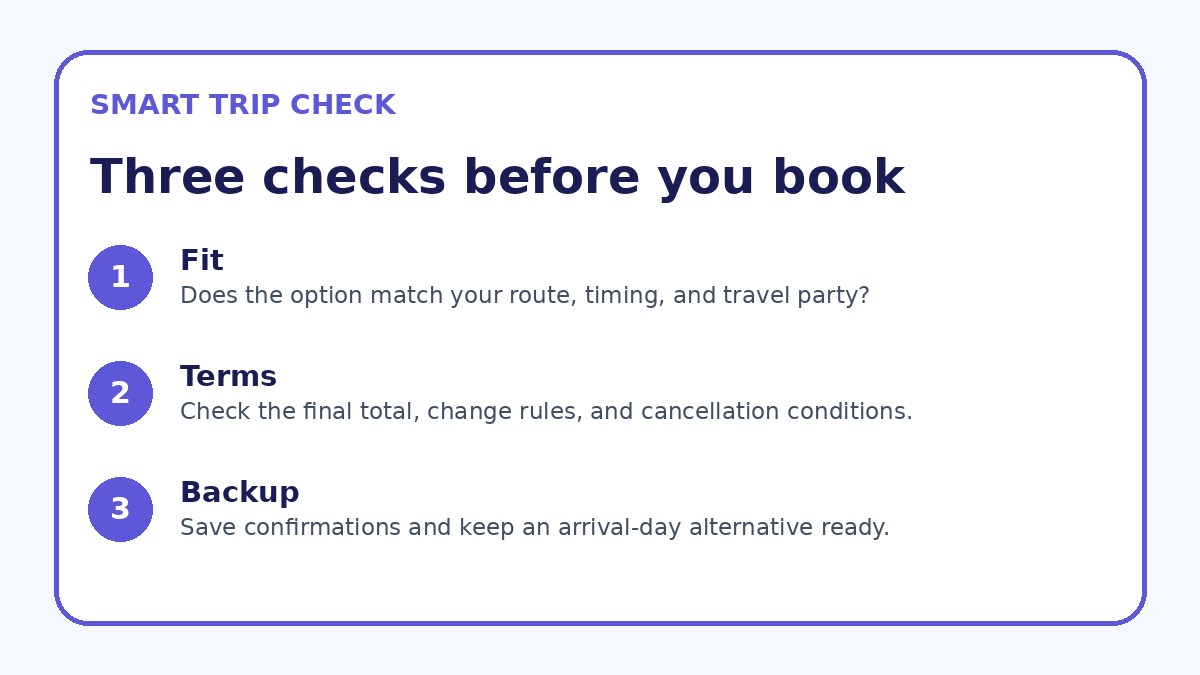
Business travel needs differ from leisure — priority should be on flexibility, predictable boarding, and comfortable seating conducive to preparing for meetings. When comparing fares, look beyond the headline price and read the fare conditions: change and cancellation fees, rebooking windows, same-day change or standby options, and refundability. Check whether the fare class grants priority boarding, lounge access, or extra baggage allowance, since an upgraded fare that saves you time or stress can be more valuable than a nominally cheaper ticket.
Seat selection is another practical decision: choose seats that let you work or rest depending on your schedule, and verify whether the fare includes free seat assignment. For short domestic legs, some carriers charge for preferred seats; decide whether aisle or window, and proximity to lavatories or exits, matter for you. Also confirm your ability to earn or credit frequent flyer miles if corporate travel policies require mileage accrual, and verify these details on the final airline booking page because benefits and rules change frequently.
Before you book
- Confirm departure and arrival airports for each itinerary and map door-to-door transfer times from your work address to the Tokyo airport and from Sapporo’s arrival airport to your meeting location.
- Compare nonstop and connecting options by calculating total travel time (door-to-door) and include realistic buffers for security, baggage, and urban transfers.
- Read the fare rules on the airline’s final booking page: change and cancellation policies, same-day change options, and whether seat selection and priority boarding are included.
- Verify baggage allowances and whether you must collect and re-check luggage on connecting itineraries; confirm these specifics on the carrier’s booking page before purchase.
- Pre-book ground transfers or check train timetables for both ends of the trip; reserve a taxi or airport express seat if your schedule leaves minimal slack.
- Save contact numbers and booking references for the airline and any transfer providers, keep digital copies of confirmations, and establish an approved contingency plan with your office for delays.
Transfers, ground logistics and contingency planning
Plan the ground side of the journey with the same care as the flight. From Tokyo, choose a transfer method that consistently meets your schedule—express trains to Haneda are faster than road travel during peak hours, while Narita often needs dedicated shuttle time. In Sapporo, factor transport from New Chitose Airport to the city center, whether using airport express trains, buses, taxis, or ride-hailing. Pre-booking a car or confirming train timetables can significantly reduce stress on arrival, especially when meetings are tightly scheduled.
Prepare contingency plans: if a flight is delayed or canceled, know the next practical flight options and your company’s approval process for changes. Keep digital copies of all itineraries, tickets, and transfer confirmations, and save the airline’s customer service number and the relevant airport’s information page. Consider travel insurance or corporate travel protection that covers missed connections and same-day rebooking if that aligns with your company policy. Always verify any transfer reservations and terminal change instructions on the airline or airport pages before finalizing booking.
Frequently asked questions
Should I prioritize Haneda or Narita departures for business trips to Sapporo?
Haneda usually offers shorter ground transfer times from central Tokyo, which can save crucial minutes for business appointments; Narita often requires longer transit time. When choosing, factor total door-to-door time and any traffic or train schedules involved. Also check which airport the specific flight departs from on the airline’s booking page, since departure airport affects your preferred departure time and transfer method. If your meeting schedule is tight, favor the itinerary that reliably gets you to the airport with a comfortable buffer.
How much buffer time should I allow for domestic flights when traveling for meetings?
For domestic flights on a business schedule, plan to arrive at the airport earlier than a casual traveler might: generally allow at least 60 to 90 minutes before departure to handle check-in, security, and unexpected queues. Add extra time if you must travel across the city to reach the airport or if traveling during peak commute hours. For same-day returns where missing the flight would disrupt meetings, build additional contingency time or choose a later return that offers more slack.
What fare features are most important for frequent business travelers on this route?
Look for fare flexibility such as free or low-cost changes, refundable or partially refundable options if your plans may shift, and priority services like boarding or dedicated check-in. Confirm seat selection policy because having a known work-conducive seat is valuable, and check baggage rules to ensure your carry-on or equipment is covered. Verify mileage accrual and corporate fare compliance on the airline’s final booking page, and balance the added cost of flexible fares against the time and coverage they provide when schedules change.
Final planning note
A focused pre-booking checklist will help you choose Tokyo to Sapporo flights that meet business priorities: minimize total travel time, protect schedule flexibility, and reduce logistical risk. Start by mapping door-to-door time from your office to the Tokyo airport and from Sapporo’s arrival airport to your meeting point, then compare nonstop and connecting options using consistent buffers. Read fare rules and baggage policies on the airline’s final booking page, pre-book ground transfers if needed, and save contact details and confirmations for quick rebooking. Using this checklist keeps decisions practical and repeatable so you can book confidently and focus on the work trip.
Continue planning
Check current options and final conditions
Use the provider page to confirm live availability, the final total, cancellation terms, and every condition that matters to your trip.
This evergreen planning guide was created with AI-assisted drafting and a structured quality review. It does not display live prices, schedules, availability, visa guidance, or provider rankings. Verify current details before booking. Some links are affiliate links; we may earn a commission at no additional cost to you.