Practical answer first: if you plan high-energy days—museums, walking tours, dining out—prioritize a central neighborhood (Union Square, Embarcadero, or Fisherman’s Wharf) and accept a smaller room. If you value downtime, privacy, and better in-room workspace for remote work, prioritize a quieter neighborhood (Nob Hill, Marina, or Japantown) and expect longer short taxi or transit rides to some sights. The sweet spot for many solo travelers is a centrally located smaller room with a reliable luggage drop and decent neighborhood noise insulation. When you compare options, check bed size, bathroom access, soundproofing, and whether the property offers secure storage and 24-hour front desk service. If you want to compare current availability and photos side-by-side, look at official hotel pages and third-party booking platforms like Trip.com to verify room types, cancellation terms, and exact amenities before booking.
See current options before you compare the details
Availability and final conditions change. Open Trip.com now or keep reading for the practical comparison.
Why location matters for solo travelers in San Francisco
San Francisco’s compact layout and steep hills make location more important than sheer room size for solo travelers. A hotel near major transit hubs, cable car stops, or frequent bus lines reduces fatigue and makes rejoining daytime plans easier after breaks. Staying close to the neighborhoods you plan to spend most time in—museums in the Civic Center, nightlife in SoMa, waterfronts by the Embarcadero—lets you walk between activities and skip repeated rideshare costs. For safety and convenience, prioritize streets with consistent foot traffic and lighting at night, especially if you plan late returns alone.
Choosing a central location can also give you more flexibility with single-day plans: you can drop back to your room between museum visits, freshen up before dinner, or leave shopping bags without carrying them all day. However, central areas usually have smaller rooms and more street noise. The practical tradeoff is time versus personal space—decide whether saving 20–30 minutes each way is worth a slimmer bed or less desk space. If you anticipate taking long day trips outside the city, weigh proximity to bus or ferry terminals that serve your itinerary.
What room comfort really means for a solo stay
Room comfort covers more than square footage. For solo travelers, bed quality, blackout curtains, reliable Wi‑Fi, clear workspace, and a clean, functional bathroom usually matter most. If you work, a dedicated desk and strong internet beat an extra armchair. If you’re sightseeing late, a comfortable mattress and soundproof windows will affect how productive you feel the next day. Evaluate listed amenities carefully: some hotels sell 'city view' or 'deluxe' labels that mostly reflect window placement rather than real comfort improvements.
When reading room descriptions and photos, look for evidence of the specific comforts you need: a proper desk and chair, USB outlets, a quiet HVAC system, and storage for longer stays. Also check whether the property offers luggage storage on arrival or after check-out—handy for late departures. If a hotel page or booking platform lists a 'workstation' or 'business center,' verify if it’s available 24/7 and if there are fees. Confirm these details on the hotel’s official booking page before you finalize, because they change more often than fixed location facts.
| Approach | Best for | Tradeoff to check |
|---|---|---|
| Central small room (Union Square/Embarcadero) | Maximizing daytime exploration and minimizing transit time | Smaller space, more street noise; prioritize soundproofing and bed quality |
| Quiet larger room (Nob Hill/Marina) | Long stays, remote work, and early rest | Longer transit to some attractions and potential rideshare costs |
| Neighborhood apartment or extended-stay | Independent travelers who cook or need more storage | Often fewer on-site services and possibly farther from tourist hubs |
| Hybrid choice: central location + upgraded room | Travelers wanting convenience with better in-room comfort | Higher nightly rates for larger rooms; still check noise and view |
Ready to check the option that fits your plan?
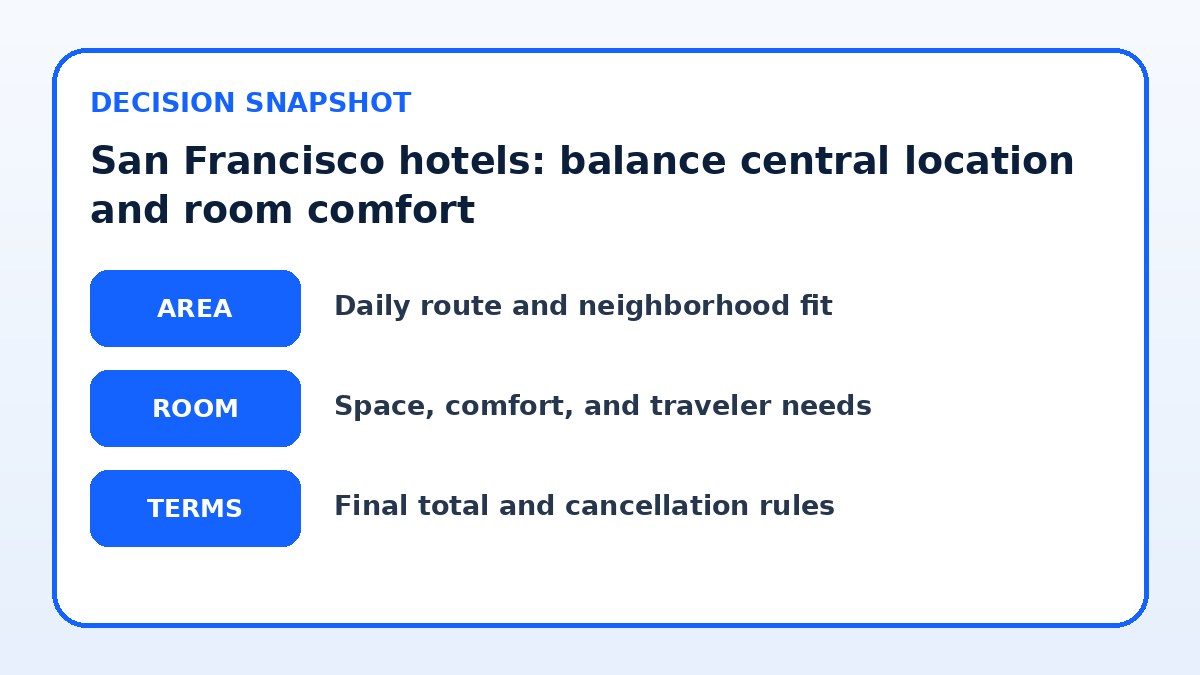
Use your exact dates and traveler details so the provider page can show the current total and conditions.
Neighborhood tradeoffs: central vs. quiet areas
Central neighborhoods like Union Square, SoMa, and the Embarcadero put you within walking distance of major attractions, restaurants, and transit—ideal if you dislike long commutes. Expect smaller rooms and more nighttime activity, which can be mitigated by asking about higher-floor rooms or requesting soundproofed windows. These areas also tend to have more hotel choices at varied price points, which gives flexibility if your dates shift. For solo travelers focused on maximizing daytime exploration, the convenience often outweighs less in-room space.
Quieter neighborhoods — Nob Hill, the Marina, Pacific Heights, or Japantown — usually offer larger rooms, calmer streets, and a more residential feel. You trade proximity for space and serenity, which benefits solo travelers who value downtime or are working remotely. Keep in mind public transit frequency and directness: some quieter pockets require a bus transfer or a longer walk to reach major attractions. Before booking, map sample door-to-door routes and estimate rideshare times and costs for evenings when transit runs less frequently.
Before you book
- Map door-to-door travel time from the hotel to your top three planned activities during both day and evening.
- Confirm exact bed size, availability of a desk, and whether the room photo matches the booked room type on the hotel’s final page.
- Ask the hotel (or read recent reviews) about soundproofing and whether higher-floor rooms are available to reduce street noise.
- Verify check-in/check-out times, luggage storage options, and any potential incidental hold amounts on the final booking page.
- Compare Wi‑Fi speed or policies if you need reliable remote work connectivity; request specifics from the hotel before booking.
- Ensure the property has 24-hour staff or secure key access and confirm whether an in-room safe or secure luggage storage is provided.
Practical booking checks and how to compare rooms
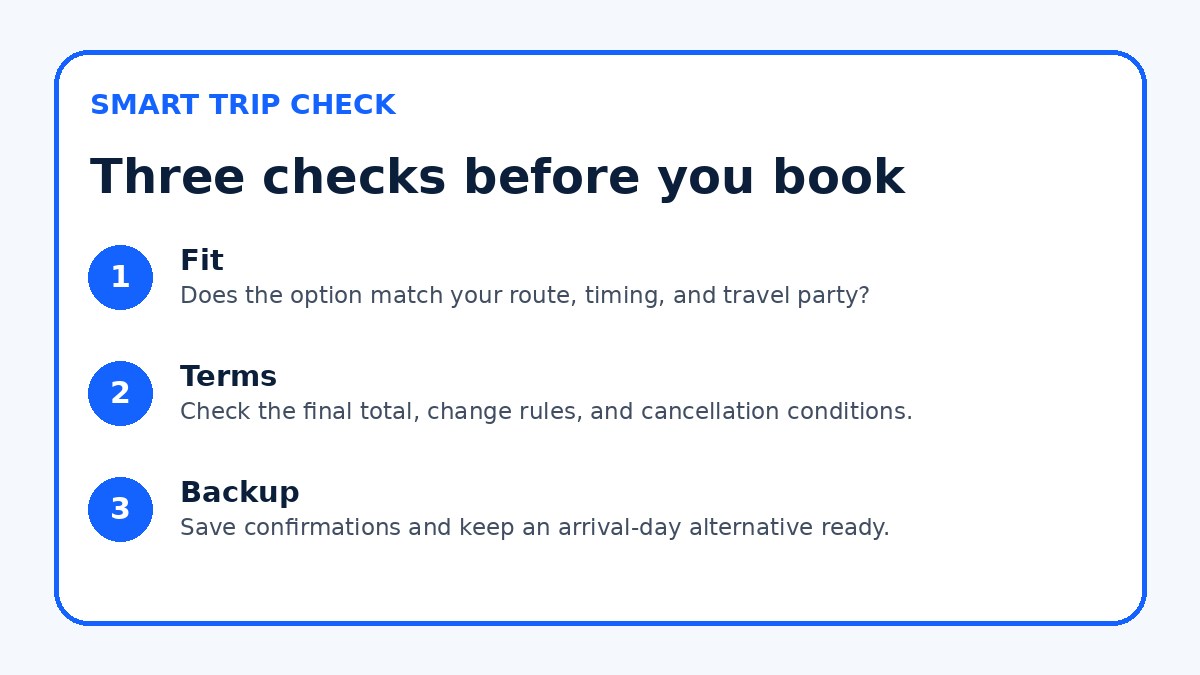
When comparing San Francisco hotels, use a simple checklist: exact bed type, room square footage if listed, floor number options, window orientation, and noise-control features. Read recent guest comments specifically about noise, Wi‑Fi reliability, and cleanliness rather than aggregated scores. If you need a desk or a bathtub, search room descriptions and photos for those elements explicitly; don’t assume they’re present just because the property is labeled 'business' or 'boutique.' Confirm refundable versus non-refundable rules, and re-check cancellation policy and any incidental hold amounts directly on the hotel’s final booking page.
Also compare arrival logistics: does the hotel offer 24-hour reception, luggage storage, early check-in or late check-out for a fee, and secure keycard access? If you’ll be using rideshares, check whether the hotel has a preferred pick-up/drop-off point—some blocks in dense districts are easier for drivers to navigate. For peace of mind, ask about on-site staff availability at night, and verify whether additional safety features like in-room safes or concierge messaging are included. Use the hotel website and one booking platform such as Trip.com for side-by-side room photos and amenity grids, then verify final details with the property.
Frequently asked questions
Is it better to stay near Fisherman’s Wharf or closer to downtown for a solo trip?
Fisherman’s Wharf is very convenient for waterfront attractions and daytime tourism, but it can be busier and more tourist-oriented at night. Downtown (Union Square/SoMa) puts you closer to transit, restaurants, and museums, letting you move around the city more efficiently. For a solo traveler who plans varied activities and evening dining, downtown often offers a better balance of convenience and transit options. If waterfront scenery and easy access to piers are your priority, Fisherman’s Wharf is reasonable—just check room comfort and noise levels before booking.
How can I judge noise levels before booking a hotel room in San Francisco?
Noise reports in reviews are useful—filter recent reviews for keywords like 'noise', 'street', and 'windows' to spot persistent issues. Look for room descriptions that mention 'soundproof windows' or higher-floor availability, and call or message the hotel to request a quiet room away from busy streets. Check the hotel’s location on a map for nearby bars, clubs, or major traffic arteries; if possible, use street view to assess foot traffic. Finally, consider booking a flexible rate so you can change rooms on arrival if the noise is unacceptable.
What safety and solo-traveler amenities should I check before booking?
Confirm 24-hour reception or secure keycard access, the presence of in-room safes or secure lockers, and well-lit entryways and nearby streets. Ask whether the property stores luggage securely before check-in or after check-out and whether staff can assist with late-night rides. Check the hotel's policy on visitors and whether there are emergency contact procedures posted. Always verify these specific details on the hotel’s official booking page or by contacting the property directly to ensure they match the listing you used to reserve.
Final planning note
Choosing San Francisco hotels as a solo traveler comes down to prioritizing what you value most: time or space. Central locations buy you time and convenience, while quieter neighborhoods buy you room comfort and rest. For a balanced solo trip, identify your daily rhythms—how many hours you'll spend out vs. resting—and use that pattern to weigh neighborhood convenience against in-room amenities. Always verify bed size, noise-control features, Wi‑Fi reliability, and staff availability on the hotel’s final booking page before confirming. Comparing official hotel pages and a booking platform like Trip.com for photos and amenity grids helps, but the final check with the property will ensure the room meets your solo-travel needs.
Continue planning
Check current options and final conditions
Use the provider page to confirm live availability, the final total, cancellation terms, and every condition that matters to your trip.
This evergreen planning guide was created with AI-assisted drafting and a structured quality review. It does not display live prices, schedules, availability, visa guidance, or provider rankings. Verify current details before booking. Some links are affiliate links; we may earn a commission at no additional cost to you.