If you’re traveling from Taipei to Kaohsiung with bulky suitcases, sports gear, or multiple bags, the single most practical choice is to plan transfers around low-effort terminals and clearly listed baggage policies. Start by choosing your arrival and departure stations with the fewest changes, the easiest platform layouts, and the most reliable luggage handling options — then verify those specifics with the carrier or station website before you finalize tickets. Think about where you’ll arrive in Kaohsiung and how you’ll get to your accommodation: a long walk, a taxi with limited trunk space, or an extra transfer can turn a simple trip into a hassle. This guide gives targeted steps to compare terminal access, assess station layouts for luggage moves, and make on-the-ground decisions that reduce carrying and waiting time.
See current options before you compare the details
Availability and final conditions change. Open Trip.com now or keep reading for the practical comparison.
Choose arrival and departure stations by transfer effort
Start by listing the possible departure stations in Taipei and arrival points in Kaohsiung and compare them for transfer effort rather than distance alone. Transfer effort includes the number of level changes (stairs, escalators, elevators), the presence of long underground corridors, the need to change platforms, and how easy it is to get a taxi or rideshare at the station exit. A station that’s five minutes further by travel time but offers step-free platform access and a taxi rank directly outside the entrance can be far easier when you have bulky luggage.
When weighing options, mentally rehearse the sequence from your hotel to your train seat and from the Kaohsiung platform to your final accommodation. Consider whether you must switch transport modes (train to metro to bus) and how many times you’ll need to lift your bags. If your schedule allows, prefer trains that stop at major transport hubs where station layouts are simpler and more passenger services are available, then verify on station maps and provider pages where elevators, escalators, and designated drop-off points are located.
Compare booking-level baggage rules and reservation notes
Before you book, check the train operator’s final booking page for explicit baggage rules: allowed number of items, maximum dimensions, any special handling instructions for oversized gear, and whether you need to declare or reserve space for large items. Don’t rely only on third-party summaries—these provider pages are where you’ll see the official requirements and any instructions about carrying bags between platforms. If you plan to bring non-standard items such as bicycles or surfboards, check whether special permits, packaging, or advance notice are required.
In addition to size and weight limits, look for guidance on where luggage should be stored on board and whether station staff will assist with loading at certain stations. If the operator offers a separate luggage service or partnered courier for same-day delivery, add that option to your comparison. Confirm these details on the carrier’s live booking or help pages, because baggage policies can differ by train type and some services may require advance arrangement.
| Approach | Best for | Tradeoff to check |
|---|---|---|
| Direct service to central Kaohsiung station | Those wanting fewer transfers and simpler last-mile logistics | May require longer on-train storage or a longer taxi to specific neighborhoods |
| Arriving at a secondary Kaohsiung station with shuttle | Travelers near that area or using a complementary hotel shuttle | Adds a transfer leg and possible walking with bags between modes |
| Using a luggage courier for door-to-door delivery | Passengers wanting to travel hands-free between stations | Adds coordination and potential service windows to schedule checks |
| Splitting luggage between coach and rail or using storage lockers | Those combining sightseeing with a long train leg | Requires planning where to stash items and extra pick-up steps |
Ready to check the option that fits your plan?
Use your exact dates and traveler details so the provider page can show the current total and conditions.
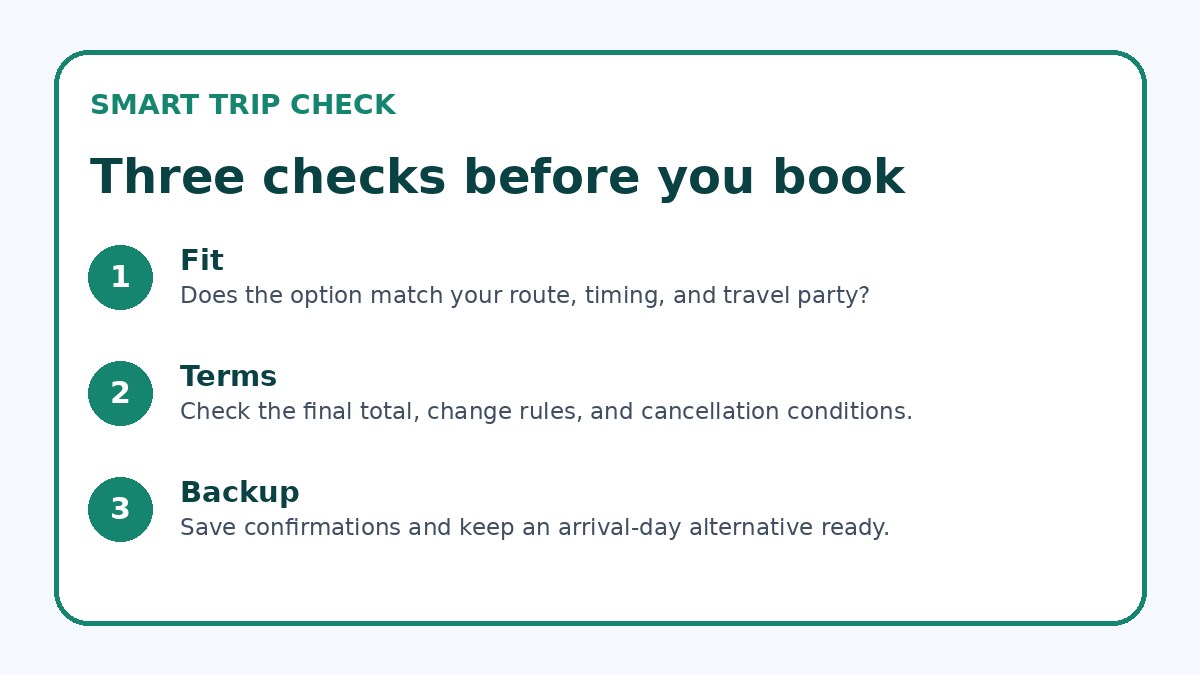
Plan first- and last-mile transfers with luggage capacity in mind
Decide how you’ll travel between station and accommodation: taxi, rideshare, hotel shuttle, metro, or walking. For large or heavy luggage, taxis and private transfers reduce carrying but check whether typical vehicles have sufficient trunk space for multiple large suitcases. Where possible, reserve a larger vehicle or pre-book an accessible shuttle. If you must use the metro, identify which station exits have elevators or ramps and which require stairs—station maps and local transit websites usually show accessibility details that matter when hauling suitcases.
Consider curbside drop-off and pick-up logistics at both ends: whether there’s a dedicated taxi rank, how crowded the station forecourt tends to be, and if there are loading zones for short-term stopping. If your hotel offers a luggage porter or a pick-up service, confirm their fees and operating hours. Keep an eye on connection windows; allow extra buffer time during peak hours or if you’ll be deploying a paid luggage service to avoid missing a train.
Before you book
- Compare station maps and mark elevators, escalators, and shortest route to the platform before you leave the hotel.
- Confirm baggage allowances and special-item rules on the train operator’s official booking or help page used to purchase tickets.
- Reserve a larger taxi or pre-book an accessible shuttle if you expect more or oversized suitcases than usual.
- Identify a backup arrival station, later service, or paid luggage courier and note contact details for quick changes.
- Pack a small emergency kit with straps, protective covers, and a compact luggage scale to stay within operator limits.
- Save screenshots of your ticket, baggage rules, and station map offline to show staff if connectivity is limited.
On travel day: practical moves, contingencies, and where to verify
On the day of travel, leave early and use confirmed station maps to plan platform routes and elevator locations. Keep digital copies of tickets, booking confirmations, and screenshots of the train operator’s baggage rules in case staff need to see them. If your trip involves a tight transfer, call or message the carrier’s customer support number on the booking page to confirm that staff can help or that luggage storage is available on the intended service. If you anticipate difficulty, arrange a paid porter or luggage courier in advance.
If plans change, have clear alternatives: a later train with simpler transfers, a different arrival station closer to your hotel, or an off-site luggage storage point. When comparing options, use the carrier’s official pages for final verification, and consider checking Trip.com for a quick overview of current availability—then cross-check with the provider before you finalize reservations. Bringing a compact luggage scale, sturdy wheels, and protective coverings will simplify transfers and reduce the risk of damage during multiple handlings.
Frequently asked questions
Can I check large or extra luggage on trains between Taipei and Kaohsiung?
Policies for checking large or extra luggage vary by train operator and service type, so don’t assume every train accepts oversized items. Before booking, examine the carrier’s official booking or baggage policy page for explicit instructions on checked luggage, dimensions, and whether advance notification or a reservation for oversized items is required. If the operator offers a specific luggage service or partnered courier, check its operating hours and pickup/drop-off procedures. Always verify on the provider’s final booking page so you know the exact requirements you must meet.
What’s the easiest way to move bulky bags through stations with many stairs?
The simplest approach is to choose stations and services with clear step-free routes and to plan your path in advance using station maps. If a station has constrained access, book a taxi that offers direct curbside drop-off to avoid stairs, or arrange for station porter assistance if available. In cases where public transit is unavoidable, target exits with elevators and allow extra time—carry a small wheeled bag for essentials and use protective covers on larger items. Verify elevator locations and temporary closures on the station or transit operator’s site the day before travel.
Should I use a luggage courier instead of carrying my bags on the train?
A luggage courier can reduce physical handling and allow you to travel hands-free, but it introduces coordination: you’ll need to schedule pickup and delivery windows and confirm service coverage and cost directly with the courier. Consider courier timelines, whether they deliver to hotels or private addresses, and whether same-day transfer is offered. If you choose this option, verify the courier’s terms, insurance for loss or damage, and exact pickup/drop-off locations on the provider’s website. Keep the courier’s contact details handy in case of delays or re-scheduling.
Final planning note
Traveling from Taipei to Kaohsiung with extra luggage is mainly a planning challenge: pick stations and services that reduce transfers and lifting, verify baggage rules on the operator’s booking page, and arrange transfer logistics that match your luggage volume. Favor routes that minimize platform changes, confirm elevator and curbside details, and have backup options such as later services, alternative stations, or a luggage courier. Before you commit, cross-check station maps, the carrier’s baggage policy, and any transfer provider’s operating hours. With those confirmations in place you’ll cut down on heavy handling and make the journey more predictable and comfortable.
Continue planning
Check current options and final conditions
Use the provider page to confirm live availability, the final total, cancellation terms, and every condition that matters to your trip.
This evergreen planning guide was created with AI-assisted drafting and a structured quality review. It does not display live prices, schedules, availability, visa guidance, or provider rankings. Verify current details before booking. Some links are affiliate links; we may earn a commission at no additional cost to you.