If you’re renting a car in Berlin with kids, practical insurance reading is the single most useful thing you can do before you click Book. Start by confirming the car’s Collision Damage Waiver (CDW) or Loss Damage Waiver (LDW) level, the excess amount (often called deductible), and whether third-party liability covers both Germany and any cross-border travel you plan. Also check if the primary driver’s age and licence status triggers restrictions or extra insurance requirements, and whether optional add-ons—like glass and tyre cover—actually remove the excess or just provide partial reimbursement. Read the provider’s final booking page and the wording of any third-party insurance you buy: the exact exclusions and claim process determine how a stressful incident will affect your family holiday budget and time.
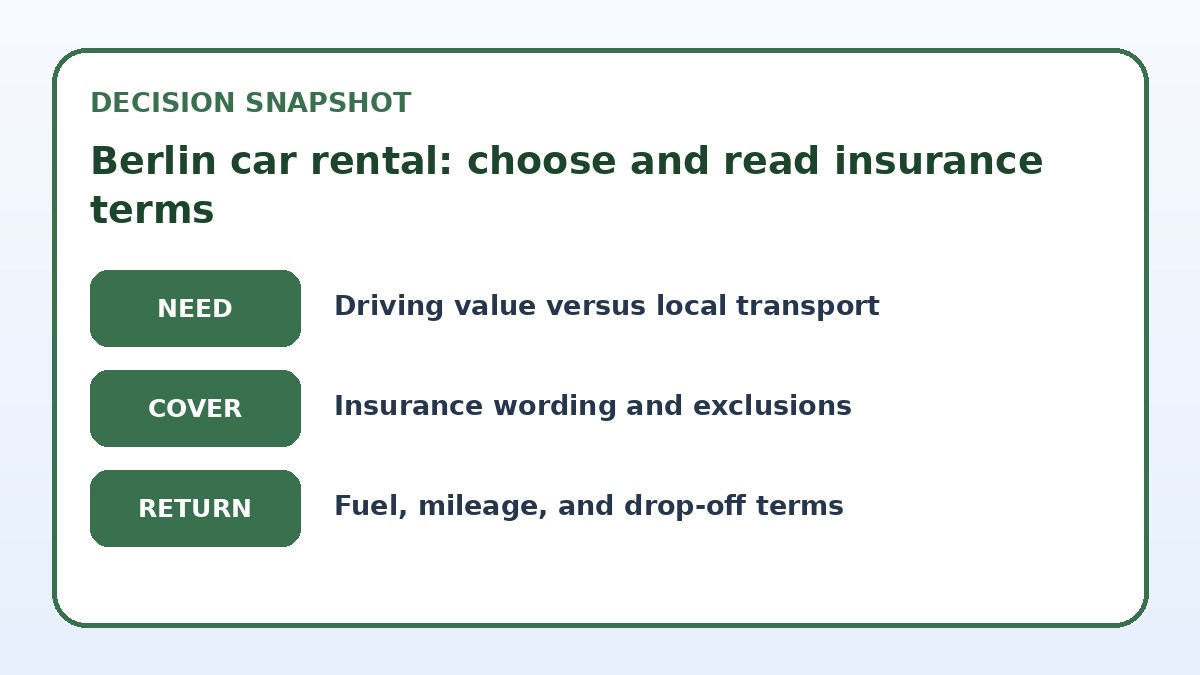
See current options before you compare the details
Availability and final conditions change. Open Trip.com now or keep reading for the practical comparison.
Which insurance words actually change your family’s risk
Insurance descriptions use a small set of phrases that control real exposure: Collision Damage Waiver (CDW) or Loss Damage Waiver (LDW) reduce or remove liability for damage to the rental vehicle; Third-Party Liability covers damage to other people’s property and bodily injury; and Theft Protection handles stolen cars or belongings. The word excess or deductible is crucial—this is the amount you must pay before cover applies. For families, a higher excess means you may need emergency cash or a credit card hold that can affect your holiday plans. Carefully note whether optional covers like gravel, glass and tyre protection are part of the CDW or sold separately.
Equally important are exclusions and conditions written in the small print. Exclusions commonly include driving off-road, driving under the influence, using the wrong fuel, or allowing an unlisted driver to use the car. Some policies exclude roof boxes or child-seat-related incidents. Another frequent clause is reduced cover for drivers under a certain age or those with fewer than a set number of years licensed. When you read these words, imagine realistic family scenarios—parking in a narrow Berlin street, a child opening a door on a lamppost, or a tyre puncture on an A-route—and check how the policy responds.
Deciding between rental-company waivers and third-party waivers
Rental-company waivers sold at the desk are convenient because they immediately reduce or eliminate the excess and avoid a reimbursement process. Those waivers are governed by the rental agreement—read that agreement on the provider’s final booking page and confirm whether the waiver removes all types of vehicle damage, glass and tyres. Desk waivers may appear more expensive but save time and stress when you need to file a claim during your trip. If you plan a long stay, multiple drivers, or to leave Berlin for a day trip across a border, desk waivers often include location-specific terms you must verify before departure.
Third-party waivers (sold online or via travel insurers) can be cheaper, but they usually require you to pay the full excess to the rental company first and then submit a claim for reimbursement. That reimbursement process can take weeks and requires documentation—rental contracts, damage reports, police reports if applicable, and proof of payment—which is disruptive on family holidays. If you consider a third-party product, read the claim timeline and evidence requirements, and confirm on the provider’s final booking page whether they cover the excess for all drivers named on the rental contract.
| Approach | Best for | Tradeoff to check |
|---|---|---|
| Pay rental-desk CDW/LDW at pickup | Families wanting immediate reduction or elimination of excess and simpler local claims | Higher daily cost but less paperwork and no reimbursement delays |
| Buy third-party excess waiver online | Families seeking lower upfront rates who can handle reimbursement steps | You must pay excess first and wait for documentation-based refunds |
| Rely on credit-card rental insurance | Travelers who already have comprehensive card benefits and meet card conditions | Card policies often have strict eligibility and require declining desk waivers |
| Use existing household/travel insurance add-on | Families with broad travel policies that explicitly cover rental vehicle excess | Policy wording and evidence demands vary; confirm claim process before travel |
Ready to check the option that fits your plan?
Use your exact dates and traveler details so the provider page can show the current total and conditions.
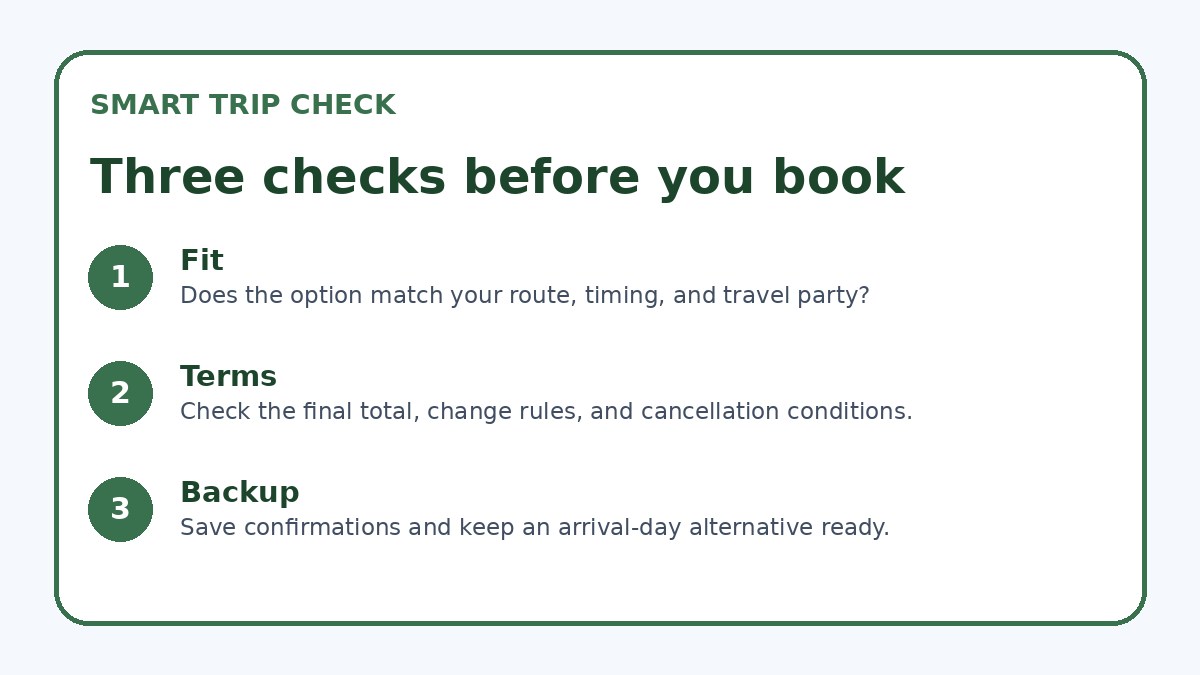
Key terms to compare and where to verify them
Compare deductible amounts, liability limits, and which perils are included (collision, theft, glass, tyres, undercarriage, and roadside assistance). Also check whether accidental damage to child seats is covered and whether personal effects inside the car are insured. When comparing, use the exact wording from the rental company’s terms and the third-party policy wording; summary pages often omit exclusions. If using a broker or comparison site like Trip.com to view options, still click through to the rental company’s final booking page and the insurance policy document—it’s where binding conditions and exceptions appear.
Pay attention to procedural requirements: timeframe for reporting damage, required police reports for theft or hit-and-run, and the method for returning a damaged vehicle. Some contracts require you to notify the rental company immediately and to bring the car back to a depot; others allow local authorised garages. For families, the claims process is as important as headline coverage—slow or complex procedures can turn a minor fender-bender into a day lost from your itinerary. Write down emergency contact numbers from the policy and keep digital copies of documents on your phone and with a co-traveller.
Before you book
- Before booking, download and save the rental company’s full terms and the PDF of any optional insurance to your phone.
- Check the exact excess amount in euros and whether optional waivers remove it completely or only partially.
- Confirm which drivers are covered, age limits, licence requirements, and whether young drivers face extra fees or exclusions.
- Read exclusions for glass, tyres, undercarriage, roof boxes and child seats, and plan whether to add cover for those items.
- Note the steps required after an incident: who to call, whether a police report is mandatory, and document requirements for claims.
- If using third-party cover, verify the reimbursement timeline and prepare digital copies of receipts and the rental contract for claims.
Practical tradeoffs: costs, convenience, and peace of mind
Lower advertised daily rental rates often pair with higher excess and narrower desk waivers—this saves cash upfront at the cost of potential larger payments if something happens. Families must balance the chance of a costly incident (higher when driving busy urban streets, carrying bikes, or towing) against the convenience of a desk waiver that removes friction. If you will be parking on-street in Berlin neighbourhoods, navigating tight lanes, or driving on unfamiliar A-roads, a more comprehensive waiver can keep holiday disruption minimal. Conversely, if you plan mostly supervised short transfers with low mileage, a leaner policy may be acceptable.
Another tradeoff is the administrative burden versus immediate protection. Desk waivers simplify claims but can be expensive; third-party products lower upfront cost but create paperwork and reimbursement wait times. Also consider whether your household travel insurance or credit card already offers cover—if so, verify the wording carefully: many cards require you to decline the rental company’s CDW at the desk, and they may still exclude certain vehicle categories or drivers under a certain age. When in doubt, call the insurer and ask for the exact clause number or email confirmation to keep with your booking.
Frequently asked questions
If my credit card offers rental insurance, can I skip buying any rental-company waiver in Berlin?
Possibly, but don’t assume full protection—credit-card benefits vary widely. Before skipping the rental-company waiver, check the card’s fine print for geographical limits, vehicle categories excluded (for example, some cards exclude vans or certain premium cars), driver age and licence requirements, and whether you must decline the desk CDW verbally or in writing. Also ask the card issuer how claims are handled—whether they reimburse the excess or pay the rental company directly—and request written confirmation of covered scenarios so you can show it at pickup if needed.
How does deductible (excess) handling differ between desk waivers and third-party waivers?
Desk waivers typically reduce or remove the deductible immediately under the rental contract, meaning you aren’t billed the excess unless you breach terms. Third-party waivers normally require you to pay the deductible up front to the rental company, then submit a claim for reimbursement to the third-party provider. That reimbursement depends on documentation—photos, damage reports, police statements—and can take time. For families, the desk option reduces immediate financial stress, while third-party options trade that convenience for lower upfront cost but added administrative work.
What wording about cross-border travel should families check when driving out of Berlin?
If you plan to cross into neighbouring countries, confirm the policy explicitly mentions permitted countries and any additional fees or paperwork for cross-border travel. Look for phrases such as ‘cross-border cover’, ‘European coverage excluding certain states’, or lists of allowed countries. Also check if the insurer or rental company requires prior notification, special permits, or additional third-party liability limits for travel outside Germany. Always verify these points on the rental company’s final booking page and, if needed, request written confirmation by email to avoid surprises at pickup.
Final planning note
For families renting a car in Berlin, reading insurance wording is more than fine print—it’s a practical tool for avoiding unexpected stress, cost, and lost holiday time. Start by checking excess amounts, exactly what perils are included, and how damage and theft claims are handled. Balance the convenience of a desk waiver against the lower upfront cost of third-party options, and confirm any credit-card or travel-insurance overlaps with written policy clauses. Before you leave, save copies of all terms, emergency contacts and claim instructions. That preparation keeps the focus on the trip—sightseeing, family time, and routine driving—rather than dealing with an unclear insurance mess.
Continue planning
Check current options and final conditions
Use the provider page to confirm live availability, the final total, cancellation terms, and every condition that matters to your trip.
This evergreen planning guide was created with AI-assisted drafting and a structured quality review. It does not display live prices, schedules, availability, visa guidance, or provider rankings. Verify current details before booking. Some links are affiliate links; we may earn a commission at no additional cost to you.