
For couples planning travel between Sydney and Melbourne, ticket flexibility often matters more than headline price. The practical answer: decide first how certain your dates are, whether you both want assigned seats together, and how tolerant you are of change fees — then compare fare rules rather than providers. Flexible fares typically let one partner alter plans without voiding both seats; refundable or change-permitted fares avoid last-minute stress, while the cheapest tickets usually carry strict no-change policies. Look at the same three things across any option: change and cancellation rules, seat-pairing policies, and whether transfers or mixed-mode journeys are treated as one booking. When you get to booking pages, verify the exact wording about who can change a ticket, how refunds are calculated, and whether a single change affects both passengers. Trip.com can be useful to compare current availability and wording, but always confirm rules on the operator’s final booking page.
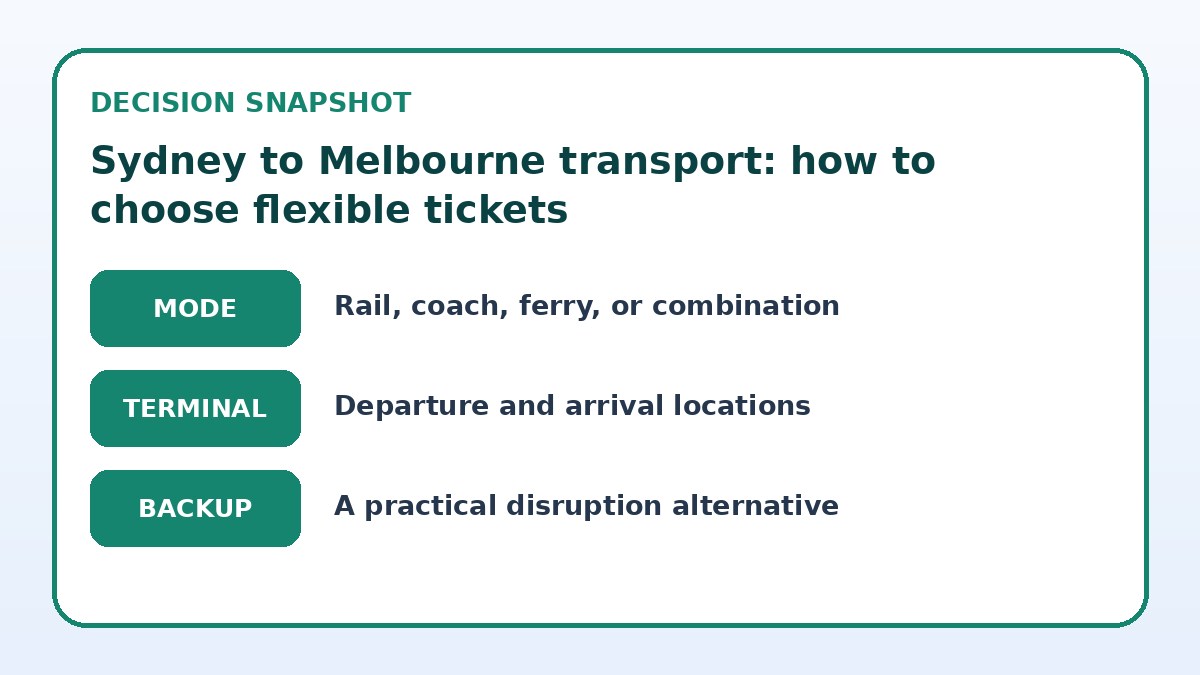
See current options before you compare the details
Availability and final conditions change. Open Trip.com now or keep reading for the practical comparison.
Why ticket flexibility matters for couples
When two people travel together, small uncertainties—late work finishes, a minor injury, or one partner wanting to extend a stop—become collective headaches if tickets are rigid. Flexible fares let one or both passengers change travel dates or times without cancelling the entire booking. This matters if you want to keep seats together, split your return dates, or handle an unpredictable schedule. Couples often prioritize different things: one may want the cheapest fare while the other prefers the comfort of change options. Choosing the right ticket type resolves those competing priorities before you travel.
Flexibility also reduces friction on travel days. If only one person’s name or ticket is changeable, you’ll face the odd situation where one partner can move travel plans while the other is locked in. For longer journeys or overnight options, flexibility can mean moving to another service without losing the entire fare’s value. When comparing options, think beyond price: examine whose name can be changed, how refunds are calculated, and whether changes must be made by phone or can be handled online quickly.
How to compare fare rules—what to check
Start by reading the fare rules section on every booking page. Look specifically for: whether changes are allowed, how fees are calculated, if refunds are partial or full, and any deadlines for making amendments. Also note whether change fees are per passenger or per booking; per-passenger policies are more useful for couples who may split plans. Confirm whether seat assignments are maintained after a change, or whether you risk losing adjacent seats when you alter one ticket. These details are the difference between a simple swap and a complex rebooking.
Next, check connection and combined-ticket protections. If your journey mixes train, coach, or flight legs, see if a single operator treats the journey as protected or if each segment requires separate claims when disrupted. Find out how name corrections, date changes, and refunds are processed—some providers require paperwork or phone calls for non-refundable tickets, while others allow instant online changes. Always save screenshots or PDF copies of the exact fare rules and confirmation pages in case you need to dispute a charge later.
| Approach | Best for | Tradeoff to check |
|---|---|---|
| Cheapest non-changeable fares | Couples with fully fixed plans and minimal risk of changes | Low cost but no refunds or changes; seat pairing may be subject to availability at check-in |
| Per-passenger changeable fares | Couples who may need to alter one person’s plans without affecting the other | Higher upfront cost, but avoids joint-ticket disruption and simplifies single-person changes |
| Fully refundable tickets | Couples wanting maximum certainty and simple refunds if plans cancel | Most expensive option; verify refund processing time and any administrative steps required |
| Mixed-mode or combined bookings | Couples combining train, coach, or flight legs who want a single itinerary | Convenient in one booking but check whether protections apply across operators or only per segment |
Ready to check the option that fits your plan?
Use your exact dates and traveler details so the provider page can show the current total and conditions.
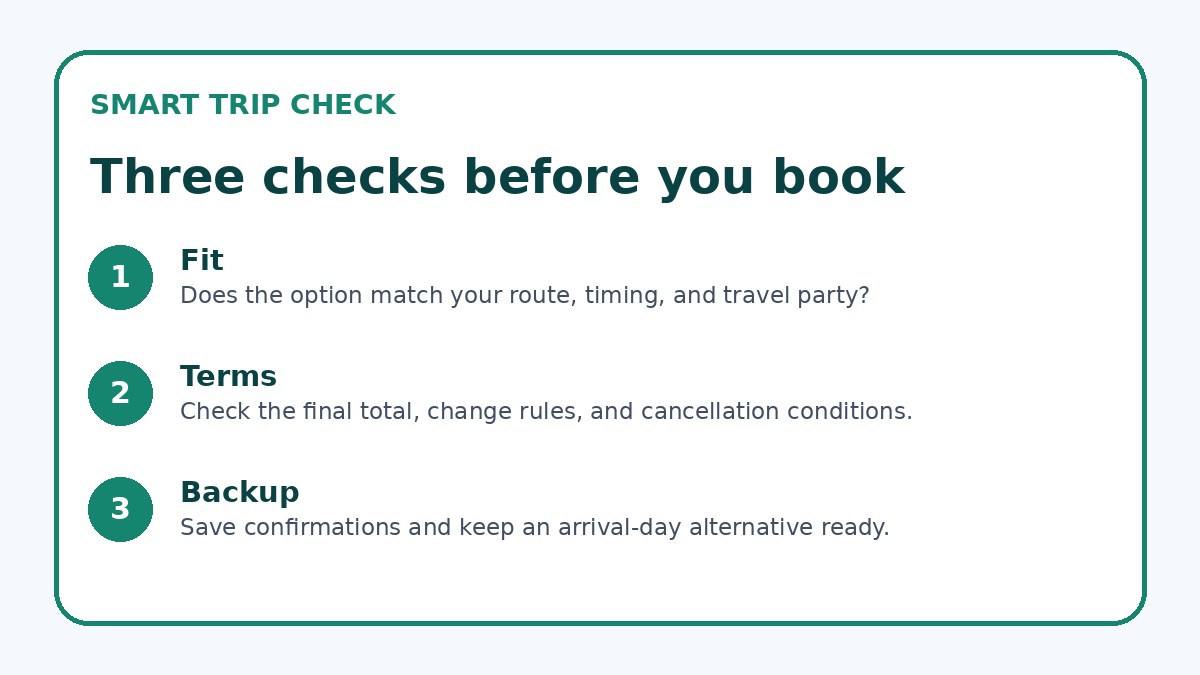
Tradeoffs: cost versus certainty for couples
Lower fares frequently come with stricter rules: limited or no changes, no refunds, and seat allocations that might separate you at check-in. That’s fine if your dates are fixed and you want to save money, but it increases the risk if plans shift. More flexible fares cost more upfront but reduce the administrative hassle and emotional strain of last-minute changes. For couples who value spontaneity or whose schedules can change independently, paying a bit extra for per-passenger changeability can be a practical insurance policy.
Another tradeoff involves mixing ticket types. Booking one flexible return and one cheap non-changeable outward ticket can save money while still offering a safety net—but it can complicate refunds and seat pairing. If you plan activities in either city that require precise arrival times, factor in the cost of flexibility against the value of punctual arrival. Remember to consider the friction cost: a cheap ticket that forces long wait times for rebooking or customer-service calls may be more costly in time and stress than a slightly pricier flexible ticket.
Before you book
- Agree on how fixed your travel dates are and set a maximum you’ll pay for change flexibility before searching.
- Compare the exact change and cancellation wording on the operator’s final booking page, not just summaries.
- Verify whether change fees apply per passenger or per booking and whether seat assignments transfer on change.
- Decide whether to book separate tickets or a combined booking based on who needs the option to amend plans.
- Save screenshots or PDFs of fare rules and booking confirmations immediately after purchase for dispute evidence.
- If using a third-party site, confirm the operator’s policy on the final booking page and keep both references.
Practical booking workflow for couples
Start by agreeing on how fixed your dates are. If both partners are flexible by at least a day or two, cheaper, semi-flexible options might work. If either partner’s schedule is uncertain, search specifically for fares tagged as changeable or refundable. When you find a candidate fare, check the full terms on the operator’s final booking page—verify change fees, whether changes are allowed per passenger, and how refunds are calculated. If comparing multiple providers, save fare-rule screenshots or PDFs to avoid confusion later.
At booking, choose the passenger arrangement that preserves per-person flexibility where possible. If seat selection is offered, book seats together immediately and confirm that seat reservations are transferable with a fare change. Use single-booking engines cautiously: a combined booking can simplify payments but may treat both passengers as one ticket for changes. Finally, keep contact details, booking references, and the operator’s amendment instructions handy; these details matter far more than an advertised fare when plans change.
Frequently asked questions
Can one partner change a shared booking without affecting the other?
It depends on the fare and the provider’s rules. Some operators allow changes per passenger, meaning one person can alter their ticket without canceling the other. Others treat the reservation as a single booking so any amendment applies to all passengers on that booking. To avoid surprises, read the fare rules for ‘per-passenger changes’ or ‘per-booking changes’ and, if unclear, contact customer support before paying. Keep proof of the fare rules on your booking page in case you need to request an exception later.
Should couples book together or buy separate tickets for more flexibility?
Booking together simplifies payment and ensures initial seat pairing, but it can tie both travellers to the same change rules. Buying separate tickets can provide per-person freedom—useful if one partner’s schedule is less certain—but it may complicate seating and makes handling connections riskier if one partner misses a segment. Weigh how important sitting together is against the need for independent changes; if seat adjacency matters, prioritize booking together and choose a fare that supports per-passenger changes.
What should we verify on the final booking page before completing our purchase?
On the operator’s final booking page check: the exact wording on change and cancellation fees, whether changes apply per passenger, how refunds are calculated, and the process for making amendments (online, app, or phone). Confirm seat-assignment terms after changes and whether mixed-mode legs are protected. Take screenshots of the terms and the total paid amount. If you used a third-party seller, also note the seller’s change process and who handles refunds so you know where to start if you need to amend the trip.
Final planning note
For couples traveling between Sydney and Melbourne, choosing the right ticket comes down to how much schedule certainty you have and how much friction you’re willing to tolerate if plans change. Flexible fares cost more upfront but save time, stress, and customer-service hassles when one partner needs to adjust. Always compare the specific change and cancellation rules on the operator’s final booking page, verify whether changes are per passenger, and decide whether seating together outweighs independent flexibility. Keep documentation of fare rules and booking confirmations. That straightforward preparation turns a potential travel headache into a manageable plan.
Continue planning
Check current options and final conditions
Use the provider page to confirm live availability, the final total, cancellation terms, and every condition that matters to your trip.
This evergreen planning guide was created with AI-assisted drafting and a structured quality review. It does not display live prices, schedules, availability, visa guidance, or provider rankings. Verify current details before booking. Some links are affiliate links; we may earn a commission at no additional cost to you.