
If you and your partner are planning a quick getaway from Los Angeles to Las Vegas, the single most useful thing you can do at booking is compare the airline or fare class change and cancellation conditions side by side. Start by deciding how flexible you need to be — strictly fixed dates, likely changes, or a refundable option — then check the provider’s final booking page for the exact rules, fees, and timelines. For couples, factor in shared risks: one person’s sudden illness or a last-minute work obligation can make flexible or refundable options worthwhile. This article gives a practical checklist, explains tradeoffs between low fares and flexible terms, and shows how to compare direct and connecting flight options when change and cancellation policies differ.
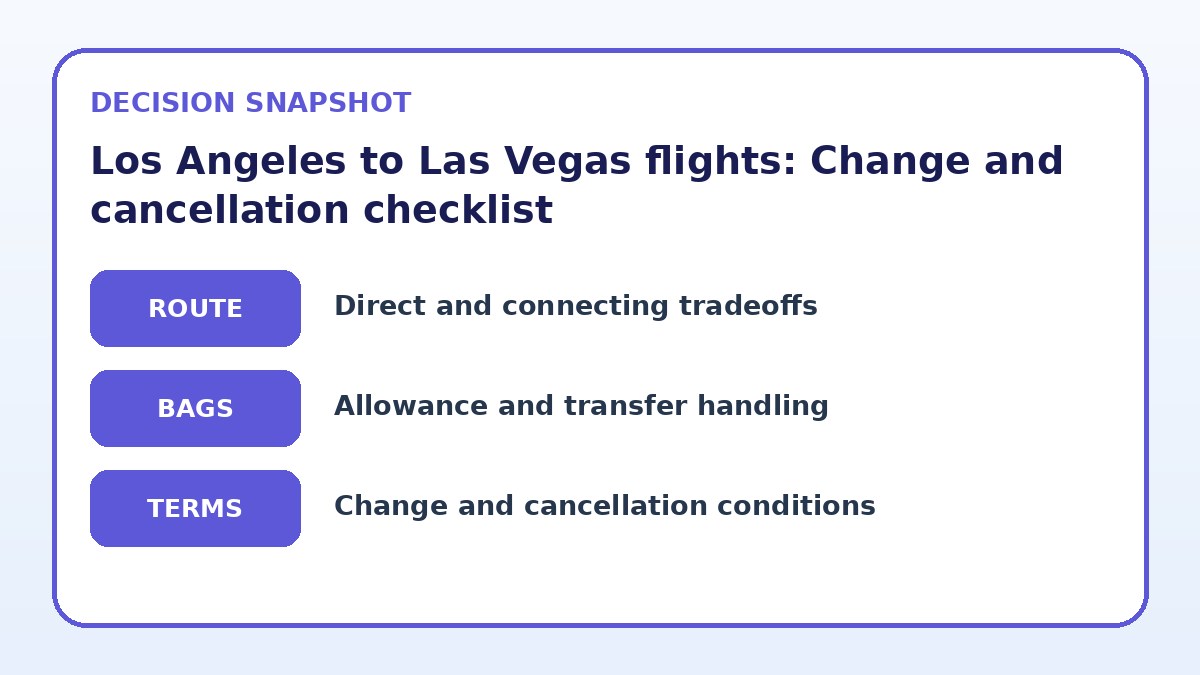
See current options before you compare the details
Availability and final conditions change. Open Trip.com now or keep reading for the practical comparison.
How to compare fare rules before you buy
Begin by viewing the full fare rules on the airline’s official booking or confirmation page rather than relying solely on summary labels like “Economy” or “Basic.” The fare family name is only a starting point; the detailed conditions state whether changes are permitted, which change fees apply, how any fare difference is handled, and whether refunds are possible. For couples, open two browser tabs so you can compare two itineraries or two different airlines at once — this makes it easier to spot small but important differences such as whether companion name changes or cancellations are allowed without penalties.
Always verify whether the policy applies per passenger or per reservation. Some airlines allow one traveler on a booking to change their ticket while the other remains fixed, while others treat the whole reservation as a unit. For example, if you book a round-trip for both partners and one needs to cancel, you must know whether the airline issues a partial refund, travel credit, or requires canceling the entire reservation. Where fare rules are unclear, contact the airline’s customer service and capture the agent’s name and reference number; take screenshots of the policy page to avoid later disputes.
Direct versus connecting flights: policy differences to watch
Never assume the same change and cancellation terms apply to direct and connecting itineraries. Low-cost carriers that operate direct Los Angeles–Las Vegas routes often sell deeply restricted basic fares with firm change fees or no refunds, while connecting itineraries sold by legacy carriers or code-share partners may allow different levels of flexibility depending on which carrier issues the ticket. Additionally, when an itinerary involves multiple carriers, the most restrictive carrier’s rules and the ticketing carrier’s policies can govern changes; that can affect whether you pay separate change fees for each leg or a single fee for the whole ticket.
If you prefer maximum flexibility for a couple, consider booking a single-carrier itinerary or an airline-branded fare bundle that explicitly includes fee-free changes. When evaluating connections, check minimum connection times and how the airline handles missed connections due to rebookings. Also confirm baggage transfer policies and whether changing one segment forces reissuance of the entire ticket. These details matter because a change to just one leg can trigger additional costs or procedural hurdles that make the change more expensive or time-consuming than anticipated.
| Approach | Best for | Tradeoff to check |
|---|---|---|
| Book the cheapest nonrefundable fare | Couples confident their dates won’t change and prioritizing lower upfront cost | High change/cancellation fees and limited recovery if one partner cancels |
| Buy a flexible or refundable fare | Couples who value peace of mind and expect possible date shifts | Higher upfront cost that may outweigh potential change savings for short trips |
| Book with a third-party agency | Couples seeking bundled hotel or package options from one seller | Potential extra agency fees and longer processing times for changes or refunds |
| Purchase travel insurance covering changes | Couples wanting protection for unexpected cancellations without paying higher fares | Insurance has exclusions and claim processes that may limit reimbursements |
Ready to check the option that fits your plan?
Use your exact dates and traveler details so the provider page can show the current total and conditions.
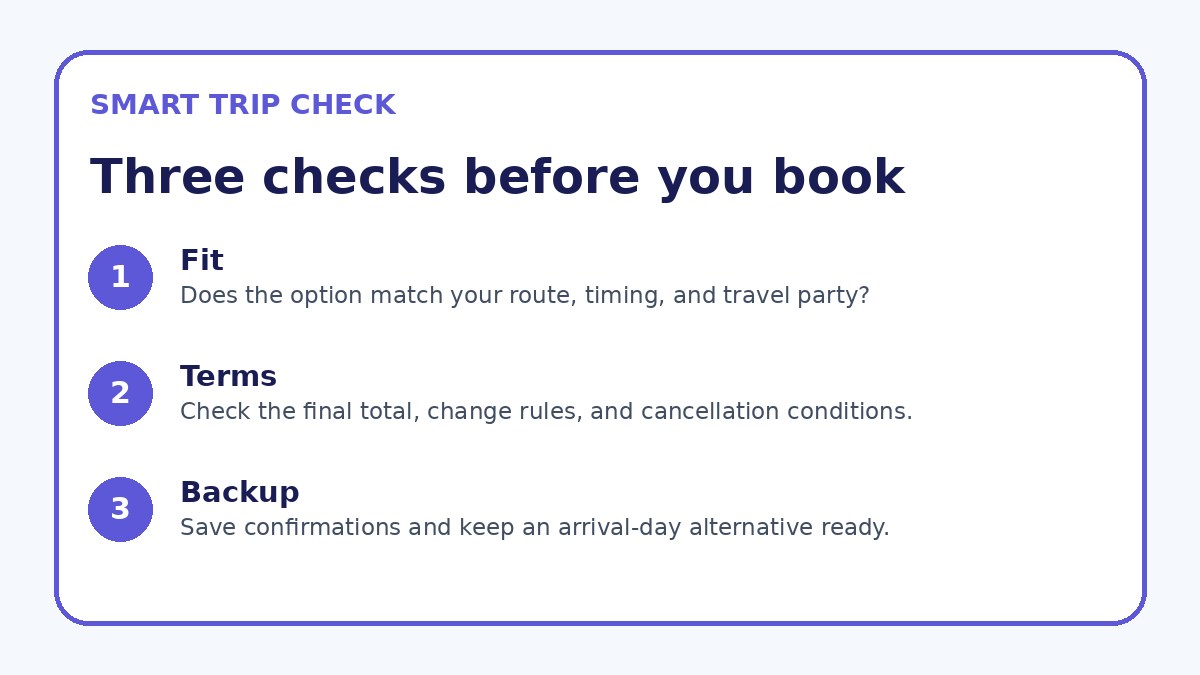
Third-party bookings, travel agencies, and insurance
Booking through online travel agencies or third-party sites can offer convenience and different price displays, but the change and cancellation pathway is often more complex. Third parties frequently act as intermediaries: they may have their own policies about refunds and rebookings, and in some cases you must go through the agency to request a change rather than dealing directly with the airline. For couples who want a single contact point for changes, a reputable agency can help — but always confirm on the agency’s final booking page which fees the agency charges versus the airline’s own penalties.
Travel insurance can fill gaps, especially for nonrefundable tickets. Look for policies that specifically cover trip changes, cancellations for covered reasons such as illness, and travel assistance for rebooking. For couples, consider whether the policy covers cancellations for individual travelers or only if both cancel. Before buying, read the policy’s definitions of covered reasons and the claims process; insurers typically require documentation and have specific timelines, so understand when and how to submit a claim if you need reimbursement for nonrefundable fares or change fees.
Before you book
- Open the airline’s fare rules PDF and save a screenshot or PDF of the change, cancellation, and refund terms before paying.
- Compare at least two fare families and a third-party option side-by-side, noting change fees, fare difference handling, and refundability.
- Verify whether the ticket is refundable to cash or only to travel credit/voucher, and confirm processing timelines for refunds.
- Confirm whether changes can be made per passenger or only per reservation, and ask the airline for written clarification if unclear.
- If booking through a third party, read that agency’s change and refund procedures and keep their contact details for future requests.
- Decide if travel insurance is needed; if so, buy a policy that explicitly covers ticket change fees and read the claim requirements.
What to verify on the airline’s final booking page
On the booking confirmation page and the fare rules PDF, verify the exact change fee amount, whether fare differences apply, the time window for free or reduced-cost changes, and the refundability terms. Look for wording that clarifies whether a voucher or travel credit is issued instead of a cash refund, whether refundable fares include taxes and fees on refund, and whether taxes are retained when issuing credits. If the airline mentions “fee-free changes” read the fine print—many such offers still require you to pay any fare difference, and some limit fee-free changes to specific fare classes or booking windows.
Confirm contact methods and timelines for making a change: does the airline require phone calls for same-day changes, or can you manage everything from the website or app? For couples, also check whether name corrections and passenger swaps are permitted and what paperwork is needed. If you see any ambiguous language, save screenshots and email the airline for written clarification. Trip.com can be used once to compare availability and rules across options, but always treat the airline’s official booking page as the final authority.
Frequently asked questions
Can one partner change or cancel while the other keeps their reservation?
It depends on the airline and how the ticket was issued. Some carriers allow changes or cancellations per passenger on the same record, issuing refunds or credits only for that traveler, while others treat the whole reservation as a unit. Before booking, check the fare rules for wording about “per passenger” changes and ask the airline to confirm in writing. If you anticipate one person may cancel, consider separate tickets to avoid a forced cancellation of both travelers' reservations.
Is travel insurance a reliable substitute for flexible fares?
Travel insurance can cover many unforeseen cancellations, but it is not a perfect substitute for refundable fares. Policies vary in covered reasons, excluded events, and documentation requirements; some policies cover illness or injury but not changes of mind or work obligations. Also note that insurance reimburses eligible costs after you pay; a refundable fare may avoid upfront loss. Read policy terms carefully and compare the cost of insurance plus a cheaper fare against the price of a flexible ticket to decide which option suits your risk tolerance.
What should I double-check on the final booking page before completing payment?
Before you hit pay, verify the displayed fare family, the change fee amount, whether fare differences are owed on rebooking, and whether the ticket is refundable to cash or credit. Check passenger names for spelling, ensure travel dates and times match your plan, and review baggage allowances linked to the fare. If you see any ambiguous wording about “fee waivers” or “changes,” take a screenshot and contact the airline for written confirmation because the airline’s final booking page governs the contract of carriage.
Final planning note
For couples traveling between Los Angeles and Las Vegas, the right approach depends on how firm your dates are and how much risk you’re willing to take on. If you expect potential changes, a flexible fare or a clear travel-insurance policy that covers change fees can reduce stress and administrative hassle, especially when two people are involved. If you prioritize a lower upfront cost and are confident in your schedule, a basic nonrefundable fare can work — but make sure you understand the penalties and that you’ve saved the fare rules. Always verify the airline’s final booking page for exact change and cancellation language, and keep screenshots or written confirmations to avoid surprises later.
Continue planning
Check current options and final conditions
Use the provider page to confirm live availability, the final total, cancellation terms, and every condition that matters to your trip.
This evergreen planning guide was created with AI-assisted drafting and a structured quality review. It does not display live prices, schedules, availability, visa guidance, or provider rankings. Verify current details before booking. Some links are affiliate links; we may earn a commission at no additional cost to you.