Practical answer first: for most families the regular intercity train (conventional JR or private line) will be the best balance of speed, frequency, luggage space and station access; long‑distance coaches can work when traveling late or carrying lots of suitcases; ferries are a niche, scenic choice only if your itinerary specifically includes a river or coastal leg; driving gives door‑to‑door control but adds parking and navigation stress in city centers. Use this guide to weigh comfort, stroller/buggy accessibility, transfers, luggage needs and child-friendly facilities so you can pick a realistic option for your family's pace and priorities. Check live timetables, platform accessibility information, and exact station drop‑off points before you buy tickets—confirm details on the operator’s official booking page (or compare availability on Trip.com) so there are no surprises at departure.
See current options before you compare the details
Availability and final conditions change. Open Trip.com now or keep reading for the practical comparison.
Train travel: predictable, frequent, and family-friendly
Trains between Osaka and Kyoto run on several lines and are used by commuters and families alike. For day trips, look for services that arrive at central stations close to major attractions to minimise last‑mile transfers with children and luggage. Trains generally have level or ramped access at main stations, priority seating, and space for buggies in vestibules; confirm elevator locations and platform transfer routes in advance so you can avoid stairs at interchange stations.
When choosing between faster limited‑stop services and all‑stops local trains, balance journey time against waiting and walking. A slightly slower service that departs more often can be easier with children because you won’t feel rushed to catch a single fast train. If your family includes infants, check whether carriages permit folding strollers in aisles; if you’re travelling with a car seat for a toddler, plan how to carry it through stations and onto train cars.
Coaches and private buses: fewer transfers but consider drop‑off points
Long‑distance coaches can be a sensible alternative if your family has heavy luggage or you prefer a single vehicle rather than transfers between train lines. Coaches typically operate between main coach terminals and are useful for travellers coming from or going to airport areas or outskirts where rail connections are less direct. For families, a single check‑in point and a guaranteed seat beside children can feel simpler than juggling multiple transfers on local transit.
Tradeoffs include coach terminal distance from central hotels, possible walking with suitcases at origin or destination, and less predictable on‑road timing in peak traffic. Confirm where the coach actually stops relative to your accommodation, whether the operator allows onboard food for children, and what baggage allowances apply. If you have very young children who nap at specific times, choose departure slots that match their schedule to reduce stress.
| Approach | Best for | Tradeoff to check |
|---|---|---|
| Regular intercity train | Families wanting frequent departures, short station walks, and minimal navigation. | May require carrying strollers on short platforms during busy periods. |
| Long‑distance coach | Groups with lots of luggage or a single terminal-to-terminal transfer preference. | Coach stops may be farther from central hotels and are subject to traffic delays. |
| Ferry/river leg | Families planning sightseeing that includes waterborne attractions or scenic cruising. | Rarely direct between Osaka and Kyoto; usually requires additional rail or road connections. |
| Car or taxi | Groups needing door‑to‑door flexibility, many stops, or specific child seat arrangements. | Adds parking, tolls and urban driving complexity near major Kyoto sites. |
Ready to check the option that fits your plan?
Use your exact dates and traveler details so the provider page can show the current total and conditions.
Ferry and river options: scenic but usually indirect
Ferry and river services are attractive when your day includes sightseeing on the water or a route that links coastal or riverside points. Between Osaka and Kyoto there is no single direct cross‑water shortcut that replaces the land routes; instead, ferries make sense as part of a wider itinerary that includes a port, river promenade or island stop. For families, a short daytime cruise can be restful and entertaining, but it rarely replaces the need for a connecting train or bus to reach Kyoto station or major temples.
If you plan a ferry leg, verify boarding procedures for strollers and the availability of restrooms and snack facilities onboard. Consider sea conditions and how motion might affect small children. Also check transfer times on either end of the ferry so you don’t end up with a long walk or a late connection while tired children wait. Use ferry services for variety, not as a faster alternative, unless your accommodation aligns with a port.
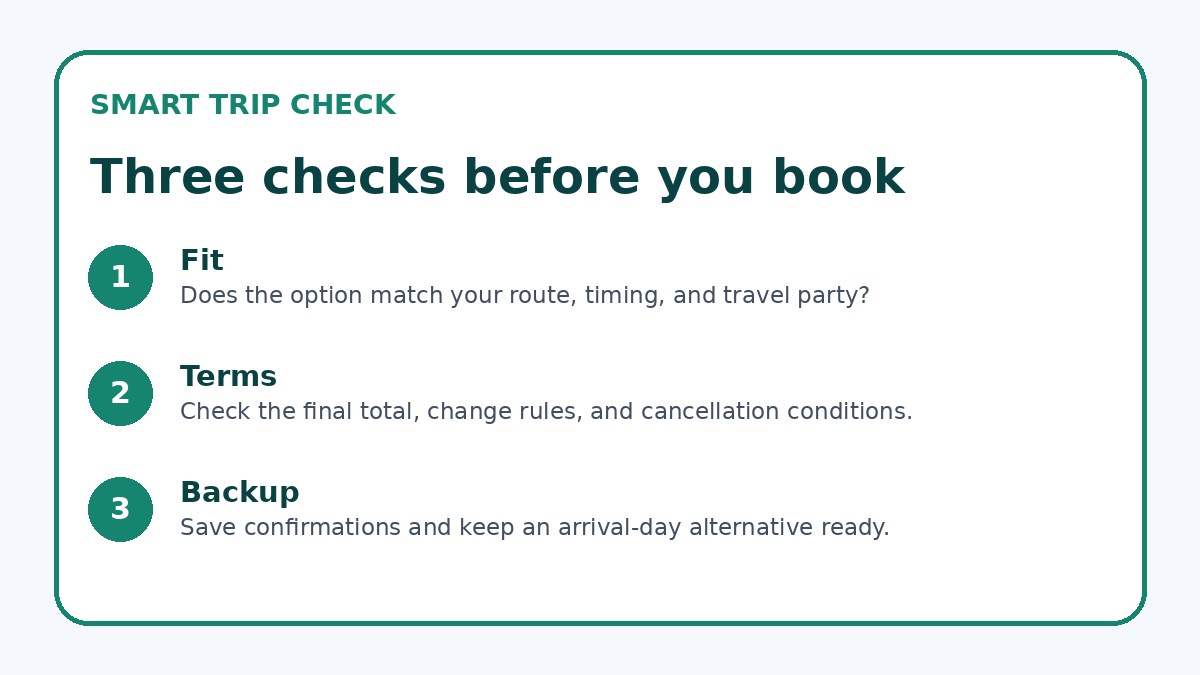
Before you book
- Confirm station access: check elevator locations, platform transfer routes and step‑free paths for strollers at departure and arrival stations.
- Verify luggage rules and carriage dimensions with operators if you travel with large suitcases, a stroller, or a car seat.
- Match departure times to your children’s nap and meal routines to reduce stress during travel.
- Check exact pick‑up and drop‑off addresses for coaches, ferries and taxis relative to your hotel entrance.
- If driving, reserve a parking space near your Kyoto accommodation and confirm local regulations for drop‑offs.
- Before booking, review cancellation, change policies and any child fare rules on the operator’s official booking page.
Driving and taxis: flexible but add urban logistics
Driving gives families maximum control over departure time, stops and luggage, and can be particularly useful when your group includes seniors or many suitcases. Taxis or private hires remove the need to navigate parking but can be costly in an urban region. If you rent a car, map where you’ll park in Kyoto — many central attractions are in low‑emission or restricted zones and parking availability varies. Plan child restraint needs ahead of time and confirm rental companies can provide the correct car seats if you don’t travel with your own.
Urban driving also means dealing with congested approaches, one‑way streets and limited drop‑off points at popular temples or garden entrances. For short city hops inside Kyoto, taxis or ride‑hailing services can be an effective way to avoid multiple transfers with tired children, while still using trains for the main intercity leg. Always check the exact drop‑off/pick‑up spot and parking options at your hotel before choosing to drive, so you don’t end a relaxed family day with a difficult search for parking.
Frequently asked questions
Is it easy to take a stroller on trains between Osaka and Kyoto?
Yes, many trains and major stations are equipped for strollers, but ease varies by line and station layout. Look up station maps to confirm elevator locations and the platform layout at both ends before you travel. If you intend to use a busy commuter service during rush hours, consider folding the stroller and boarding from quieter carriages to avoid crowded vestibules. For longer stays, check whether your hotel offers storage so you can leave a larger stroller if needed.
Should we book a coach or taxi instead of a train when travelling with heavy luggage?
A coach or taxi can simplify moving large suitcases because you avoid transferring between trains and carrying bags up and down stairs. Weigh convenience against terminal distance and possible traffic delays. If you choose a coach, confirm its baggage allowance and the terminal’s distance from your accommodation. For taxis, verify child seat requirements and whether the taxi company can supply the appropriate restraint; private hires often do with advanced notice.
Can a ferry be part of a family route between Osaka and Kyoto?
A ferry can be a pleasant addition if your itinerary includes ports, riverfront attractions, or scenic cruising, but it’s not typically a direct substitute for the land route. Plan connecting rail or road transfers on either end so the total journey fits your family’s pace. Also check boarding rules for strollers, restroom availability, and the likely sea conditions for the day of travel. Use ferry legs to add variety rather than to save time, unless the rest of your schedule is built around waterfront locations.
Final planning note
Choosing how to travel from Osaka to Kyoto with a family comes down to what you value most: frequent, short walks and predictable departures point to trains; a single vehicle for heavy luggage suggests coaches or taxis; scenic variety invites a ferry leg if it fits your route; and driving gives maximum control but requires parking planning. Start by listing your must‑haves — stroller access, car seats, luggage volume, and nap times — then compare options against those priorities. Always verify platform accessibility, exact stop locations and operator policies on the provider’s booking page (or compare availability on Trip.com) before finalising tickets so your family day runs smoothly.
Continue planning
Check current options and final conditions
Use the provider page to confirm live availability, the final total, cancellation terms, and every condition that matters to your trip.
This evergreen planning guide was created with AI-assisted drafting and a structured quality review. It does not display live prices, schedules, availability, visa guidance, or provider rankings. Verify current details before booking. Some links are affiliate links; we may earn a commission at no additional cost to you.