If you need to get from Hanoi to Da Nang, choose the mode that matches your priorities: comfort and scenery, lowest hassle, or fastest transit. For many first-time visitors the train is the best balance — it’s comfortable, lets you see the coast and countryside, and arrives in Da Nang city near the main beaches and attractions. Coaches are cheaper and run frequently, but can be less comfortable for long daytime or overnight trips. Ferries only cover segments along the coast and are rarely a direct point-to-point solution between these two cities. Flights are fastest for travelers short on time but add transfers to and from airports and extra planning. Below you’ll find decision criteria, practical tradeoffs, and concrete checks to make before you buy a ticket so you can pick the right option for your trip.
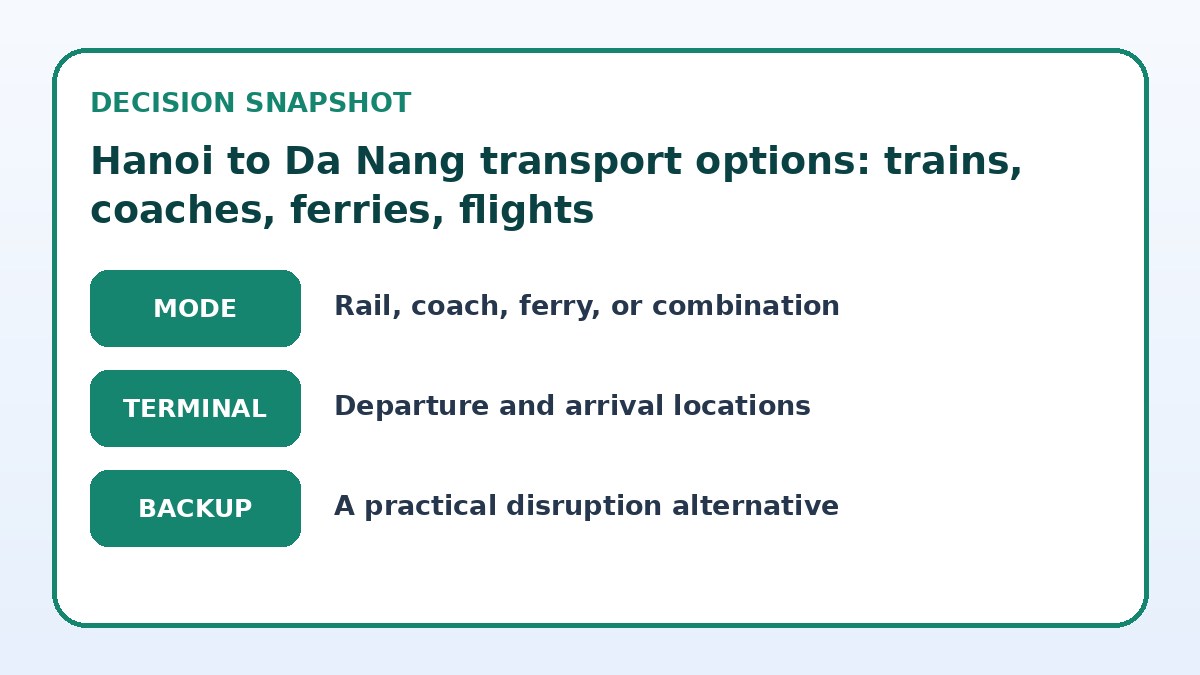
See current options before you compare the details
Availability and final conditions change. Open Trip.com now or keep reading for the practical comparison.
Why choose rail for Hanoi to Da Nang
Trains suit travelers who want a relaxed journey and time to see Vietnam’s changing landscape. Onboard you can move about, sleep in a berth on overnight services, and avoid the stress of driving. Trains also arrive at Da Nang’s central rail station, which keeps you close to the city and reduces onward transfer time. For first-time visitors this convenience is important: it’s easier to orient yourself, get a taxi or ride-hail, and head straight to your hotel or the waterfront without navigating an unfamiliar airport transfer.
Compare trains by class and schedule before booking. Decide whether you prefer a daytime scenic ride or an overnight berth for uninterrupted sleep. Verify final carriage descriptions, baggage rules, and exact departure or arrival stations on the operator’s booking page since amenities and seat types vary. If you need to compare current availability or multiple providers on one place, Trip.com can be used as a comparison tool, but always confirm the operator’s final terms before you pay.
Buses and coaches: flexibility versus comfort
Coaches are common between major Vietnamese cities and often offer multiple daily departures. They can be a good fit when you need a late-night arrival or a low-cost alternative, and many travelers find them efficient for point-to-point travel. However, coach rides between Hanoi and Da Nang are long and can be cramped depending on the vehicle and operator. Road conditions, rest stops, and overnight comfort vary widely; if you’re sensitive to motion or need guaranteed sleep, assess vehicle type and onboard facilities carefully.
When choosing a coach, compare departure and arrival points because some drop passengers at peripheral terminals or rest stops rather than central locations. Look for reviews that discuss legroom, restroom availability, and enforced stops. Don’t assume amenities by category—confirm on the provider’s page whether reclining seats, blankets, or onboard restrooms are actually available. If you have mobility needs, check access and luggage assistance policies before booking.
| Approach | Best for | Tradeoff to check |
|---|---|---|
| Train | Travelers who prioritize comfort, scenery, and a central arrival | Longer journey time than flying and schedules can be less frequent |
| Coach | Budget-minded travelers needing flexible departure times | Less comfort on long routes and arrival points may be outside city center |
| Flight | Travelers short on time seeking the fastest transit | Requires airport transfers and more pre-trip logistics |
| Ferry / mixed | Those adding coastal detours or island hops to their itinerary | Not typically a direct Hanoi–Da Nang point-to-point solution |
Ready to check the option that fits your plan?
Use your exact dates and traveler details so the provider page can show the current total and conditions.
Ferries, coastal options, and mixed itineraries
A direct ferry between Hanoi and Da Nang is not a standard single-ticket option because the route is long and mainly served by road and rail. However, ferries can be useful for travelers who want to explore coastal segments, island detours, or scenic day trips near Da Nang and Hue. Ferries and boat transfers are attractive for short hops, sightseeing, and reaching islands or beaches not directly served by rail or road. Consider ferries as a supplement to a rail or coach backbone rather than a standalone solution for point-to-point travel between these cities.
If you’re planning a multi-segment trip that includes ferries, build realistic transfer windows into your itinerary. Weather can affect schedules, and some services operate seasonally. Always verify departure points, boarding procedures, luggage restrictions, and cancellation terms on the ferry operator’s official page. When combining modes—train plus boat, or flight plus ferry—confirm how much time you’ll need between connections and whether providers will take responsibility for missed onward travel.
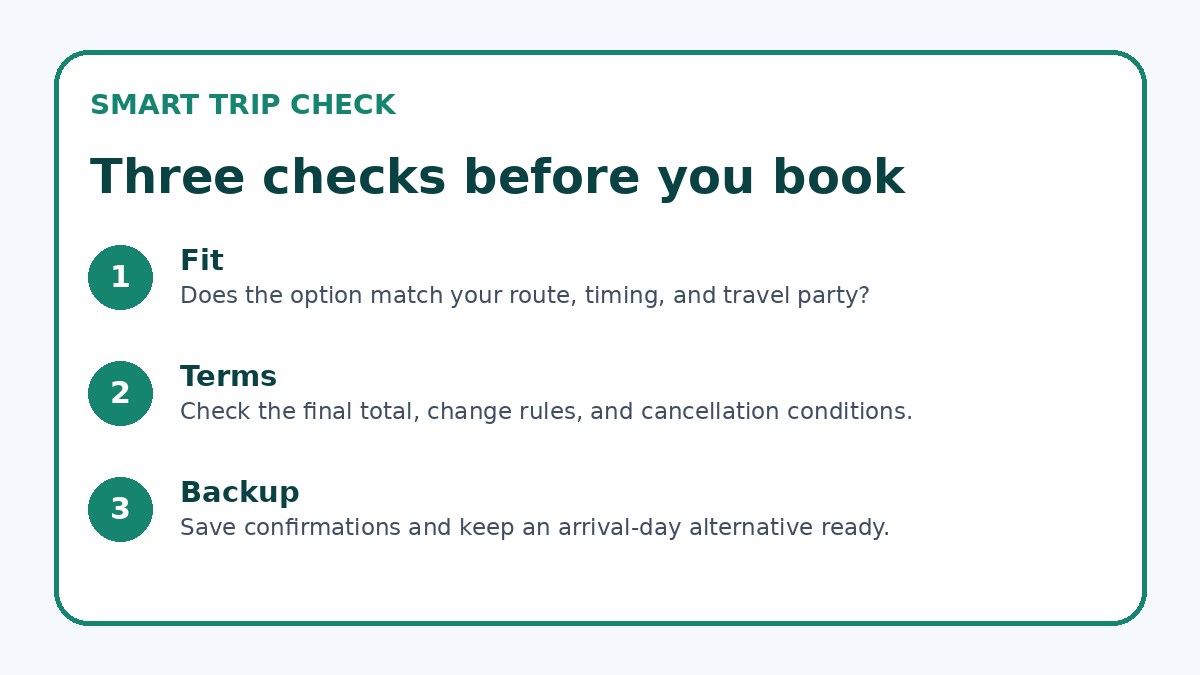
Before you book
- Decide your top priority: fastest transit, lowest cost, scenic route, or nighttime travel before comparing options.
- Check final departure and arrival locations (station, bus terminal, or airport) and plan ground transfers to your accommodation.
- Confirm baggage allowances, seat or berth types, and any accessibility or mobility assistance on the provider’s booking page.
- Allow generous connection time if mixing modes (train-to-ferry, flight-to-coach) and verify weather or seasonal service notes for ferries.
- Read recent traveler reviews for the specific service or timetable you plan to book, focusing on comfort, punctuality, and luggage handling.
- Buy refundable or changeable tickets when your schedule is uncertain, and keep screenshots or confirmation emails handy for check-in or transfer arrangements.
Flights and when they make sense
Flights are the fastest way to span the distance, appealing when you have limited time or want to maximize days at your destination. For first-time visitors who value convenience and speed, a flight can make sense if you don’t mind the extra steps of getting to and from airports and passing through security. Remember to factor in transfers, check-in time, and potential transport from Da Nang Airport to your hotel—those elements can offset the flight’s time advantage, especially for central-city arrivals.
When comparing air travel to rail or coach, look at the total door-to-door time rather than airborne time alone. Check baggage allowances and whether the fare includes checked luggage to avoid unexpected fees at the airport. If connecting flights are offered, compare the connection length and whether the same ticket covers missed connections. Always confirm the airline’s baggage and check-in policies on its final booking page, and build extra time for local traffic when planning airport transfers.
Frequently asked questions
How do I choose between an overnight train and a day coach for this route?
Think about how you sleep and how you want to spend travel time. An overnight train lets you cover distance while sleeping and may feel less rushed on arrival, but it requires a comfortable berth and confidence sleeping in a shared public space. A day coach keeps you awake to see scenery and may cost less, but long daytime road travel can be tiring and you’ll arrive with less rest. Compare total travel time, expected comfort, and how you plan to spend the first hours after arrival—those factors will usually decide which suits you.
Can I easily combine a train with a ferry or local boat around Da Nang?
Yes—combining a longer rail or coach leg with short ferry or boat trips is common for travelers who want coastal side trips. Treat the rail leg as your main transfer and schedule ferry segments with comfortable buffer time for delays. Check boarding locations for ferries relative to the rail station and confirm luggage rules; some short boat services limit or charge for large suitcases. Verify seasonal schedules and weather sensitivity on the ferry operator’s page before committing to connections.
What should I verify on the provider’s final booking page before paying?
Always confirm exact departure and arrival points, seat or berth descriptions, baggage allowances, refund/change policies, and any accessibility or special-assistance options. Also check boarding-window times (when you must arrive at the station or terminal), identification requirements, and if transfers between terminals are necessary. If you’re comparing multiple options, cross-check total door-to-door time rather than isolated in-transit durations to make a realistic choice.
Final planning note
Choosing Hanoi to Da Nang transport comes down to priorities: comfort and scenery (train), cost and flexibility (coach), speed (flight), or adding coastal exploration (ferry/mixed). For most first-time visitors the train balances convenience and experience by delivering a central arrival and a relaxed journey, but coaches and flights remain valid alternatives based on budget and schedule. Use the checklist to confirm stations, baggage rules, and transfer times, and double-check service details on the operator’s official booking pages before you purchase. With these checks done, you can book confidently and spend more time enjoying Da Nang than worrying about logistics.
Continue planning
Check current options and final conditions
Use the provider page to confirm live availability, the final total, cancellation terms, and every condition that matters to your trip.
This evergreen planning guide was created with AI-assisted drafting and a structured quality review. It does not display live prices, schedules, availability, visa guidance, or provider rankings. Verify current details before booking. Some links are affiliate links; we may earn a commission at no additional cost to you.