Practical answer up front: first‑time visitors traveling from Seoul to Taipei should prioritize flight duration (direct vs. one‑stop), seat type for comfort, and a transit schedule that avoids short layovers and overnight fatigue. If you can take a direct flight, it usually reduces transfer stress; if a connection is necessary, choose a single carrier or alliance that protects your luggage and offers a realistic minimum connection time. Focus on departure and arrival airports, aircraft seat pitch/width or premium cabin availability, and whether an overnight flight fits your sleep preferences. Finally, confirm baggage rules, transfer procedures, and visa or entry requirements for any transit country on the airline’s booking page before finalizing your ticket. The rest of this guide explains the tradeoffs and concrete steps to plan a comfortable long‑haul connection from Seoul to Taipei.
See current options before you compare the details
Availability and final conditions change. Open Trip.com now or keep reading for the practical comparison.
Deciding between direct and connecting Seoul to Taipei flights
A direct flight is the simplest option when available: fewer moving parts, no need to recheck luggage, and less chance of missing a connection. For first‑time visitors, simplicity often beats a marginally lower fare because it reduces airport navigation stress and the need to understand another airport’s transfer process. Direct options also let you plan meals and sleep more reliably—important when crossing time zones. If direct schedules match your preferred departure and arrival times, they are usually the easiest route to a comfortable journey.
Connecting flights make sense when direct options are limited, significantly more expensive, or when a connection gives access to a better cabin class for the same price. But connections require extra attention: airport layout, minimum connection times, and whether you must clear immigration and recheck luggage. If you choose a one‑stop itinerary, pick connections with consistent airlines or alliances to simplify baggage handovers and claim protection. Also, avoid tight layovers during bad‑weather seasons or peak traffic times to minimize stress.
Choosing comfort: seat class, aircraft, and timing
Start with seat class: economy seats vary widely between carriers and aircraft. If stretching out matters, compare seat pitch and width in the airline’s seating chart before booking. Premium economy or exit‑row bulkhead seats add comfort for a moderate upgrade, while business class offers the most rest and service if your budget allows. Also consider the aircraft type—widebody planes almost always provide more space than narrowbodies on longer routes—so check the specific equipment listed on the booking page to see if it matches your comfort priorities.
Flight timing influences comfort as well. Overnight flights can let you sleep en route but may disrupt your first day at the destination; daytime flights keep you aligned with local hours but can be tiring if the flight is long. When connecting, avoid late‑night arrivals with tight overnight layovers that force transfers in the middle of the night. Aim for itineraries that synchronize with your sleep and arrival plans: arriving in Taipei in the morning or early evening often gives the best balance for first‑time visitors.
| Approach | Best for | Tradeoff to check |
|---|---|---|
| Direct flight | Travelers who value simplicity and fewer transfer risks | May have limited departure times and higher fares or fewer cabin options |
| One‑stop on same airline/alliance | Passengers wanting better connections between cabin quality and price | Longer total travel time but greater protection for missed connections |
| Separate tickets with gap between legs | Flexible itineraries or mixing low‑cost carriers to save money | Higher risk: you must manage baggage recheck and provide longer buffers |
| Choose premium economy or exit row | Travelers seeking extra space without full business‑class cost | Additional fee and seat availability varies widely by aircraft and fare class |
Ready to check the option that fits your plan?
Use your exact dates and traveler details so the provider page can show the current total and conditions.
Transfer logistics and what to verify before booking
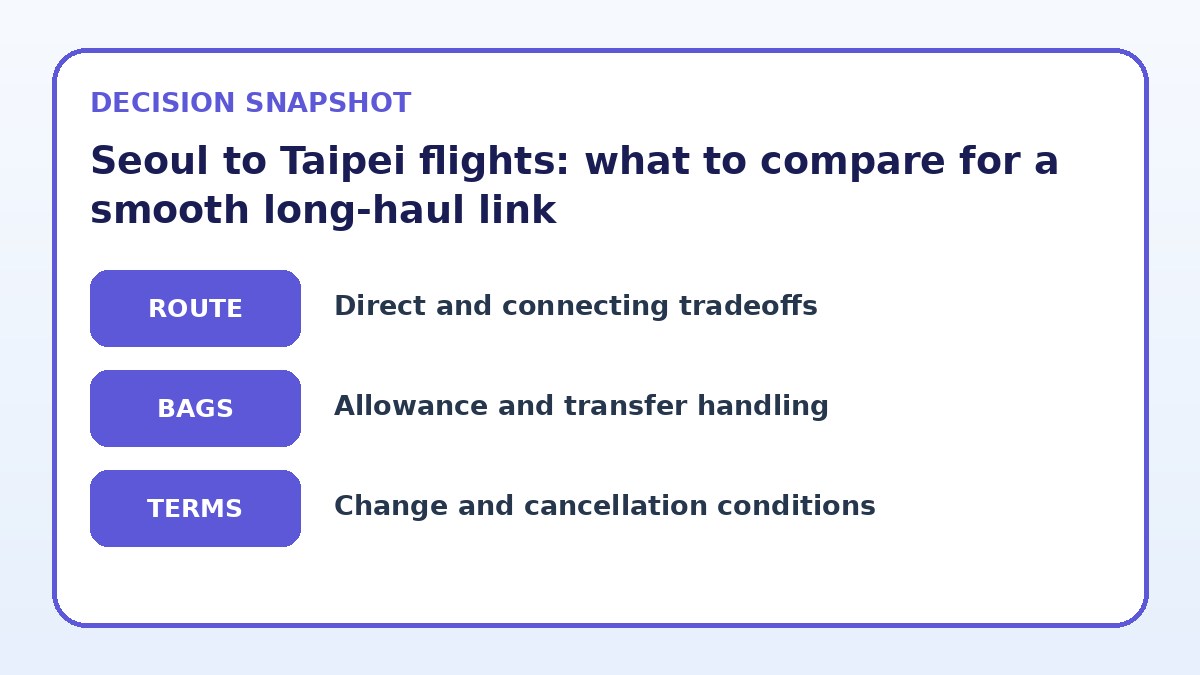
Before you commit, verify transfer details on the airline’s final booking page: whether your luggage is checked through to Taipei, whether you must pass immigration during layovers, and which terminals are involved. These details can change between carriers and even between different flights of the same airline. If your connection requires changing terminals, check transfer shuttle availability and the extra time needed. Confirm also whether the carrier provides minimum connection time protection—this matters if your first flight is delayed and you need to be rerouted.
Also check baggage allowances, carry‑on rules, and any seat assignment restrictions that apply to discounted fares. Some low‑cost legs bundled into multi‑carrier itineraries may not include full baggage transfer; that can force you to collect and recheck bags, adding time and complexity. Finally, look for through‑check guarantees or rebooking policies for missed connections; these are the protections that make a one‑stop itinerary feel more like a direct trip in terms of reliability.
Before you book
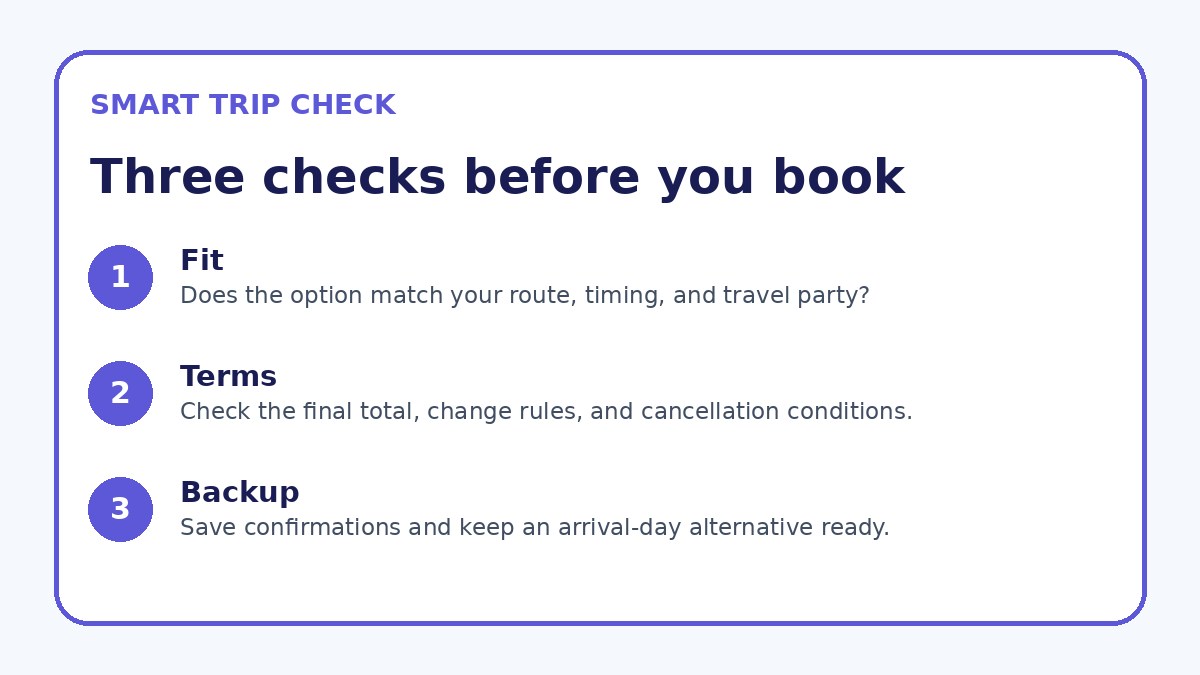
- Confirm whether your luggage is checked through to Taipei on the airline’s final booking page.
- Compare total door‑to‑door travel time, not just air time, when weighing direct and connecting itineraries.
- Check the exact aircraft type and seat map to verify seat pitch, width, and exit‑row rules.
- Allow extra buffer time for terminal changes, passport control, or rechecking baggage during connections.
- Save screenshots of booking confirmations, boarding passes, and transfer instructions in case of limited connectivity.
- Review baggage allowances and change/refund conditions on the ticket before you pay, especially for multi‑carrier itineraries.
Practical day‑of tips for a less stressful connection
On travel day, arrive at Seoul’s departure airport with time to spare—check recommended arrival windows and add buffer time for security lines or transportation delays. Pack essentials in your carry‑on: chargers, a change of clothes, medications, travel documents, and any items you’d need if luggage is delayed. Wear comfortable layered clothing and bring an inflatable neck pillow or lumbar support if you plan to sleep. Keep all documents and mobile boarding passes accessible and screenshot key confirmations in case of network issues.
During the connection, move purposefully between gates and follow airport signage; use the airline’s app to monitor gate changes and boarding times. If your layover is long, identify secure luggage storage or lounges you can buy into for rest and charging. For short layovers, stay near your arrival gate and prioritize immigration and security queues. If any delay threatens a connection, contact airline staff immediately—if you’re on a single‑ticket itinerary they can offer rebooking options more easily than if you hold separate tickets.
Frequently asked questions
Are there direct Seoul to Taipei flights and should I always pick them?
Direct flights do exist on some schedules and they simplify travel by removing transfer steps, but they are not always the best choice for every traveler. Consider factors beyond non‑stop status: seat comfort, departure times that match your sleep plan, and total door‑to‑door time. If a direct flight forces you into an awkward overnight or a cramped seat, a one‑stop itinerary with a generous layover and a more comfortable aircraft might provide a better overall experience. Always compare itineraries for comfort and practicality, not only nonstop versus one‑stop labels.
How much connection time should I allow when booking a one‑stop route?
Aim for at least 90–120 minutes for same‑airline international connections to allow for disembarkation, transit between gates, and security checks. If your connection requires passing immigration to recheck luggage, or changing terminals, add at least another 60–90 minutes depending on airport size and peak traffic. If you’re booking separate tickets, plan significantly longer buffers—three hours or more—to cover delays and baggage reclaims. Check the airline’s stated minimum connection time as a baseline, and add extra buffer for peace of mind.
What must I verify on the airline booking page before finalizing my Seoul to Taipei ticket?
On the carrier’s booking page, confirm whether your fare includes checked baggage and if it is through‑checked to your final destination, the exact aircraft model and seat selection options, and the change/cancellation rules tied to your fare class. Also verify terminal assignments for each leg, any required transit visas for layovers, and whether boarding passes will be issued for all segments. If you plan to compare availability, Trip.com can be used as an additional comparison site, but always rely on the airline’s page for binding baggage and rebooking policies.
Final planning note
Planning a comfortable Seoul to Taipei trip for first‑time visitors is about tradeoffs: direct flights reduce complexity while well‑chosen connections can improve comfort or cost. Prioritize seat comfort and realistic connection times over marginal savings, and verify baggage transfer and rebooking protections on the carrier’s final booking page. Pack thoughtfully for the journey and give yourself buffer time for terminal changes and immigration. With the right balance of timing, seat choice, and verified transfer logistics, your long‑haul connection can feel manageable and let you arrive in Taipei ready to explore.
Continue planning
Check current options and final conditions
Use the provider page to confirm live availability, the final total, cancellation terms, and every condition that matters to your trip.
This evergreen planning guide was created with AI-assisted drafting and a structured quality review. It does not display live prices, schedules, availability, visa guidance, or provider rankings. Verify current details before booking. Some links are affiliate links; we may earn a commission at no additional cost to you.