
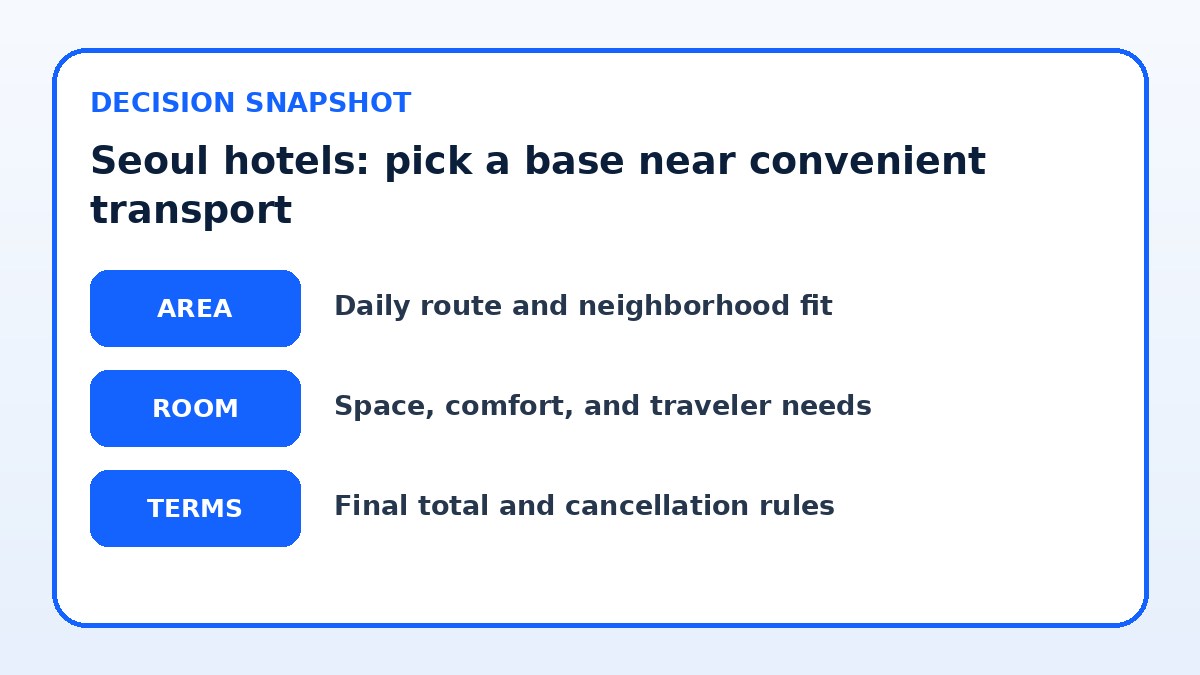
Practical answer up front: for a first trip to Seoul, book a hotel within a short walk of a main subway station on one of the city’s central lines (Line 1, Line 2, or an equivalent transfer hub) or close to an airport rail connection. That placement gives fast access to major sights, efficient links between neighborhoods, and easy luggage logistics for arrivals and departures. If you prioritize nightlife or temples, pick the nearest station on a relevant line; if you have mobility constraints, choose a property with elevator access and minimal steps from the street. Before booking, check station name on the hotel listing, the walking route from station exits, and whether the hotel’s address includes a nearby bus stop or airport shuttle — verify these details on the booking page and official hotel site.
See current options before you compare the details
Availability and final conditions change. Open Trip.com now or keep reading for the practical comparison.
Why transport proximity should lead your hotel choice
Seoul is a large, multi-nodal city where travel time can make or break daily plans. Choosing a hotel near a well-connected subway station reduces dependence on taxis, lowers the mental load of route-finding, and opens more flexible day-trip options. For first-time visitors who want to see several districts in a short stay, easy transfers matter more than a slightly cheaper room further from transit. Proximity also helps when your itinerary changes: if a museum closes unexpectedly or weather forces a change of plan, a short, predictable trip between places keeps your day salvageable.
Transport proximity also affects practicalities such as luggage handling, late-night returns, and access to morning departures. A hotel near a major transfer hub gives multiple route options — in case of line closures or crowding — and usually has more taxis waiting nearby. For travelers with limited mobility or small children, reducing the number of stairs and long street walks between station and room makes sightseeing less tiring. Finally, staying near transit often increases the number of nearby services — convenience stores, cafes, and pharmacies — that are handy for first-time visitors.
Choosing a neighborhood by transit and travel priorities
Start by listing what you most want to do: museum districts, palaces and historical lanes, nightlife and restaurants, hiking nearby, or day trips. Then map those priorities to subway lines and transfer stations. For central sightseeing and easy circle access, consider areas close to major transfer stations where two or more lines meet. If your plan centers on one district—say, the historic core or a single concert venue—choose the closest station on the right line to minimize nightly returns. This approach keeps most of your daytime in the places you care about and saves travel fatigue.
When assessing neighborhoods, don’t only eyeball distance on a map; check the station exit number that leads most directly toward your hotel and the walking environment between them. Some routes require crossing wide roads or navigating steep stairways; others run along sheltered arcades. Also consider services you’ll use often—late-night food, convenience stores, and luggage storage—plus noise levels if you need rest. Balancing the exact subway line with local conveniences makes a single, practical choice rather than a theoretical one.
| Approach | Best for | Tradeoff to check |
|---|---|---|
| Stay beside a major transfer hub | First-time visitors wanting fast, flexible travel across Seoul | Higher noise, busier streets, and sometimes higher nightly rates |
| Choose a quiet residential station a few stops away | Travelers seeking local atmosphere and lower cost | Adds predictable transit time each day and may need extra planning |
| Book near the airport rail link | Arrivals/departures with heavy luggage or early/late flights | Less central for sightseeing; you may need extra transfers for inner-city sites |
| Pick a neighborhood hub on a single direct line | Trips focused on one area or easy direct access to attractions | Limited flexibility for cross-city day trips without transfers |
Ready to check the option that fits your plan?
Use your exact dates and traveler details so the provider page can show the current total and conditions.
Tradeoffs: speed, cost, comfort, and neighborhood character
A hotel next to a major transfer hub delivers speed and flexibility but can be noisier, pricier, or feel less residential. Conversely, quieter neighborhoods a couple of stops away may offer better local character and value while adding daily transit time. Decide which tradeoff matters most for your trip: are you trying to maximize sightseeing time, minimize expense, or soak in a neighborhood atmosphere? For example, staying slightly farther but on a direct line to key attractions can be a smart compromise if the additional subway time is predictable and comfortable.
Comfort tradeoffs also include building access and luggage handling. Some transit-adjacent hotels are on busy streets with many steps or narrow sidewalks; others have full-service lobbies and elevators. If you plan early-morning departures or late arrivals, check whether the hotel offers express check-out, luggage hold, or an airport shuttle connection. Always weigh street-level convenience against interior amenities and confirm the exact logistics on the hotel’s booking page so you’re not surprised by access issues when you arrive.
Before you book
- Confirm the exact subway station name on the hotel page and match it to your planned routes in a mapping app.
- Check which station exit leads toward the hotel and verify the walking route for stairs, crossings, and sidewalks.
- Ask or verify on the booking page whether elevators are available from street to lobby and to your room floor.
- Verify baggage storage, early check-in or late-check-out policies if your arrival or departure times are off-peak.
- If you need airport access, confirm shuttle details or the walking distance to the airport rail link on the hotel page.
- Read recent guest comments that mention the station walk, noise, and local services rather than only star ratings.
Practical checks before you book
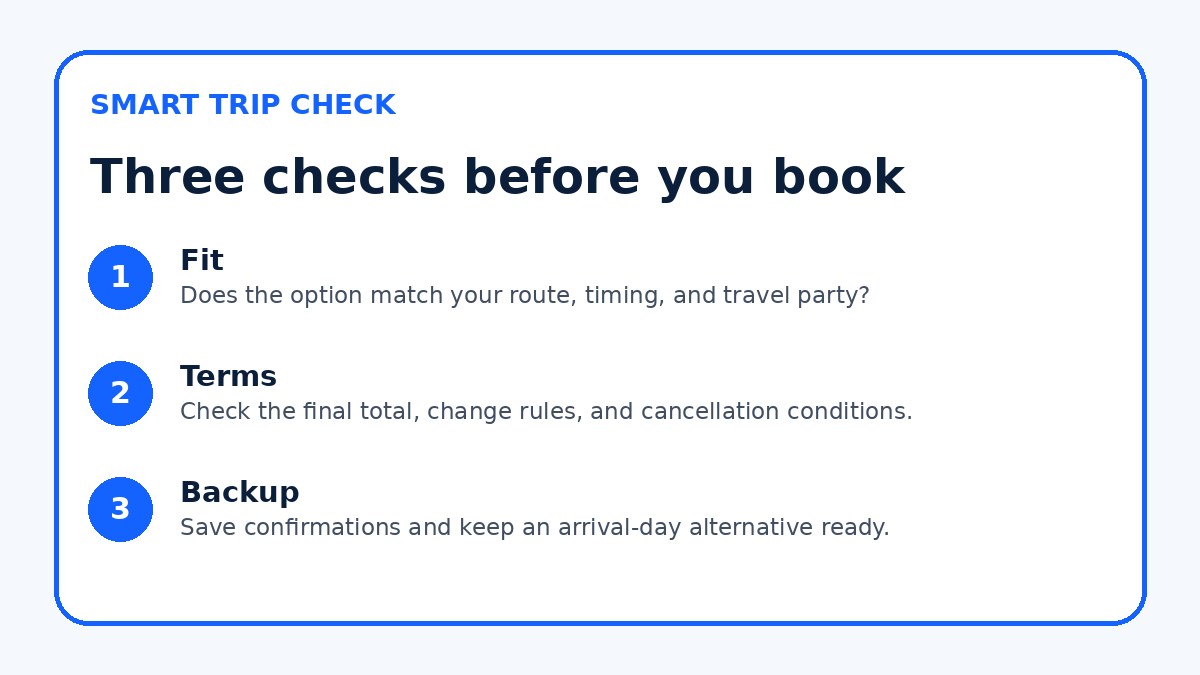
On each candidate hotel page, verify the listed station name exactly matches the station you intend to use—station names can be similar. Look for notes about which station exit to use and how long the walk typically is; when in doubt, use the hotel’s official address to plot the walking route on a mapping app. Confirm elevator access from street to lobby and whether the property has baggage storage if you’ll arrive before check-in or leave after check-out. If the hotel mentions an airport transfer, check the booking page for frequency and reservation requirements.
Also check cancellation and change policies so you can adapt plans if your flight schedule shifts. If you plan to use a Korea Tour Card, T-money, or foreign-loaded transit card, verify whether the hotel can sell or top up the card nearby. Look for recent guest comments that reference the station walk and noise levels rather than overall ratings. Optionally, compare availability and conditions on a travel aggregator such as Trip.com, but always reconfirm crucial details like exact address, station exit, and access features on the hotel’s official booking page.
Frequently asked questions
Is it better to stay near Seoul Station or a neighborhood like Hongdae or Myeongdong?
The best choice depends on your priorities. Seoul Station is a major transport hub with direct links to long-distance trains and often the airport rail; staying nearby gives great intercity flexibility. Neighborhoods like Hongdae and Myeongdong put you closer to nightlife and shopping respectively and often sit on a single convenient line, reducing nightly travel. Compare the specific lines serving each area and how many transfers you’ll need for your planned attractions; choose the location that minimizes the type of travel you anticipate most.
How do I judge walking time from a station when hotel pages give vague estimates?
Plot the hotel address and the station exit on a mapping app, then switch to pedestrian mode to see actual walking time and route. Look for details such as required street crossings, bridges, or staircases. Check recent guest reviews for mentions of exact walking time and obstacles. If you carry heavy luggage or need step-free access, contact the hotel directly to confirm elevator availability or ask about a recommended taxi drop-off point and whether staff can assist with luggage.
Should I prioritize a cheaper hotel farther from transit or pay more to be closer?
This depends on how you value time versus money. Calculate how much extra daily transit time and taxi costs a farther hotel would add; if you plan many short trips across the city, those minutes accumulate and can reduce what you enjoy seeing. Conversely, if you plan long day trips out of Seoul and will spend little time traveling within the city, saving on hotel cost could be sensible. Factor in convenience for arrival/departure days and any mobility needs when you compare price against location.
Final planning note
For first-time visitors, using transit proximity as a primary filter will make your Seoul trip smoother and more enjoyable. Start by matching your main activities to subway lines, then pick a neighborhood and narrow hotels to those within an easy walk of the most relevant station exit. Balance the convenience of transfer hubs with neighborhood character and interior hotel features such as elevators and luggage handling. Before booking, verify exact station names, exit directions, and access details on the hotel’s official page and read recent guest notes about the walk and noise. With those checks done, your chosen Seoul hotel will be a practical base for confident exploration.
Continue planning
Check current options and final conditions
Use the provider page to confirm live availability, the final total, cancellation terms, and every condition that matters to your trip.
This evergreen planning guide was created with AI-assisted drafting and a structured quality review. It does not display live prices, schedules, availability, visa guidance, or provider rankings. Verify current details before booking. Some links are affiliate links; we may earn a commission at no additional cost to you.