Practical answer first: for most couples staying mainly in Prague’s historic centre and nearby neighbourhoods, public transport (metro, trams, buses) will be simpler, cheaper, and less stressful than renting a car. Choose a rental if your trip includes day trips to remote castles, wine regions, or flexible countryside excursions where public connections are slow or infrequent. The rest of this article explains the tradeoffs—time, cost, comfort, parking, and romance—and gives decision criteria so you can match transport to your itinerary and travel style. If you want a quick price and availability snapshot before committing, you can compare options on sites like Trip.com, but always confirm rules, insurance, and exact pick-up/drop-off details on the provider’s final booking page.
See current options before you compare the details
Availability and final conditions change. Open Trip.com now or keep reading for the practical comparison.
When public transport is the smarter choice
Public transport in Prague connects the tourist core, residential districts, and many cultural sites with frequent trams, a three-line metro and buses. For couples who prefer walking between attractions, enjoying cafés, or spending relaxed evenings without thinking about where to leave a car, transit reduces friction. You avoid dealing with narrow cobbled streets, finding a legal parking spot, and the extra mental load of city driving. A compact central itinerary—museums, river walks, markets and theatre nights—usually aligns well with ticketed transit services and comfortable short walks.
Using transport together can also feel more leisurely: sit side-by-side on a tram, hop off to explore a neighbourhood, or use the metro for quick cross-city moves. It’s often easier to plan timings when you’re near stations because frequencies are high in the centre. If you're considering transit, check the layout of your chosen accommodation relative to stops; being within a short walk of a tram or metro line multiplies convenience and lowers the temptation to hire a car just for occasional trips.
When renting a car makes sense for couples
Renting a car becomes attractive when your plans extend beyond the city—castles in rural Bohemia, vineyards, or national parks where public connections are slow or require multiple transfers. A car gives flexibility to leave early for sunrise views, linger at a roadside lookout, or detour to smaller villages that public schedules don’t serve. Couples who value privacy, want to create their own day-trip rhythm, or carry gear (like picnic supplies or photographic equipment) will find the car practical despite the extra steps of driving and parking.
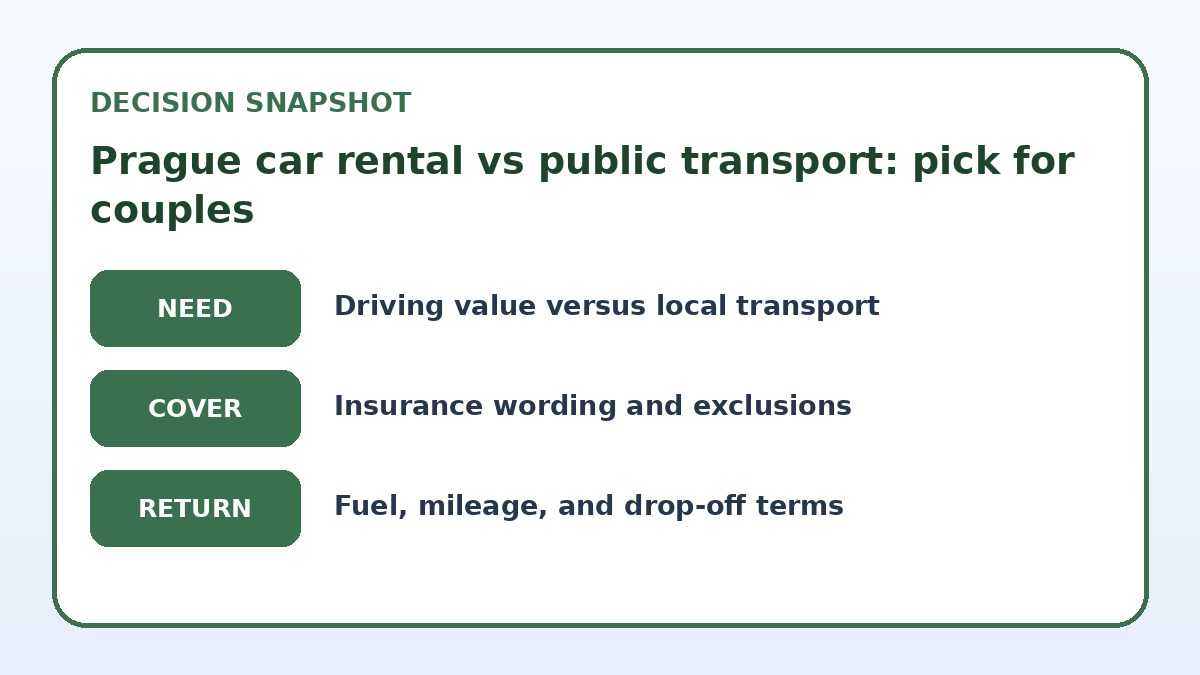
Choose a rental if your itinerary features several day trips to places without direct rail or frequent bus service, or if you plan to split time between Prague and smaller towns. Also consider mobility needs: if either partner prefers minimal walking between transit and sites, a car may reduce strain. If you do decide to rent, read the rental agreement carefully—check what insurance is included, where fuel and toll responsibilities lie, and what documents you must present at pick-up. Confirm any low-emission or restricted zones the provider mentions on their booking page.
| Approach | Best for | Tradeoff to check |
|---|---|---|
| Public transport (tram, metro, bus) | Couples focused on central sightseeing, short walks, and relaxed evenings without parking worries. | Less flexibility for remote day trips and early departures; some routes require transfers. |
| Prague car rental for day trips | Couples planning multiple rural excursions, scenic drives, or carrying extra gear for outdoor stops. | Adds driving stress in the city, plus parking searches, fuel, and possible zone restrictions. |
| Hybrid: transit plus short-term hire | Couples who want city ease but occasional countryside freedom for specific days. | Requires coordination of pick-up/drop-off times and possibly higher short-term rental rates. |
| Private transfers or guided day tours | Couples wanting convenience without driving responsibility, with a clear schedule for popular destinations. | Less spontaneous freedom and often higher cost per person than self-directed travel. |
Ready to check the option that fits your plan?
Use your exact dates and traveler details so the provider page can show the current total and conditions.
Tradeoffs: cost, time, comfort and parking
Cost comparisons are not limited to the headline rental rate. Add fuel, parking fees, possible congestion or restricted-zone charges, and insurance or excess waivers when comparing with transit ticket costs. Time is another factor: door-to-door time on public transport can be faster in the center because you avoid parking searches and walking from peripheral lots, while a car can be faster for direct rural routes with few stops. For couples balancing budget and comfort, tally probable parking locations and likely time lost circling or walking from distant parking.
Comfort and convenience are subjective. A car offers climate control and private space for conversation, music, and flexible stops, which some couples value highly. Conversely, transit avoids the stress of navigation, parking fines, or local driving rules. Consider your tolerance for city driving and whether one partner will be responsible for navigation and parking; if that creates tension, public transport may preserve the holiday mood. Wherever possible, estimate a few typical trip scenarios—hotel to major attraction, hotel to an out-of-town destination—and compare likely door-to-door times and hassle.
Before you book
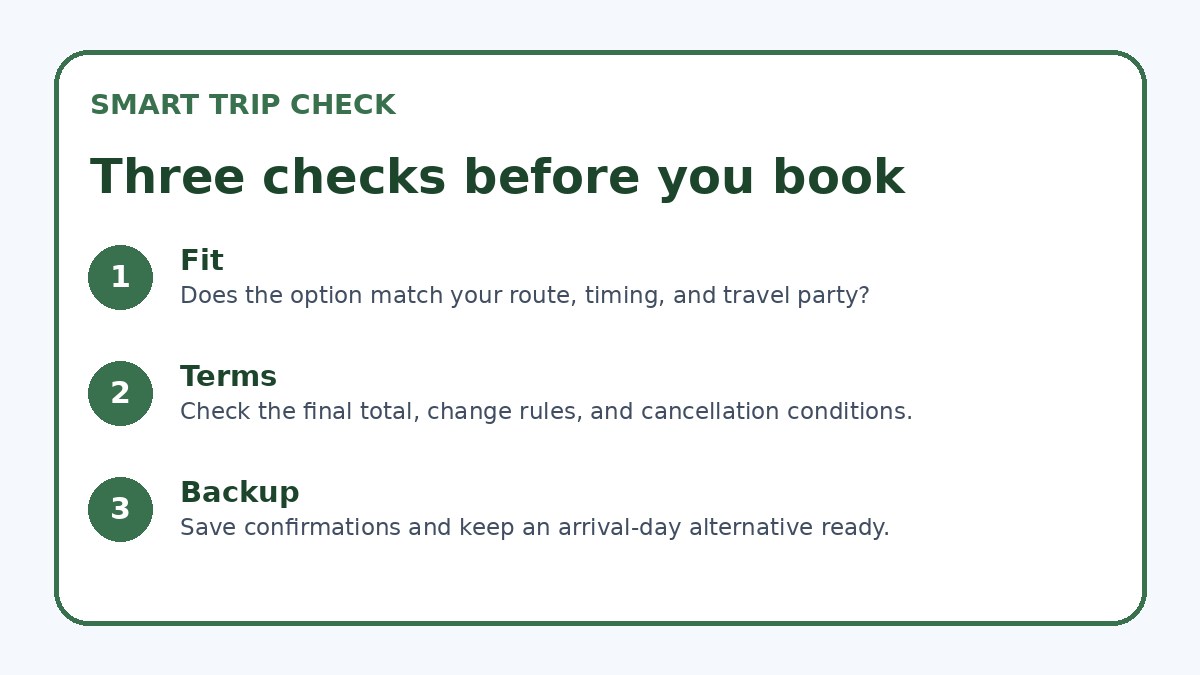
- Map your daily itinerary and mark nearest tram or metro stops within a 10–20 minute walk from planned sites and your accommodation.
- List the out-of-city places you definitely want to visit and check their public transport connections and likely transfer counts.
- If considering rental, confirm on the booking page the insurance details, excess amount, fuel policy, and any additional driver fees.
- Check your accommodation’s parking availability and rates, including whether overnight street parking is legal and safe.
- Estimate door-to-door travel time for a typical city trip and a typical day trip by both car and public transport.
- Decide whether to book a car for specific days only (reserve refundable options) or to stay car-free for the whole visit.
Practical tips to decide before you book
Start by mapping your planned activities and marking where public transport stops are relative to your lodging and sites. If most markers lie within short walks of tram or metro stations, lean toward staying car-free. If key destinations are outside public routes or require multiple transfers, list those as candidate drives. For mixed plans, consider a hybrid approach: rely on public transport for in-city days and book a car just for the specific days you need rural mobility—confirm flexible pick-up and drop-off terms before reserving.
When you contact rental providers, verify the final booking page for any mention of additional driver fees, fuel policies, insurance excess amounts, and whether the vehicle is allowed in any restricted zones. Also confirm pick-up and drop-off logistics (airport vs city locations can change convenience). For public transport, check the types of tickets that suit your stay length—single tickets, short-term passes, or multi-day options—and how validation works. Trip.com can be a place to check current availability, but always use the provider’s final page to confirm exact terms and conditions.
Frequently asked questions
Is driving in Prague difficult for visitors?
Driving in Prague can feel busy because of narrow, historic streets, tram tracks and frequent one-way systems. If you’re comfortable navigating European city centres and using GPS, you’ll manage, but plan for slower driving, carefully read parking signs, and allow extra time. If either partner dislikes urban driving or wants to avoid parking hassles altogether, public transport provides a predictable alternative. Always check the rental provider’s final booking page for any local restrictions, low-emission zones, or added fees before you commit.
Can couples rely solely on public transport to see Prague’s main sights?
Yes — most major attractions are well served by trams and the metro, which converge near the historic centre, museums, parks and major bridges. Walking between closely spaced sights is often faster and more pleasant than transferring between lines. For attractions outside the core—certain castles, rural vineyards or small villages—you may face long or indirect public connections, making a car or organized tour more practical for those specific trips. Check the proximity of your hotel to transit stops as that will strongly influence daily convenience.
How should couples approach parking and safety concerns?
Before booking a car, confirm where you can legally park near your accommodation and at the places you plan to visit. Hotel parking policies, municipal parking zones, and private garage rules vary; verify availability and costs on provider pages. Keep valuables out of sight and lock the vehicle, and be mindful of steep curbs or tight spaces in older neighbourhoods. If parking seems scarce or expensive for your planned itinerary, that’s a strong signal to prioritize public transport and save the rental for specific day trips where parking is easier.
Final planning note
For most couples whose plans center on Prague’s compact historic area, public transport offers a low-stress, cost-effective way to move between sights while leaving time for walking and relaxed evenings. Rent a car if your heart is set on several rural day trips, flexible timing, or private scenic drives; just factor in parking, insurance and potential restricted zones when calculating convenience and cost. A mixed approach—using transit in the city and hiring a car for one or two planned countryside days—often delivers the best balance. Whatever you choose, map your itinerary, confirm booking terms on provider pages, and pick the option that keeps your trip enjoyable rather than logistical.
Continue planning
Check current options and final conditions
Use the provider page to confirm live availability, the final total, cancellation terms, and every condition that matters to your trip.
This evergreen planning guide was created with AI-assisted drafting and a structured quality review. It does not display live prices, schedules, availability, visa guidance, or provider rankings. Verify current details before booking. Some links are affiliate links; we may earn a commission at no additional cost to you.