
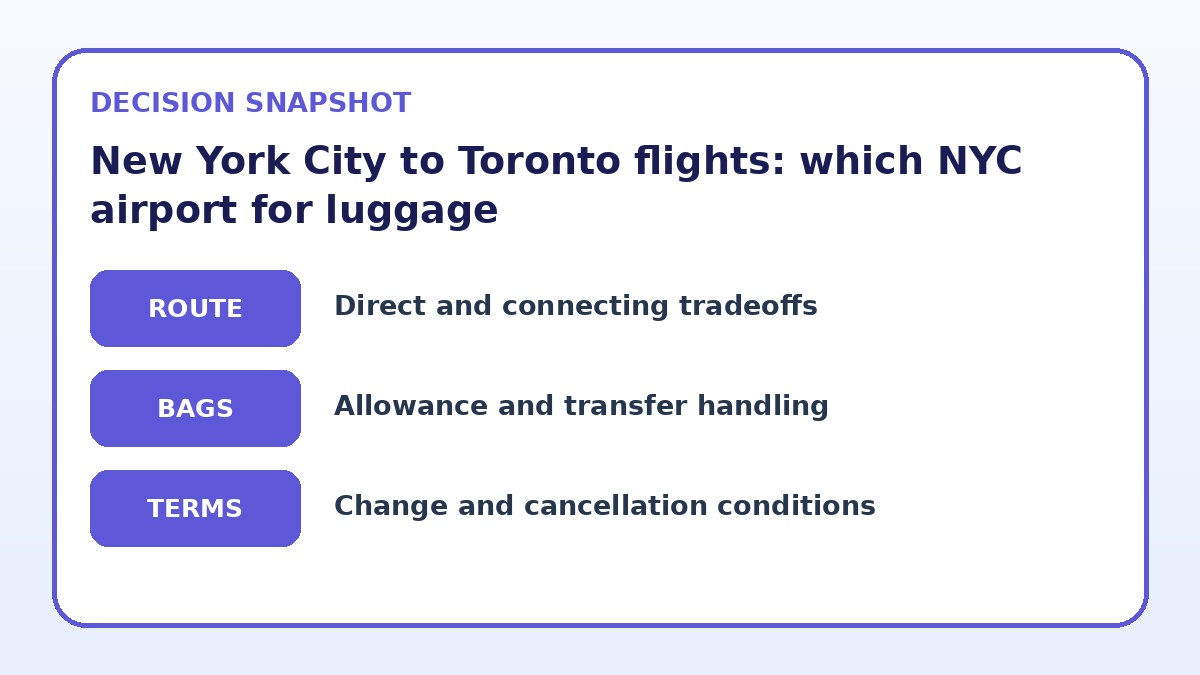
Short practical answer: if you’re prioritizing fewer hassles with extra bags, choose JFK for the widest carrier options and better ground-handling services; LaGuardia is quicker from many Manhattan addresses but has tighter domestic-type operations that can be less forgiving for oversize or many-checked-bag itineraries; Newark works well when you prefer airports west of Manhattan or want more international-style check-in counters. Which is best depends on where you start in the city, how many and how large your bags are, and whether you value a simpler check-in and baggage transfer or a faster door-to-gate trip. Below I’ll lay out the tradeoffs, how to compare itineraries, what to verify on booking pages, and a checklist so you can decide quickly and confidently.
See current options before you compare the details
Availability and final conditions change. Open Trip.com now or keep reading for the practical comparison.
How airport layout and services affect travelers with extra luggage
Airport terminals differ in check-in layout, baggage handling capacity, and availability of ground staff trained for oversized items. Terminals with consolidated international-style check-in counters and larger dedicated baggage areas tend to process multiple or heavy bags more smoothly. If an airport’s domestic terminals are compact with fewer bag-drop lanes, you may face longer waits, tighter overhead bin space, or restrictions on early check-in. Think about whether you need curbside assistance, oversized-baggage handling, or porter services — airports that support those services reduce the physical strain of moving heavy items and speed up processing.
Beyond counters and staff, the distance between drop-off, security, and gates matters when you’re managing many or bulky cases. A longer walk or multiple shuttle transfers inside an airport can be a real burden with heavy luggage. Also, airports with more international flights tend to be better set up for baggage transfers and special handling; that can reduce the chance of misrouted or delayed bags on itineraries that include connections. Before booking, find terminal maps and check whether the airline allows early check-in and oversized-item processing at your chosen airport.
Comparing JFK, LaGuardia, and Newark for baggage practicality
JFK’s multiple terminals serve many international and major North American carriers and generally have larger baggage-handling operations and more staff experienced with oversized or multiple-checked-bag situations. For travelers who need to check sports equipment, instruments, or several suitcases, JFK often provides the most options for early check-in, oversized-item processing, and ground assistance. However, ground travel to JFK can be longer from much of Manhattan and parts of Brooklyn, and that extra transit time needs to be weighed against smoother baggage handling at the terminal.
LaGuardia offers the fastest door-to-gate time for many Manhattan departures, meaning less time hauling luggage in cars or rideshares. But LGA’s terminals are more compact and focused on domestic operations, which sometimes equates to fewer dedicated oversized-baggage lanes and less space for staging multiple bags. Newark Liberty (EWR) sits geographically west of the city and can be the most convenient for travelers from New Jersey or western boroughs; its facilities are often closer to international-terminal standards than LaGuardia’s, but ground transfer times vary depending on traffic and your starting point.
| Approach | Best for | Tradeoff to check |
|---|---|---|
| Choose JFK | Travelers with many, heavy, or oversized bags who prefer fuller handling support | Longer ground travel from central Manhattan and possibly more traffic on approach |
| Choose LaGuardia | Travelers prioritizing shortest door-to-gate time within NYC with moderate luggage | Smaller terminals and fewer oversized-baggage lanes can complicate very large or multiple items |
| Choose Newark | Travelers west of Manhattan or in New Jersey who want international-style check-in facilities | Variable ground-transfer time and potential need to cross state lines; check parking and transfer options |
| Prioritize direct flights | Anyone with multiple checked bags wanting to minimize handling and re-checking risks | Direct options may depart from a less convenient airport or have inconvenient departure times |
Ready to check the option that fits your plan?
Use your exact dates and traveler details so the provider page can show the current total and conditions.
How to compare direct and connecting itineraries with extra luggage
When possible, prioritize direct flights to avoid an extra check and re-check of bags. Each connection raises the chance of misrouting or delay for luggage and increases the number of times you must manage your bags during transfers. If a direct flight departs from a less convenient airport, weigh the extra time and stress traveling to that airport against the risk and hassle of an extra connection. Where direct flights are unavailable, choose connections with longer transfer windows and confirm whether bags are checked through to the final destination or must be re-checked at the connection airport.
If you must connect, verify the transfer process on the airline’s booking page: look for statements about checked-through baggage, minimum connection times, and responsibilities for oversized items. Connections that change terminals or require an inter-airport transfer can be especially burdensome with heavy or bulky luggage, so give yourself ample buffer time and consider purchasing seat assignments or priority boarding to reduce gate-area crowding. Also check if the carrier offers gate-to-gate assistance or luggage delivery services for a fee if you want to minimize lifting and carrying.
Before you book
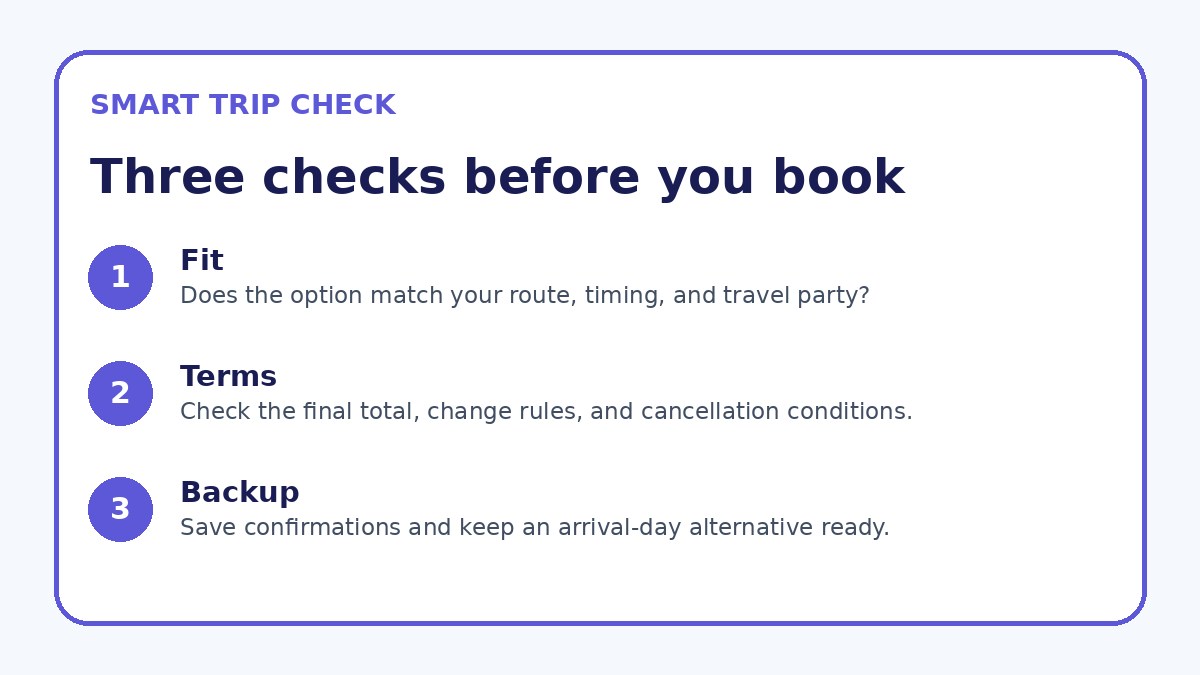
- Confirm the airline’s checked-bag weight, size, and fee rules on the final booking page before selecting an airport or flight.
- Compare door-to-door ground travel time from your starting address to JFK, LGA, and EWR using current transit or rideshare estimates.
- If you have oversized items, call the airline to confirm special handling procedures and whether advance arrangements are required.
- Choose direct flights when possible to reduce the number of times your luggage is handled or transferred.
- Reserve curbside check-in, porter service, or early bag drop if those options are offered at your chosen airport.
- Pack a carry-on with essentials and documents, and photograph checked items’ labels and contents before handing bags to staff.
Practical booking checks and day-of-travel tips for heavy packers
Before you book, read the airline’s full baggage policy on the final booking page: allowable weight per bag, maximum dimensions, number of included checked items, fees for oversize or overweight bags, and any rules for sports or special equipment. Policies differ even on the same route and change frequently, so rely on the carrier’s published terms on the booking confirmation rather than third-party summaries. If you plan to travel with multiple or oversized items, consider purchasing extra-allowance bundles or specialty handling at purchase; these add certainty and can be cheaper than paying at the counter.
On the day of travel, arrive earlier than standard recommendations if you have many or heavy bags; extra time reduces hurried lifting, saves stress, and allows staff to process oversized items. Use curbside check-in or porter services if available, and pack a wheeled bag or use luggage with sturdy wheels and handles for easier transfers between vehicle and terminal. Photograph labels and contents of specialty items, keep essential documents and a change of clothes in a carry-on, and confirm on the airline’s app whether your bags have been checked through to Toronto to avoid last-minute re-checks.
Frequently asked questions
Do airlines treat luggage differently depending on which NYC airport I depart from?
Airlines follow their own baggage policies regardless of departure airport, but airport facilities and staffing affect how smoothly those policies are implemented. Larger terminals with dedicated oversized-item processing and more bag-drop lanes can shorten waits and provide better handling for multiple or heavy bags. Always check the airline’s final booking page for precise policy details, and if you have special items call the carrier to ask about the specific procedures at JFK, LGA, or EWR.
Is it worth paying for extra baggage allowance before I get to the airport?
Prepaying extra allowance typically reduces uncertainty and can be less expensive than paying overweight or oversize fees at the counter. It also speeds check-in because staff won’t need to reclassify or reweigh unexpected additional bags. Confirm the carrier’s prepaid baggage options on the booking page and keep proof of purchase ready at check-in. If you handle bulky items or several suitcases, prepaid allowances and specialty handling are often the most practical choice.
How much extra time should I add for travel to the airport when I have heavy or many bags?
Add at least 30–60 extra minutes beyond standard recommendations to account for loading, curbside drop-offs, and longer walks through terminals with luggage. If you’re using public transit, allow more time for transfers and station navigation. For oversized items or if you need special assistance, arrive even earlier to permit staff processing. Check the airline’s suggested arrival time for checked baggage and aim to be at the airport well before that window if you anticipate slow handling.
Final planning note
Choosing the most practical NYC departure airport for New York City to Toronto flights when you have extra luggage requires balancing ground travel time, terminal facilities, and airline baggage rules. JFK often provides the broadest handling options and staff experienced with oversized or multiple bags, LaGuardia minimizes door-to-gate time for many Manhattan travelers while offering fewer large-item services, and Newark can be convenient for western-origin travelers and tends toward international-style baggage facilities. Always verify baggage allowances and special-handling procedures on the airline’s final booking page, factor in transit time to each airport, and use the checklist above so you arrive with the right allowances and services prearranged.
Continue planning
Check current options and final conditions
Use the provider page to confirm live availability, the final total, cancellation terms, and every condition that matters to your trip.
This evergreen planning guide was created with AI-assisted drafting and a structured quality review. It does not display live prices, schedules, availability, visa guidance, or provider rankings. Verify current details before booking. Some links are affiliate links; we may earn a commission at no additional cost to you.