If your family is traveling between Los Angeles and San Francisco, the most useful early decision is how you’ll handle transfers at stations and terminals. Whether you’re choosing train, bus, or plane (or a combination), transfers are where stress and delays most often happen—especially with kids, strollers, and luggage. Start by deciding which balance you want: fewer transfers and more local ground time, or potentially faster schedules that require changing stations or terminals. This article gives practical transfer plans families can follow, explains tradeoffs (walking vs. shuttle vs. taxi), and lists exactly what to check on provider pages before booking. Use these steps to compare door-to-door travel time, the ease of moving children and bags, and the predictability of the connection.
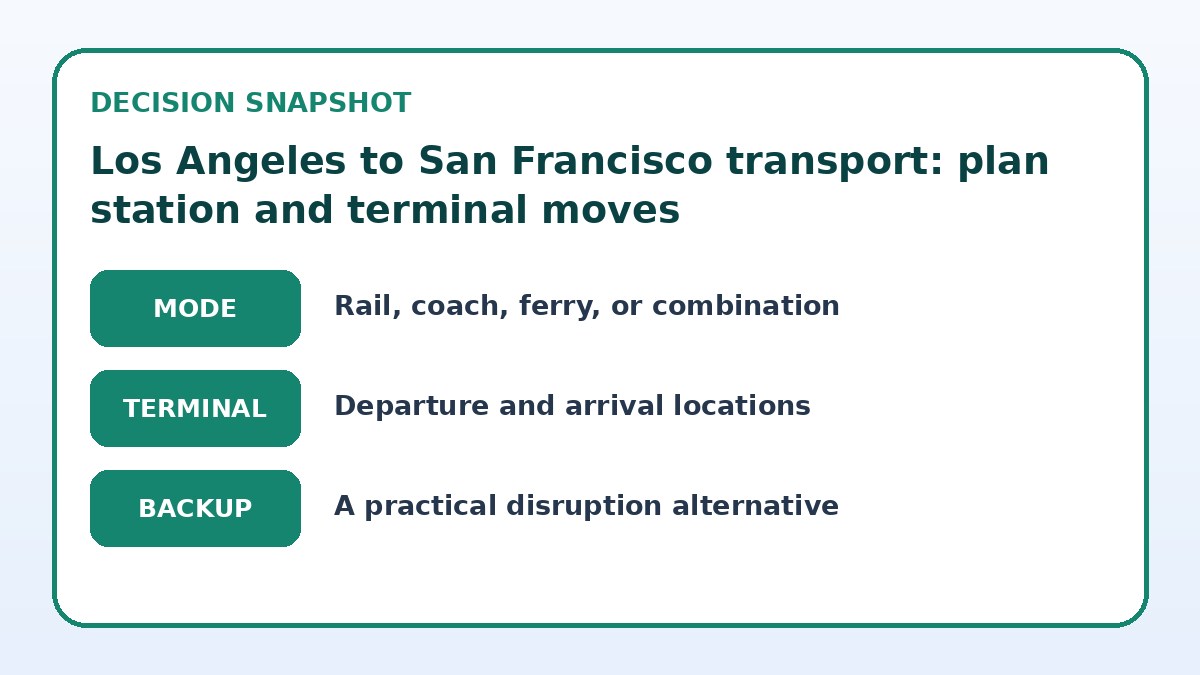
See current options before you compare the details
Availability and final conditions change. Open Trip.com now or keep reading for the practical comparison.
Which transfer strategy suits your family?
Start by matching your family’s tolerance for complexity with the transfer type. Some families prioritize a single, longer ride with minimal changes—ideal for toddlers who settle during continuous travel—while others prefer splitting the trip into shorter segments with a planned stop to let kids run and reset. Consider mobility and luggage: a toddler in a stroller or a family with multiple suitcases will prefer enclosed transfers or vehicles that load luggage without stairs. Evaluate how your children handle transitions; if naps are essential, choose options that align with those windows to reduce the chance of a cranky connection.
Also weigh predictability. Fixed-schedule services like most trains and many buses can be easier to plan around but may be less frequent than flights that offer many departure times; the latter can reduce wait if you miss a connection but usually means dealing with terminals and security processes. Think about contingencies: can you comfortably extend a layover if the first leg is delayed? If not, pick a plan with slack and straightforward transfer paths—short shuttle rides or single-station transfers where elevators and bathrooms are readily available.
Practical steps at Los Angeles departure points
Los Angeles travel often begins at major hubs: airport terminals, rail stations, or bus depots. Families should map exact pickup and drop-off points in advance, because not all terminals have the same curbside arrangements or same nearest station entrance. Identify the nearest elevator, family restroom, and a sheltered waiting area; these small details make transfers less chaotic. If you’re leaving from a major airport terminal, plan for security lines and the time to walk between gates and ground transport—allot extra time if you need to fold strollers or check car seats.
If using a train or intercity bus from a central station, confirm station access for strollers and the placement of platforms relative to station entrances. Large stations sometimes require walking across concourses or using pedestrian bridges; look for elevators and ramps rather than assuming escalators will be available. If a shuttle is listed as the primary transfer method between station and airport or between terminals, check the shuttle pick-up point and frequency on the operator’s booking page before you commit, and factor in potential wait times for vehicles during peak travel periods.
| Approach | Best for | Tradeoff to check |
|---|---|---|
| Direct single-vehicle routes (no transfers) | Families who want the least handling of kids and luggage | May be fewer departure times and less flexibility for nap or stop timing |
| One planned transfer with a timed buffer | Families balancing speed with a planned rest stop | Requires accurate scheduling and some walking between platforms or stops |
| Multiple short legs with scheduled breaks | Families who prefer shorter travel segments and planned activity breaks | More handoffs increase the risk of missed connections and luggage handling |
| Fly + ground transfer (airport to city) | Those prioritizing travel speed for longer distances, then short final leg | Adds security and terminal procedures; ground transfers may be busy or involve stairs |
Ready to check the option that fits your plan?
Use your exact dates and traveler details so the provider page can show the current total and conditions.
Arrivals in San Francisco: terminals, stations, and last-mile choices
San Francisco arrivals can happen at airport terminals, the main train station, or regional bus stops—each with different last-mile options. Once you know where you’ll arrive, decide how you’ll complete the final leg: rideshare, taxi, scheduled shuttle, public transit, or a private transfer. Families with multiple pieces of luggage often find private transfers or rideshares easier because they minimize carrying and simplify timing. But if you prefer public transit, check stroller policies and how accessible platforms and vehicle entrances are for family gear.
Also consider the drop-off point relative to your accommodation. San Francisco’s hills and one-way streets can make short walking distances harder with a stroller. If your arrival point requires a walk, map a sheltered, level route and estimate realistic walking time with young children. For apartment or hotel arrivals, contact the property in advance to confirm luggage assistance or early check-in options that can reduce the stress of carrying bags through streets or up stairs after your transfer.
Before you book
- Confirm exact pickup and drop-off points (curbside number, terminal name, platform) on the transport provider’s official booking page.
- Verify elevator/ramps and family restroom locations at each station or terminal you’ll use and note alternative routes.
- Photograph or screenshot transfer meeting points and any ticket barcodes and save them offline for easy access.
- Pack a compact carry-on with essentials for transfers: snacks, water, medicines, a spare change of clothes, wipes, and chargers.
- Reserve extra connection time (at least one buffer beyond the operator’s minimum) when booking tight transfers with kids.
- If you need a car seat, confirm the provider’s policy in writing and arrange for either your own or a pre-booked rental seat.
What to verify on booking pages and at stations
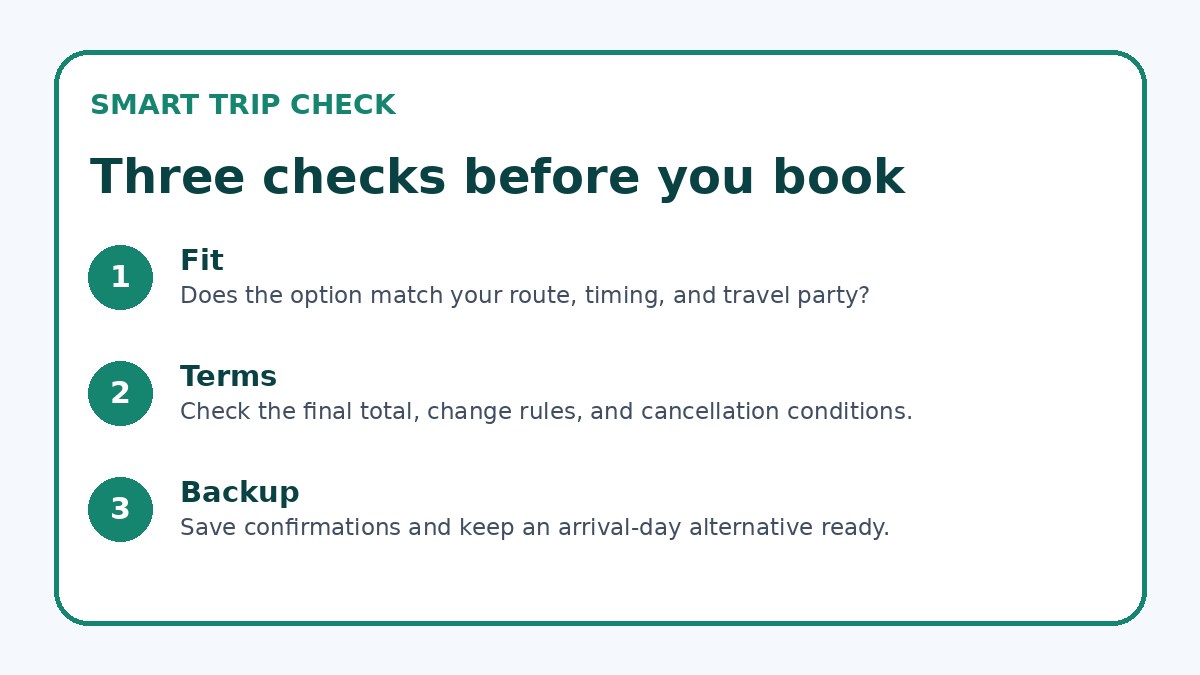
Before you finalize any booking, check three critical items on the provider’s page: exact transfer locations (not just station names), accessibility features (elevators, ramps), and luggage or stroller policies. Providers sometimes list generic station names that cover multiple platforms or terminals; find the precise curbside or platform name to avoid arriving at the wrong spot. For flights, confirm which terminal and whether an inter-terminal transfer is required; if so, check whether the airport offers a free shuttle or requires rideshare/taxi for connections.
Also confirm boarding rules for families: some trains and buses have priority boarding for those with small children or limited mobility—knowing this ahead of time saves time at busy platforms. For services that mention shuttles or transfers, find the shuttle schedule and the exact meeting point at both ends. If any detail is unclear on the provider page, call or email their customer service, and document the name of the person you speak with and any written confirmations you receive before departure.
Frequently asked questions
How much time should I allow for transfers between Los Angeles stations or terminals with children?
Allow more than you’d give an adult-only party. For local station-to-station transfers, budget at least 45–90 minutes: this includes finding elevators or ramps, folding strollers if necessary, and a short rest stop. For airport-terminal transfers that require security or inter-terminal shuttles, add extra time for lines and possible waits for shuttle vehicles. If you have a nap window to protect, extend the buffer to match your child’s routine. Always check the provider’s page for minimum connection recommendations and add a comfortable cushion.
Is it easier to take a train or fly with kids between Los Angeles and San Francisco if transfers are involved?
There isn’t a single answer—choose based on your family’s priorities. Trains often mean less time exposed to airport security and can provide room to move around, but they might require a station transfer depending on your exact origin and destination. Flying can be faster in-seat, but factor in terminal transfers, security, and boarding with children. Compare door-to-door time, the number of handoffs, and how each option handles strollers, car seats, and luggage before booking. Verify transfer details on the provider’s booking page.
What’s the best way to move luggage and a stroller during transfers?
Pack to minimize bulk and weight—use wheeled luggage and a compact stroller if possible. At stations and terminals, look for elevators and curbside check-in or baggage assistance; some carriers offer porter or curbside services that you should confirm on their booking page. Keep a small backpack with essentials for quick access and limit the number of loose bags. If a transfer requires a shuttle or van, check luggage capacity and whether you must gate-check the stroller. When in doubt, call ahead to confirm ground handling options.
Final planning note
Planning transfers between Los Angeles and San Francisco for a family trip is largely about anticipating friction points and removing them before departure. Decide whether simplicity (fewer transfers), flexibility (more departure choices), or a balance of both matters most, then align your booking to that priority. Verify specific terminal or platform drop-off points, accessibility features, and luggage or car-seat policies on each provider’s booking page—these details determine whether a connection is feasible with kids. With clear transfer choices, realistic buffers, and a compact transfer kit, family travel along this route becomes far more manageable and less stressful.
Continue planning
Check current options and final conditions
Use the provider page to confirm live availability, the final total, cancellation terms, and every condition that matters to your trip.
This evergreen planning guide was created with AI-assisted drafting and a structured quality review. It does not display live prices, schedules, availability, visa guidance, or provider rankings. Verify current details before booking. Some links are affiliate links; we may earn a commission at no additional cost to you.