Practical answer first: if your family is traveling from Kuala Lumpur to Singapore, pick a route that minimizes transfers between stations and terminals, keeps simple immigration steps, and fits your preferred balance of cost versus convenience. For many families that means choosing a single-train or direct-bus option that arrives at a major Singapore terminal (where onward transfers are easiest), or, if flying, using Kuala Lumpur International Terminal and Singapore’s main airport to reduce luggage moves. Once you know whether you prefer fewer transfers, lower local transport costs, or a shorter door-to-door time, compare options by the number of station-to-terminal handoffs, the ease of public transport at each terminal, and the family facilities available. Read on for tradeoffs, decision criteria, and a practical checklist to prepare children, manage luggage, and time connections.
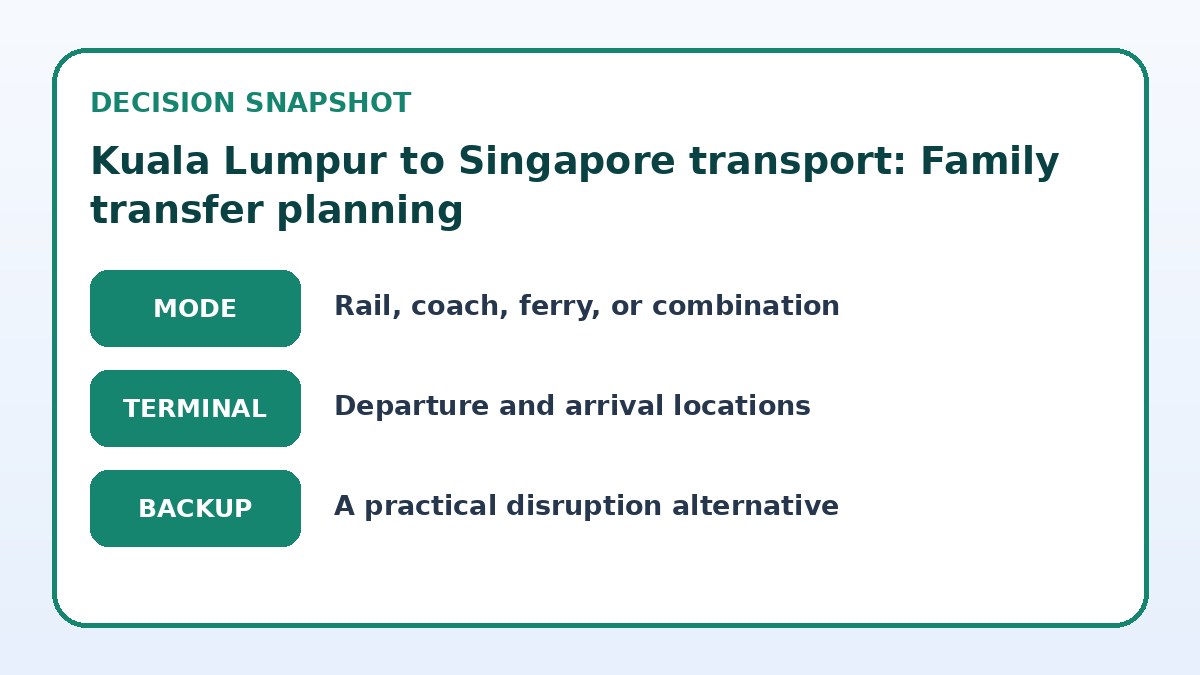
See current options before you compare the details
Availability and final conditions change. Open Trip.com now or keep reading for the practical comparison.
Choose the right route: direct versus connecting options
Families should start by deciding whether to prioritize a single through-journey or save money with connections. Direct services (train or bus) reduce the number of station and terminal transfers you’ll manage with kids and luggage: you board once, disembark once. Connecting options can be cheaper or offer more schedule choices, but they require moving between stations or terminals—sometimes across town—or waiting with children in unfamiliar transit areas. Map the full door-to-door route, not just the intercity leg, so you understand all transfers from your Kuala Lumpur accommodation to your final Singapore destination.
When comparing options, write down each handoff: hotel to station, platform changes, terminal transfers, immigration counters, and final transfer in Singapore. Note whether each connection requires public transport, taxi, or walking; if transfers involve multiple transport modes, they add time and stress. Consider sleeping arrangements for young children—overnight trains can simplify travel by eliminating daytime transfers, whereas daytime trains and buses may need extra stops for food and toilets. Use that list to compare how many times you’ll need to carry bags or fold strollers.
Stations and terminals in Kuala Lumpur: what to check
In Kuala Lumpur, identify which station or terminal your chosen service departs from and what it means for transfer time. Big hubs often have better luggage facilities, taxis, ride-hailing pickup zones, and sheltered walkways—handy when traveling with children. Smaller terminals may be closer to specific neighborhoods but could lack waiting areas, family restrooms, or easy public-transport connections. Make a quick plan for how you will get from your accommodation to the departure point: timed taxi, ride-hail, or a short rail link. For families, avoiding a long walk between stops or multiple platform changes is usually worth a slightly higher taxi fare.
Before booking, verify practical details on the provider’s booking page and official station websites: exact departure terminal, recommended arrival time before departure, whether there is step-free access for strollers, and on-site toilets or baby-change rooms. If you plan to use public transport to reach the terminal, check how it handles luggage and whether lifts or escalators are reliably available. If information is unclear, call the station contact or check recent traveler reports—Trip.com can be used as one place to compare current availability, but always confirm on the operator’s final page.
| Approach | Best for | Tradeoff to check |
|---|---|---|
| Direct train or bus with single terminal arrival | Families wanting minimal transfers and simpler luggage handling | May offer fewer daily departures and sometimes higher fares or less flexible times |
| Connecting services with station changes | Budget-conscious families willing to trade convenience for choice | More handoffs, greater chance of delays affecting later connections |
| Fly between KL and Singapore airports | Families prioritizing fastest door-to-door air travel and airport facilities | Adds airport security and boarding steps; requires careful terminal-to-terminal planning |
| Split-mode travel (train + short flight or bus) | Families balancing price, speed, and availability across segments | Introduces multiple booking sources and more moving parts to coordinate |
Ready to check the option that fits your plan?
Use your exact dates and traveler details so the provider page can show the current total and conditions.
Singapore arrival: terminals, immigration and onward transfers
Arrival terminal choice in Singapore affects the ease of getting to your final family destination. Major terminals typically have direct rail or dedicated bus links to central areas, clear taxi ranks, and family amenities such as nursing rooms and play-friendly waiting areas. If your chosen intercity service arrives at a less central terminal, factor in additional transfers by MRT, commuting buses, or taxi rides. Look for terminals with clear signage, accessible platforms, and short walking distances to public transport—the fewer steps between platforms and exits, the better for children and strollers.
Allow extra time for immigration and baggage collection where required, and plan for where you will regroup. If you’re crossing the land border, check whether immigration is handled at the station or a separate terminal; families benefit from arriving at a single immigration point rather than making two separate moves. Build in contingency time for queues and consider pre-booking a taxi or ride-hail from the terminal to avoid searching for transport after a tiring journey.
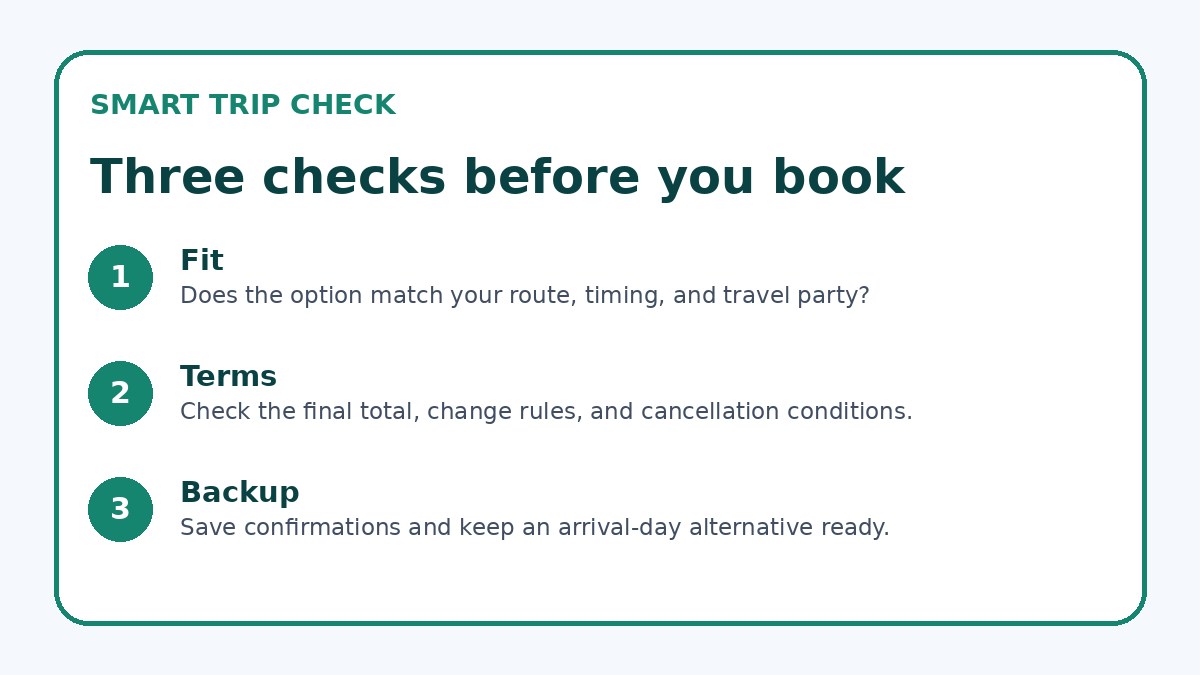
Before you book
- Confirm exact departure and arrival stations/terminals on the operator’s booking page and note the recommended arrival time.
- Check station access: step-free routes, stroller access, toilet and baby-change facilities, and proximity of taxi/ride-hail pickup points.
- Pack an accessible carry bag with passports, tickets, medications, snacks, spare clothes, and a small first-aid kit.
- Allow at least 45–90 minutes buffer per transfer when traveling with children, adjusting upward for peak hours or border crossings.
- Pre-book or plan the last-mile transfer from your arrival terminal to your accommodation, and keep the driver’s contact handy.
- Label all luggage and note a clear regrouping point at every transfer (platform number, café, or station information desk).
Packing, timing and moving with children
Pack with transfers in mind: keep snacks, essential medicines, passports, and a change of clothes in an easily reachable carry bag rather than in checked luggage. Use wheeled luggage wherever possible and a lightweight, foldable stroller for airports and stations that still have some walking. If your journey includes multiple terminals, label bags clearly and keep a small checklist of items to take each time you move between vehicles or platforms—this reduces forgotten items during hurried transfers. Plan short bathroom and snack breaks at larger stations where facilities are more reliable.
When scheduling, aim for off-peak travel times if your family tolerates them, because mid-morning or mid-afternoon departures often mean less crowding at stations and simpler platform changes. Never plan back-to-back tight connections with small children—build 45–90 minute buffers depending on how many transfers are involved. If one parent can manage luggage and another child, assign roles: one handles check-in and bags while the other looks after paperwork and the children. That division of labor reduces stress during busy transfers and keeps everyone moving smoothly.
Frequently asked questions
How many transfers should a family expect when traveling from Kuala Lumpur to Singapore?
The number of transfers depends on your chosen route and carrier: a direct intercity bus or train typically means the fewest transfers—usually boarding once and disembarking once—while breaking the trip into separate train and bus or flight segments increases the number. For families, fewer transfers reduce the need to move luggage and lower the chance of missed connections. To know the exact count, list each step from your accommodation in Kuala Lumpur to your final Singapore address and count station exits, platform changes, immigration points, and final taxis or rides.
What should I verify on the operator’s page before booking for our family?
On the provider’s final booking page verify the exact departure and arrival terminal names, recommended check-in time, baggage allowances and any stroller policies, and whether step-free access or family facilities are available. Also check refund and change terms in case you need to adjust plans. If the booking page lacks clear details about transfers, call the operator or check recent traveler reports. Trip.com can be used to compare current availability, but always confirm critical transfer details on the carrier’s own page before paying.
How do I handle immigration and customs with young children during a land border transfer?
Immigration at a land border can add time and sometimes requires crossing between different buildings. Organize documents in a single folder for quick access, keep passports and any required travel papers in a top carry bag, and prepare children for waiting times with snacks and simple activities. Allow extra buffer time for queues, and decide whether to use family or priority lanes where available. If using multiple services that handle immigration differently, confirm in advance where checks occur so you don’t arrive at the wrong terminal or miss a required step.
Final planning note
Families traveling Kuala Lumpur to Singapore can simplify the journey by selecting routes with the fewest station and terminal transfers, prioritizing terminals with accessible family facilities, and building realistic time buffers around immigration and peak crowds. Start by mapping your full door-to-door route and counting every handoff; this reveals the true complexity of each option. Verify departure and arrival terminal details on the operator’s booking page, prepare an easy-to-reach carry bag for essentials, and assign roles for luggage and child supervision. With those steps, you’ll reduce stress during transfers and make the journey more manageable for everyone.
Continue planning
Check current options and final conditions
Use the provider page to confirm live availability, the final total, cancellation terms, and every condition that matters to your trip.
This evergreen planning guide was created with AI-assisted drafting and a structured quality review. It does not display live prices, schedules, availability, visa guidance, or provider rankings. Verify current details before booking. Some links are affiliate links; we may earn a commission at no additional cost to you.