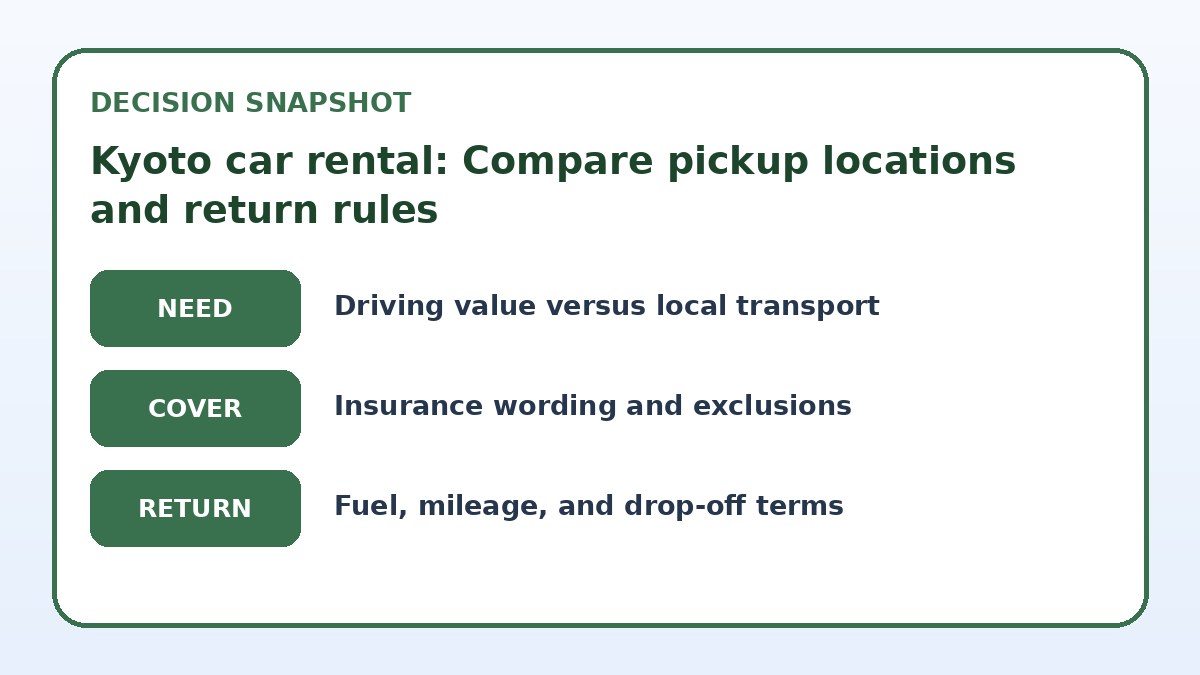
If you're a solo traveler renting a car in Kyoto, focus first on pickup and drop-off logistics: choose a pickup location that minimizes transfers and gives you clear return instructions. Decide whether the convenience of an airport or central-city desk outweighs the potential extra time returning the car, especially if you plan to use public transit for arrival or departure. Read the rental agreement for allowed return windows, fuel and mileage rules, one-way penalties, after-hours drop-off procedures, and what documentation or ID the provider requires. Verify final details on the provider’s booking page — including exact pickup address, required ID, and any fees that apply to returns — and consider comparing current availability and terms on Trip.com as one of several checking steps.
See current options before you compare the details
Availability and final conditions change. Open Trip.com now or keep reading for the practical comparison.
Picking your Kyoto pickup location
Start by matching your pickup point to your arrival mode. If you arrive by train at Kyoto Station, a city-center desk or nearby station kiosk can save you transfers and taxi fares; if you land at Kansai or Itami airports, airport counters are convenient when you prefer to drive directly out of town. For solo travelers with luggage or limited mobility, prioritize proximity and simple navigation over small price differences. Also think about where you’ll first drive: city center pickups are good for inner-Kyoto plans, while airport pickups suit routes that head west, east, or onward to other prefectures.
Ask about shuttle needs and luggage handling before booking. Some airport counters require a brief shuttle ride to the depot, which can be manageable but adds complexity when you’re alone and carrying bags. Compare walking distance from station exits, elevator availability, and whether the rental desk is inside the transport hub or a short walk away. On the booking page, check for photos or an exact street address and, if unclear, call the provider to confirm step-by-step arrival instructions — solo travelers benefit from precise timing and a clear meeting point.
Return policies and after-hours options
Returns matter more than many renters expect, especially when you’re traveling alone and juggling trains or flights. Confirm the official return window and whether late returns incur hourly or daily charges. Many providers offer after-hours drop boxes or remote key return procedures, but the conditions and liabilities differ: some require a staff check-in the next business day while others still charge for unverified damage. If you’ll return the car outside staffed hours, verify who is responsible for photographing the car, how mileage and fuel are recorded, and how they document pre-return condition.
If you plan to return at an airport or a different city branch, check whether a one-way fee applies and whether the receiving branch inspects the vehicle prior to finalizing the contract. Solo travelers should get written confirmation of any walk-in or after-hours return instructions and request an email or screenshot that shows the allowed drop-off method. On the booking page, look for the provider’s specific after-hours guidance and their stated procedure for return confirmations — if that information isn’t visible, contact customer service before you book.
| Approach | Best for | Tradeoff to check |
|---|---|---|
| Airport pickup and return | Travelers arriving late or with onward flights who want to drive immediately. | May involve shuttle waits, longer depot processing, and different return inspection procedures. |
| City-center pickup and return (Kyoto Station area) | Those staying in central Kyoto who prefer walking from train arrival to rental desk. | Limited office hours can complicate late or early returns; one-way drops may be restricted. |
| One-way pickup and drop-off | Itineraries crossing prefectures or ending at an airport where you won’t return to the start point. | Often subject to one-way fees and branch acceptance rules; return inspection policies vary. |
| After-hours key drop with remote inspection | Solo travelers with early/late arrivals needing flexible return times. | May leave you liable for damage discovered later unless you obtain immediate confirmation of condition. |
Ready to check the option that fits your plan?
Use your exact dates and traveler details so the provider page can show the current total and conditions.
Documentation, eligibility, and insurance caveats
As a solo renter in Kyoto, make sure your license and ID meet local requirements: many providers require the original driver’s license, sometimes accompanied by an international driving permit (IDP) if your license is not in Japanese. Confirm age requirements and whether the provider requires additional ID, such as a passport or local contact number. Note that the booking page should list exactly what to present at pickup; if it’s vague, get written clarification. Keep scans or photos of your documents accessible but retain originals when collecting the keys.
Insurance and roadside assistance details can materially affect your decision. Understand what the base agreement covers and what optional waivers or top-ups reduce your financial exposure in a damage or theft claim. Solo travelers should evaluate the ease of contacting roadside assistance (English availability, 24/7 coverage) and whether an after-hours return without staff affects liability. Verify on the provider’s final booking page whether the collision-damage waiver, theft protection, and roadside support are included or available as add-ons, and what steps to follow when making a claim.
Before you book
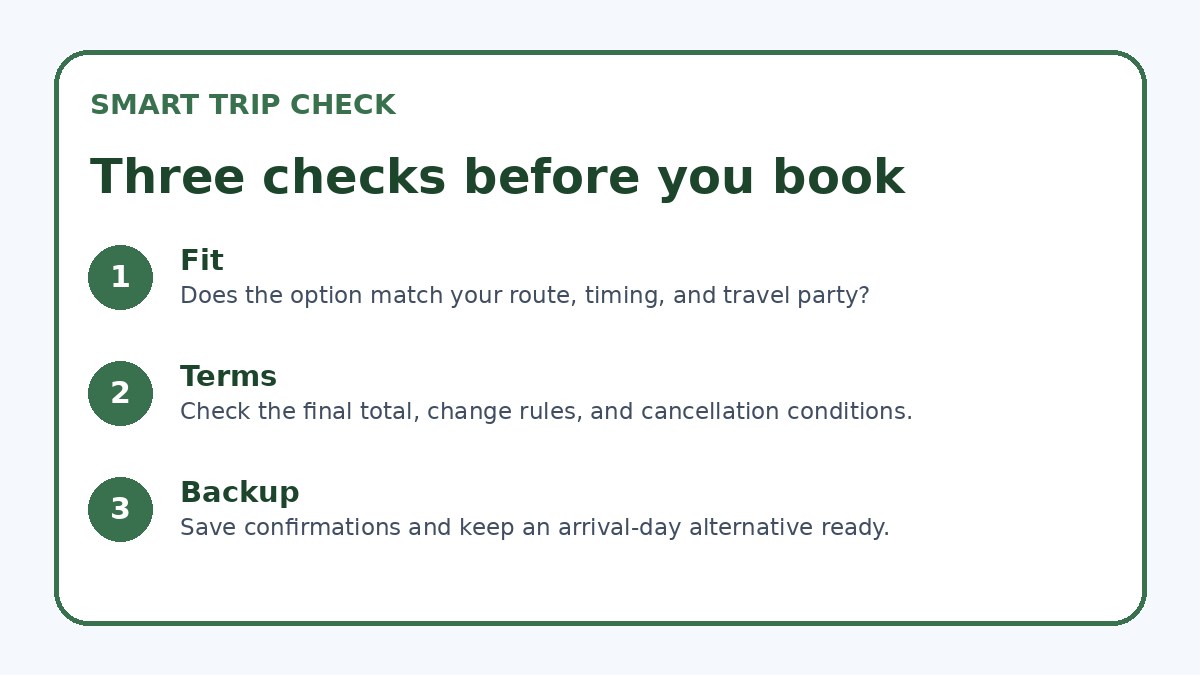
- Confirm exact pickup and return addresses, and save them to your phone and travel notes before departure.
- Verify required identification and whether an international driving permit is needed for your nationality.
- Ask about after-hours return procedures and request written confirmation of the process if you expect an off-hour drop-off.
- Check whether the rental includes roadside assistance and confirm language support and contact numbers.
- Confirm fuel return rules (full-to-full or other) and photograph the fuel gauge and odometer at pickup and drop-off.
- Document the car’s condition with time-stamped photos from multiple angles at pickup and return, and keep copies.
Practical tradeoffs: convenience, cost, and risk
Convenience often means a higher nominal cost but fewer logistical headaches: airport pickups let you drive straight away but may involve shuttles and longer on-site processing; downtown counters minimize transfers but could be closed early, forcing an after-hours return. For solo travelers, the mental cost of navigating unfamiliar transfers with luggage can be more important than a modest savings. Balance the perceived savings against the potential for late-return fees, extra taxi time, or missed trains. Write down the sequence from arrival to driving away and test it mentally to catch friction points.
Risk mitigation matters: if you’ll arrive late at night, prioritize desks with clear after-hours procedures or plan to stay overnight near the pickup point. If you plan a one-way trip, double-check branch acceptance and one-way charges. Keep an emergency plan: contact numbers, clear photos of the car at pickup and return, and copies of the contract saved separately. Before finalizing any booking, verify pickup and return addresses, after-hours instructions, allowed fuel levels for return, and damage assessment procedures on the rental provider’s live booking page.
Frequently asked questions
Can I pick up a Kyoto rental car late at night as a solo traveler?
Many providers accommodate late pickups, but the specific options vary: some have a staffed 24/7 desk, others require an after-hours procedure or pre-arranged key collection. Before booking, check the provider’s booking page for explicit late-pickup instructions and whether additional ID or authorization is needed. If the information isn’t clear, call or message the rental company to confirm where and how you’ll collect keys and which documentation to present. Also verify whether any temporary holds or extra charges apply for late pickups.
What should I do if I need to return the car to a different location in Kyoto or at the airport?
One-way returns can be convenient but are controlled by branch acceptance and may trigger fee differences. On the booking page, find the exact list of allowed return branches and any one-way charge, and ask whether the drop-off branch performs an immediate inspection and finalizes the contract on-site. For solo travelers, confirm directions and operating hours for the receiving branch and get written confirmation of the return address and procedure. If the provider does not accept returns at your desired location, plan transport alternatives or adjust the itinerary.
How will after-hours returns affect liability for damage when I’m traveling alone?
After-hours returns commonly use key-drop boxes and a next-business-day inspection; this creates a window where damage discovered later may be more complicated to dispute. To reduce risk, take comprehensive time-stamped photos of the vehicle’s exterior and interior at both pickup and return, record the fuel level and odometer reading, and ask for any drop-off receipt or email confirmation. Verify the provider’s stated after-hours return policy on the booking page and keep a copy of the rental contract showing how damages are assessed and how to file disputes.
Final planning note
For solo travelers in Kyoto, the pickup and return terms should drive your rental choice as much as vehicle type or headline price. Prioritize a pickup location that fits your arrival method, confirm after-hours procedures if your schedule is flexible, and insist on written confirmation for one-way returns or any exceptions. Protect yourself by understanding required documents, insurance boundaries, and the provider’s damage-assessment process — then document condition and fuel at pickup and drop-off. Before you click confirm, verify exact addresses, allowed return windows, after-hours instructions, and any fees on the rental provider’s final booking page so you don’t face surprises after arriving.
Continue planning
Check current options and final conditions
Use the provider page to confirm live availability, the final total, cancellation terms, and every condition that matters to your trip.
This evergreen planning guide was created with AI-assisted drafting and a structured quality review. It does not display live prices, schedules, availability, visa guidance, or provider rankings. Verify current details before booking. Some links are affiliate links; we may earn a commission at no additional cost to you.