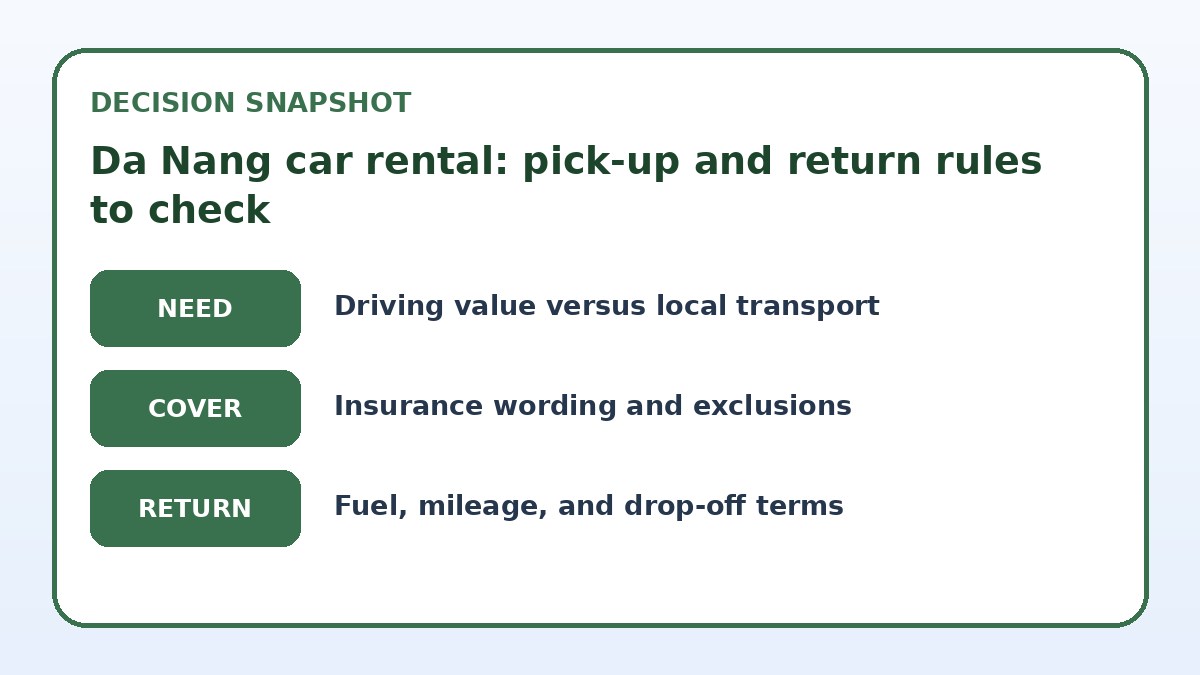
If you're renting a car in Da Nang for work, the single most practical step is to confirm the pickup and return terms before you book: exact pickup location, required documents, fuel policy, authorized drivers, damage reporting, and drop-off window and fees. Business trips often hinge on timing, so know where the car will be handed over, how late you can return it without penalty, and whether they allow airport or hotel delivery. Read the rental contract sections on insurance excess, cross-border travel if you plan a short Vietnam loop, and what photographic evidence they expect at handover. Prioritize clear communication with the rental provider about meeting points, after-hours procedures, and who signs the damage report. This saves time at arrival, prevents misunderstandings when you’re on a tight schedule, and ensures your company’s expense policy can be followed confidently.
See current options before you compare the details
Availability and final conditions change. Open Trip.com now or keep reading for the practical comparison.
Where and how you receive the car
Pickup location affects total travel time and possibility of delays. Airport-based pickups can be faster if the provider meets you inside arrivals, but some companies park off-site and shuttle customers to a remote lot. If your schedule has tight connections or meetings, choose a provider who documents a specific meeting point and offers a staff contact number. For hotel delivery, verify where the car will be found at the agreed time—driveway, lobby, or valet—and whether staff will finish paperwork in your room or at reception. These small details can add 15–45 minutes to a busy itinerary, so confirm them in writing.
The physical handover is where many disputes start, so plan to inspect both exterior and interior with the agent and take time-stamped photos or a short video of existing damage. Ask the agent to note any blemishes on the contract before you sign, and request a copy of the signed condition report. If you cannot inspect the vehicle because of time constraints, insist on a written condition report sent to you by email before you drive away. Also clarify whether the vehicle comes with a spare tire, phone charger, and a local SIM or navigation device—these are useful for an unfamiliar city and for reducing interruptions during meetings.
Insurance, deposits, and authorized drivers
Insurance language in rental contracts is where business travelers need to be precise. Verify whether the basic rate includes collision damage waiver (CDW) with an excess amount—meaning you may be liable up to a fixed sum for damage—and whether your corporate card or company insurance covers that excess. If you plan to add additional loss damage waivers or third-party liability supplements, confirm how those reduce your financial responsibility and whether the rental firm requires a hold on your credit card and for how long after return.
Authorized drivers can affect cost and compliance. Many companies limit the number of drivers or require each driver to present a valid license and be listed on the agreement; additional drivers often incur fees. If a colleague will drive during part of the trip, add them to the contract at pickup and retain copies of all drivers’ licences and signatures. Also check age restrictions and local driving license reciprocity—some policies treat foreign licenses differently and may require an International Driving Permit alongside your national license.
| Approach | Best for | Tradeoff to check |
|---|---|---|
| Airport desk pickup with on-site inspection | Tight arrival schedules and immediate customer support | Possible shuttle wait if lot is off-site; airport fees may be higher |
| Hotel delivery and in-room paperwork | Maximizing productivity and avoiding airport queues | May incur delivery fees and requires coordinating staff timing |
| After-hours drop with key dropbox | Late-night flights and flexible departures | Higher risk of inspection disputes unless you photograph evidence |
| Prepaid fuel or return-to-full option | Predictable corporate accounting and avoiding refuelling stops | You may pay for unused fuel or face higher per-litre refuelling rates |
Ready to check the option that fits your plan?
Use your exact dates and traveler details so the provider page can show the current total and conditions.
Return procedures, after-hours drops, and inspections
Return terms are as important as pickup for business travel efficiency. Confirm the allowed return window—many rentals permit returns by a specified hour or charge a full extra day for late returns—and whether the company uses the time recorded at its desk or the time the keys are dropped in a return box. If you anticipate returning after hours, ask for the exact steps: whether you park in a designated bay, leave the keys at reception or in a dropbox, and how they document fuel level and damages when staff are not present. Get the provider’s policy in writing so corporate expense approvers can understand potential extra charges.
In-person inspections at return prevent disagreements. Whenever possible, have a staff member walk the car with you and sign off on the handover condition report. If you must use an after-hours drop, photograph the entire car and fuel gauge with timestamps and email or message the provider immediately; keep copies for expense reconciliation. Ask how long it takes the company to release holds on credit cards and confirm whether they’ll send a final invoice or damage report—this is crucial for reconciling corporate accounting and resolving disputes quickly.
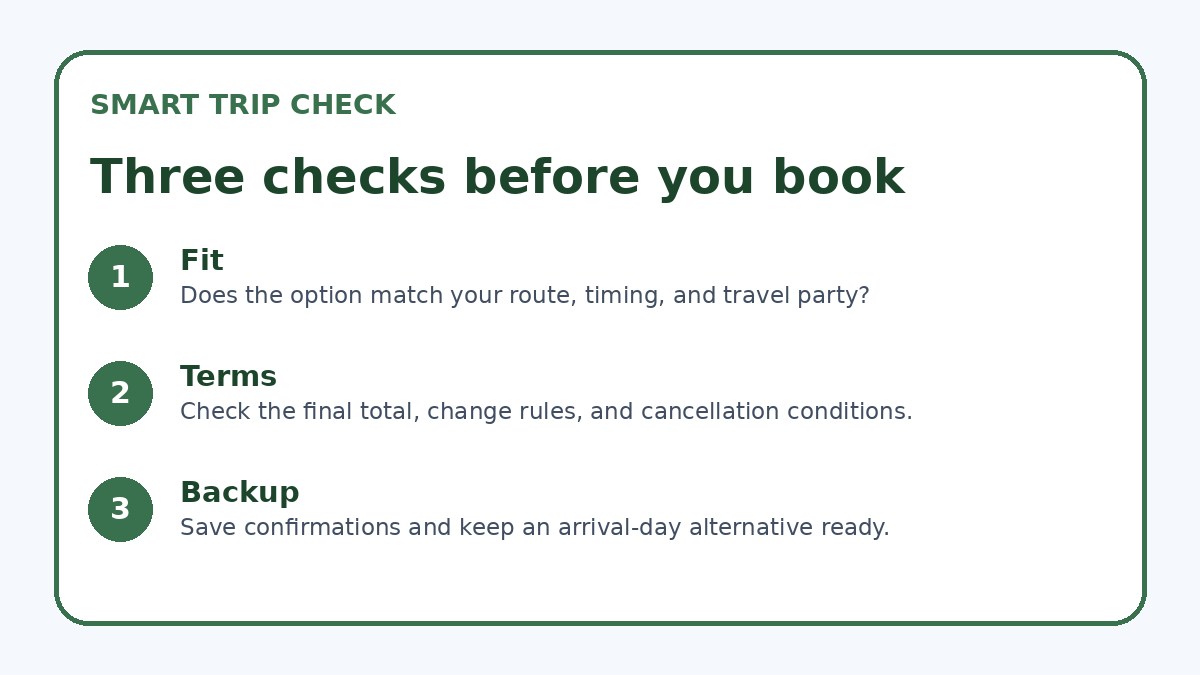
Before you book
- Confirm the exact pickup location and contact person with phone number and meeting point details before departure.
- Verify which documents are required at pickup (passport, driving licence, company authorisation, and credit card) and bring originals.
- Ask for written confirmation of the fuel policy, mileage limits, authorized drivers, and any cross-border restrictions.
- Photograph the car (exterior, interior, and odometer/fuel gauge) with timestamps during pickup and after return; save copies.
- Clarify the deposit amount, hold release timeline, and whether your corporate card will be charged or only authorized.
- Get the provider’s after-hours return procedure in writing, including where to leave keys and how to report post-return damage.
Common contract traps and what to verify before booking
Pay attention to fuel policy wording, mileage limits, and cross-border restrictions. 'Return full' typically means you must refill before returning or face higher per-litre charges. Mileage caps matter if you plan excursions outside Da Nang; exceeding them can trigger per-kilometre fees. Cross-border clauses may prohibit travel into neighboring provinces or require special documentation and insurance; if your itinerary includes a short trip, ask whether the policy allows it and whether additional coverage is needed.
Also check cancellation terms, amendment fees, and how damage claims are handled if the vehicle develops a mechanical issue. Some contracts require you to use an approved repairer or to obtain written confirmation before authorizing repairs; others settle costs after the fact. For business travellers, verify whether the company provides a replacement vehicle and how quickly, or whether you’ll be responsible for arranging alternate transport to meet commitments. Always request key contract clauses in clear language and save screenshots of the final booking page for your records.
Frequently asked questions
Can I use my international driving licence in Da Nang?
Whether an international driving permit is accepted varies by rental company and local enforcement. Many providers ask for a valid driving licence from your home country and may also request an International Driving Permit (IDP) or a translated licence for verification. Before booking, check the rental agreement and ask the provider to confirm acceptable documents on their final booking page. Also verify with your company travel policy and ensure any additional required documents are carried while driving to avoid fines or refusal at pickup.
What should I do if I discover damage after I return the car?
If damage is reported after return, request the provider’s damage report and photographic evidence and ask for a clear breakdown of repair costs and how they were calculated. Keep your own photos and timestamps from the return to support your case. Contact the rental company immediately, provide your booking reference, and ask how to escalate within their claims process. If the charges appear incorrect, raise the issue with your company’s travel or expense manager and request that the provider share repair invoices and assessments before any final charge is processed.
How long will a deposit hold remain on my credit card after returning the vehicle?
Hold release times differ between suppliers and banks, and the rental company’s policy should state the expected timeframe; however, the actual release depends on the card issuer. Ask the provider to confirm the hold amount and the nominal release window on their final booking page, and consider using a corporate card that handles holds efficiently. For expense planning, allocate extra days for the hold to clear and keep documentation showing the vehicle was returned without unresolved damage to speed up disputes with your card issuer if needed.
Final planning note
For business travelers in Da Nang, mastering pickup and return terms saves time and reduces expense headaches. Confirm pickup logistics, inspection steps, driver rules, and hold policies in writing before you book, and photograph the vehicle at both ends to protect yourself and your employer. Clarify fuel, mileage, and after-hours return procedures so you can focus on meetings rather than administrative surprises. Finally, save the final booking page, contact details, and the signed condition report for quick reconciliation with your corporate travel or expense team if any charges arise.
Continue planning
Check current options and final conditions
Use the provider page to confirm live availability, the final total, cancellation terms, and every condition that matters to your trip.
This evergreen planning guide was created with AI-assisted drafting and a structured quality review. It does not display live prices, schedules, availability, visa guidance, or provider rankings. Verify current details before booking. Some links are affiliate links; we may earn a commission at no additional cost to you.